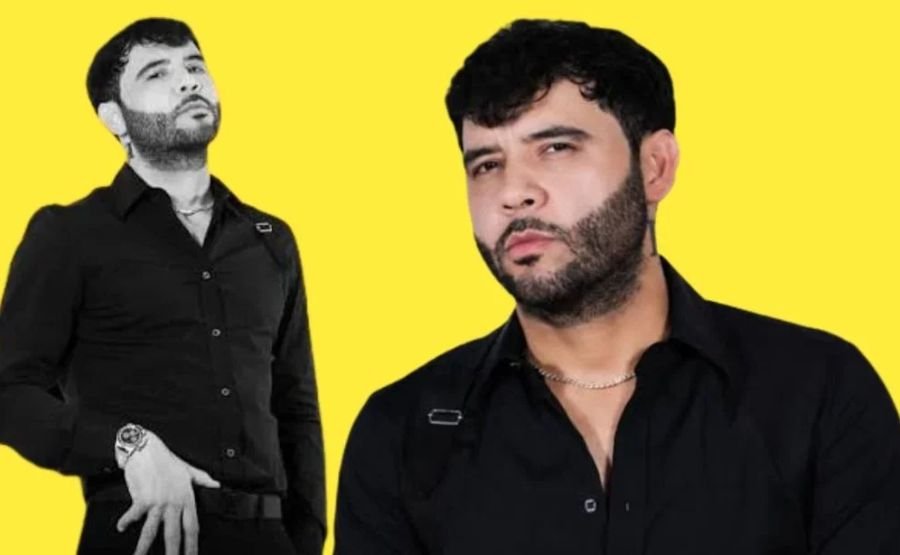
How Old Is Jose Darey Castro? Exploring His Age, Background, and Personal Life
Quick Bio
| Detail | Information |
| Full Name | José Darey Castro |
| Born | April 16, Navojoa, Sonora, Mexico |
| Nationality | Mexican |
| Occupation | Singer, Songwriter, Accordionist, Bandleader |
| Known For | Founding and leading Los Dareyes de la Sierra; pioneering the sierreño-norteño fusion sound |
| Band Founded | 1997, Navojoa, Sonora (originally as Los Llegadores de Sonora) |
| Record Label | DISA Records |
| Key Albums | El Águila Real (2005); Con Banda (2008, Billboard Top Latin Albums #40); Tienes Todo (2015, six charting singles) |
| Turning Point | 2004 armed ambush of tour bus in Chihuahua; survived and redirected his career |
| Son | Darey Castro Jr. |
| Streaming | 11.1 million monthly Spotify listeners (2024–2025) |
| Age | Mid-40s (exact birth year not authoritatively confirmed) |
The Man and the Music That Couldn’t Be Stopped
There’s a moment in every great musician’s career that separates those who merely play music from those who are transformed by it. For José Darey Castro, that moment came on a dark stretch of highway in Chihuahua, Mexico, in 2004, when armed men stopped his tour bus looking specifically for him.
He survived. The music changed. And from that point forward, Los Dareyes de la Sierra became something that charts and streaming numbers alone can’t fully explain.
José Darey Castro is not a household name in the mainstream music press. He doesn’t get cover stories in English-language magazines or invite profiles from American entertainment journalists. What he has instead is something harder to manufacture and far more durable: millions of people who grew up with his music, who played it at quinceañeras and backyard parties and long truck rides across the Sonoran desert, who knew every word before they ever learned his name.
He is one of the architects of the sound that redefined regional Mexican music for the twenty-first century — a sierreño-norteño fusion that bridged the corrido tradition of the previous generation with the energy and production values that modern audiences demanded. That is not a small thing. And it was built, quite literally, against all odds.
Roots in the Sierra: Growing Up Sonoran
José Darey Castro comes from Navojoa, a city in the southern portion of the Mexican state of Sonora, in the agricultural flatlands not far from where the Sierra Madre Occidental begins its dramatic climb toward the sky. Sonora is a state shaped by the particular combination of cattle culture, agricultural wealth, working-class pride, and the specific musical tradition — the sierreño corrido, the norteño accordion, the tololoche bass — that has produced some of Mexico’s most beloved regional musicians.
The details of his childhood that have made it into the public record are limited. He has not given the kind of expansive biographical interviews that reveal parents’ occupations and formative memories and favourite teachers. What is clear from the music he has spent his career making is that he absorbed the musical culture of his region at a bone-deep level — the structure of the corrido, the particular rhythmic urgency of a well-played norteño accordion, the storytelling tradition that valued narrative specificity over vague romantic sentiment.
Children who grow up in musical households in Sonora in the late 1970s and 1980s grow up surrounded by the corridos of Los Tigres del Norte, the brass-heavy banda of Sinaloa filtering in from the south, and the accordion-driven sierreño of groups that played the dances and festivals that marked the year’s rhythms. That was the sonic environment that shaped José Darey Castro before he ever picked up an instrument himself.
He learned the accordion. That matters. The accordion is not an instrument you approach casually. It demands coordination, breath control, the ability to play melody and rhythm simultaneously, and the specific physical intelligence that comes from years of practice. It is the essential instrument of norteño music — the voice of the corrido tradition — and mastering it at a serious level takes the kind of focused commitment that starts young.

A Band Born With Several Names
In 1997, in Navojoa, Sonora, a group of musicians came together around José Darey Castro’s accordion and his voice. They called themselves Los Llegadores de Sonora. The name didn’t last long — legal complications and the competitive landscape of regional Mexican music made name changes a practical necessity for young bands trying to establish themselves without immediately running into trademark conflicts.
They became Los Alteños de la Sierra. That name lasted longer, long enough to begin building a local following across Sonora and northern Mexico, playing the circuit of private parties, community dances, and regional festivals that constitutes the real education for any norteño group. Those early years of grinding through the circuit — loading and unloading equipment, playing to crowds that might number a few hundred or a few dozen, developing the stage chemistry that makes a band feel inevitable rather than assembled — are the years that the music itself cannot replace.
Then came the name that stuck: Los Dareyes de la Sierra. The word “dareyes” — a phonetic adaptation of a surname — was distinctive enough to be remembered and Spanish enough to feel rooted. The full name positioned them squarely in the sierreño tradition, connecting their music explicitly to the highland sierra sound. It became the name under which everything important would happen.
The group that solidified around Castro included Miguel Enrique Razcón and Juan Vázquez, whose instrumental contributions helped define the specific sonic character of the early band. The chemistry between them — the particular way Castro’s accordion interacted with the string and rhythm section — was the foundation everything else was built on.
DISA Records and the Climb to Recognition
Signing with DISA Records was the pivotal institutional step that moved Los Dareyes de la Sierra from regional phenomenon to nationally distributed act. DISA was one of the most important labels in regional Mexican music, with distribution infrastructure and industry relationships that could get records into stores across Mexico and into the significant Mexican-American market in the United States.
The early 2000s were a remarkable period for norteño and regional Mexican music in general. The genre was experiencing a commercial surge, driven partly by demographic shifts in the United States, partly by the increased visibility of corridos in the mainstream, and partly by the organic popularity of a generation of groups who had come up through the circuit and had genuinely devoted fan bases before they ever had label deals.
Los Dareyes de la Sierra released their first significant album with the band’s current name — Duelo de Shakas — in 2000, followed by an impressive run of releases in the mid-2000s that established their commercial presence. El Águila Real appeared in 2005, as did Cigarro de Hoja, followed by Directo in 2006 and En la Mira in 2007. That pace of releases — more than one album per year at peak — reflects both the demand for their music and the work ethic that drives serious regional Mexican acts.
The Night That Changed Everything: Chihuahua, 2004
Before any of that mid-2000s commercial momentum could fully build, José Darey Castro came very close to never recording another song.
In 2004, after finishing a performance gig somewhere in the state of Chihuahua, Castro and his band were on their tour bus heading home when armed gunmen stopped the vehicle on the highway. They were looking specifically for Castro. The details of why — whether this was connected to the subject matter of his corridos, to a personal conflict, or to the broader climate of violence that characterised parts of northern Mexico during this period — have never been fully disclosed publicly. What matters is the outcome: Castro survived.
The experience marked him. By his own account, the encounter fundamentally changed how he approached both his music and his career. He made decisions after 2004 that he might not have made without that near-death perspective — including a willingness to evolve the band’s sound and approach rather than simply continuing to do what had always worked before. The 2008 Con Banda album, which added the heavyweight brass of Sinaloa banda music to the group’s established norteño foundation, was at least partly the product of that post-2004 readiness to take risks.

Con Banda, Billboard, and Breaking Through
The Con Banda album, released in 2008, was the moment that made the broader music industry formally take notice of Los Dareyes de la Sierra. The Billboard magazine feature from that summer told the story directly: Castro’s debut on Billboard’s Top Latin Albums chart had nearly not happened at all, given the 2004 ambush. The album climbed to Number 40 on the chart and was still there in its sixth week of charting when Billboard ran the piece.
Number 40 on Billboard’s Top Latin Albums is not a headline-grabbing position in the pop world’s terms. In the norteño market of 2008, it was significant — validation that the group had broken through from regional phenomenon to nationally charting act with crossover appeal across the Mexican and Mexican-American markets.
The Con Banda experiment — blending the established sierreño-norteño sound with the brass-heavy production of Sinaloa banda music — proved more successful than the risks involved might have suggested. It demonstrated Castro’s instinct for what the audience was ready to hear, even before the audience quite knew it themselves. The norteño-banda hybrid would go on to become one of the dominant sounds in regional Mexican music in the decade that followed.
Tienes Todo and a Second Wave
By 2015, Los Dareyes de la Sierra had been recording and touring for eighteen years. That kind of sustained career arc in regional Mexican music requires constant renewal — the market is competitive, tastes shift, and the corrido tradition demands that lyrics stay relevant to what audiences are actually experiencing and caring about.
Tienes Todo delivered on that challenge. The album generated six charting singles — an unusually productive yield that speaks to both the quality of the material and the group’s continued standing with their core audience. Six singles from a single album climbing the Regional Mexican charts simultaneously represents a commercial high-water mark for any norteño act.
The years following Tienes Todo saw Castro continue to evolve his collaborative approach. He became a sought-after collaborator within the broader ecosystem of nueva música mexicana — the generation of artists, many of them younger, who were redefining what regional Mexican music could sound like while remaining rooted in its corrido and norteño traditions. His work with Luis R Conriquez, El Fantasma, Eden Muñoz, Giovanny Ayala, Larry Hernández, and others placed him at the intersection of the traditional and the contemporary, a bridge figure whose credibility with the older audience opened doors to the younger one.
The collaboration with Santa Fe Klan — an artist who represented the urban corrido fusion — and with Los Plebes del Rancho de Ariel Camacho’s circle, indicated a continuing willingness to explore genre boundaries without abandoning the foundational sierreño identity that had always been the band’s core.
Personal Life: Private by Design
José Darey Castro has consistently kept his personal life away from media scrutiny, and that consistency has been largely respected by the press. What is known is that he has a son named Darey Castro Jr. — a name that both honours and continues the paternal lineage. Beyond that, the details of his family relationships, romantic history, and domestic life have remained genuinely private.
This is not unusual for regional Mexican musicians of his generation and background. The corrido tradition is fundamentally a storytelling art form, and many of its most accomplished practitioners understand intuitively the difference between the stories they tell in songs and the story of their own lives. Castro has always been more comfortable letting the music speak than speaking about himself.
His public presence is concentrated almost entirely in his musical output: the recordings, the live performances, the festival appearances, the collaborations. The human being behind all of it — his interior life, his relationships, his faith, his daily rhythms — belongs to himself and to those who actually know him.
The Hardships That Shaped Him
The 2004 ambush was not the only difficulty Castro navigated over a career spanning more than two decades. The regional Mexican music industry is not a gentle environment. It carries real physical dangers — the corrido tradition’s subject matter puts some artists in proximity to the criminal organisations whose stories they tell, voluntarily or not. The violence that characterised northern Mexico through the 2000s and into the 2010s touched the lives of musicians as it touched everyone else in the region.
Beyond physical danger, the industry’s commercial landscape is itself a kind of sustained adversity. The rise of digital streaming reshaped the economics of music sales dramatically, hitting physical album revenue in the early 2010s with particular force. Artists and labels whose business models had been built around CD sales had to find new revenue structures or become irrelevant. Castro and Los Dareyes navigated this transition successfully — 11.1 million monthly Spotify listeners represents a genuinely large digital footprint for a regional Mexican act — but the navigation required adaptation that was not without its uncertainties.
The band’s lineup has also shifted over the years, as most long-running bands inevitably see their personnel change. Each transition requires rebuilding chemistry, re-establishing working relationships, and maintaining the sound and identity that the audience recognises as essentially Dareyes even as the specific individuals change around the leader.
The Money Picture
José Darey Castro’s personal net worth is not publicly documented in any verified way. The figures that appear on various content mill websites — ranging from modest estimates to ambitious guesses — have no documented factual basis. Regional Mexican artists at his level of career longevity and streaming numbers earn money from multiple streams: recording royalties, live performance fees, streaming revenue, publishing rights from both original compositions and cover versions, merchandise, and licensing.
An artist with 11.1 million monthly Spotify listeners and a career spanning more than twenty-five years of consistent recording and touring has built genuine financial stability. The larger context is that regional Mexican music, while not generating the individual fortunes of pop superstars, sustains working musicians who play constantly for devoted audiences across Mexico and the United States — a market of tens of millions of people who attend concerts and stream music at significant rates.
Castro has maintained his career on his own terms, which speaks to financial management as much as artistic integrity. Artists who survive for twenty-plus years without major label implosions or dramatic career interruptions tend to be people who understand the business of music as well as the music itself.
Where Things Stand Now
As of 2025 and into 2026, Los Dareyes de la Sierra remain active and productive. The band continues to release new material — collaborations with contemporary acts keep them connected to the evolving sound of nueva música mexicana while their back catalogue provides a foundation of proven hits that live performances can rely on. Their Spotify following continues to grow, with the platform’s algorithmic recommendation system introducing them to younger listeners who discover the sierreño tradition through playlists rather than through the radio stations and physical record stores that shaped their original audience.
José Darey Castro performs, records, collaborates, and leads the band that has carried his name in its title for nearly thirty years. His son Darey Castro Jr. carries that name into the next generation. The music endures.
Final Words
José Darey Castro’s story is ultimately a story about what it means to stay committed to a tradition while refusing to be imprisoned by it. The sierreño corrido is a form with deep roots — hundreds of years of storytelling culture, specific instrumental requirements, regional identity bound up in every chord. Within those constraints, he found enough room to create something that felt both timeless and contemporary, that honoured the tradition without simply repeating it.
The near-death experience in Chihuahua in 2004 is the pivot point that everything else radiates from. Before it, a promising regional act. After it, something more considered — a musician who understood, in the most visceral possible way, that time is not guaranteed and that the music worth making is the music worth risking something for.
That understanding shows in the work. The collaborations reached across generations. The willingness to add banda brass to a sierreño foundation. The continued evolution through digital platforms after a career that began in an era of cassettes and regional radio.
He is not famous in the way the mainstream music world measures fame. He is something rarer: genuinely important to the people his music is for.
FAQs
1. How old is José Darey Castro?
His birth date is listed as April 16 on Famous Birthdays, one of the more reliable sources for such information. He is in his mid-40s as of 2025–2026. Various content mill sites have listed birth years ranging from 1980 to 1987, with no authoritative primary source confirming the year. The April 16 birthday has more cross-source consistency than the year claims.
2. Where is José Darey Castro from?
He is from Navojoa, Sonora, Mexico. This is confirmed by multiple reliable music database sources including Last.fm, AllMusic, Qobuz, and LiveOne. Some content mill sites incorrectly list Badiraguato, Sinaloa or Culiacán, Sinaloa — these appear to be errors. Navojoa, Sonora is where the band was founded and where Castro’s roots are.
3. What band is José Darey Castro associated with?
He is the founding leader, lead vocalist, and accordionist of Los Dareyes de la Sierra, a norteño-sierreño group formed in Navojoa, Sonora in 1997. The band originally operated under the names Los Llegadores de Sonora and Los Alteños de la Sierra before settling on their current name.
4. What happened to José Darey Castro in 2004?
In 2004, following a performance in Chihuahua, Mexico, Castro’s tour bus was stopped by armed gunmen who were specifically looking for him. He survived the ambush. The experience profoundly affected him and his approach to his career and music, by his own account. It is frequently cited as the pivotal event that preceded his major commercial breakthrough period.
5. What are Los Dareyes de la Sierra’s most important albums?
Key recordings include Duelo de Shakas (2000), which established their early identity; El Águila Real (2005) and Cigarro de Hoja (2005), which built their mid-2000s commercial presence; Directo (2006) and En la Mira (2007), which continued the momentum; Con Banda (2008), which reached Number 40 on Billboard’s Top Latin Albums and marked their national chart breakthrough; and Tienes Todo (2015), which generated six charting singles.
6. What is the band’s musical style?
Los Dareyes de la Sierra are known for a sierreño-norteño fusion sound. Sierreño music is rooted in the corrido storytelling tradition of the Sierra Madre regions of Sonora and Sinaloa, typically featuring accordion, bajo sexto (a large twelve-string guitar), and tololoche (upright bass). Over their career they also incorporated banda elements — the heavy brass instrumentation associated with Sinaloa — to create a hybrid sound that proved commercially influential.
7. Who has José Darey Castro collaborated with?
His collaborations span generations of regional Mexican music. Notable partners include Luis R Conriquez, El Fantasma, Eden Muñoz, Giovanny Ayala, Larry Hernández, Los Plebes del Rancho de Ariel Camacho, Santa Fe Klan, and Los Gemelos de Sinaloa, among many others. These collaborations have kept him connected to younger artists and new audiences while his back catalogue sustains his core following.
8. How many people listen to Los Dareyes de la Sierra on Spotify?
As of recent reporting, the group has approximately 11.1 million monthly listeners on Spotify — a significant figure that reflects both their loyal longstanding audience and the platform’s algorithmic reach introducing them to younger and international listeners.
9. Does José Darey Castro have children?
He has a son named Darey Castro Jr. Beyond this, details about his family life are not public. Castro has consistently maintained privacy around his personal life.
10. What record label is Los Dareyes de la Sierra on?
The band released albums on DISA Records, one of the leading regional Mexican music labels. More recent releases have appeared through Double P Records and other labels, reflecting the broader changes in the music industry’s distribution landscape.
11. What does “Dareyes” mean?
The name Los Dareyes de la Sierra is a phonetic adaptation of a surname — specifically Castro’s name, Darey — combined with “de la Sierra” (of the Sierra/mountains), situating the group within the regional sierreño musical tradition. The name identifies both the leader and the geographical-musical identity of the group simultaneously.
12. What is José Darey Castro’s net worth?
No verified figure exists. Various content mill websites offer estimates but without documented basis. His income derives from recording royalties, live performance, streaming revenue, publishing rights, and collaborations built across a twenty-five-plus year career with one of regional Mexican music’s most consistently active groups. He is financially stable by any reasonable inference from the career record, but specific figures are not publicly confirmed.
Explore stories that inspire curiosity with The Imperial Magazine.