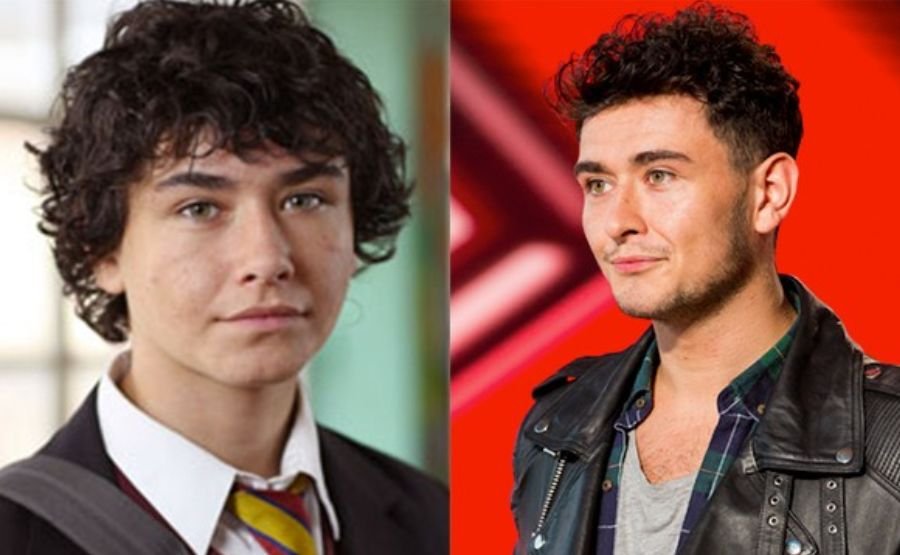
Josh Waterloo Road: His Character, Storyline, Relationships, and Life Beyond the Series
Quick Bio
| Detail | Info |
| Full Name | William Edward Rush |
| Born | July 6, 1994, Bury, Greater Manchester, England |
| Died | December 17, 2025, Salford Royal Hospital, aged 31 |
| Nationality | British |
| Occupation | Actor, singer-songwriter |
| Known For | Playing Josh Stevenson in BBC’s Waterloo Road (2009–2013) |
| Mother | Debbie Rush — actress, Coronation Street (Anna Windass) |
| Father | Andrew Rush |
| Siblings | Older sister Poppy Rush (actress); older brother Tom Rush |
| Children | One son |
| Other Notable Roles | Grange Hill, Shameless, Casualty, Vera, Friday on My Mind |
| Music | Reached the Six Chair Challenge stage on The X Factor (2016) |
The Actor Who Made a Generation Feel Seen
There’s a particular kind of actor who doesn’t just play a role — they inhabit one so completely that the character and the person become impossible to separate in the public memory. For hundreds of thousands of young British viewers who grew up watching Waterloo Road in the early 2010s, William Rush was Josh Stevenson. Full stop.
Josh was the kid who figured out he was gay on national television. The kid whose cannabis habit spiralled into something darker and more frightening than anyone around him anticipated. The kid who leaned on his dad, made mistakes, and eventually found a way through. For a generation of young people who were quietly wrestling with their own identities, mental health, or family complications, watching Josh do all of that — messily, honestly, on a primetime BBC school drama — was a lifeline.
William Rush, the young man from Bury who brought Josh to life across four series of that show, died on December 17, 2025, just days before Christmas. He was thirty-one years old. His life was short. His impact, for the people who saw themselves in his most famous character, was not.
This is his story.
See also “Roderick Jeffrey Watts: The Psychologist Who Made Justice His Life’s Work“
Growing Up Rush: A Manchester Childhood in the Entertainment Industry
William was born on July 6, 1994, in Bury — one of those Greater Manchester towns that tends to produce people who are quietly tough, dry-humoured, and don’t put on airs. He grew up the youngest of three children. His older sister was Poppy Rush, who also gravitated toward acting. His older brother Tom went a different direction. And at the centre of the household was their mother, Debbie Rush — an actress who would go on to spend a decade on Coronation Street playing Anna Windass, one of the street’s most beloved working-class characters.
Debbie and her husband Andrew had been married since 1989, and the home they made for their three kids seems to have been a genuinely warm one. William has been described by those who knew him as family-oriented and grounded — someone who valued his roots and didn’t let the spotlight change that. Growing up watching his mum navigate a professional acting career while raising a family gave William something a lot of aspiring performers never get: a realistic picture of what the job actually involved, day in and day out, without the mythology.
He trained at the Manchester School of Acting — a practical, no-nonsense path that suited both him and his home city’s pragmatic approach to everything. And he didn’t wait around for permission to start. His professional career began while he was still in primary school.
Starting Young: Grange Hill and the Early Roles
For anyone who knows British television, Grange Hill carries a specific weight. It ran for three decades on the BBC, and for generations of young British viewers it was the school drama — the show that tackled drug abuse in the 1980s with a sausage and a catchphrase that became part of cultural shorthand. Landing a recurring role there as a child actor was not nothing. It was a genuine credential.
William appeared as Ali Duncan in Grange Hill from 2005 to 2007, in six episodes. He was around eleven when he started that job. Eleven. The character was a troubled student trying to navigate a difficult home situation — not a million miles from the kind of emotionally complex, working-class youth he would return to again and again throughout his career.
Around the same period, he picked up a small part in Shameless, the raucous Channel 4 drama about the chaotic Gallagher family on a fictional Manchester estate. It was a brief appearance — an unnamed lad at an ice cream van — but it added another credit to a CV that was quietly building in quality and variety. He also appeared in The Street, Drop Dead Gorgeous, and other British productions in those formative years, gradually assembling the kind of diverse early experience that serious actors need.
Before he turned fifteen, all of this took place.
Waterloo Road: The Role That Defined Him
In 2009, William walked onto the set of Waterloo Road as Josh Stevenson — and television history, in a modest but real way, was about to be made.
Waterloo Road was BBC’s big, long-running school drama, set first in Rochdale and later relocated to Scotland. It was the kind of show that managed to be entertaining and popular while consistently tackling issues that other primetime dramas wouldn’t touch: addiction, abuse, family breakdown, mental illness. It was brave in the way that only a show confident in its audience could be.
Josh Stevenson arrived in series five as the teenage son of teacher Tom Clarkson — a surprise to Tom, who hadn’t known of his son’s existence, and equally a surprise to Josh, who suddenly had a father figure he hadn’t grown up with. It was a naturally dramatic setup, and William made the most of it from the start, finding in Tom and Josh’s evolving relationship something that anchored the character through everything that followed.
And quite a lot followed.
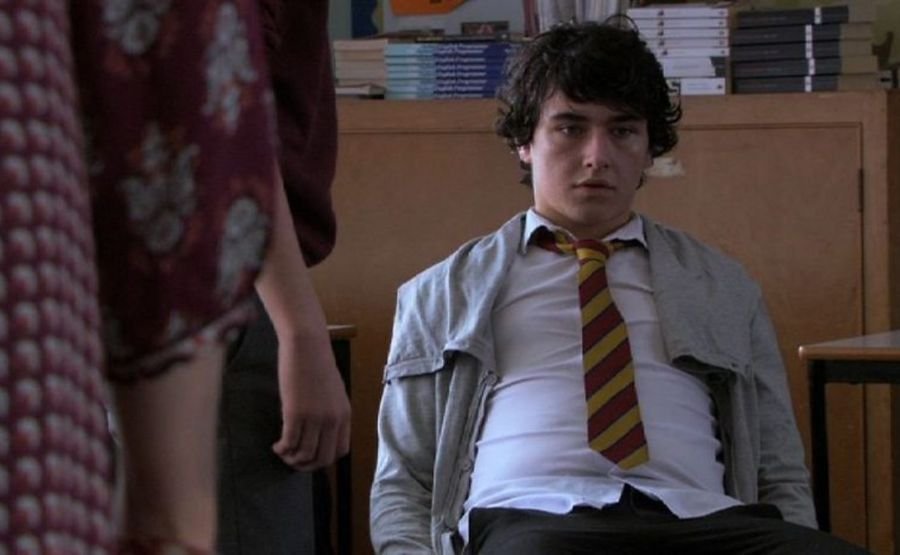
Over four series and 69 episodes between 2009 and 2013, Josh’s storyline moved through territory that was almost breathtaking in its ambition for a primetime family drama. His coming out as gay — a gradual, uncertain, honestly portrayed arc that led to a relationship with fellow student Nate Gurney — arrived at a time when LGBTQ+ storylines in British mainstream television were far less common than they are today. William played it with a specificity and vulnerability that resonated deeply with young viewers who were having similar private conversations with themselves. The character didn’t come out in a single dramatic moment and ride off into a rainbow sunset. He stumbled. He was scared. He said things like “if that makes me gay, I’ll just have to deal with it” — which captured perfectly the ambivalent, still-processing state that many young people experience.
Then came the cannabis storyline, which took a turn nobody watching casually was quite prepared for. Josh’s drug use escalated into something that began to look like psychosis. Eventually came the diagnosis: schizophrenia. For a family drama to handle that subject with the care and detail the show gave it — and for William to carry those scenes with the emotional weight they required at such a young age — was genuinely remarkable.
The combination of queer identity, addiction, and mental illness across one character’s arc made Josh Stevenson one of the most layered, important characters British youth television had produced. And the young man from Bury brought him to life, week after week, for four years.
The On-Screen Family and a Real One Too
One of the quieter footnotes of William’s Waterloo Road years is that he eventually appeared alongside his own mother on television. When he secured a guest appearance on Coronation Street — the same soap where Debbie Rush was playing Anna Windass at the time — mother and son shared a professional world in the most literal sense. It was a small detail, but a meaningful one for a family as close as the Rushes clearly were.
After Waterloo Road concluded, William returned briefly for a guest appearance in 2013, and then the show moved on into its next chapter. He moved on too — into the early stages of what everyone around him expected to be a long and evolving career.

Life After Josh: Vera, Casualty, and Searching for the Next Chapter
The years between Waterloo Road and 2016 produced a handful of credits that showed William was doing what working actors do: keeping busy, taking roles as they came, and hoping the next one would open a door. He appeared in Casualty, the long-running BBC hospital drama, and in Vera, ITV’s acclaimed detective series set in Northumberland, both of which carry real prestige in British television circles.
These weren’t headline-grabbing roles, but that’s partly the nature of the industry after a long-running part in a major series ends. You’ve been one person for four years. Audiences need time to see you as someone else. The work itself — showing up, learning lines, holding your own in demanding scenes — continues regardless.
He was building something, even if it wasn’t as visible as his Waterloo Road years had been.
The X Factor: Music, Another Stage, and a Step Sideways
Acting and music often live close together in creative people, and William Rush was no exception. He had always had a musical streak running alongside the performing, and in 2016 he made a decision that surprised his fan base: he auditioned for the thirteenth series of The X Factor.
What followed was genuinely impressive. He didn’t flame out in the early rounds. He pushed through to the Six Chair Challenge — one of the competition’s most nerve-shredding stages, where performers are literally seated and unseated in front of a live audience by a judge deciding on the spot whether they’re in or out. Getting that far required real ability, real composure, and the willingness to make yourself vulnerable all over again in a completely different arena.
He didn’t go on to win, but that was never really the point. The X Factor appearance told you something important about William: he wasn’t sitting quietly at home waiting for acting jobs to find him. He was still chasing creative expression wherever it led, still willing to take risks, still curious about what he was capable of.
Friday on My Mind: His Final Role
In 2017, William travelled to Australia to take part in Friday on My Mind, a biographical miniseries about the Easybeats, the beloved Australian rock group of the 1960s. He played George Young — elder brother of the legendary AC/DC founders Malcolm and Angus Young, and himself a musician of considerable note. It was a substantial, interesting role in a production that took him to the other side of the world and asked something genuinely new of him.
It was also, as events would prove, his final on-screen appearance.
After Friday on My Mind, William’s confirmed acting credits go quiet. The industry is like that. It doesn’t always announce its silences. People step back, deal with life, figure out next steps. What he was doing in the years between 2017 and 2025 isn’t publicly documented in detail. He had a son. He was family-oriented by all accounts. He valued his privacy in a way that is entirely understandable for someone who first stepped in front of a camera at age eleven.
Personal Life: Private, Grounded, and Generous
William Rush had a son — the little boy who made him a father, whose existence William kept firmly away from public view. Beyond that, the details of his adult personal life are not part of the public record, and that seems to have been exactly how he wanted it.
Those who knew him described him consistently as kind and grounded. Not “grounded for someone who grew up in television” — just genuinely grounded. His sister Poppy was also in the industry, and the siblings maintained what appears to have been a close relationship. His mother clearly adored him — her Instagram tribute in December 2025 was the kind of raw grief that doesn’t perform for an audience.
He practiced the hashtag #BeKind not as a slogan but as an approach to life. His mother ended her announcement of his death with that same hashtag — a small detail that said everything about what she wanted people to remember of him.
The Final Gift: Organ Donation
When William Rush died at Salford Royal Hospital on December 17, 2025, his family revealed one detail that cut through the grief and said something profound about who he was.
He had registered as an organ donor.
In the worst moment of their lives, the Rush family found themselves simultaneously mourning a son and knowing that elsewhere, other families were receiving a different kind of news entirely — that a match had been found, that a life might be extended, that the darkness had produced something that wasn’t dark at all. His mother wrote about it without melodrama: he had given hope and life to other families, she said. Until the very end, keep others in mind.
The cause of William’s death was not publicly disclosed. His family asked for privacy, and the British entertainment community — to its credit — largely honoured that request, focusing tributes on his life and work rather than the circumstances of his death.
Net Worth and Financial Life
William Rush’s career was that of a hardworking British television actor — solidly employed through his teenage years and early twenties, with credits that carried genuine prestige even if they weren’t household-name money-spinners. His net worth was never publicly disclosed, and the figures that circulate online are speculative.
British television acting at his level — a series regular on a major BBC drama, recurring roles in other established shows — provides a comfortable income for as long as the work keeps coming. It isn’t film-star wealth. The years after a long-running show ends can be financially irregular in any actor’s life, because that’s how the industry operates.
What can be said with confidence is that William Rush was not someone who chased money or talked about it. He valued other things more.
The Tributes and the Legacy Left Behind
When Debbie Rush posted to Instagram on the morning of December 18, 2025, the response from across British entertainment was immediate and genuine. Waterloo Road co-star Chelsee Healey wrote that her heart was breaking. The White Lotus’s Aimee Lou Wood offered quiet condolences. Coronation Street’s Sally Dynevor expressed shock. Katie McGlynn, who had played Jodie “Scout” Allen in Waterloo Road, sent love to the family.
But the most moving tributes came from ordinary people. A journalist named George Griffiths wrote about being fourteen years old, scared, and watching Josh Stevenson’s coming-out story on Waterloo Road — and how it made him feel less alone. Thousands of people shared that post. Others wrote about the schizophrenia storyline, about how watching a mainstream BBC drama take that subject seriously in 2011 or 2012 had helped them understand their own experiences or those of someone they loved.
This is the particular kind of legacy that belongs only to actors who choose the right roles and inhabit them with real humanity. You don’t always know, while you’re doing it, that you’re reaching someone. But William Rush was reaching people. Thousands of them. And they remembered, twelve years later, exactly what that had meant.
Final Words
William Rush packed a surprising amount into thirty-one years. He started working at eleven and never really stopped. He played one of British youth television’s most significant characters at an age when many actors are still figuring out what they want. He made people feel seen when they needed it. He tried his hand at music in front of millions on national television. He went to Australia to play a rock musician in a period drama. He had a son he loved. He had a family that loved him back.
And at the end, quietly, he made the decision to be an organ donor — giving something of himself to strangers who would never know his name.
There’s a version of William Rush’s story that focuses on what might have been: the career cut short, the decade of quieter visibility after his big break, the unanswered question of what came next. But there’s another version that looks at what actually was — a young man who, while still in his teens, delivered a performance across four years of television that genuinely changed how young LGBTQ+ people and young people struggling with mental health saw themselves reflected on screen. That’s not nothing. That’s quite a lot, actually.
He was Josh. He was Will. He was the son who gave his last gifts to people he never met. And for a generation of viewers who grew up alongside him, that’s who he’ll always be.
See also “Roderick Jeffrey Watts: The Psychologist Who Made Justice His Life’s Work“
FAQs
1. Who was William Rush?
William Edward Rush was a British actor and singer-songwriter born in Bury, Greater Manchester on July 6, 1994. He was best known for playing Josh Stevenson in the BBC school drama Waterloo Road from 2009 to 2013, and was the son of Coronation Street actress Debbie Rush.
2. How did William Rush die?
William died on December 17, 2025, at Salford Royal Hospital in Greater Manchester. He was thirty-one years old. His family chose not to publicly disclose the cause of death and asked for their privacy to be respected during their grief.
3. Who played Josh in Waterloo Road?
Josh Stevenson was played by William Rush across series five through eight of the show, between 2009 and 2013. He appeared in 69 episodes as a series regular, plus a guest appearance in 2013.
4. What were Josh Stevenson’s storylines on Waterloo Road?
Josh’s character arc on the show was one of the most complex in the series. He came to terms with being gay and entered a relationship with fellow student Nate Gurney. He also developed a serious cannabis addiction that escalated into psychotic symptoms and eventually led to a diagnosis of schizophrenia. The show handled both storylines with unusual depth and care for a primetime family drama.
5. Who were William Rush’s parents?
His mother was Debbie Rush, best known for playing Anna Windass on Coronation Street from 2008 to 2018. His father was Andrew Rush. Debbie and Andrew married in 1989 and had three children: Tom, Poppy, and William.
6. Did William Rush share the screen with his mother?
Yes. He had a guest appearance on Coronation Street during the period when his mother Debbie was a regular cast member there, which meant they briefly shared a professional and family world simultaneously.
7. What other TV shows did William Rush appear in?
Beyond Waterloo Road, William’s credits included Grange Hill (as Ali Duncan, 2005–2007), Shameless, Casualty, Vera, The Street, Drop Dead Gorgeous, Coronation Street, and the Australian miniseries Friday on My Mind (2017), his final on-screen role.
8. Did William Rush have a music career?
Music was a genuine passion alongside acting. In 2016 he auditioned for series 13 of The X Factor and progressed to the Six Chair Challenge stage before being eliminated. He was also a singer-songwriter who continued to engage with music outside of formal competition settings.
9. What was Friday on My Mind and what was his role?
Friday on My Mind was an Australian biographical miniseries about the Easybeats, a prominent 1960s rock group. William played George Young — a key member of the band and the older brother of Malcolm and Angus Young, who would go on to found AC/DC. It was his final confirmed screen role.
10. Did William Rush have children?
Yes. William had one son, whose details he kept private. He was by multiple accounts a devoted, family-centred person who valued keeping his personal life away from public attention.
11. Was William Rush an organ donor?
Yes. His mother Debbie confirmed in her tribute that William had registered as an organ donor, and that through his death he was able to give hope and life to other families. She described this decision as a reflection of his kindness and his nature of thinking of others.
12. What is William Rush’s legacy?
His primary legacy is the role of Josh Stevenson in Waterloo Road — a character whose honest portrayal of a gay teenager and a young person living with schizophrenia provided genuine representation at a time when such characters were rare on mainstream British television. Many viewers have spoken publicly about Josh’s coming-out story making them feel less alone as young people. That impact, once made, doesn’t diminish.
Explore stories that inspire curiosity with The Imperial Magazine.


One Comment