Kelly Dale Anderson: The Woman Who Found Herself — and Found Joni Mitchell
Quick Bio
| Detail | Information |
| Birth Name | Kelly Dale Anderson |
| Adopted Name | Kilauren Gibb |
| Born | February 19, 1965, Toronto, Ontario, Canada |
| Nationality | Canadian |
| Occupation | Former professional model; private individual |
| Known For | Being the biological daughter of Joni Mitchell; their 1997 reunion |
| Biological Parents | Joni Mitchell (mother); Brad MacMath (father) |
| Adoptive Parents | David and Ida Gibb, Toronto teachers |
| Children | Marlin (son, born ~1994, with Paul Kohler); Daisy Claire (daughter, with Edward Barrington) |
| Education | The Bishop Strachan School; attended George Brown College, University of Toronto |
| Modeling Career | Approx. 10–13 years; Chatelaine cover, November 1983 |
| Net Worth | Not publicly disclosed; lives privately |
A Name That Holds an Entire Story
Here’s something worth sitting with for a moment. A baby is born in Toronto in February 1965, named Kelly Dale Anderson by her birth mother, then handed to another family eight months later and renamed Kilauren Gibb. She grows up not knowing who she really came from. She builds a life — school, modeling, marriage, motherhood. And then, at twenty-seven, she finds out she was adopted. After five years of looking, her hands become motionless as she views a picture on a computer screen.
The face staring back at her is Joni Mitchell.
Her mother.
Kelly Dale Anderson’s life is, in the most essential sense, a story about identity — what it means to be named, then renamed; to belong to one family while carrying the blood of another; to spend decades as one person and then discover you are also someone else entirely. It’s a story that unfolded before the internet made such searches routine, and the way the pieces finally fell together says something worth understanding about what it takes to find yourself when the world has spent decades helping you stay lost.
See also “Trini Mitchum: Inside the Life of James Mitchum’s Daughter“
Toronto, 1965: The Beginning Nobody Talked About
The year Kelly was born, Joni Mitchell was not yet Joni Mitchell in the way the world would come to know her. She was Roberta Joan Anderson — a young art student who had studied at the Alberta College of Art in Calgary, fallen for a fellow student and photographer named Brad MacMath, and found herself pregnant in circumstances that 1960s Canadian society handled with something between shame and silence.
She was unfit to be a parent. The social pressures on unwed mothers in that era were crushing and explicit. Mitchell had briefly married a folk singer named Chuck Mitchell, in part to provide the baby a legitimate context — but the marriage had no foundation beyond the immediate crisis, and it dissolved. The baby — Kelly — needed a home that Mitchell, struggling financially and navigating the early stages of what would become an extraordinary creative career, could not yet provide.
Eight months after Kelly’s birth, she was placed for adoption. The family who took her in was the Gibb family: David and Ida Gibb, Toronto schoolteachers who already had a son named David. They gave the baby girl a new name — Kilauren — and raised her in Toronto’s Don Mills area, a comfortable, stable, middle-class neighbourhood where a child could grow up with structure and love.
What the Gibbs gave Kilauren was genuine. She has spoken of her childhood with affection, of being raised well in a household that valued education and care. There was no darkness in the Gibb home. There was simply a sealed door into the room where her origins lived, and for the first two and a half decades of her life, that door stayed firmly closed.
Growing Up Gibb: The Girl Who Looked Like Joni
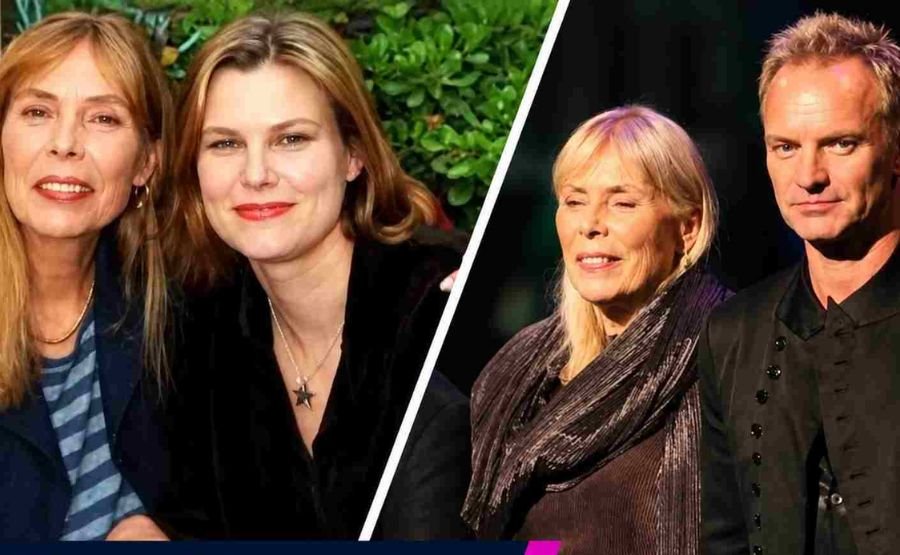
What nobody in Kilauren’s childhood could have known — or perhaps chose not to examine too closely — was how visibly she carried her birth mother’s genetics. Joni Mitchell’s particular physical presence is unmistakable: the bone structure, the colouring, the quality of her gaze. As Kilauren grew from child to teenager to young woman, friends began making the comparison without understanding what they were saying.
They would say to her, “You look like Joni Mitchell.” And she’d laugh it off, because why would that mean anything?
She attended The Bishop Strachan School, a private girls’ school in Toronto with a strong academic tradition, and later studied at George Brown College and the University of Toronto. Her educational path was eclectic in the way that creative, restlessly intelligent people’s paths often are — she absorbed what interested her and moved toward what felt alive.
What felt particularly alive, from an early age, was the camera. Kilauren had the bone structure and presence that modeling agencies look for, and when she was a teenager she began pursuing that path seriously. It was a career built on appearance, on performance, on projecting an identity for other people’s purposes — an interesting occupation for someone whose deepest identity questions hadn’t yet surfaced.
The Modeling Years: A Cover and a Career
By November 1983, Kilauren Gibb was on the cover of Chatelaine, one of Canada’s most widely read women’s magazines. She was eighteen years old. The photograph announced her arrival into professional modeling in the clearest possible way: national visibility, a marquee publication, the kind of credential that opens doors in the Canadian fashion world and beyond.
She modeled for approximately ten to thirteen years, depending on the source. It was steady professional work — the kind that takes a person across cities and continents, in and out of studios and on-location shoots, building the practical resilience that a freelance creative career demands. She traveled. She worked internationally. She built a professional identity as Kilauren Gibb, the model, in a world that knew nothing about the other name she’d been born with.
The career ran parallel to an interior life that was becoming increasingly complicated. Modeling is a profession that puts intense focus on the exterior self while the interior questions sit unanswered. For Kilauren, those questions were gathering weight even as the professional exterior stayed composed.
The Discovery: Pregnancy and a Sealed Secret Opened
The moment everything changed came when Kilauren was twenty-seven years old and pregnant with her first child. The pregnancy — which would produce her son Marlin, fathered by Toronto drummer Paul Kohler — triggered a natural impulse to understand her own medical history. And pursuing that medical history meant, for the first time, confronting the adoption.
Her adoptive parents confirmed it. She had been adopted. The sealed file that governed closed adoptions in Ontario meant the specific details of her origins were not immediately accessible, but the fundamental truth was now spoken aloud: she had been born as someone else, to someone else, under circumstances she knew nothing about.
Reactions to this kind of revelation vary enormously. Some people feel betrayed. Some feel curious. Some feel something like relief — as if a persistent low-frequency confusion about themselves suddenly has a name. Kilauren’s response, by every account, was to search. She wanted to know.
It took five years.
The Search: Five Years and a Fan Website
A unique technical moment occurred in the early 1990s, just before the internet developed into the resource it would soon become, but just after it became enough accessible for motivated individuals. to use as a research tool. Kilauren spent five years combing adoption records, cross-referencing what limited information she could access from Ontario’s closed adoption files, and holding the search in her mind alongside everything else life required of her: raising Marlin, managing a career, navigating a separation from Paul Kohler.
The breakthrough came from an unexpected direction. At a friend’s suggestion, Kilauren went online and found a fan website dedicated to Joni Mitchell — the kind of encyclopedic, lovingly maintained fan site that early internet culture produced. She was browsing it partly because her friends had long told her she looked like Mitchell, and partly because she knew that Joni Mitchell had announced publicly in December 1996 that she was searching for a daughter she’d given up for adoption.
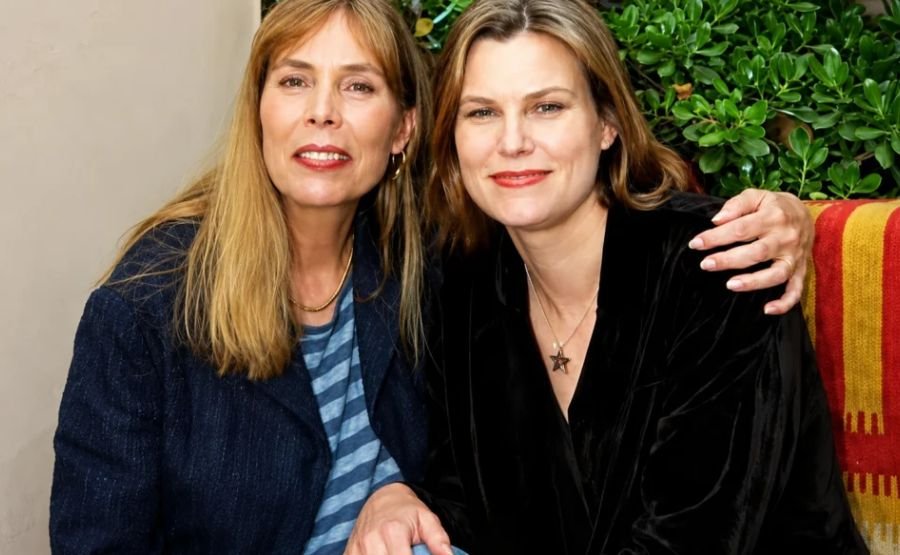
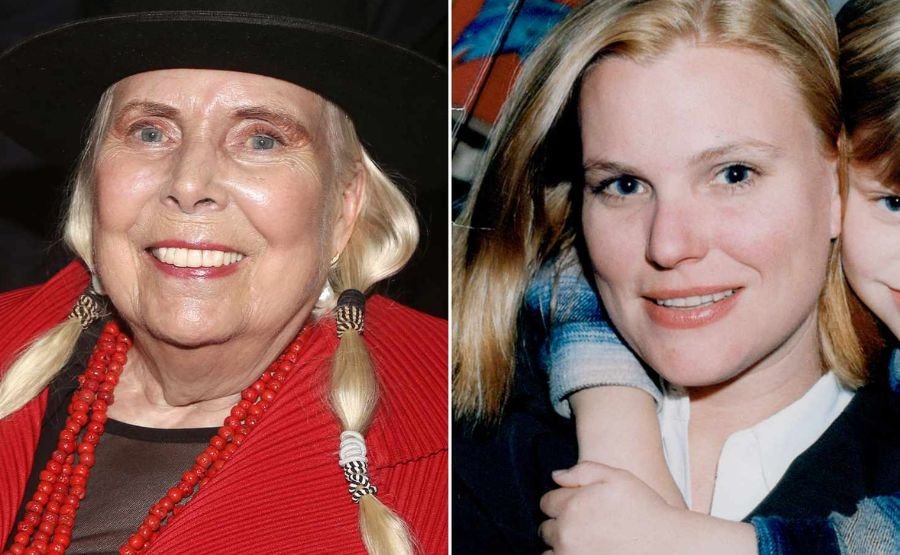
When Kilauren looked at the photographs on that fan site, she understood. The facial structure, the way Mitchell held herself, the particular quality of the woman’s appearance — it was unmistakably familiar in the way that one’s own reflection in an unexpected mirror can stop you cold.
She called Mitchell’s management. She said she needed to speak with someone emotionally attached to Joni Mitchell. The initial response was skeptical — Mitchell’s public announcement had generated dozens of calls from women claiming to be her daughter, and filtering them required care. Kilauren was asked to send photographs of herself as an infant. She did.
The photographs matched records Joni Mitchell had kept for thirty-two years.
The Reunion: Los Angeles, March 1997
On March 13, 1997, Kilauren Gibb flew from Toronto to Los Angeles with her three-year-old son Marlin. A car met her at the airport and took her to Joni Mitchell’s home. In the gathering California evening, Kilauren and Marlin walked through the darkness toward the house — and promptly went to the wrong door first, a small human comedy inside an enormous emotional moment.
When they found the right entrance and Mitchell opened it, thirty-two years of separation collapsed into something neither woman had words for.
Mitchell later described it as the peak experience of her life. Kilauren said she felt immediately that she was home — that the sense of belonging she’d been searching for without fully naming it was suddenly present. Marlin, three years old and uncomplicated by the weight of history, apparently charmed his grandmother immediately.
The visit lasted nineteen days. Both women’s lives would never be entirely the same.
The public response when the reunion became known was enormous — the story captured international attention in the way that human reunion stories do, especially when one of the parties is a person of the level of cultural importance that Joni Mitchell attained. But the emotional reality, underneath the media coverage, was something more complicated and more human than the happy-ending version suggested.
After the Reunion: The Cost of Finding What You Lost
A year after meeting Joni Mitchell, Kilauren gave an interview that offered a more honest account of what reunion actually involves. The joy was real. The sense of completion was real. But the consequences of the reunion rippling through her existing life were also real, and not all of them were comfortable.
Her relationship with lover Edward Barrington, whom she had known since they were both in their teens in 1979, deteriorated. Her frequent trips to Los Angeles to be with Mitchell created distance in Toronto. Barrington and Kilauren had a daughter together, Daisy Claire, but the relationship deteriorated into a custody dispute that became ugly when Barrington was accused of selling photographs from the reunion to tabloid outlets, an allegation he denied.
She also met her biological father, Brad MacMath, a Toronto photographer who had been Joni Mitchell’s boyfriend during their time at the Alberta College of Art. The meeting with MacMath added another layer to the identity reconstruction she was undertaking — a half-brother, Morgan, MacMath’s son from another relationship, suddenly entered her family map. Those who knew both MacMath and Kilauren noted how similar they were in temperament and disposition.
The custody situation with Barrington over their daughter Daisy produced genuine legal and personal turbulence. Court proceedings awarded Barrington limited supervised access. By all accounts, it was one of the most trying times in Kilauren’s life; the delight of biological bonding coexisted with the practical challenges of a life in flux.
Through it all, she described finding her identity not as a simple arrival but as an ongoing process of integration: the Gibb upbringing, the modeling career, the biological inheritance from Mitchell and MacMath, the responsibilities of motherhood, the recalibration of what family meant when your family had suddenly doubled in unexpected directions.
Personal Life: Her Identity Outside of the Narrative
Kilauren Gibb has always been more than the reunion story. She is also someone who spent over a decade building a professional modeling career from genuine ability rather than from connection to a famous name — the Mitchell connection came after most of that work was done. She is a mother who has experienced a great deal of personal turmoil while raising her two children. She is a woman who spent five years searching for something most people take entirely for granted.
Her marriage to Toronto drummer Paul Kohler produced son Marlin, born around 1994. The relationship ended, and they separated. Her subsequent relationship with Edward Barrington produced daughter Daisy Claire but ended in conflict. Reports from some sources indicate she may have married someone named Edward Barrington, though other accounts suggest the relationship ended before any formal marriage. What is consistent across sources is that both Marlin and Daisy are central figures in her life.
She and Joni Mitchell have maintained a relationship through the years that followed their reunion, navigating the complicated emotional territory that biological reconnection at age thirty-two involves. Mitchell’s serious health struggles in later years — including her 2015 aneurysm and long recovery — brought their relationship into further focus, with Kilauren present as part of Mitchell’s family.
Money: A Private Life, Honestly Described
The net worth of Kilauren Gibb is not made public. She has not given public financial interviews, does not operate social media profiles, and has kept her private life genuinely private in the decades since the reunion’s initial media frenzy.
What can be said honestly: a decade-plus modeling career in Canada provides steady but not extraordinary income. She is not wealthy in the way that a pop culture figure might be. She has never monetized the Mitchell connection — she has given limited interviews over the years and has not written a memoir, launched a brand, or sought celebrity status of her own.
Her mother Joni Mitchell, by contrast, has a net worth estimated at approximately $100 million. Whether and how that wealth affects Kilauren’s financial life is genuinely unknown and not something Kilauren has discussed publicly.
She appears to live a modest, grounded life in Toronto, focused on her family rather than on the spotlight.
What She’s Doing Now
Kilauren Gibb will be sixty-one in 2026. Her son Marlin is now in his early thirties. Her daughter Daisy Claire is in her late twenties or early thirties. The reunion that made global news nearly three decades ago has settled into the quieter, more ordinary texture of a family relationship — present, ongoing, navigated week by week rather than celebrated in press conferences.
She has been remarkably consistent in protecting her privacy. In a time when such intimate tales are regularly adapted into films, podcasts, and memoir deals, Kilauren has refused to do any of those things. The story of Kelly Dale Anderson becoming Kilauren Gibb and finding Joni Mitchell has been told primarily by journalists and biographers rather than by her.
She remains in Toronto, as far as public records suggest, living the private life she has consistently prioritized.
Final Words
Kelly Dale Anderson’s story carries something genuinely universal inside its very specific circumstances. The desire to know where you come from — to hold your origins in your hands and understand what was passed to you and what you built yourself — is not a celebrity story. It’s a human one.
What sets Kilauren Gibb’s version apart is what she did with the solution once she discovered it. She didn’t become famous on the strength of her mother’s fame. She didn’t write the book or sell the documentary rights. She found her mother, integrated that discovery into her existing life as best she could, raised her children, and went about being a person rather than a story.
The song “Little Green,” which Joni Mitchell wrote about her missing daughter and released on the 1971 album Blue, contains one of Mitchell’s most luminous and heartbreaking lyrics — a letter to a child she wasn’t sure she’d ever see again. When Kilauren finally heard it understood — not as a famous song but as her mother’s voice reaching across three decades to find her — the private interior of that song became something different entirely.
That’s the core of Kelly Dale Anderson’s life. A name given, a name changed, a face recognized in a computer screen, and thirty-two years of silence finally broken. Not a tidy story. But a true one.
FAQs
1. Who is Kelly Dale Anderson?
Kelly Dale Anderson is the birth name of Kilauren Gibb, the biological daughter of legendary Canadian singer-songwriter Joni Mitchell. She was born on February 19, 1965, in Toronto, Ontario, placed for adoption at eight months old, raised by Toronto schoolteachers David and Ida Gibb as Kilauren Gibb, and found Joni Mitchell again in 1997 following a five-year search.
2. What was the reason for Kelly Dale Anderson’s adoption?
Joni Mitchell was an unmarried art student in 1965 facing severe financial hardship and the intense social stigma that unmarried motherhood carried in that era. She briefly married folk singer Chuck Mitchell partly to provide legitimacy for the pregnancy, but the marriage had no real foundation and dissolved. Unable to provide financial and practical stability for an infant, Mitchell made an adoption plan for her daughter.
3. Who raised Kelly Dale Anderson?
She was adopted at eight months old by David and Ida Gibb, schoolteachers from Toronto who already had a son named David. They raised her in the Don Mills neighborhood of Toronto after renaming her Kilauren Gibb. She has spoken warmly of her upbringing in the Gibb household as stable and loving.
4. Kilauren Gibb found out she was adopted when?
She discovered she was adopted at age twenty-seven, when she was pregnant with her first child, son Marlin, and sought out her medical history. At that point, the adoption was confirmed by her adoptive parents.
5. How was Joni Mitchell discovered by Kilauren Gibb?
After five years of searching through Ontario adoption records and other sources, Kilauren found an encyclopedic fan website dedicated to Joni Mitchell in the mid-1990s. Looking at photographs of Mitchell — and knowing that Mitchell had publicly announced she was searching for a daughter she’d given up — she recognized the resemblance and contacted Mitchell’s management. Infant photographs she faxed to the management team confirmed the match.
6. When and where did the reunion happen?
The reunion took place on March 13, 1997, at Joni Mitchell’s home in Los Angeles. Marlin, Kilauren’s three-year-old son, and she took a plane from Toronto. The initial visit lasted nineteen days and was widely covered in the international media when it became public knowledge.
7. Who is Kilauren Gibb’s biological father?
Brad MacMath, a photographer from Toronto who dated Joni Mitchell while they were both enrolled at the Alberta College of Art in Calgary, is her biological father. After getting back together with Mitchell, Kilauren met MacMath. MacMath had a son, Morgan, from another relationship — making him Kilauren’s half-brother.
8. What was Kilauren Gibb’s modeling career?
She worked as a professional model for approximately ten to thirteen years, beginning as a teenager. Her most notable public credit was appearing on the cover of Chatelaine magazine in November 1983, when she was eighteen years old. The career gave her international work experience and sustained professional income through much of her twenties and early thirties.
9. Does Kilauren Gibb have children?
Yes, two. She married Toronto percussionist Paul Kohler in 1994, and the two eventually divorced, giving birth to her son Marlin. Her later connection with Edward Barrington, a childhood friend who reappeared in her life around the time of the Mitchell reunion, gave birth to her daughter Daisy Claire. After that relationship ended, there was a custody battle for Daisy.
10. What happened between Kilauren Gibb and Edward Barrington?
Edward Barrington was someone Kilauren had known since they were teenagers in 1979. Around the time of the Mitchell reunion, they got back in touch and became parents to Daisy Claire. The relationship later deteriorated, and Barrington was accused of selling photographs from the reunion to tabloid outlets — allegations he denied. Court proceedings awarded him limited supervised access to their daughter.
11. What is Kelly Dale Anderson’s net worth?
Her personal financial situation is not publicly disclosed. She has built no public profile beyond what the Mitchell reunion generated, has not monetized the association, and has given very limited interviews. A decade-plus modeling career provides a baseline, but she lives privately and her finances remain her own business. Her mother Joni Mitchell has an estimated net worth of around $100 million, but what flows from that to Kilauren is unknown.
12. Where is Kilauren Gibb now?
As of 2026, she is sixty-one years old and lives privately in Toronto, Canada. She maintains a relationship with Joni Mitchell, who has had significant health challenges in recent years. Her children Marlin and Daisy Claire are now adults. She has consistently declined the celebrity exposure that her story could have generated and remains, by deliberate choice, out of the public eye.