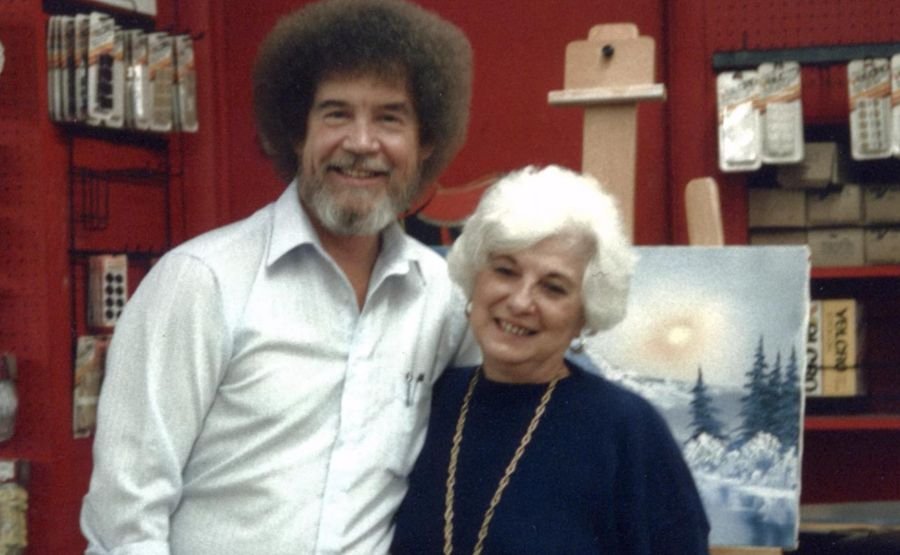
Bob Ross Married: The Man Behind the Happy Little Trees
Quick Bio
| Detail | Information |
| Full Name | Robert Norman Ross |
| Born | October 29, 1942, Daytona Beach, Florida, USA |
| Died | Orlando, Florida, USA, July 4, 1995 (age 52) |
| Nationality | American |
| Occupation | Painter, art instructor, television host |
| Known For | Hosting The Joy of Painting on PBS (1983–1994); wet-on-wet oil painting technique; “happy little trees” |
| Military Service | 1961–1981 in the U.S. Air Force; retired as a Master Sergeant |
| Marriages | Vivian Ridge (1965–1977); Jane Lee Zanardelli (1977–1992); Lynda Brown (1995) |
| Children | Two sons: Steve Ross (b. 1966, with Vivian) and Jimmie Cox (half-brother, pre-marriage) |
| Business | Co-founded Bob Ross Inc. with Annette and Walt Kowalski |
| Cause of Death | Lymphoma |
| Legacy | One of the most recognizable television personalities in American cultural history |
Why Bob Ross Still Matters
Here’s something that says a lot about Bob Ross: a man who died in 1995 at fifty-two years old is currently more famous than he was at the peak of his television career. His show was beloved when it ran, but it was never a smash ratings hit. It aired on PBS, it reached a devoted but modest audience, and when it ended in 1994, there was no particular fanfare.
Then the internet happened. Then YouTube. Then streaming. And somewhere along the way, the quiet man with the paint-covered brushes and the forest of curls became a cultural phenomenon — a shorthand for gentleness, patience, and the radical idea that creating something beautiful doesn’t require talent as much as it requires permission.
Millions of people heard him say that mistakes were simply happy accidents. That you couldn’t make a wrong decision in your painting, only a different one. In a world that grew progressively louder and more critical, those words aged remarkably well.
But the man behind those words was more complicated than the television persona. His life involved military discipline, personal loss, three marriages, a business dispute that consumed his legacy, and a death that came far too soon. That’s the story worth knowing.
Florida Boy: Daytona Beach and a Difficult Start
Jack and Ollie Ross welcomed Bob Ross into the world on October 29, 1942, at Daytona Beach, Florida. The family was not wealthy. His father Jack was a carpenter, and Bob grew up learning to work with his hands alongside him. That early education in physical craft — measuring, cutting, building — left its mark. He approached painting the same way he approached carpentry: systematically, efficiently, with a deep respect for getting things right.
His childhood wasn’t without its complications. While helping his father on a job, the young Bob caught his left index finger in a saw, losing a portion of the finger in the accident. It would seem the kind of setback that might discourage a person from ever working with precision tools again. It didn’t. He kept building things. He kept using his hands.
He also had partial Cherokee ancestry through his family, something he was proud of and acknowledged openly. The connection to nature that would become the defining visual language of his art wasn’t simply aesthetic — it was personal.
Eighteen Years Old and Into the Air Force
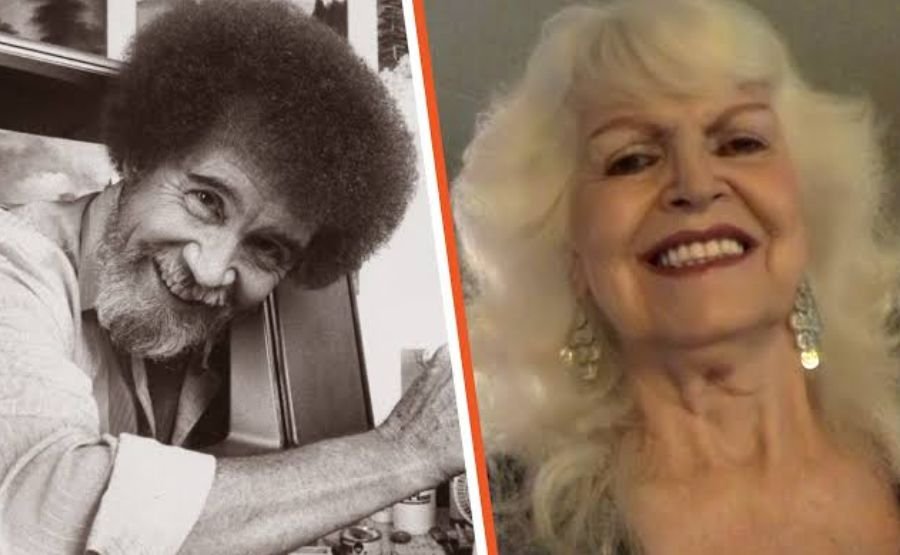
In 1961, at age eighteen, Bob Ross enlisted in the United States Air Force. It was a move that would reshape the entire trajectory of his life in ways nobody could have predicted when he signed the papers.
He was assigned work as a medical records technician — not a glamorous role, but a disciplined one, requiring precision and attention to detail. He rose through the ranks steadily. By the time his military career concluded two decades later, he had reached the rank of Master Sergeant and served as First Sergeant of the base clinic at Eielson Air Force Base near Fairbanks, Alaska.
That posting to Alaska is where the story gets interesting. He would later describe his military self as genuinely harsh — a man who yelled, who pushed, who carried the kind of authority that the Air Force specifically cultivates in its senior NCOs. He swore that if he ever left that life, he would never raise his voice at anyone again. He kept that promise.
But Alaska also gave him something he hadn’t expected. The landscape was overwhelming — mountains that seemed to have no ceiling, forests that stretched without end, skies that shifted through colors no painter could have invented. He started attending an art class at the local USO club. He discovered that he could paint. Not just adequately, but prolifically. He would eventually be selling small paintings of Alaskan scenes at a gift shop for twenty-five dollars apiece, earning more from those paintings than from his military salary.
He also discovered, while working a part-time bartending job during this period, a television program that changed everything. It was hosted by a German-accented painter named William Alexander who called himself Bill, and the show was called The Magic of Oil Painting. Alexander painted fast. He painted confidently. He used a technique called wet-on-wet, applying fresh paint directly over still-wet existing paint without waiting for layers to dry, which allowed complete paintings to emerge in under an hour. Bob watched, and he understood immediately that this was what he had been looking for.
From Sergeant to Student: The Making of a Painter
In 1981, Bob Ross left the Air Force with a plan and his rank of Master Sergeant. He returned to Florida and found Bill Alexander, learning the wet-on-wet technique directly from its television popularizer. He joined Alexander’s “Magic Art Supplies Company” and began working as a traveling art instructor and salesman — traveling from city to city, running workshops, selling supplies, demonstrating technique.
He was good at it. Genuinely good. He had the patience for it, the warmth for it, and something the camera would eventually recognize immediately: a presence. When Bob Ross stood in front of a canvas and began to talk, people listened. They leaned in. Something in his voice and manner communicated that everything was going to be fine.
In Clearwater, Florida, one of those traveling workshop sessions was attended by a woman named Annette Kowalski. She had come to learn painting. What she recognized instead was a star. She approached Ross and suggested he could have his own show. She and her husband Walt were prepared to help make it happen.
The three of them pooled their resources and founded Bob Ross Inc. in 1982. That same year, a local PBS station aired a pilot version of his art instruction program. The response was strong enough that additional PBS stations signed up. By 1983, The Joy of Painting was running nationally.
The Joy of Painting: Thirty-One Seasons of Happy Accidents
The show filmed at WIPB-TV in Muncie, Indiana, and the format was startlingly simple. Bob Ross stood at a canvas for roughly twenty-six minutes and painted a landscape while talking to the viewer. That was it. No guests, no competition, no drama. Just a man, some brushes, cadmium yellow and titanium white and phthalo blue, and a voice that made the whole thing feel like a conversation between friends.
He finished a complete painting in every episode. Mountains. Cabins. Waterfalls. Pine forests — always referred to as “happy little trees.” Clouds that he called “fluffy” and treated with the same tender care he gave to everything else in his pictorial world.
He filmed thirty-one seasons between 1983 and 1994, producing 403 episodes. He painted over thirty thousand paintings in his lifetime. The technique he used, the specific brushwork, the vocabulary — the happy accidents, the two-inch brush, the fan brush loaded with color and dragged across a canvas — became as recognizable as any cultural artifact of the era.
His son Steve appeared on the show multiple times, learning under his father’s guidance and eventually becoming a certified Bob Ross instructor himself. The appearances were warm and genuine, a father and son sharing something they both loved.
What most viewers didn’t know was that the show paid Bob Ross essentially nothing. PBS operated as a public broadcaster. The revenue model for Bob Ross Inc. was not the television program itself — it was the ecosystem built around it: instructional videos, art supply kits, books, certified instructors, workshops. The show was, in effect, the most effective advertisement in history for a mid-sized art supplies company.
Three Marriages, Three Very Different Stories
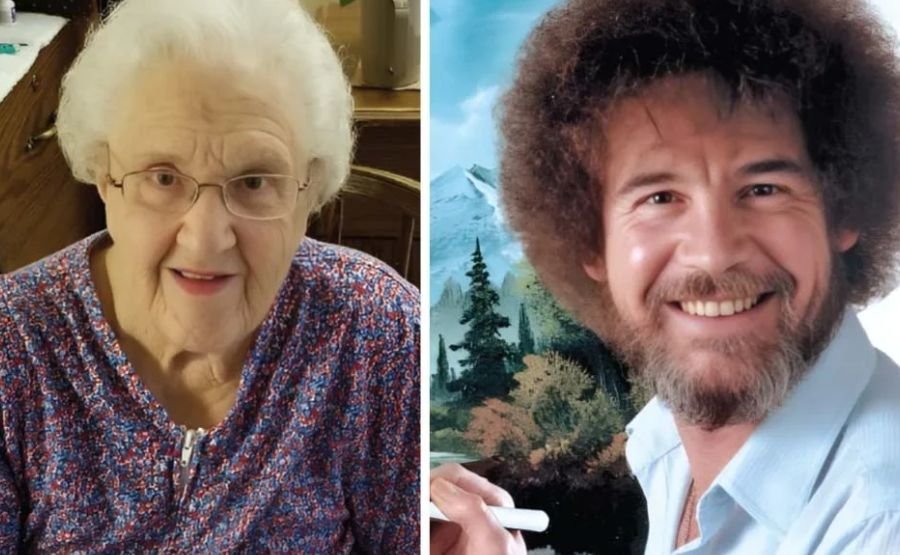
Bob Ross’s personal life was defined by love in several forms, and also by significant loss.
His first wife was Vivian Ridge, whom he married on May 28, 1965, while still in the Air Force. They had one son together, Robert Stephen — known as Steve — born on August 1, 1966. Steve would become a painter, would appear alongside his father on television, and would later become the center of a bitter legal dispute over his father’s legacy.
Bob and Vivian divorced in 1977 after twelve years. The specific reasons were never made public. Both moved on with their lives.
The same year the divorce was finalized, Bob married Jane Lee Zanardelli. Jane was a painter who had been a student in one of his workshops — her interest in oil painting had drawn her to his sessions, and what began as an instructor-student relationship developed into something deeper. They married in April 1977 and remained together for fifteen years. Jane became genuinely central to his creative and professional life — Bob Ross Inc. was co-founded not just with the Kowalskis but with Jane’s active involvement and participation.
In 1992, Jane was diagnosed with cancer. She died that same year. Bob was devastated. He stopped filming The Joy of Painting for a period, unable to continue. The man who told millions of viewers that there were no mistakes, only happy accidents, was encountering a reality that no reframing could soften.
He eventually returned to the show and completed the final seasons. But the loss of Jane left a mark that people who knew him described as permanent.
Three years later, his own diagnosis arrived. Lymphoma. He had been fighting it quietly, and he continued trying to paint and teach while his health declined. In 1995, he met Lynda Brown, a nurse, while she was caring for him. They married just two months before his death. On July 4, 1995 — American Independence Day — Bob Ross died in Orlando at the age of fifty-two.
The marriage to Lynda, brief as it was, appears to have been a final expression of his unwillingness to let difficulty stop him from living. He married her knowing he was dying. That choice says something about the man.
The Legacy Battle That Nobody Expected
After his death, the story became considerably darker than the television persona ever suggested.
Bob Ross had updated his will shortly before dying, leaving the rights to his intellectual property — including his name and likeness — to his son Steve and his half-brother Jimmie Cox. This was a significant document. The rights to Bob Ross were worth, and would become worth, an enormous amount of money.
What followed was years of legal combat. Annette and Walt Kowalski, through Bob Ross Inc., contested the will and asserted control over the company and its assets. By 1997, Steve and Jimmie had effectively lost — Bob Ross Inc. was controlled by the Kowalskis, who could license the Bob Ross name and image for products, collaborations, and commercial ventures without any financial benefit flowing to the family.
Steve Ross filed another lawsuit in 2017, after discovering what he believed were the specifics of his father’s intentions. That case also failed. Bob Ross Inc., now run by the Kowalskis’ daughter, continues to control the brand.
The whole conflict came to light in the 2021 Netflix documentary Bob Ross: Happy Accidents, Betrayal & Greed. Walt Kowalski and Annette choose not to take part. Steve Ross’s account of his father’s wishes, and what he describes as a systematic campaign to strip the family of everything Bob meant to leave them, became the central narrative of the film.
What viewers were left with was a collision between the warmth of the television legacy and the grimness of what followed. Steve Ross maintains to this day that his father’s wishes were overridden. Bob Ross Inc. maintains that everything was done properly.
Money: Where It Went and Why It Matters
Bob Ross himself, despite being one of the most recognizable television personalities of his era, died without significant personal wealth. The Bob Ross Inc. business model. was real and profitable, but Bob’s compensation arrangement meant that the financial rewards accumulated within the company structure rather than to him personally. He didn’t mind, by most accounts. He was painting. He was teaching. He was doing what he loved.
His net worth at the time of his death was modest by the standards of celebrity — estimates in the range of two to three million dollars, most of which was tied up in the company he had co-founded.
After his death, the brand became genuinely lucrative. Licensing deals, merchandise, digital rights, the viral cultural resurgence — all of it generated significant income. All of it, legally, flowed through Bob Ross Inc. and away from his children.
That gap between the television legacy and the financial reality is part of why the Netflix documentary resonated so strongly. The man who made everyone feel like they could paint, who gave away his technique and his warmth freely on public television, died without having secured what he built for the people he loved most.
Final Words
Bob Ross died over thirty years ago. He never owned a smartphone. He never had a social media account. He never saw the internet. And yet, more people know his voice and his face today than knew them when he was alive.
What that tells you is something about the specific thing he offered. In every episode, he gave permission. He said: you can do this, it won’t be perfect, that’s fine, make a happy accident out of whatever goes wrong. That message — applied to a canvas, applicable to anything — found new audiences in every era that encountered it.
The personal life behind the television persona was more complicated, more human, and in some ways more poignant than the warm gentle image he projected. He lost his second wife to cancer. He married his third knowing he was dying himself. He watched a legal battle over his legacy unfold in ways he almost certainly hadn’t anticipated when he made his final will.
But he also painted thirty thousand paintings. He taught an estimated thirty million people, through television alone, that beauty was accessible. He yelled at no one after the Air Force. He called the trees happy and meant it.
That combination — the gentleness he chose, the technique he mastered, the television legacy he built, and the complicated human story underneath all of it — is what makes Bob Ross genuinely worth knowing.
FAQs
1. How many times was Bob Ross married?
Three times. He married Vivian Ridge in 1965 and they divorced in 1977. He then married Jane Lee Zanardelli the same year, and she died of cancer in 1992. His third marriage was to Lynda Brown, a nurse, in 1995 — just two months before his own death in July of that year.
2. Who was Bob Ross’s first wife?
Vivian Ridge, whom he married on May 28, 1965, while still serving in the Air Force. She was an artist herself and had studied art history at Wake Forest University. They had one son together, Steve Ross, born in 1966. The marriage ended in divorce in 1977.
3. Who was Bob Ross’s second wife?
Jane Lee Zanardelli, whom he married in April 1977 after his divorce from Vivian. Jane had been a student in one of his oil painting workshops. She became an active partner in Bob Ross Inc., the company he co-founded with Annette and Walt Kowalski. She died of cancer in 1992 after fifteen years of marriage.
4. Who was Bob Ross’s third wife?
Lynda Brown, a nurse who cared for Bob during his illness. They married in 1995, the same year Bob died of lymphoma. Their marriage lasted approximately two months.
5. How many children did Bob Ross have?
He had two sons. Steve Ross was born on August 1, 1966, from his marriage to Vivian Ridge. Steve became a painter and certified Bob Ross instructor, appearing multiple times on The Joy of Painting. Bob also had a half-brother named Jimmie Cox, who is sometimes referred to in documents related to Bob’s estate; some sources list Jimmie as a son from before his first marriage.
6. How did Bob Ross become famous?
He served in the Air Force for twenty years, discovered painting while stationed in Alaska, and learned the wet-on-wet technique from German painter Bill Alexander. After retiring from the military in 1981, he was discovered by Annette Kowalski at a traveling workshop. She and her husband Walt partnered with Ross to co-found Bob Ross Inc. and pitch his format to PBS, leading to the launch of The Joy of Painting in 1983.
7. How many seasons did The Joy of Painting run?
Thirty-one seasons, aired between 1983 and 1994. That produced 403 episodes. In each episode, Bob painted a whole landscape.
8. How did Bob Ross die?
On July 4, 1995, he passed away in Orlando, Florida, from lymphoma. He was fifty-two years old. His death came just two months after his third marriage and shortly after the conclusion of his television series.
9. What happened to Bob Ross’s legacy after he died?
Steve Cox, his son, and Jimmie Cox, his half-brother, inherited the rights to his intellectual property. However, his business partners Annette and Walt Kowalski contested control of Bob Ross Inc. and effectively won, gaining full control of the brand and its licensing rights. Steve Ross filed additional lawsuits, most recently in 2017, without success. The 2021 Netflix documentary Bob Ross: Happy Accidents, Betrayal & Greed brought the dispute to wide public attention.
10. Did Bob Ross have a lot of money when he passed away?
No. Despite being one of the most recognizable television personalities of his era, Bob Ross died with relatively modest personal wealth — estimated at two to three million dollars, A large portion of it is linked to Bob Ross Inc.’s organizational structure. The brand became far more financially valuable after his death, with licensing revenue that has continued to grow through streaming, merchandise, and commercial partnerships.
11. What is wet-on-wet painting?
It is a technique also known as alla prima, in which fresh paint is applied directly onto still-wet existing paint rather than waiting for layers to dry. This allows a complete painting to be executed in a single session. Bob Ross learned the technique from Bill Alexander and refined it into a faster, more accessible method that could be taught in a half-hour television format.
12. Was the Bob Ross on television the real Bob Ross?
Essentially yes, according to his son Steve and others who knew him. The gentle warmth, the love of nature, the patience — those were genuine. What the show didn’t show was that Bob had been a demanding Air Force first sergeant earlier in his life, that he was running a significant business behind the scenes, and that his personal life had its share of grief and difficulty. But the man on camera was not performing a character. He was choosing, every single episode, to be the best version of himself.
Explore stories that inspire curiosity with The Imperial Magazine.





2 Comments