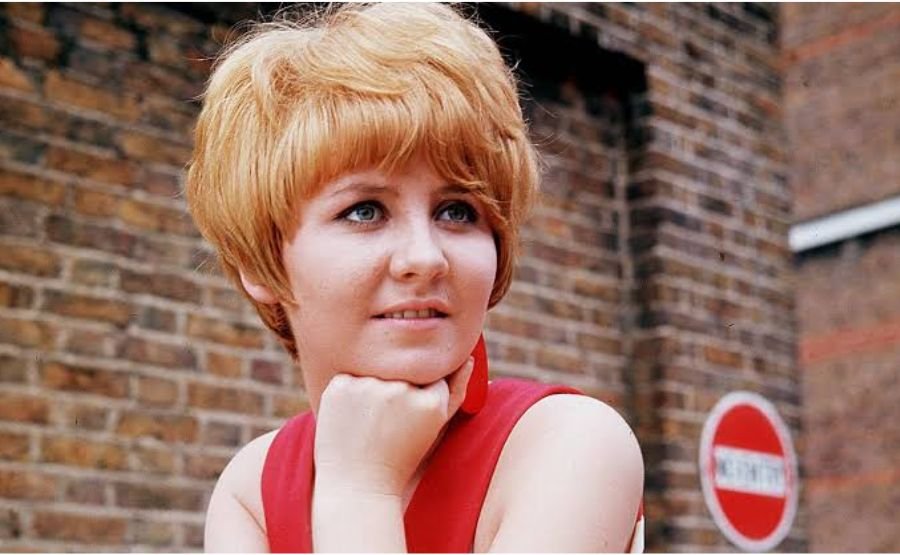
Lulu Singer British: How a Scottish Singer Became a Global Icon
Quick Bio
| Detail | Information |
| Full Name | Marie McDonald McLaughlin Lawrie (stage name: Lulu; legal name after marriage: Lulu Kennedy-Cairns) |
| Born | November 3, 1948 — Lennoxtown, Stirlingshire, Scotland |
| Nationality | British (Scottish) |
| Occupation | Singer, songwriter, actress, television personality |
| Known For | “To Sir, With Love” (1967); “Boom Bang-a-Bang” (1969); “Relight My Fire” with Take That (1993) |
| Career Span | 1964 to present — over six decades |
| Honours | OBE (2000); CBE (2021) for services to music, entertainment and charity |
| Marriages | Maurice Gibb (1969–1975); John Frieda (1977–1991) |
| Children | One son — Jordan Frieda (born 1977) |
| Estimated Net Worth | Approximately $30 million |
Scotland’s Most Durable Voice
Let’s start with something that doesn’t get said enough: very few artists survive sixty years in the entertainment business. The ones who do usually have something the others don’t — a quality that goes beyond a good voice or a catchy song. They have staying power rooted in character.
Lulu has that quality in abundance.
She grew up without money in a working-class part of Glasgow, sang before she could read a clock properly, got famous before she could legally drink, won Eurovision, made one of the biggest-selling singles in American chart history, married a Bee Gee, divorced him, married a famous hairdresser, raised a son, got divorced again, reinvented herself multiple times across multiple decades, and arrived at her late seventies with a CBE, an estimated $30 million, and an audience that still fills venues.
The name on her birth certificate — Marie McDonald McLaughlin Lawrie — tells you everything about where she came from. The name on every marquee for the last sixty years tells you everything about where she ended up.
See also “David Mitchell and Victoria Coren: The Story Behind Their Marriage and Family Life“
A Glasgow Childhood: Loud, Warm, and Tight for Money
Lulu was born on November 3, 1948, in Lennoxtown, a small town in Stirlingshire just north of Glasgow. Her family moved to the Dennistoun area of Glasgow when she was very young — a dense, lively, urban neighbourhood that shaped her in ways she’s talked about throughout her career. It wasn’t a wealthy upbringing, to put it mildly. Her father worked in the meat trade, and money was genuinely scarce. Her mother reportedly hid cash under the carpet and the kitchen linoleum — the kind of saving that happens when you don’t trust that there’ll be enough next week.
There were two brothers and a sister. The household was full and noisy, which seems to have suited Marie just fine. She sang from the moment she had the coordination to do it. By the time she was four years old, she’d already performed for an audience — at a neighbourhood Coronation party, getting up in front of people with the easy fearlessness that some children just seem to be born with.
She attended Thomson Street Primary School and Onslow Drive School in Dennistoun, and her teachers almost certainly knew before long that there was something unusual about this girl. Not because she was the quietest student in the room. Quite the opposite.
By the time she was nine, she was performing at the Bridgeton Public Hall. By ten, she was a regular with a local accordion band. Let that sink in — before double digits, she was performing regularly with adult musicians. Talent at that age and that frequency of performance is not something you manufacture. It’s something that comes out of the person whether the circumstances encourage it or not.

The Teenager Who Was Too Much to Ignore
When you picture the teenage Lulu — Marie, technically, at this point — picture energy. Real, almost physical, kinetic energy. She was small and loud and raw in the way that great singers often are before they’re polished, before producers and management smooth the rough edges down. Not everyone who encountered her knew what to do with it.
Around the age of twelve or thirteen, she pushed her way into performing with a group called the Bellrocks, showing up week after week on Saturday nights until she was simply part of the furniture. The bass player from that group would later recall that even then, the voice was something else. You didn’t need to be a professional to recognize it.
By the time she was fourteen, she’d joined a local group called the Gleneagles, who were playing clubs and small venues in Glasgow and Edinburgh. They were a proper beat group — guitar-heavy, energetic, the kind of sound that was sweeping British youth culture in the early 1960s in the wake of what was coming out of Liverpool and London. Marie was their singer, and she threw herself into it the way she did everything else: completely.
The turning point came at a Glasgow discothèque called Le Phonographie in 1962 or 1963, when a woman named Marion Massey came in and heard them play. Massey was a music manager in an era when that was almost exclusively a man’s job. She was raising three young children at the time, running her household and her professional life simultaneously — which tells you something about the kind of person she was. She heard the Gleneagles, and she heard Marie Lawrie in particular, and she signed them.
The first thing she did was rename them. The group became Lulu and the Luvvers. And Marie became Lulu — because Massey looked at this ferociously energetic fourteen-year-old girl and thought: she’s a real lulu of a kid. The word, in old-fashioned American slang, means something exceptional, remarkable, hard to categorize. It stuck. It has never left.
The Rocket Goes Up: Shout, Sidney Poitier, and Eurovision
Massey landed the group a recording contract with Decca Records in 1964, and their debut single was a cover of the Isley Brothers’ “Shout.” If you’ve never heard Lulu’s version, find it. It is not a polite interpretation. She takes a song that was already energetic and turns it into something almost alarming — a fifteen-year-old girl from Dennistoun screaming at the top of her lungs with perfect control and zero inhibition. In the UK singles chart, it peaked at number seven. For a debut single from a teenager with a backing band that few people had heard of, that was extraordinary.
The band continued for a couple more years before Lulu transitioned to a solo career, working with producer Mickie Most — one of the shrewdest ears in British pop at the time — on a string of seven consecutive charting singles. She also began establishing herself on television, co-hosting a music programme called Gadzooks! It’s the In-Crowd in 1965, which introduced her to a different kind of audience: the kind that watched TV rather than just went to clubs.
Then came 1966: Lulu toured Poland with the Hollies, becoming the first British female singer to perform live behind the Iron Curtain. That was a genuine piece of history, though it was about to be overshadowed.
In 1967, everything changed.
She was cast alongside Sidney Poitier in To Sir, With Love — a film about a Black teacher in a rough East London school, navigating prejudice and connecting with difficult students. It was a serious film with serious subject matter, and Lulu, barely nineteen, held her own in it. But the moment that changed her life was the theme song. She recorded it as a B-side, which in the UK was considered the throwaway side of a single. But American disc jockeys heard it, flipped the record, and started playing it instead of the A-side. And then it went to number one on the Billboard Hot 100 — not just for a week, but for five consecutive weeks — and became the biggest-selling single during the whole year 1967 in the United States. In a year that also included tracks from the Beatles and the Rolling Stones, a nineteen-year-old Scottish girl with a B-side nobody expected to matter was sitting at the top of the American charts.
She wasn’t even famous in America before that. She very much was afterwards.
Two years later came Eurovision. Lulu represented the UK at the 1969 contest with “Boom Bang-a-Bang” — a song that is cheesy in the best possible way, perfectly engineered for the occasion, and enormous fun. She won. Well — she tied for first with three other entries, in what remains one of Eurovision’s most chaotic results. But she went up on that stage and she won it, and the UK went along with her. In the UK, the song peaked at number two.
By the time she was twenty-one, she had a number one American single, a Eurovision win, a film career, and a television profile. The girl from Dennistoun had rather comprehensively arrived.
Love, the Bee Gees, and a New Chapter
The personal and professional ran together in 1969 in a way that Lulu would later describe with characteristic frankness.
She met Maurice Gibb backstage at Top of the Pops. He was nineteen; she was twenty. He was the youngest Bee Gee, the bass player and keyboardist in the most successful group in Britain at that particular moment. By her own account, she noticed him noticing her, decided she’d like to meet him, and arranged for it to happen. They fell in love quickly and married the same year — the wedding taking place just weeks before her Eurovision appearance, which meant their honeymoon was squeezed around a song contest.
The marriage was opposed by Maurice’s older brother Barry, who had concerns about the speed of it all. Those concerns were not unfounded. Both parties were young, both were famous, both were navigating enormous careers while trying to also navigate each other, and Maurice was developing a serious problem with alcohol that would shadow him for much of his adult life.
They stayed together for five years. Lulu has talked about it with honesty in interviews — that she loved him, that she thought they could have it all, that the reality of someone’s illness is different from anything you imagine before you’re inside it. They divorced in 1975 and remained friends until Maurice’s death from a sudden illness in 2003. She attended his funeral. That tells you something about how the ending was handled.
In the early 1970s, Lulu’s BBC television show gave her a platform that kept her visible across British living rooms even as the pop landscape shifted around her. It was there she hosted remarkable moments, including a live performance session in which David Bowie appeared and performed his own song “The Man Who Sold the World” — a song that had barely registered on the charts when he released it. Lulu then recorded her own version, which reached number three in the UK and introduced the song to far more people than Bowie’s own release had managed to.
She also sang the title theme to the James Bond film The Man with the Golden Gun in 1974, joining an exclusive group of artists attached to that franchise.
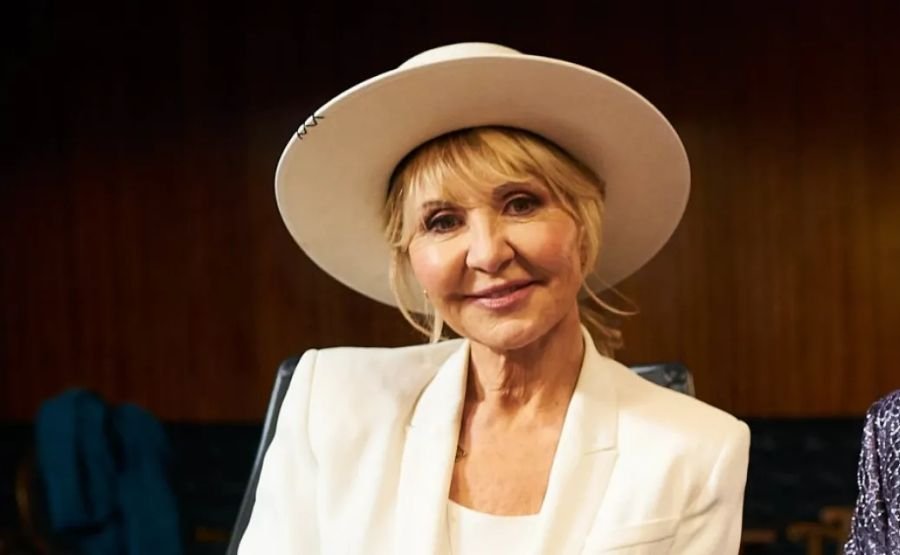
Reinvention, a New Marriage, and the Quiet Years
Two years after her divorce from Maurice Gibb, Lulu married John Frieda — at the time a rising celebrity hairstylist, later one of the most successful names in the professional haircare industry. Two months after the wedding, she discovered she was pregnant. June 1977 saw the birth of their son, Jordan.
The marriage lasted fourteen years, and by Lulu’s own account it was a gentler, more private kind of life than her first. She kept working — television appearances, pantomimes, the occasional single — but she wasn’t at the centre of pop culture the way she had been in the late 1960s. The industry had moved on, and she moved with it at a somewhat quieter pace.
She and John separated in 1991. Jordan, then a teenager, went to live with his father in America. Lulu has spoken in interviews about the difficulty of that period and about the complexity of her relationship with her son over the years — the distances, the regrets, the eventual rebuilding. She has said he has forgiven her for the things that needed forgiving, which is both a painful thing to acknowledge publicly and a brave one.
The 1990s Comeback: Independence and Fire
The early 1990s turned out to be a surprisingly good time for Lulu.
She released an album called Independence in 1993, and co-wrote a song called “I Don’t Wanna Fight” with her brother — a song that ended up being recorded by Tina Turner for her biographical film What’s Love Got to Do with It. Having a writing credit on a Tina Turner track is not a small thing.
But the real moment came later in 1993 when she was asked to feature on a cover version of “Relight My Fire” by Take That, the British boy band who at that point were about as famous as you could be in the UK. The record reached number one after she was featured on it. Her first ever chart-topper in the UK — at the age of forty-four, nearly thirty years into her career. The record industry has a tendency to make older women invisible. Lulu’s response to that tendency was to make a number one single and get on with it.
She performed it when she was on Top of the Pops. A new generation, many of whom had no idea who she was beyond “the woman on the Take That record,” got curious and looked up what she’d been doing for the previous three decades.
Honours, Legacy, and What She’s Worth
In 2000, Lulu was appointed an Officer of the Order of the British Empire — an OBE — recognising her contribution to music and entertainment over four decades. In 2021, that was upgraded to a CBE, Commander of the British Empire, for continued services to music, entertainment, and charity. She has spent decades supporting various causes and appears at charitable events as a genuine participant rather than a name-on-the-letterhead figurehead.
She is thought to be worth about $30 million. It’s accumulated steadily over sixty years of recording, performing, television work, occasional songwriting royalties, and business interests. It is the net worth of someone who has worked continuously and managed what they earned rather than someone who made one enormous hit and coasted. Her song catalogue alone generates ongoing royalties — “To Sir, With Love” in particular, which has been licensed and covered and used in film and television for more than half a century.
Where She Is Now
In 2024, Lulu completed her farewell tour, called “Champagne for Lulu” — a celebration marking sixty years since “Shout” first charted in 1964. The shows sold well. She performed at Glastonbury. By all accounts the farewell had the emotional weight that these occasions deserve when the artist is someone who has genuinely given that long to their craft.
At seventy-seven, she remains one of the most recognisable faces and voices in British entertainment. She appears on television regularly. She talks openly in interviews about ageing, about her relationships, about her son, about the industry’s treatment of women, about Botox (she has had it; she considers it a poison, like chocolate). She is not someone who has retreated gracefully into elder-stateswoman silence. She remains forthcoming, opinionated, and funny.
That’s not a late-career affectation. That’s who she has always been. The girl who walked into rooms at fourteen and refused to be overlooked grew into a woman who has been impossible to overlook for sixty years, across every format and every decade the British entertainment industry has thrown at her.
Final Words
What makes Lulu’s story remarkable isn’t any single moment — not the American number one, not the Eurovision victory, not the Take That collaboration. It’s the continuity. She didn’t flame out at twenty-three and spend the next fifty years on nostalgia tours. She kept making things, kept finding relevance, kept adapting.
She also kept being honest, which in the entertainment industry is not as common as it sounds. She has spoken candidly about her marriages, about her failings as a mother during her years of distance from Jordan, about the sexism she encountered negotiating with record labels as a teenager, about what it costs to be visible for that long. That openness has made her more human to her audiences, not less impressive.
Her legacy sits comfortably in multiple categories: British pop pioneer, Eurovision champion, Hollywood crossover artist (before that phrase existed), television personality, songwriter, and mother. She is one of only a handful of female artists to have major hits across five separate decades. The CBE she received in 2021 was the establishment catching up with what audiences already knew.
Sixty years is a very long time to be the same person you started as, while also becoming someone better. Lulu has managed it. That’s the thing worth remembering.
FAQs
1. What is Lulu’s real name?
November 3, 1948, was the day of her birth. After her marriage to John Frieda and later career use, her legal name became Lulu Kennedy-Cairns. Her first manager, Marion Massey, gave her the stage name “Lulu” when she was fourteen.
2. Where is Lulu from?
She was born in Lennoxtown, Stirlingshire, but grew up in the Dennistoun area of Glasgow, Scotland. She has always been openly proud of her Scottish, working-class roots.
3. How did she get the name “Lulu”?
Her manager Marion Massey coined it in the early 1960s, saying the young Marie Lawrie was “a real lulu of a kid” — meaning exceptional and hard to categorize. The name replaced her birth name professionally and has remained her identity ever since.
4. What was her biggest hit?
By sheer commercial scale, “To Sir, With Love” from the 1967 film of the same name. It was initially a B-side that American radio stations picked up organically. It topped the Billboard Hot 100 for five weeks and became the best-selling single in the United States for that entire year.
5. Did she win Eurovision?
Yes — technically. In 1969 she represented the UK with “Boom Bang-a-Bang” and finished in a four-way tie for first place at the Eurovision Song Contest. It remains one of the most unusual results in the competition’s history, but a win is a win.
6. Was she really the first British female singer to perform behind the Iron Curtain?
That’s the record attached to her. In 1966 she toured Poland with the Hollies, making her the first British woman to perform live in a Soviet-bloc country. It was a significant moment culturally, even if it tends to be overshadowed by her more commercially famous achievements.
7. Who were her husbands?
She married Maurice Gibb of the Bee Gees in 1969; they divorced in 1975. She then married celebrity hairstylist John Frieda in 1977; they separated in 1991. She has not remarried.
8. Does she have children?
One son, Jordan Frieda, born in June 1977 with her second husband John Frieda. Jordan worked as an actor for some years. Lulu has spoken publicly about the difficulties in their relationship during his teenage and young adult years, and about the reconciliation that followed.
9. What happened with Maurice Gibb after the divorce?
They remained friends. Maurice struggled with alcoholism through much of his life, though he got sober in later years. He died unexpectedly in January 2003 from complications of a twisted intestine, aged fifty-three. Lulu attended his funeral and has spoken warmly of him in interviews since.
10. How did “Relight My Fire” happen, and why is it significant?
In 1993, Take That — then at the peak of their UK fame — recorded a cover of the Dan Hartman disco classic and invited Lulu to appear on the track. It went to number one in the UK, giving Lulu her first ever chart-topper in her home country at the age of forty-four, nearly three decades into her career.
11. What honours has she received?
She was awarded an OBE (Officer of the Order of the British Empire) in 2000 and a CBE (Commander of the Order of the British Empire) in 2021, both for services to music, entertainment, and charitable work.
12. What is Lulu’s net worth and what is she doing now?
Her net worth is estimated at approximately $30 million, built across six decades of recording, performing, television, songwriting royalties, and business activity. In 2024 she completed her “Champagne for Lulu” farewell concert tour marking sixty years since her debut. She remains active in television and public life, and shows no particular interest in disappearing quietly.
Explore stories that inspire curiosity with The Imperial Magazine.