
Amanda Kate Lambert: Growing Up Sinatra, Living Quietly, Preserving Everything
Quick Bio
| Detail | Info |
| Full Name | Amanda Catherine Lambert Erlinger |
| Born | March 17, 1976, Beverly Hills, California, USA |
| Nationality | American |
| Occupation | Artist, photographer, archivist, author |
| Known For | Granddaughter of Frank Sinatra; daughter of Nancy Sinatra; archivist and curator of the Frank Sinatra personal photographic collection |
| Parents | Nancy Sinatra (mother), Hugh Lambert (father, died 1985) |
| Sibling | Angela Jennifer “AJ” Lambert (older sister) |
| Spouse | Michael Erlinger |
| Children | One daughter, Annabelle |
| Major Work | SINATRA (2015), a 400-page limited-edition luxury photo book co-compiled with Robin Morgan |
| Role at Frank Sinatra Enterprises | Manager and archivist of Frank Sinatra’s personal photographic collection since 2002 |
| @akerlinger |
A Life Lived in a Very Famous Shadow
There are names that precede you into every room. Names that carry decades of mythology, that make strangers stop mid-sentence and tilt their heads a fraction differently. Sinatra was that name for Amanda Kate Lambert.
She never chose it. She was born into it — literally the daughter of Nancy Sinatra and the granddaughter of the most recognizable voice of the twentieth century. Her family tree is among the most closely examined in the history of American entertainment. And yet Amanda, now known professionally as Amanda Erlinger after her marriage, has spent her adult life doing something that takes a particular kind of quiet determination: carving out a role that is genuinely her own.
She is not a pop star. She doesn’t perform at Vegas residencies or appear on tabloid front pages. Instead, she went in through a different door entirely — the archivist’s door, the artist’s door, the door marked with a camera and a careful eye. She has become the woman most responsible for how the world understands the visual and personal legacy of her grandfather. And she has done it without noise, without drama, and with what everyone who has met her seems to describe as genuine warmth and humility.
Her story is worth knowing. Not because she is Frank Sinatra’s granddaughter — though that is fascinating enough — but because of what she chose to do with that inheritance.
See also “Veronica Capone: A Private Life Linked to a Famous Name“
Born into Beverly Hills, Raised Near Legend
Amanda was born in Beverly Hills, California, on March 17, 1976. Her mother Nancy Sinatra was already a star in her own right by then — the woman who had recorded “These Boots Are Made for Walkin’” a decade earlier and duetted with her own father on “Somethin’ Stupid.” Her father Hugh Lambert was a celebrated dancer and choreographer who had choreographed for Rowan & Martin’s Laugh-In and led the Hugh Lambert Dancers on The Ed Sullivan Show. He had danced in original Broadway productions of Flower Drum Song and How to Succeed in Business Without Really Trying. Talent ran in every direction through the household.
Amanda’s older sister AJ — full name Angela Jennifer Lambert — had arrived two years earlier, in May 1974. The two girls grew up in Beverly Hills, surrounded not only by the comforts of a well-established home but by the constant, ambient hum of a famous family’s professional world. Their grandfather Frank was still very much alive, still recording and performing well into the 1980s. He was a presence — not just in the national consciousness but in the practical, everyday texture of their lives.
The Sinatra connection was felt at close quarters. Amanda has described spending time at her grandfather’s home, including in Palm Springs where the family gathered. She was present for a family atmosphere that most people who adore Frank Sinatra could only imagine: the real version of the man, complete with practical jokes, Eskimo Pies, an intense love of sports teams, and an artist’s eye for the visual world that few people knew he possessed.
A Father Lost Too Soon
When Amanda was nine years old, her father Hugh Lambert was diagnosed with cancer. He died in 1985, when she was still a child — just nine years old. Her sister AJ was eleven.
The loss was immense and sudden by the standards of early childhood. Their mother Nancy raised both daughters on her own from that point forward. It speaks to Nancy Sinatra’s character that she managed this without the kind of public melodrama that often surrounds celebrity grief. She concentrated on her daughters and stayed silent for long periods.
For Amanda, losing her father at such a young age meant that the other stable creative forces in her life took on greater weight. Her grandfather Frank stepped into a role that mattered — not as a myth or a cultural icon, but as a grandfather who taught her things. Frank Sinatra was, alongside his singing career, a passionate visual artist. He painted. He photographed. He had kept a camera close throughout much of his adult life, documenting his own world with a hobbyist’s genuine curiosity and an artist’s natural instinct for framing.
He passed some of that on to Amanda. She has spoken in interviews about learning artistic concepts and techniques from her grandfather directly. About the way he saw pictures. About the particular patience involved in preserving and understanding visual records of a life. Those lessons landed somewhere deep and lasting.
Schooling and the Slow Formation of an Artistic Identity
Amanda attended Beverly Hills High School, where she engaged with art programs and creative activities as a natural extension of what she was exploring at home. She was not a child who was pushed toward the spotlight. She was a child who gravitated, quietly and consistently, toward making and looking.
It would be overstating things to map her formal education as a neat runway toward her eventual career. Life doesn’t usually work that neatly. But the threads that would eventually define her work — photography, visual archiving, the curation of personal history — were clearly present in her formative years, being fed by both a school environment that took the arts seriously and a home life that was drenched in creative legacy.
She has described her childhood as genuinely warm, not burdened by the Sinatra name but enriched by it. The famous grandfather wasn’t an abstraction to her. He was the man who told stories. The man who shared his love of cameras. The man who sat with her and paid attention to things.
Discovering Her Mission: The Artist and the Archive
Amanda’s professional path came into distinct focus in 2002, when she took on the role of manager and archivist of Frank Sinatra’s personal photographic collection. This was not a ceremonial title. It was real, ongoing, hands-on work — going through boxes of photographs, authenticating images, organizing decades of visual material that the family had preserved but that the wider world had never seen.
Frank Sinatra, as it turns out, had been photographed by almost everyone of significance in mid-twentieth century visual culture. But he had also taken photographs himself — self-portraits, candid shots, personal documentation. When Amanda began sorting through the family archive, she made discoveries that surprised even her. One of the most memorable, which she has described publicly, was coming across a photograph her grandfather had taken of himself in 1938, reflected in a medicine cabinet mirror at his apartment. A selfie, roughly eighty years before the word existed.
She told her grandmother Nancy Barbato, Frank’s first wife. Her grandmother asked, simply, “What’s a selfie?”
That moment captures something important about Amanda’s work. She was bridging generations, translating history, finding the humanity inside the mythology.
The SINATRA Book: A Centennial Milestone
The biggest single project of Amanda’s career arrived in 2015, when Frank Sinatra would have turned one hundred years old. That year, in collaboration with Robin Morgan and in partnership with Frank Sinatra Enterprises and Iconic Images, she co-compiled and curated an enormous, extraordinary limited-edition luxury volume simply titled SINATRA.
The book was 400 pages long. It was limited to just 1,000 numbered copies, each housed in a deluxe clam-shell box and signed by all three of Frank’s surviving children — Nancy, Tina, and Frank Jr. — along with a rare, previously unpublished photograph taken by Nancy Sinatra Sr. herself, authenticated and included as a physical print.
The contributors list was extraordinary: Martin Scorsese, George Clooney, Billy Joel, Paul McCartney, Quincy Jones, Tony Bennett, Neil Sedaka, Sidney Poitier, Elvis Costello, and Angie Dickinson, among others. These were not people recruited for celebrity endorsement. They were people who had actually known Frank Sinatra and had genuine things to say.
Crucially, the photographic material itself was unlike anything previously available. It drew from the Capitol Records and Warner Bros. Records archives, from unpublished family photographs, and — most remarkably — from Frank’s own personal photography, including his self-portraits. Amanda had spent years unearthing this material. Her mother Nancy described it publicly: her daughter, Frank’s granddaughter, had found these hidden gems and brought them to light for the first time.
The UK edition of the book retailed at £1,000. It was a collector’s object, a piece of art history, and an act of filial devotion all at once.
The year the book came out, Amanda and her sister AJ appeared together in Miami Beach at the Fontainebleau hotel, where a Frank Sinatra Photo Gallery exhibition was unveiled alongside the book’s release. Reporters who met them there described two women who were funny, warm, and reflective about their grandfather — not as mythmakers performing reverence, but as granddaughters who genuinely missed him and found him endlessly interesting.
Amanda told interviewers that Frank was a practical joker. That he adored Eskimo Pies. That he had “a very intense sense of calm and peace and relaxation.” That the famous swagger was real, but so was a much quieter man underneath it.
Exhibitions, Panels, and Public Presence
Amanda’s work with the Sinatra archive took her around the country and internationally. She served as guest of honor at the Sinatra: My Kind of Town exhibition at Hilton/Asmus Contemporary in Chicago, where she gave an intimate interview about her grandfather’s deep affection for the city — his love of Chicago sports teams, his extended time there, the two songs he recorded about the place.
In London, the centenary year brought the Sinatra at 100: A Century in the Making exhibition to Proud Chelsea, featuring the archive photographs she had spent years organizing and authenticating. The exhibition included Sinatra’s earliest self-portraits, taken in his formative years as a young man in Hoboken, and ran them alongside iconic images by celebrated photographers like Terry O’Neill.
She appeared on panels at prestigious institutions. At an event presented in association with The Grammy Museum and The New York Public Library for the Performing Arts, she sat alongside Tina Sinatra, author Gay Talese, musician Max Weinberg, and jazz vocalist Kurt Elling — listed in the program as Fine Art and Photography Curator for Frank Sinatra Enterprises and granddaughter of Frank.
She also gave an interview for CBS News alongside her mother Nancy, at the opening of a Sinatra exhibit at the New York Public Library for the Performing Arts. When asked what she thought her grandfather would make of the exhibition, she said simply: “I think he’d be humbled. He’d be amazed.”
She appeared on The Paul Leslie Hour, speaking as an artist and photographer in her own right, crediting her grandfather for teaching her artistic techniques and concepts while also making clear that her practice as a visual artist is genuinely her own.
Personal Life: Marriage, Motherhood, Privacy
Amanda married Michael Erlinger, taking his name professionally — which is how she is most often cited in connection with her archival and artistic work. The couple have one daughter, Annabelle, whose life they keep private.
That choice of privacy is consistent with everything Amanda has done. She is active on Instagram under the handle @akerlinger, where her presence is warm and personal but not performative. She has never sought celebrity in the way that being Frank Sinatra’s granddaughter might theoretically offer.
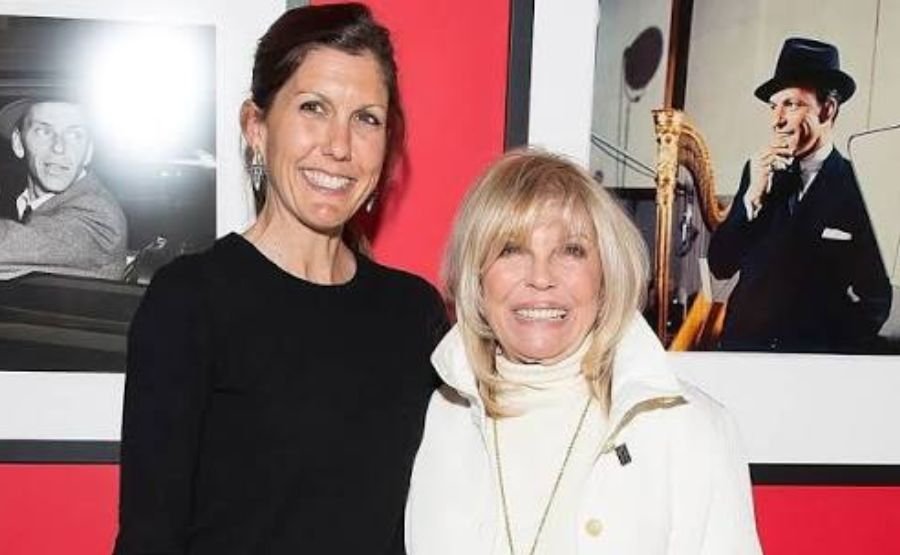
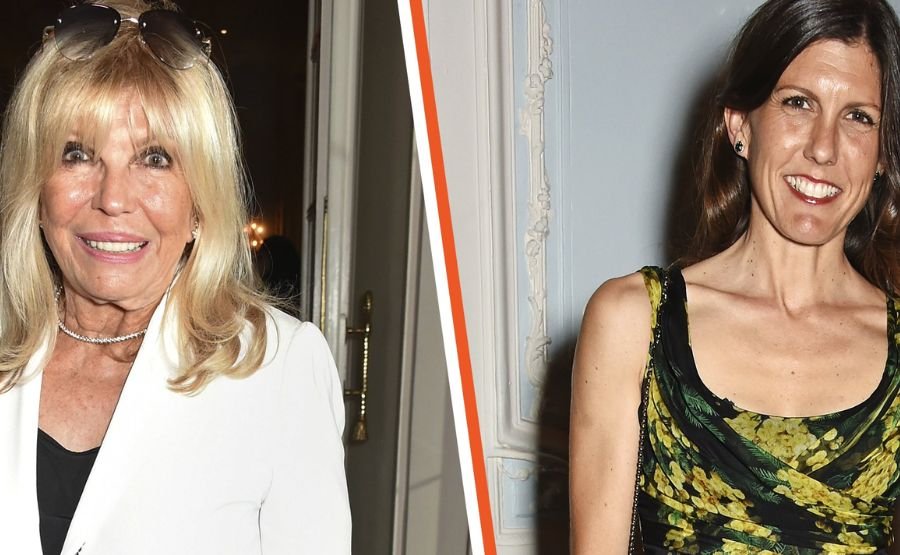
Her relationship with her mother Nancy and sister AJ appears close and genuine. The three women have been photographed together on numerous occasions, appearing at exhibitions, celebrations, and family events with the easy, relaxed body language of people who actually like each other.
Nancy has consistently spoken of both daughters with public warmth and pride — celebrating AJ’s musical career and Amanda’s archival work with equal affection.
Hardships: Loss, Legacy, and the Weight of a Name
At the age of nine, Amanda lost her father. That’s the biggest and earliest hardship on record — a childhood defined in part by the gap left by Hugh Lambert’s death in 1985. She has not spoken extensively about this publicly, but the loss shaped her. Amanda’s universe was reduced to her mother, her sister, and the rest of the Sinatra family, which included a grandfather who passed away while she was in her early twenties.
Frank Sinatra died on May 14, 1998. Amanda was 22. That loss closed the direct line to the man who had shaped so much of her artistic sensibility and who had been, by her own account, a genuine and meaningful presence in her life.
The burden of the Sinatra name is something else worth acknowledging. The mythology is so enormous, so encrusted with decades of cultural memory, that simply carrying that surname means being constantly measured against something. Amanda has navigated this with what appears to be exceptional grace. She neither exploits the name nor runs from it. She has made the archive her home precisely because it’s where the name connects most authentically to real history rather than to celebrity spectacle.
Net Worth and Financial Life
Amanda’s net worth has been estimated at around two million dollars, which would place her comfortably within the professional creative class rather than anywhere near the kind of dynastic wealth her grandfather accumulated. The SINATRA book was a significant commercial project, limited in edition but priced at premium collector levels. Her ongoing role at Frank Sinatra Enterprises likely provides a professional income. Her work as an independent artist and photographer adds to this.
What is notable is that she has not monetized the Sinatra name in the ways that would be easiest and most lucrative. No memoir. No reality television. No speaking circuit built on celebrity proximity. Her income comes from her actual work — the archiving, the curation, the photography, the genuine labor of artistic production.
What She Is Doing Now
Amanda continues to work as an artist and photographer based in the Los Angeles area. Her role at Frank Sinatra Enterprises remains active. She participates in exhibitions, public programs, and archival projects tied to her grandfather’s legacy as they arise. She maintains her Instagram presence with quiet regularity.
She is raising her daughter. She is, by all accounts, exactly what she appears to be: a private, thoughtful, genuinely talented person who happens to belong to one of the most famous families in American musical history and who has decided, consciously and consistently, that this fact should serve her work rather than define her person.
Final Words
Amanda Kate Lambert Erlinger’s story is, at its core, a story about inheritance — and about what you choose to do with it. She inherited talent from both parents. She inherited a name so large it could easily become a prison. She inherited a grandfather’s love of the visual world, taught to her at close quarters, before the world lost him.
She used all of it to become something that the biography of celebrity culture rarely produces: a genuinely skilled professional who works with integrity, in service of something larger than herself, without needing applause.
The SINATRA book is the most visible marker of what she has built. But the less visible work — the years spent sorting through boxes of photographs, authenticating images, understanding what her grandfather actually saw when he looked through a camera — that is the thing that will last. She is the keeper of how Frank Sinatra saw his own world. Being that way is not a minor thing.
What makes Amanda distinctive is not the name she was born with but the seriousness and warmth with which she has treated it. She didn’t weaponize the legacy or shrink from it. She studied it. She organized it. She shared it. And somewhere in that process, she built something entirely her own.
FAQs
1. Who exactly is Amanda Kate Lambert?
Amanda Kate Lambert, whose full name is Amanda Catherine Lambert Erlinger, is the younger daughter of Hugh Lambert, a choreographer, and singer Nancy Sinatra. She is Frank Sinatra’s granddaughter. Professionally she works as an artist, photographer, and archivist, and has served as manager of Frank Sinatra’s personal photographic collection since 2002.
2. When and where was Amanda born?
She was born in Beverly Hills, California, on March 17, 1976.
3. What is her relationship to Frank Sinatra?
Frank Sinatra was her maternal grandfather. Frank’s first wife, Nancy Barbato, gave birth to her mother, Nancy Sinatra. Amanda grew up spending time with Frank and has described him as a direct personal influence on her artistic development.
4. What happened to her father and who was he?
Her father was Hugh Lambert — a dancer, choreographer, and Broadway performer who worked on shows including Flower Drum Song and How to Succeed in Business Without Really Trying, and who served as choreographer for Laugh-In. At the age of nine, he passed away from cancer in 1985.
5. Who is Amanda’s sister?
Her older sister is Angela Jennifer Lambert, known professionally as AJ Lambert, born May 22, 1974. AJ is a musician who has built her own career in jazz and cabaret, frequently performing Sinatra material and hosting programming on Sirius XM’s Siriusly Sinatra channel.
6. What is the SINATRA book?
SINATRA is a 400-page, limited-edition luxury photo book published in 2015 to commemorate the centenary of Frank Sinatra’s birth. Amanda co-compiled it with Robin Morgan in association with Frank Sinatra Enterprises and Iconic Images. Just 1,000 copies were produced, each signed by Nancy, Tina, and Frank Jr. Sinatra. Contributors included Paul McCartney, George Clooney, Martin Scorsese, Quincy Jones, Billy Joel, Tony Bennett, and many others.
7. What is Amanda’s role at Frank Sinatra Enterprises?
Since 2002, she has served as manager and archivist of Frank Sinatra’s personal photographic collection. This involves authenticating, organizing, and curating photographs from the Sinatra family archive for exhibitions, publications, and other official uses.
8. Has Amanda appeared at public exhibitions?
Yes. She has been a featured presence at multiple exhibitions, including the Sinatra at 100 show at Proud Chelsea in London, the Sinatra: My Kind of Town show at Hilton/Asmus Contemporary in Chicago, and events at the New York Public Library for the Performing Arts presented in partnership with the Grammy Museum. She has also appeared on WGN-TV and CBS News in connection with these events.
9. Is Amanda married and does she have children?
Yes. She is married to Michael Erlinger and took his surname professionally, becoming Amanda Erlinger. They have one daughter, Annabelle. The family keeps their personal life private.
10. What did Frank Sinatra teach Amanda about art?
Amanda has spoken publicly about her grandfather being a painter and photographer himself — passions few people knew he held. He taught her artistic techniques and ways of looking at the visual world. One of her most memorable stories involves finding a self-portrait photograph Frank had taken of himself in 1938, reflected in a mirror — and realizing her grandfather had effectively taken a selfie decades before the concept existed.
11. What is Amanda’s estimated net worth?
Her net worth is estimated at approximately two million dollars, reflecting her professional work as an artist, photographer, and archivist rather than any inherited dynastic wealth. The Sinatra fortune did not flow directly to the grandchildren in any publicly documented way.
12. Why does Amanda use the name Erlinger rather than Lambert or Sinatra?
She took her husband Michael Erlinger’s surname after marriage, which is how she is most commonly identified in professional contexts. This reflects her broader approach to her identity — rooted in her own work and family life rather than defined by her famous lineage, even as she honors and preserves that lineage through her professional work.

One Comment