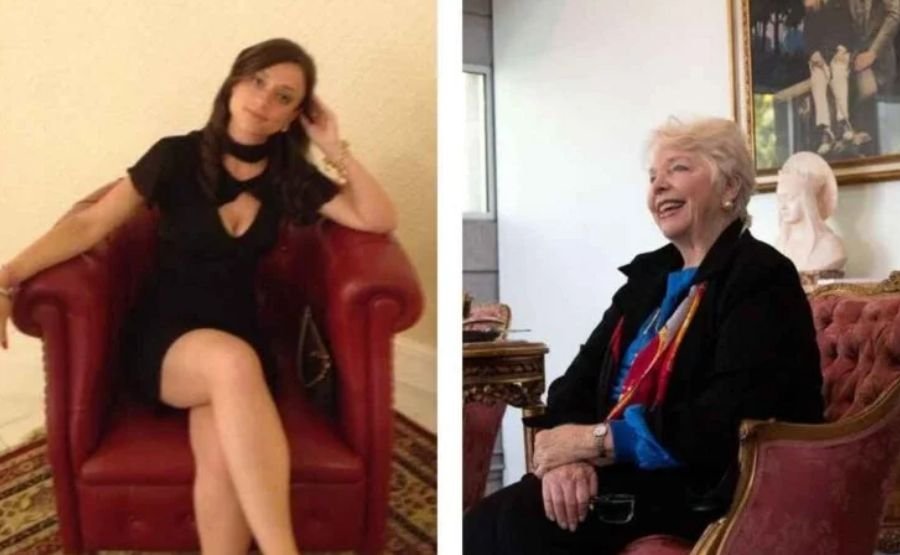
Veronica Capone: A Private Life Linked to a Famous Name
Quick Bio
| Detail | Info |
| Full Name | Veronica Frances Capone (later Bacon, then Peterson) |
| Nickname | Ronnie |
| Born | January 9, 1943, Miami Beach, Florida, USA |
| Died | November 17, 2007, Auburn Faith Hospital, Auburn, California |
| Nationality | American |
| Known For | Eldest granddaughter of Al Capone; living a deliberately private life away from the family’s criminal legacy |
| Father | Al Capone’s sole son, Albert Francis “Sonny” Capone |
| Mother | Diana Ruth Casey |
| Siblings | Teresa, Barbara, and Patricia (Diane) Capone |
| Married | Robert Warren Bacon, August 16, 1963, Santa Clara, California |
| Later Residence | San Francisco area, California; Florence, Oregon; Auburn, California |
| Grandfather | Alphonse “Al” Capone, Chicago Outfit crime boss |
A Name That Arrives Before You Do
Imagine being introduced at a party, at a new job, at a school, or anywhere at all — and watching the person’s expression shift the moment they catch your surname. Not because of anything you’ve done, but because of what someone else did, decades before you were born.
That was Veronica Capone’s entire life.
She was the eldest grandchild of one of the most notorious figures in American history. Her grandfather, Al Capone, ran the Chicago mob during Prohibition, ordered violence on a scale that shocked a nation that thought it had seen everything, and became so culturally embedded that his name never really faded — not in decades, not in generations. It became shorthand. A reference point. A Halloween costume.
Veronica spent her 64 years quietly doing the opposite of everything her grandfather’s legend implied. She married a regular man, raised a family, moved around the American West, and passed away in a hospital in California, largely unknown to the world. No book. No documentary. No press conferences.
Her story is worth knowing precisely because of how deliberately ordinary it was. And that ordinariness — chosen, maintained, defended across a lifetime — took a kind of courage that doesn’t usually make headlines.
See also “Lori Coble: A Life Shaped by Sorrow, Strength, and Love“
Born into a World Already in Decline
Veronica entered the world on January 9, 1943, in Miami Beach, Florida. Her grandfather, the famous one, was already a shell of himself by then. Al Capone had been released from Alcatraz in 1939, his mind ravaged by the late-stage effects of neurosyphilis. He had retreated to the family’s Palm Island estate in Miami Beach — a grand, sun-washed property with a pool modeled on a hotel, surrounded by palm trees and warm water—and there he lived his days in a fog, sometimes fishing in the pool, sometimes conversing with people who weren’t there, and sometimes hardly identifiable as the guy who had previously frightened Chicago.
So Veronica was born into a household shaped by two simultaneous realities: the lingering glamour and weight of the Capone name, and the quiet, sad spectacle of Al Capone’s decline. Her grandmother Mae, devoted and steady, held the household together. Her father, Sonny — Albert Francis Capone, Al’s only son — was 24 at the time of Veronica’s birth, still young, already carrying a name he hadn’t chosen.
Sonny was a gentle man by most accounts. Born with a hearing impairment and a complicated medical history, he had spent his own childhood in the surreal position of being the mob boss’s kid — receiving lavish presents, being shielded by bodyguards, but also being watched and judged and constantly navigated around public attention. By the time Veronica was born, he had married Diana Casey and was doing his best to build something quieter.
Those early years in Florida were surrounded by the Capone extended family. Veronica’s grandmother Mae was a constant presence. And at Christmas 1946, when Veronica was three years old, a photograph was taken at the Palm Island estate — one that would later sell for nearly twenty thousand dollars at auction — that showed the whole family gathered around a clearly ailing Al Capone. His oldest surviving granddaughter, Diane Patricia, would later describe that Christmas as warm and seemingly normal. None of them knew it would be among the last.
Al Capone died on January 25, 1947. Veronica was four years old.

Growing Up Capone
After her grandfather’s death, the family’s circumstances changed significantly. The wealth and spectacle were gone. What remained was the surname.
Sonny moved his family around, eventually landing in Florida communities and later heading toward California. The Capones were not poor, but they were not the kings of anything anymore. Sonny worked quietly, stayed out of trouble, and raised his four daughters — Veronica, Teresa, Barbara, and Patricia — with a deliberate emphasis on privacy and normalcy.
What that meant, practically, was that Veronica grew up knowing her family’s history but being raised to step away from it. There were no glamorized celebrations of “Grandpa Al.” There were family photos, letters, personal items — the kinds of things any family keeps — but the children were not encouraged to trade on the name or to dwell in it.
That said, you can’t exactly hide it. Veronica carried the name Capone through her childhood and adolescence, at school, with friends, in every new neighborhood and every new classroom. The reaction was never neutral. Even in the 1950s, the name Al Capone was everywhere — in movies, in crime magazines, in cocktail party conversations. Being his granddaughter meant being a walking historical footnote whether you wanted to be or not.
One detail that surfaces in accounts of the Capone grandchildren’s childhood captures this tension beautifully. When California wildfires periodically threatened homes in later decades, the sisters expressed worry not over financial losses but over the potential destruction of old family photographs and personal mementos. The things that connected them to their family as people — not as infamous figures — were what they feared losing. That says something about how they were raised. They weren’t taught to monetize the legacy. They were taught to hold it privately.
Education and the World She Chose
Specific details about Veronica’s formal schooling are not part of any public record, which itself tells a story. She wasn’t attending famous institutions or making news. She was going to school, growing up, figuring herself out, and keeping her head down in the best possible sense.
What we know is that by her early twenties she had found her footing. She was living in California, in the northern part of the state, far removed from the Florida roots of her childhood. And at 20 years old, on August 16, 1963, she got married.
Marriage and Making a Home
The man she married was Robert Warren Bacon. The ceremony took place in Santa Clara, California — a civic event, quiet and clean, the kind of wedding that doesn’t make society pages. Robert was born in 1933, making him about a decade older than Veronica.
The choice of a new surname was, whether consciously intended or not, a practical form of distance. As Veronica Bacon, she wasn’t hiding exactly — the family connection was always traceable to anyone curious enough to look — but she also wasn’t leading with it. Day to day, in the grocery store, at the bank, at neighborhood gatherings, she was simply Veronica Bacon. Not Capone. Not the granddaughter of Scarface.
The couple settled in the San Francisco Bay Area, building a domestic life in the urban landscape of northern California. After becoming a mother—documents show that she had at least one son—Veronica dedicated herself to raising a family and fostering ties within the community.
This is the part of Veronica’s life that has the fewest documented details, and that’s almost certainly by design. She was not seeking coverage. She was living. The Bay Area of the 1960s and 1970s was a place of enormous social change, cultural upheaval, and reinvention — perhaps an unexpectedly fitting home for a woman who had spent her whole life quietly reinventing what the Capone name could mean.

The Quiet Years: California, Oregon, and the Drift West
Records show that Veronica moved around over the decades, tracing a path through northern California and at points into the Pacific Northwest. Around 2005 she was living in Florence, Oregon — a small, coastal town with a population of just a few thousand people, known more for its sand dunes and fishing than for anything glamorous.
It’s hard to picture a starker contrast to the world her grandfather inhabited. Al Capone had thrown parties attended by hundreds, kept armed guards, commanded an illegal empire worth millions. His eldest granddaughter, in her sixties, was living in a small Oregon coastal town. If that sounds like a criticism, it isn’t. It sounds like a choice. A very deliberate, very human choice.
Eventually Veronica made her way back to California, to Auburn — a Gold Rush-era town in the Sierra Nevada foothills, east of Sacramento, in Placer County. It is beautiful country. Quiet, elevated, far from anywhere famous.
There, in November 2007, she fell ill. The records describe her death as stemming from complications of an acute illness. She was 64 years old. She died at Auburn Faith Hospital on November 17, 2007.
The Weight of the Name — Carried, Not Worn
Here’s the thing about being the grandchild of a famous criminal. You didn’t do anything. You didn’t choose the family. You didn’t commit the crimes. You didn’t get the money. What you got was the reputation — permanent, attached, inescapable.
Veronica’s father Sonny understood this intimately. He legally changed his name to Albert Francis Brown in 1966, decades after his father’s death, still trying to put a little more air between himself and the Capone legacy. He died in 2004, three years before Veronica. His daughters had all taken other surnames through marriage. The family name dissolved, generation by generation, into the ordinary stream of American life.
For Veronica, the burden was particular because she was the eldest. She was the first granddaughter to bring the name into the world and the first to have to decide how to use it in her own life. Her sister Diane Patricia (the youngest) later wrote a book about the family — Al Capone: Stories My Grandmother Told Me — and has spoken publicly about what it was like growing up Capone. But that came later, in older age, on her own terms. Veronica’s lifetime was different. She kept quiet. She kept moving.
There’s no evidence she ever publicly denounced her grandfather or performed any kind of theatrical disowning. She simply lived somewhere else, under a different name, building something that was hers.
Hardships: Living in a Legend’s Shadow
The particular difficulty of Veronica’s life is something that doesn’t have a clean category. It isn’t the hardship of poverty or illness or violence, though those things might have touched her edges. It’s the more diffuse, lifelong difficulty of never quite being seen as yourself.
When a stranger heard her maiden name, they immediately formed an opinion. Every friend who discovered the family history had to recalibrate their understanding of who she was. Every media moment involving Al Capone — a new film, a new book, a retrospective, an anniversary — stirred the pot again and reminded the world that the Capone family was still out there, still living with this thing.
Sonny’s decision to change his name suggests the family discussed, at some level, what to do about the legacy. Veronica’s decision to marry and leave the name behind professionally is another thread of the same conversation. Her younger sister eventually chose to engage with the history publicly, to write about their grandmother Mae’s private view of Al. That’s a valid approach too. The family found different ways through.
What we know of Veronica’s way is defined almost entirely by its discretion.
Net Worth and Financial Life
There is no honest way to assign Veronica Capone a net worth, and any figure you may see on any website has simply been invented. The Capone fortune — such as it was — did not flow down through Sonny’s children. Al Capone’s criminal empire was largely dismantled by his imprisonment, and the family’s comfortable lifestyle was sustained through the 1940s at the Palm Island estate, but Mae sold that property after Al’s death and the wealth dissipated over time.
Sonny worked modest jobs in California. His daughters grew up in comfortable but ordinary middle-class circumstances. Veronica married a man whose records don’t point to any particular wealth or prominence. She lived in a small coastal Oregon town in her later years, then in Auburn, California. These are the biographies of ordinary financial lives — enough to live, enough to move, enough to be comfortable, but nothing resembling a dynasty.
When Veronica’s sister Diane Patricia organized an auction of Al Capone family heirlooms in 2021 — items that included personal letters, home movies, photographs, and a pistol — the sisters described keeping those items in the family for decades specifically because they were personal, not because they were considered financially strategic investments. The auction was prompted by the practicalities of aging and estate management, not by a long-planned monetization of the Capone name.
Final Chapter
Veronica spent her last years in Auburn, in the quiet hill country of northern California. She died in November 2007 at 64 — younger than her grandfather had been, younger than you might expect, carried off by illness before she could see her family’s story enter yet another media cycle.
Her death was not nationally reported. There was no obituary in the Chicago Tribune. The world, largely, did not notice. And that is almost certainly exactly what she would have wanted.
See also “Lori Coble: A Life Shaped by Sorrow, Strength, and Love“
Final Words
Veronica “Ronnie” Capone Peterson lived an entire, full life — childhood, marriage, motherhood, multiple homes across the American West, old age — and almost none of it made the news. For anyone else, that might sound like a failure of significance. It was a feat for someone who was born into the Capone family.
Her legacy is not one of monuments or accomplishments in any conventional biographical sense. She didn’t run a company or win an award. She didn’t write a memoir or appear on television. What she did was something harder to quantify: she built a life that belonged to her. She took the most recognizable surname in American crime history and, through deliberate, consistent choices over six decades, turned it into something quiet and human and her own.
There’s a particular kind of courage in that — not the flashy kind, but the sustained, daily kind. The courage to say: this is my grandfather’s story, not mine. The courage to answer to a different name. The courage to live in Florence, Oregon, or Auburn, California, as just another person going about their days.
One of the most well-known criminals in history has an elder grandchild, Veronica Capone. At the time of his death, she was four. Everything else she became, she chose.
FAQs
1. Who exactly was Veronica Capone?
Veronica Frances “Ronnie” Capone was the eldest granddaughter of Al Capone, the notorious Chicago mob boss. She was the firstborn daughter of Albert Francis “Sonny” Capone, Al’s only son, and his wife Diana Ruth Casey.
2. When and where was she born?
She was born January 9, 1943, in Miami Beach, Florida — the same city where her grandfather was then living in declining health at the family’s Palm Island estate.
3. Was Veronica Capone acquainted with Al Capone?
Yes. When Al Capone passed away in January 1947, she was four years old. A now-famous photograph taken at Christmas 1946 at the Palm Island estate captured the whole family — including the grandchildren — gathered together in what would be one of the last photographs of Al Capone alive. Veronica was present at that gathering.
4. What was her father Sonny Capone like?
Albert Francis “Sonny” Capone was Al’s only son and a notably quiet, private man who actively distanced himself from his father’s legacy. He was born with a partial hearing disability, worked modest jobs, and eventually legally changed his surname to Brown in 1966. He died in 2004, three years before Veronica.
5. Did Veronica use the Capone name throughout her life?
No. She changed her name upon marriage. She married Robert Warren Bacon in 1963 in Santa Clara, California, and took his name, becoming Veronica Bacon. Later records also reference the surname Peterson, suggesting a subsequent marriage or name change.
6. Did she ever speak publicly about her grandfather?
There is no record of Veronica speaking publicly about Al Capone. She maintained a deliberately private life. It was her younger sister, Diane Patricia Capone, who eventually wrote a book about the family — Al Capone: Stories My Grandmother Told Me — and engaged with the family’s history publicly.
7. How many siblings did Veronica have?
Patricia, sometimes known as Diane, Barbara, and Teresa were her three sisters. Together, the four daughters of Sonny Capone are the only recognized legitimate grandchildren of Al Capone.
8. Where did Veronica live during her adult life?
She lived in several parts of the American West, including the San Francisco Bay Area after her 1963 marriage, and later Florence, Oregon (documented around 2005), before eventually settling in Auburn, California, in the Sierra Nevada foothills.
9. When and how did Veronica Capone die?
She died on November 17, 2007, at Auburn Faith Hospital in Auburn, Placer County, California, following complications from an acute illness. She was 64 years old.
10. Did the Capone grandchildren inherit any of Al Capone’s wealth?
Not in any significant way. Al Capone’s fortune was largely dismantled by his imprisonment, legal penalties, and deteriorating health. The family lived at the Palm Island estate after his release from Alcatraz, but Mae sold the property after his death in 1947. Sonny worked ordinary jobs in California, and the grandchildren grew up in middle-class circumstances, not as heiresses to a criminal empire.
11. Did the Capone family ever sell family heirlooms?
Yes. In 2021, Veronica’s youngest sister Diane Patricia organized an auction of family items through Witherell’s auction house. Items included personal letters, home movies of Al Capone and his associates, vintage family photographs, and his favorite Colt pistol. Diane Patricia noted these items had never left family possession since Al Capone’s death and the decision to auction them was practical rather than profit-driven.
12. What is Veronica Capone’s legacy?
In the shadow of an impractical last name, Veronica’s legacy is the calm dignity of a life established on personal terms. She chose anonymity, privacy, and ordinary life with remarkable consistency. In a family whose story has been told and retold by Hollywood, true crime writers, and documentary filmmakers for decades, Veronica Capone is the one who simply walked away and lived her own story — and never told it to anyone.




One Comment