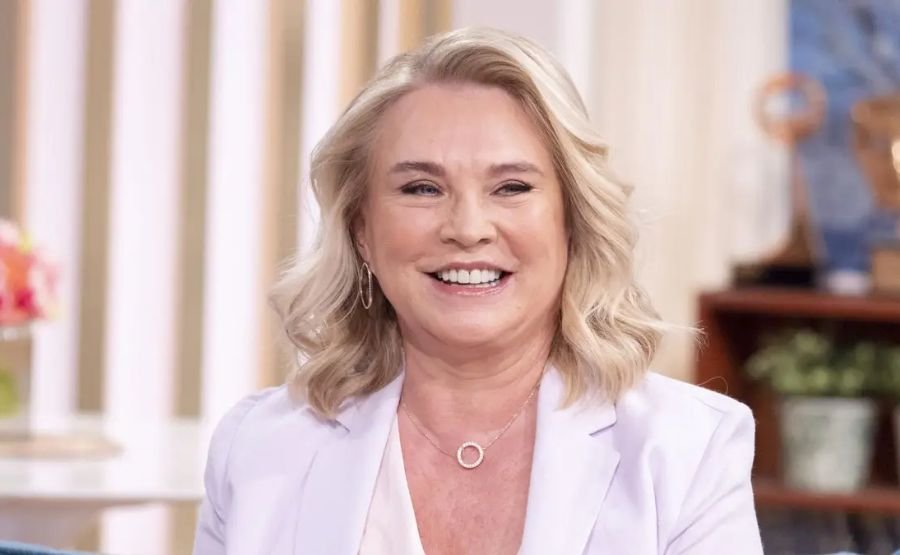
Amanda Redman Net Worth: How the British Actress Built Her Wealth
Quick Bio
| Detail | Info |
| Full Name | Amanda Jacqueline Redman MBE |
| Born | 12 August 1957, Brighton, East Sussex, England |
| Nationality | British |
| Occupation | Actress, Drama Teacher, Theatre School Founder |
| Best Known For | New Tricks (BBC, 2003–2013); The Good Karma Hospital (ITV, 2017–2022) |
| Education | Bristol Old Vic Theatre School |
| Awards | MBE (2012); three BAFTA TV nominations; Honorary Bencher, Middle Temple (2024) |
| Family | One daughter, Emily Glenister (b. 1987) |
| Net Worth | Estimated £4–5 million (approx. $5–6.5 million USD) |
| Notable Connection | Niece of Oscar-nominated actress Joyce Redman |
An Unlikely Star — Who Is Amanda Redman?
There’s something refreshing about Amanda Redman. She doesn’t have the kind of origin story that gets neatly packaged into a Hollywood fairy tale. She grew up on the south coast of England, survived a harrowing medical ordeal before she was even old enough to form proper memories, and spent years grinding through minor roles before British audiences truly took notice of her. When they did, they kept watching — for decades.
Her name is probably most recognisable to anyone who spent Sunday evenings with the BBC. She was the sharp-tongued, no-nonsense Detective Superintendent running a team of retired policemen in New Tricks, a show that shouldn’t have worked on paper but somehow became a beloved institution. Later, she traded the grey skies of London for the tropical colour of Sri Lanka in The Good Karma Hospital, playing a fiercely capable doctor with the kind of warmth you can’t fake.
But Amanda Redman is more than a small-screen fixture. She’s a trained stage actress with serious classical theatre credentials, a passionate teacher who has run her own drama school for nearly three decades, and a woman who carries visible burn scars she survived as a toddler with extraordinary openness and grace. Her life, on closer inspection, is quietly remarkable.
Brighton Beginnings — Childhood and Family
Amanda was born on a summer’s day in 1957 in Brighton, a town that has always had a certain theatrical energy to it — the gaudy glamour of the seaside, the creative people it attracts. Her father, Ronald Redman, was a Londoner; her mother, Joan, had actually been born in India. Hers wasn’t a showbusiness family in any obvious sense, but there was a theatrical thread running through the bloodline: her aunt was Joyce Redman, a distinguished stage actress who received an Academy Award nomination for her work in the early 1960s. Whether Amanda consciously absorbed that influence as a small child or simply grew into it by osmosis is hard to say, but it was there.
What shaped her earliest years far more dramatically was an accident that almost took her life. When Amanda was just eighteen months old — barely walking — a container of scalding hot soup fell or spilled on her. The burns to her left arm and upper body were severe. At the spot, she was pronounced clinically dead. That she survived at all was remarkable; what followed was five years of her childhood spent largely in a hospital burns unit, undergoing a series of reconstructive surgeries. The surgeon who treated her had trained under Archibald McIndoe, the New Zealand-born plastic surgeon famous for his pioneering work rebuilding the faces and bodies of RAF pilots burned in WWII crashes. That lineage of medical expertise almost certainly shaped the quality of care Amanda received.
She emerged from those years carrying scars on her left arm that remain visible. Rather than hiding them, she has lived openly with them throughout a career spent constantly in the public eye. That takes a kind of courage people don’t always credit her for.
Her father Ronald died in 1980, when Amanda was 23 — still young, and in the early stages of building her career. She later also lost her brother, who passed away in 2008.
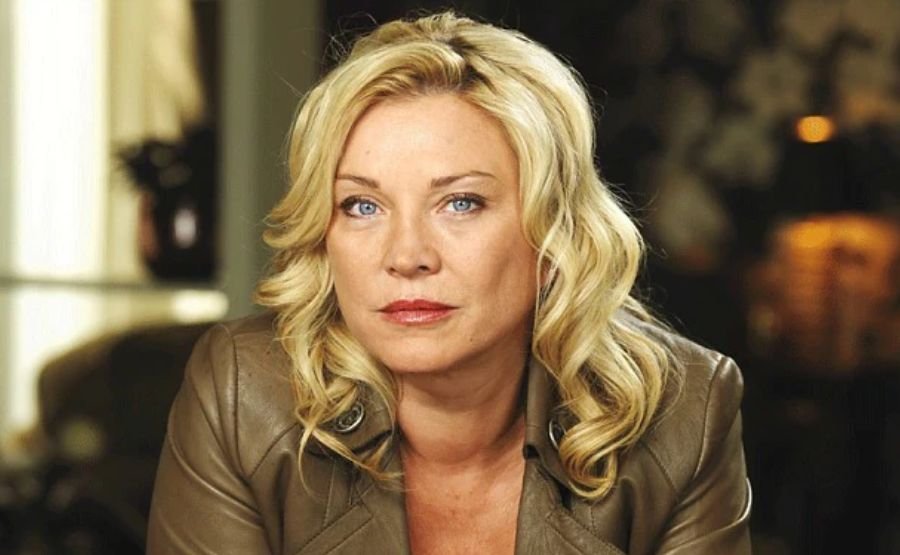
The Making of an Actress — Education and Early Influences
Bright, driven, and clearly drawn to performance from early on, Amanda made the decision that so many serious British actors make: she went to drama school. Not just any drama school, but the Bristol Old Vic Theatre School — one of the most highly regarded in the country, a place with a reputation for turning out technically grounded, theatrically serious performers rather than television personalities.
She trained there through the mid-to-late 1970s, graduating around 1978, and what she took away was a classical foundation. Stage first, technique always. She learned how to inhabit a character rather than simply deliver lines. That grounding would prove enormously useful across the decades that followed, as she moved fluidly between Shakespeare, television crime drama, and warm-blooded human comedy.
The Bristol Old Vic wasn’t just a training ground — it was a philosophical commitment. The performers it produces tend to carry a certain seriousness about the craft, and Amanda Redman has always been recognisably of that tradition. She never became the kind of actress who talks airily about “instinct.” She trained, she studied, and she worked.
Her aunt Joyce’s career presumably provided some early evidence that a sustained, respected life in acting was possible for a woman from outside the metropolitan establishment. Joyce had done it on stage and screen across decades; Amanda would do the same, in her own way.
Climbing the Ladder — First Steps and Early Career
Amanda’s professional life began in theatre. She worked at the National Theatre and the Bristol Old Vic in productions that showcased her classical range. She played Shakespeare — including a role in Pericles, Prince of Tyre opposite Mike Gwilym — and she appeared in productions at the Royal Court and Young Vic, venues that were and remain among the most critically serious in British theatre.
Television came calling fairly early. She picked up small roles through the late 1970s and into the 1980s, nothing earth-shaking but steady work. In 1981 she appeared in the film Richard’s Things. In 1984 she had a part in the Paul McCartney-produced musical film Give My Regards to Broad Street. In 1985, she played Janet in a touring stage production of The Rocky Horror Show — a fun departure from the classical work, and evidence of her versatility. The following year she appeared in a BBC television production of Oscar Wilde’s The Importance of Being Earnest, playing Gwendolen.
By the late 1980s her film work was stepping up. For Queen and Country in 1989 was a notable credit. And she was offered something rather different that same year: the role of Elsa in Indiana Jones and the Last Crusade. She turned it down. The reason? A phobia of rats. (The role ultimately went to Alison Doody.) It’s the kind of fact that turns up in biographical footnotes and raises a smile — a quirky reminder that even successful actors make career decisions for entirely human reasons.
The 1990s were busier. She appeared in Dangerfield, a BBC medical drama, playing a recurring role across its first two series from 1995. She popped up in Taggart. The work kept coming, varied and consistent, building a professional reputation without yet producing the kind of defining role that lodges a name in the national consciousness.
Breaking Through — The Roles That Made Her Famous
Three roles, across roughly fifteen years, elevated Amanda Redman from a respected working actress to a household name.
The first was Alison Braithwaite in At Home with the Braithwaites, an ITV comedy-drama that ran from 2000 to 2003. She played a woman whose comfortable suburban life is spectacularly disrupted when she wins the lottery — and keeps it secret from her family. The show was warm, funny, and anchored entirely in Redman’s performance. Critics noticed. She received a BAFTA TV nomination for the role, and a further nomination for Most Popular Actress at the National Television Awards. For the first time, her face was genuinely famous.
Around the same time, she appeared in the film Sexy Beast (2000) alongside Ray Winstone — one of the most ferociously entertaining British gangster films of its era. Her role was smaller but memorable.
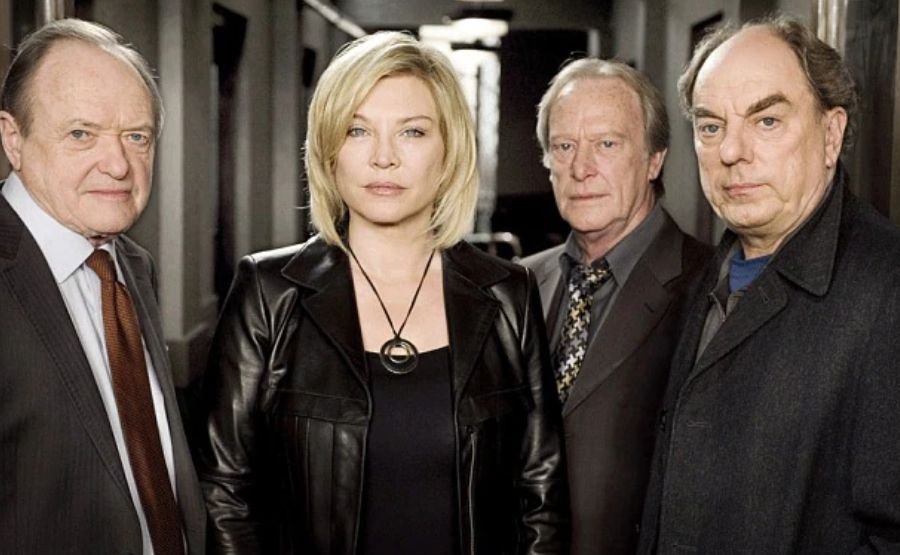
The second, and biggest, was Detective Superintendent Sandra Pullman in New Tricks, which began in 2003 and ran for a decade. The premise was unlikely: a career-driven female detective lumbered with a team of older, retired policemen reopening cold cases. In less capable hands the whole enterprise might have wobbled. Instead, Redman made Pullman so precisely drawn — ambitious, exasperated, not above bending her own rules, and carrying an almost comic inability to find happiness in her personal life — that the character became genuinely iconic. The chemistry between Redman and her co-stars Dennis Waterman, James Bolam, and Alun Armstrong became one of television’s great ensemble pleasures. She stayed for a decade, departing in 2013.
The third was Dr. Lydia Fonseca in The Good Karma Hospital (ITV, 2017 to 2022), filmed almost entirely in the lush coastal landscape of southern Sri Lanka. Lydia ran a chaotic but compassionate hospital with an iron grip and a big heart, mentoring younger colleagues and navigating personal complications with the authority of someone who has lived. The show ran for multiple series and found an audience who adored it. Redman turned 60 while filming the first series — she quietly told the production she wanted no fuss, and was promptly ambushed by her colleagues with cakes anyway.
Beyond these television peaks, she received a BAFTA nomination in 2014 for her performance in Tommy Cooper: Not Like That, Like This, a drama in which she played Mary Cooper, the long-suffering wife of the comedian. It was a quieter, more painful piece of work, and it demonstrated that Redman had lost none of her range.
Honours and Recognition
In the 2012 Queen’s Birthday Honours, Amanda Redman was appointed a Member of the Order of the British Empire — an MBE — for her services to drama and charity. It was the kind of recognition that reflects not just professional achievement but a sustained commitment to giving something back.
In November 2024, she was made an Honorary Bencher of the Middle Temple, one of the four Inns of Court in London, an honour that acknowledges individuals who have made significant contributions to public life. It placed her in distinguished company.
Three BAFTA nominations and decades of consistent work tell their own story. She never won the BAFTA outright, but in British acting circles, nominations from the Academy carry weight.
Love, Marriage, and Family
Amanda’s romantic history has had its complications. In 1984 she married actor Robert Glenister — a fellow performer whose brother Philip Glenister would later become well-known for Life on Mars. Interestingly, Amanda is credited with encouraging Philip to pursue acting during her years married to Robert. The marriage produced a daughter, Emily Glenister, born in 1987. The marriage ended in 1992.
During the 1980s, Amanda and Dennis Waterman — who would later become her co-star in New Tricks — had a brief romantic involvement. It makes the dynamic of their eventual professional relationship rather delicious in retrospect: two people with personal history playing colleagues for a decade on national television.
In September 2010, Amanda married Damian Schnabel, and by all accounts the relationship has brought her real contentment. She has spoken warmly about the stability and happiness of her current life.
Her daughter Emily became an actress too, and even appeared in an episode of New Tricks alongside her mother — a genuinely touching detail for anyone who tracked Amanda’s career over those years.
The Hard Parts — Setbacks and Struggles
Amanda Redman’s life story doesn’t come without shadows. The burns she suffered as an infant left visible scars and demanded years of medical intervention during what should have been an uncomplicated childhood. Living in hospitals, undergoing surgeries, missing ordinary early life — those aren’t trivial things, even when survived with apparent equanimity.
The loss of her father when she was twenty-three, still early in her career, was a blow. Another was when her brother passed away in 2008, halfway through her New Tricks years. These are the quiet griefs that don’t make headlines but shape the person.
Her first marriage ended in divorce after eight years, a difficult circumstance made more complicated by the fact that both parties moved in the same professional circles.
And then there’s the slightly surreal chapter of the Dennis Waterman situation — the two had a romantic history, and later worked together closely for a decade. Neither appears to have made it publicly awkward, but it’s the kind of thing that requires maturity to navigate.
She has also spoken candidly about her complicated relationship with ageing. She doesn’t romanticise getting older and has been honest that birthdays, particularly milestone ones, weigh on her more than she’d like them to.
The Money — Net Worth Explained Honestly
Amanda Redman’s wealth is the product of fifty years of consistent professional work across theatre, television, and film. She never had a single blockbuster moment that generated Hollywood-scale earnings, but she was employed — seriously, consistently employed — in well-paid television roles for decades. New Tricks alone ran for ten series on BBC One; the fees for a lead performer over that period are substantial. The Good Karma Hospital added further years of ITV work.
Beyond acting, she founded the Artists Theatre School in 1998 and has run it ever since — teaching drama on weekends at Ealing Studios to students ranging from young children to adults. The school generates its own income stream and reflects a passion that goes beyond the financial, but it contributes nonetheless.
Various estimates place her net worth in the range of £4 to £5 million (roughly $5 to $6.5 million USD, depending on exchange rates and the source). Some outlets have quoted higher figures, but those appear to be less reliable. A figure in the £4–5 million range is credible for a senior television actress with her credits, longevity, and entrepreneurial side project. It’s comfortable, not extravagant — the financial position of someone who worked hard and spent wisely, rather than someone who struck sudden gold.
Where She Is Now: Her Present Projects and Life
At 69, Amanda Redman shows no signs of stepping back. She has continued to work — her career has never really had a quiet period — and her involvement with the Artists Theatre School remains a central part of her identity and weekly routine. She has described teaching as genuinely important to her, not merely a side interest.
She became a patron of Brighton Open Air Theatre in 2018, a connection rooted in genuine personal affection for her hometown. She spoke about her stepfather having bowled on the very ground where the theatre now stands, and about her mother’s connection to the local area — a reminder that Brighton isn’t just where she was born, but a place threaded through her family history.
Her 2024 Honorary Benchership at the Middle Temple was the most recent formal recognition of a career still very much in motion. She is, at this stage of her life, a genuinely beloved figure in British television — the kind of actress whose appearance in any cast immediately raises a show’s credibility.
Final Words
What makes Amanda Redman’s story worth telling isn’t a single dramatic arc or one defining moment. It’s the accumulation. An accidentally damaged childhood that is not characterized by it. A classical training that gave her bones. Decades of steady, serious work. A couple of extraordinary roles — Pullman, Alison Braithwaite, Lydia Fonseca — that brought her to audiences who may not have seen the stage productions or the early films but who quickly understood they were watching someone exceptional. A theatrical school she founded herself, an MBE, and a daughter who followed in her footsteps. She appears to have found serenity in her second marriage.
She’s not the kind of celebrity who dominates magazine covers or courts tabloid attention. She’s something rarer: an actress who simply got on with the work, took it seriously, and let the quality speak. British television has been significantly richer for her presence in it.
FAQs
1. Amanda Redman was born where and when?
Amanda Redman was born on 12 August 1957 in Brighton, East Sussex, England. She grew up on the south coast and the town has remained close to her heart throughout her life.
2. How did Amanda Redman fare as a newborn?
When Amanda was around eighteen months old, a container of boiling soup spilled on her, causing severe burns to her left arm and upper body. She was clinically declared dead at the scene but survived, and spent roughly the first five years of her life in hospital undergoing multiple reconstructive surgeries.
3. Where was Amanda Redman trained to be an actress?
She trained at the Bristol Old Vic Theatre School, one of Britain’s most respected drama academies, graduating around 1978. The training gave her a strong foundation in classical theatre.
4. What is the most well-known role played by Amanda Redman?
Her most well-known role is that of Detective Superintendent Sandra Pullman from the BBC series New Tricks, which she portrayed from 2003 until 2013. The role made her a genuinely familiar face to millions of British television viewers.
5. In 2013, Amanda Redman left New Tricks; why?
She chose to depart after a decade in the role — a professional decision to move on rather than a dispute or contractual issue. Her character was written out and Tamzin Outhwaite took over leadership of the UCOS unit.
6. What was The Good Karma Hospital?
It was an ITV drama series set in and around a small hospital in Sri Lanka, running from 2017 to 2022. Amanda played Dr. Lydia Fonseca, the head of the hospital — a warm, tough, experienced doctor who becomes a mentor to a younger colleague. The show was filmed on location in southern Sri Lanka.
7. Is Amanda Redman related to Joyce Redman?
Yes. Joyce Redman was her aunt — a distinguished British actress who received an Oscar nomination in 1963 for her work in Tom Jones. That theatrical lineage almost certainly influenced Amanda’s path into the profession.
8. Has Amanda Redman won any awards?
She has received three BAFTA TV nominations — for At Home with the Braithwaites, for Tommy Cooper: Not Like That, Like This, and additional recognition — and was awarded an MBE in 2012 for services to drama and charity. In November 2024, she was made an Honorary Bencher of the Middle Temple.
9. Was Amanda Redman ever married to Robert Glenister?
Yes. She and actor Robert Glenister married in 1984 and divorced in 1992. They have a daughter, Emily Glenister, who was born in 1987 and also became an actress. During those years Amanda is said to have encouraged Robert’s brother Philip Glenister to pursue acting; Philip went on to star in Life on Mars.
10. What is the Artists Theatre School?
It’s a drama school Amanda Redman founded in 1998. She runs it and teaches there herself on weekends, based at Ealing Studios. It offers classes to students from age five through to adults. It reflects a deep personal commitment to passing on what she learned about the craft.
11. What is Amanda Redman’s estimated net worth?
Reliable estimates place her net worth in the region of £4 to £5 million (approximately $5 to $6.5 million USD). This wealth was built over fifty years of consistent acting work across theatre, film, and television, alongside income from her drama school. She is comfortably well-off rather than spectacularly wealthy.
12. What is Amanda Redman doing now?
As of 2026, she is in her late sixties and still active professionally. She continues to teach at the Artists Theatre School and remains engaged with British theatre as a patron and supporter. Her 2024 Honorary Benchership at the Middle Temple suggests her public standing continues to grow, and she remains one of the most respected actresses of her generation in the UK.
Explore stories that inspire curiosity with The Imperial Magazine.