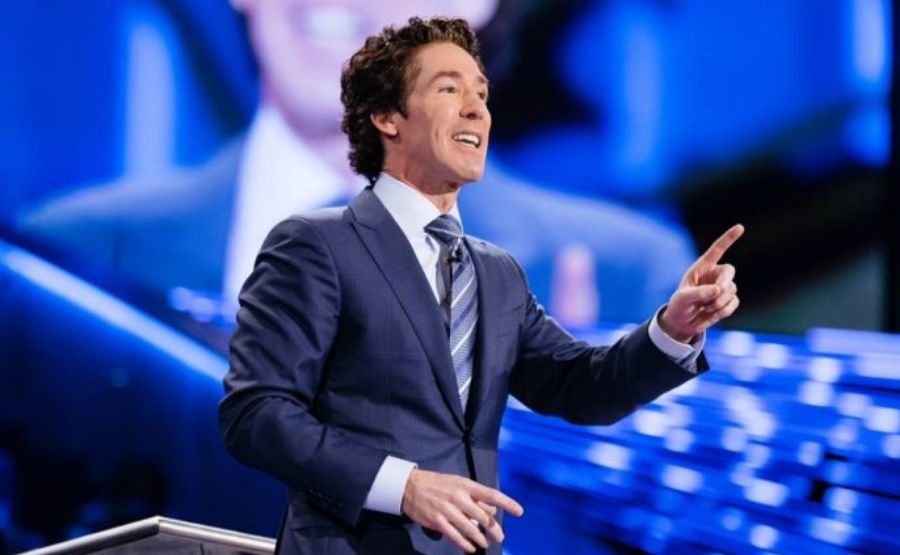
Dave Sumrall Net Worth: The Story Behind His Wealth, Ministry, and Success
Quick Bio
| Detail | Information |
| Full Name | Dave Sumrall |
| Nationality | American |
| Occupation | Pastor, Church Planter, Entrepreneur |
| Known For | Co-founding itown church in Fishers, Indiana; grandson of legendary evangelist Lester Sumrall |
| Church Founded | itown church — August 15, 2010, Fishers, Indiana |
| Current Attendance | Over 4,000 weekly across 3 Indiana campuses (Fishers, Indianapolis, Bluffton) |
| Wife | Kate Sumrall — co-lead pastor and co-founder of itown church |
| Children | Five to six children (family has grown across the years of their ministry) |
| Family Legacy | Grandson of Dr. Lester Sumrall — world-renowned Pentecostal evangelist, missionary, and founder of LeSEA |
| Training | Studied church planting under Pastor Chris Hodges at Church of the Highlands, Birmingham, Alabama |
| Mission Experience | Lived in the Philippines doing missionary work, 2003 |
| Estimated Net Worth | Undisclosed; AI-generated estimates range wildly and are unreliable |
Why Dave Sumrall Is Worth Understanding
When you hear the name Sumrall in American Christian circles, it carries weight. Real, historical weight. Dave Sumrall grew up inside one of the most remarkable evangelical dynasties in modern American church history, born into a family where global mission work, evangelism across 110 countries, and the founding of television stations and Bible colleges were simply part of the family story.
But here’s what makes Dave interesting: he didn’t just inherit a name and trade on it. He took the calling that runs through his bloodline and made something genuinely new with it. He packed his bags for the Philippines, fell in love, came home, apprenticed himself under one of the most effective church planters in the country, and then walked into a suburb of Indianapolis with his young wife and a dream that was both completely personal and thoroughly rooted in everything his family stood for.
What he built at itown church is the story of a generation learning to reach people differently than their grandparents did — and doing it without apologising for believing exactly the same things.
The Family Tree: Understanding Where He Comes From
You cannot understand Dave Sumrall without first understanding Lester Sumrall, because Lester’s story is the soil Dave grew in.
Lester Frank Sumrall was born in New Orleans on February 15, 1913, the sixth of eight children. As a seventeen-year-old lying sick with tuberculosis, he experienced what he described as a direct vision from God — a casket on one side of him, an open Bible on the other, and a voice asking him to choose. He chose the Bible. He woke the next morning, he said, completely healed. He never looked back.
From that moment until his death in South Bend, Indiana on April 28, 1996, Lester Sumrall became one of the most prolific and widely-travelled evangelists of the twentieth century. He ministered in 110 countries. He wrote more than 130 books. He flew to Manila in the early 1950s to pray for a young woman named Clarita Villanueva who was reportedly suffering from demonic possession — a case that made international headlines and brought Lester’s name to Filipino national attention. He founded the Cathedral of Praise in Manila, which grew into one of the largest congregations in Philippine history. He established the Lester Sumrall Evangelistic Association, several television and radio stations, World Harvest Bible College (now Indiana Christian University), and LeSEA Global Feed the Hungry. He was an institution, in every sense.
Lester and his wife Louise, whom he met while doing missions work in South America, had three sons: Frank, Phillip Stephen, and Peter. Dave Sumrall comes from this lineage — documented across multiple sources as Lester’s grandson through his son Frank, making Dave part of the third generation of a family that has spent nearly a century treating world evangelism as a normal career path.
The significance of this heritage cannot be overstated. Dave didn’t grow up reading about global ministry in books. He grew up inside a family where it was the expected background noise of life. The Philippines — the country where Lester had done some of his most celebrated work — would later call Dave back as well, in circumstances that changed his personal life entirely.
See also “Amanda Redman Net Worth: How the British Actress Built Her Wealth“

Growing Up Sumrall: Chicago, Indiana, and a Calling You Can’t Escape
Dave Sumrall was born in Chicago, Illinois — a detail that places him as a Midwesterner by birth, rooted in the same broad region his grandfather eventually called home when Lester settled in South Bend, Indiana in the 1960s. The specifics of Dave’s childhood — where exactly he was raised, what his schooling looked like, the texture of his growing-up years — are not extensively documented in public sources. He has maintained significant personal privacy around those early chapters, choosing to let his ministry work speak for him rather than offering a detailed memoir of his formative years.
What is clear from the broader Sumrall family context is that Dave came of age in an environment saturated with faith, evangelism, and the expectation that serving God was not a Sunday-morning hobby but a full-time vocation. Lester Sumrall died in 1996 — which means Dave, depending on his age, likely had meaningful years of exposure to his grandfather before that loss. The imprint of a man who built Bible colleges and television stations and flew across the world to pray for strangers would not have been subtle.
He also grew up knowing that the Sumrall name meant something in Philippine Christian history specifically — a detail that would later take on unexpected personal significance.
The Philippines: Where a Mission Trip Became a Marriage
In 2003, Dave Sumrall was living in the Philippines doing missionary work. That single sentence from his itown church biography is both the most compressed and the most important fact in his personal history.
The Philippines had been central to his grandfather’s ministry for decades. The Cathedral of Praise that Lester had helped establish there was by then one of the country’s largest congregations, still operating under the leadership of Dr. David E. Sumrall — a different Sumrall, a distant family connection through decades of ministry partnership rather than direct blood relation, but evidence of how deeply the Sumrall name had woven itself into Filipino evangelical Christianity.
Dave went to do missions work in that context, carrying both a personal calling and a family inheritance into a country that already knew his family’s name. And while he was there, he met Kate.
They met in 2003. By April of 2004 they were married. It is one of those love stories that sounds almost scripted — the young American missionary, the country his grandfather had helped shape spiritually, a woman who would become not just his wife but his most essential ministry partner for the next two decades and beyond. Whatever the specific details of how two people find each other on a missions field, the outcome was a partnership that would go on to build a congregation of thousands.
Coming Home: South Bend, Birmingham, and Learning to Plant
After the Philippines, Dave and Kate returned to the United States. They spent approximately two years doing ministry work in South Bend, Indiana — the very city where Lester Sumrall had made his permanent home in 1963, the city that had shaped much of what the Sumrall ministry became in its later decades. For Dave, South Bend was not just a ministry posting. It was family ground, rich with the specific history of what his grandfather had built there.
But Dave was looking ahead, not back. He wanted to plant a church. And he was smart enough to know that wanting to plant a church and knowing how to plant a church successfully are very different things. So he did something that reflects genuine humility and genuine ambition simultaneously: he went to school for it.
The school, in this case, was Church of the Highlands in Birmingham, Alabama — at that point already establishing itself as one of the most effective and rapidly growing church plants in the entire country. Its founder, Pastor Chris Hodges, had co-founded the Association of Related Churches (ARC) in 2000 specifically to provide support, mentorship, funding, and a proven organisational model for people who wanted to plant new congregations. Dave and Kate moved their growing young family to Birmingham and spent time absorbing everything Church of the Highlands could teach them about how to build something from nothing that would last.
It was a choice that tells you a great deal about Dave. He had a famous grandfather whose methods had worked brilliantly for a different era. He could have leaned entirely on that inheritance. Instead he chose to also learn contemporary church planting from the best practitioners he could find, combining the legacy he carried with the skills the moment required.

August 15, 2010: itown is Born
On August 15, 2010, Dave and Kate Sumrall officially launched itown church in Fishers, Indiana. The date was deliberate. The location was personal — Dave described it publicly as returning to a city he and Kate already loved, a place that felt like home rather than an assignment.
Fishers is a suburb of Indianapolis in Hamilton County — one of the fastest-growing communities in Indiana, a place with a large and young population, significant economic energy, and the kind of demographic profile that a contemporary evangelical church plant would look at and see genuine opportunity. It was a smart choice, grounded in both personal affection and strategic awareness.
The church launched with ARC’s support and with the mentorship of Chris Hodges operating in the background. But Dave and Kate’s particular approach to building itown was their own. The church positioned itself explicitly around a single driving idea: helping people move from where they are to where God wants them to be. That sentence became itown’s public-facing mission statement, and it works because it’s both theologically specific and broadly accessible — it speaks to spiritual transformation without requiring any prior religious fluency from the person hearing it.
The approach to Sunday services leaned into contemporary culture rather than away from it. A full live band. Modern production values. Preaching that was direct, warm, and aimed at people who might have significant personal baggage around church or religion. Dave and Kate built something that felt less like traditional evangelical Christianity’s often formal culture and more like a genuinely welcoming gathering of people who happened to believe the same things.
The growth was real. From its original launch team — the small group of early adopters who commit to a new church plant before it has any track record — itown grew year by year until it was drawing over 4,000 people in weekly attendance. That number, spread across multiple campuses in Fishers, Indianapolis, and Bluffton, represents a genuinely significant ministry achievement by any measure.
Building Campuses, Planting Vision
The decision to grow itown to multiple campuses rather than simply expanding a single location reflects Dave’s broader understanding of what church planting means. A single large congregation serves one geography. Multiple campuses extend reach, creating distinct local communities while maintaining a shared identity and leadership.
The Bluffton campus represents the most geographically distant extension of itown’s vision — taking the church outside the Indianapolis metro area into a smaller Indiana city, testing whether the model that worked in Fishers could translate to a different kind of community. That kind of expansion requires organisational maturity and leadership depth well beyond what most churches achieve in their first decade.
Dave has also been involved through itown in mentoring emerging leaders and contributing to the broader ARC network — the same pipeline that helped him get started. The pattern of receiving mentorship and then offering it to others runs through his public story as a consistent thread.
Kate: The Co-Pastor Who Makes it a Partnership
Any honest account of itown church must make room for Kate Sumrall as a central figure rather than a supporting one. Every piece of documentation about the church’s founding and growth describes Dave and Kate as co-founders and co-lead pastors. This is not a church where the woman stands slightly behind. It’s a genuine partnership modelled in public from the beginning.
Kate has developed her own public presence separate from the co-pastoring role. She hosts a podcast called Mama Kate — a platform focused on parenting, marriage, and faith from a woman who is herself raising a large family while co-leading a growing organisation. The podcast reflects the same priority the Sumralls have always placed on the relationship between strong families and strong communities. Season one concluded with an episode featuring Dave as a guest, talking with Kate about investing in marriage.
The Sumralls have five children (some earlier sources noted six when the children were younger and the count reflected different ages). They live in Fishers, Indiana — in the same community where they built their church, a deliberate choice to be genuinely rooted in the place they serve rather than commuting in from somewhere apart.
The Harder Stretches
Public information about significant personal setbacks or crises in Dave Sumrall’s life is limited. He is a private person outside of his ministry context, and neither he nor Kate has built their public platform around the kind of manufactured vulnerability that characterises some pastoral media presence.
What any honest observer of church planting knows is that the process is genuinely difficult. The years between the launch of a new congregation and the point where it reaches sustainable size and attendance are full of financial uncertainty, leadership challenges, and the particular exhaustion that comes from building something while also running it. Dave and Kate navigated all of that with a young and growing family in tow — children arriving and growing while their parents were simultaneously trying to build an institution from scratch.
The COVID-19 pandemic presented itown, like every multi-campus church with in-person attendance at its core, with a fundamental operational crisis. Services moved online. The community that had gathered physically each week scattered into homes. The return to in-person worship required rebuilding physical attendance and re-engaging people whose habits had shifted. Dave and Kate navigated this publicly, providing leadership to their community through uncertainty — the kind of moment that tests whether a pastor’s relationship with their congregation runs deeper than convenience.
The Money Question: Honest and Clear
Searching for “Dave Sumrall net worth” returns a wide range of AI-generated figures — some claiming $5 to $10 million, others reaching numbers far higher, others still describing entirely fictitious versions of Dave as an oil industry executive or technology CEO. None of these figures have a documented, verifiable basis.
What can be said honestly is this: Dave Sumrall is the lead pastor of a multi-campus church with over 4,000 regular attenders. Churches of that size in the American evangelical context typically provide their lead pastors with professional compensation packages that reflect both the scale of the organisation and the significance of the role. This would place Dave in a comfortable professional income range — neither extravagant wealth nor hardship.
He has also been described in some sources as operating a consulting enterprise connected to his ministry and business leadership work. These activities, if significant, would represent additional income streams alongside his pastoral role. But without audited financials or voluntary public disclosure — neither of which Dave Sumrall has provided — any specific net worth figure would be speculation presented as fact, which this biography refuses to do.
What is clear is that Dave has built genuine institutional value. itown church represents years of community trust, physical infrastructure, organisational systems, and brand identity in the Indiana evangelical landscape. The worth of what he has built cannot be measured by a personal net worth figure anyway.
Where Things Stand in 2026
Dave and Kate Sumrall continue to lead itown church from Fishers, Indiana. The church operates its three campuses and maintains an active online presence for people who engage with the community digitally. The weekly attendance of over 4,000 people positions itown among the larger evangelical congregations in Indiana.
Dave continues to preach, lead, mentor, and build. Kate continues to co-pastor and to develop her Mama Kate podcast and parenting platform. The children who were small when itown launched in 2010 are growing up inside the community their parents built.
The Sumrall name continues its long, strange, faithful journey through American Christian history — from Lester traveling 110 countries in a different century, to Dave and Kate building something modern and deeply local in the suburbs of Indianapolis, all of it connected by a thread of conviction that hasn’t frayed.
Final Words
What makes Dave Sumrall’s story compelling isn’t the famous grandfather, though that is part of the context. What’s compelling is the specific choices he made: to go to the Philippines as a young man and serve rather than simply inherit; to be mentored by the best practitioners in contemporary church planting rather than assume his family name was training enough; to come back to a city he loved and build something genuinely new rather than administering something already built; and to do all of it as a genuine partnership with his wife rather than as a solo project with a supportive spouse in the background.
He is a third-generation minister in a tradition that takes seriously the idea that faith is meant to be transmitted through families. But he is also a person who understood that transmission requires active choice and not just passive inheritance. You don’t get to say “my grandfather was Lester Sumrall” and have that be sufficient. You must use it for something.
By that measure, Dave Sumrall has done plenty.
FAQs
1. Who is Dave Sumrall?
Dave Sumrall is an American pastor, church planter, and entrepreneur based in Fishers, Indiana. He is best known as the co-founder and lead pastor of itown church, a multi-campus evangelical congregation that he and his wife Kate established in the Indianapolis area in 2010. He is the grandson of Dr. Lester Sumrall, one of the most prominent Pentecostal evangelists of the twentieth century.
2. What is itown church?
itown church is a contemporary Christian congregation founded on August 15, 2010, in Fishers, Indiana. Led by Dave and Kate Sumrall, the church has grown from a small launch team to more than 4,000 weekly attendees across three Indiana campuses — in Fishers, Indianapolis, and Bluffton. Its declared goal is to assist individuals in moving from their current situation to the place God desires for them.
3. How is Dave Sumrall related to Lester Sumrall?
Dave Sumrall is the grandson of Dr. Lester Sumrall, the legendary American Pentecostal evangelist, missionary, author, and broadcaster who ministered in 110 countries and died in 1996. Multiple sources document that Dave is Lester’s grandson through Lester’s son Frank. The Sumrall family has been one of the most significant dynasties in twentieth-century American evangelical Christianity.
4. Who was Lester Sumrall?
Lester Frank Sumrall (1913–1996) was a New Orleans-born Pentecostal pastor and world evangelist who began his ministry at seventeen after reportedly being healed of tuberculosis. Over the next six decades he ministered in 110 countries, wrote more than 130 books, founded television and radio stations, established World Harvest Bible College (now Indiana Christian University), created the Lester Sumrall Evangelistic Association, and helped plant the Cathedral of Praise in Manila — which became one of the largest churches in the Philippines.
5. Who is Kate Sumrall?
Kate Sumrall is Dave’s wife and co-lead pastor of itown church. She met Dave in 2003 while he was doing missionary work in the Philippines, and they married in April 2004. She serves as a co-founder of the church and has developed her own platform through a podcast called Mama Kate, focused on parenting, marriage, and faith. She and Dave share the senior pastoral role and raise their children in Fishers, Indiana.
6. How did Dave Sumrall prepare to plant itown church?
After marrying Kate and spending approximately two years doing ministry in South Bend, Indiana, Dave and Kate relocated to Birmingham, Alabama to study church planting at Church of the Highlands — one of the most rapidly growing and widely studied church plants in American Christianity. Under the mentorship of Pastor Chris Hodges and in connection with the Association of Related Churches (ARC), they developed the model and organisational foundation they would use to launch itown in 2010.
7. What is the Association of Related Churches (ARC)?
ARC is a network co-founded by Chris Hodges and others specifically to support evangelical church planting. It provides new church planters with funding, mentorship, a proven organisational model, and a community of peer support. Dave Sumrall and itown church were launched with ARC’s involvement, and Dave has since been part of the broader ARC community as a contributing mentor for emerging church planters.
8. How many children do Dave and Kate Sumrall have?
Dave and Kate Sumrall have five children. Earlier church profile information mentioned six, as family size was recorded at different points in time. The family lives together in Fishers, Indiana, close to the church’s primary campus.
9. What is Dave Sumrall’s net worth?
No verified or reliably documented figure exists for Dave Sumrall’s personal net worth. Online sources claiming specific figures ranging from $5 million to $500 million are either AI-generated fabrications or guesses presented without any factual basis. Dave is the lead pastor of a church with more than 4,000 weekly attendees, and his compensation would reflect that level of organisational responsibility, but no financial disclosures have been made public.
10. Why did Dave Sumrall go to the Philippines?
Dave went to the Philippines in 2003 as a young missionary. The Philippines had deep significance in his family heritage — his grandfather Lester had done celebrated ministry there in the 1950s, including the famous Clarita Villanueva case, and had helped establish the Cathedral of Praise in Manila. Dave’s decision to do missions work in that specific country was almost certainly shaped by that family legacy, even as it became personally transformative in entirely unexpected ways when he met Kate there.
11. Does Dave Sumrall have a business outside of ministry?
Some sources reference Dave’s involvement in consulting and entrepreneurial activity connected to his leadership work, with references to a firm sometimes called Sumrall Corporation. However, the details of any business ventures separate from itown church are not comprehensively documented in reliable public sources, and caution is warranted around accepting unverified descriptions of his business activities.
12. What is itown church’s approach to worship and services?
itown church is a contemporary evangelical congregation that uses modern music with a full live band, current production values, and accessible, direct preaching aimed at people at all stages of spiritual life — including those with little or no prior church background. The church organises its community around small groups called Circles, which meet regularly through three annual semesters. The overall approach prioritises warmth, accessibility, and practical spiritual guidance over traditional formality.
Explore stories that inspire curiosity with The Imperial Magazine.


One Comment