
Rebecca Dyer: A Life Lived on Her Own Terms
Quick Bio
| Detail | Information |
| Full Name | Rebecca Dyer (also known as Rebecca Foster during her marriage) |
| Born | Circa 1955, United States |
| Nationality | American |
| Occupation | Actress, Former Model |
| Known For | Marriage to Grammy-winning music producer David Foster; mother of actresses/entrepreneurs Sara, Erin, and Jordan Foster |
| Former Spouse | David Foster (m. 1982 – div. 1986) |
| Children | Sara Foster, Erin Foster, Jordan Foster |
| Modeling Agency | Ford Models |
| Current Status | Private life; largely out of the public eye |
Who She Is and Why Her Story Matters
There’s a particular kind of courage involved in stepping away from the spotlight — especially when you have every reason to stay in it. Rebecca Dyer did exactly that. She was a working model and actress who found herself at the center of Hollywood’s music world during one of its most commercially explosive decades, married to a man who would go on to win sixteen Grammy Awards. And yet, when that chapter closed, she chose something far less glamorous than celebrity: a quiet, private life focused on raising her daughters.
That’s not a story you hear very often in an industry that rewards loudness. Rebecca’s biography isn’t crammed with magazine covers or red carpet highlights. It’s quieter than that — and in many ways, more interesting because of it. She helped shape three daughters who have each carved out their own distinct careers in entertainment, fashion, and business. That is a legacy of a different kind.
What we know about Rebecca Dyer is pieced together from fragments — references in profiles of her famous daughters, occasional mentions in retrospectives about David Foster‘s life, and a handful of entertainment industry records. She hasn’t written a memoir. She doesn’t give interviews. She keeps her social media private. And somehow, that restraint tells you a great deal about who she is.
Childhood and Family Background
Rebecca Dyer was born in the United States around 1955, though the exact date and location of her birth have never been publicly confirmed by her or through any verifiable official record. This is deliberate — Rebecca has guarded the details of her early life with the same intentionality she has brought to the rest of her private existence.
What we can say is that she grew up in an era when the modeling world was undergoing a profound shift. The 1960s and 1970s saw the rise of agencies like Ford Models into cultural institutions, and for a young woman with striking looks and natural poise, the path from childhood interest in the arts toward a modeling career was well-trodden.
Her family background is not documented in the public record, and Rebecca has never volunteered that information. She is, by nature, a person who keeps the people she loves shielded from outside attention — a trait that likely intensified after her years adjacent to the entertainment industry’s harsher spotlight.

Education and Early Influences
Details about Rebecca’s formal education are, like much of her biography, absent from the public domain. What is established is that before she transitioned into acting, she built a career as a model with one of the most prestigious agencies in the world: Ford Models, based in New York City.
Ford was not just a modeling agency — it was, in its heyday, a finishing school of sorts for ambitious young women navigating a complicated industry. The agency had launched careers that defined the visual culture of several decades. Getting signed by Ford required more than a pretty face; it demanded discipline, professionalism, and the ability to perform consistently under pressure.
That Rebecca worked there suggests she had all three qualities. It also meant she was exposed early to a world where talent and business acumen had to coexist. The modeling industry of the late 1970s and early 1980s was a complicated environment — competitive, often exploitative, and demanding in ways that were rarely acknowledged at the time. That Rebecca navigated it successfully, and later transitioned to acting, points to a resilience that would define the rest of her life.
First Steps in Her Career and How She Rose
After her time modeling — which included work in fashion campaigns and the kind of magazine appearances that defined commercial success in that era — Rebecca made the move that many models of her generation attempted: she crossed over into acting.
Her IMDB profile exists, confirming she worked as a professional actress, though she was never a household name in the way that her future daughters would become. She worked in an industry where the line between modeling and acting was often porous, particularly for women who had the kind of visual presence that directors and casting agents found camera-ready from the start.
This was the late 1970s and very early 1980s — a vivid, slightly chaotic period in Hollywood when the new blockbuster era was colliding with the remnants of the New Hollywood movement. Rebecca was working in this landscape, taking acting roles and maintaining her modeling career, before her personal life took a turn that would redirect everything.
Meeting David Foster and the Marriage Years
David Foster was, by the early 1980s, already a rising force in the music industry. The Canadian-born producer and composer had been working his way through Los Angeles’s session musician world since the 1970s, writing and producing for artists that would eventually make him a legend. When Rebecca and David came together, he was on the edge of the explosion that would make him one of the most commercially successful producers in pop music history.
They married in 1982. It’s worth noting that their eldest daughter Sara was born in February 1981 — before the wedding — which tells you something about the timeline of their relationship. They were clearly deeply committed to each other and to building a family before they formalized things. They were already parents by the time they exchanged vows.
Their second daughter Erin arrived in August 1982, shortly after the wedding, and youngest daughter Jordan followed in September 1986.
By Rebecca’s own recollection — referenced in accounts about Foster’s work ethic — her husband during this period was almost entirely consumed by his craft. David Foster was the kind of creative who, as Rebecca noted, essentially lived inside his recording studio. He was present in bursts and then absent in ways that must have put enormous pressure on the household. The music was always first. The industry was always calling.
For Rebecca, this meant managing a home, raising three young daughters, and maintaining her own sense of self in the shadow of a career that wasn’t hers. It was not an easy position. Many women in similar circumstances during that era simply absorbed themselves into their husband’s identity and gradually disappeared from their own. Rebecca, to her credit, did not.

The Divorce and Its Aftermath
The marriage ended in 1986 — four years in, with three daughters under the age of six. The reasons were never aired publicly. David Foster himself, in interviews over the years, has been characteristically candid about his failures as a husband and father during this period. He has described himself as a “runner” — someone who moved from one marriage to the next, finding it difficult to reconcile the demands of his ambition with the requirements of a stable home life. He has expressed regret about how little he was present during his daughters’ childhoods.
What happened behind closed doors between Rebecca and David in those final months of their marriage is entirely private, and it should stay that way. What we know is the outcome: they separated, they divorced, and Rebecca took primary responsibility for raising Sara, Erin, and Jordan.
She did not remarry, as far as public records indicate. She did not pivot into a career as a television personality or write an exposé. She did not become a fixture on the Hollywood social circuit or leverage her proximity to one of the music industry’s biggest names for personal gain. She simply got on with the work of being a mother.
Raising Three Daughters Who Changed the Industry
This is perhaps the most remarkable part of Rebecca Dyer’s story, and the one that gets overlooked most often when people discuss the Foster family.
Sara Foster went on to become an actress and entrepreneur. Erin Foster became a writer, performer, and producer whose satirical eye for the absurdities of Hollywood life produced the celebrated Netflix series Nobody Wants This (2024), which became one of the streaming platform’s most talked-about shows in its debut season. Jordan Foster built a career as a celebrity hairstylist and fashion stylist in New York City, eventually serving as style director for her sisters’ clothing brand, Favorite Daughter, launched in 2020.
Three daughters. Three different creative paths. All of them thriving.
You don’t get that outcome by accident. Sara and Erin have spoken publicly about how their father raised them with a blunt philosophy — “I’m rich, you’re poor,” David famously told them, communicating that his success was not theirs to inherit and that they needed to build their own. That’s good parenting wisdom. But the day-to-day shaping of three creative, confident, emotionally literate human beings requires far more than a memorable one-liner. It requires presence. Consistency. The kind of steady, unglamorous love that doesn’t generate press releases.
Rebecca provided that. The evidence is in her daughters.
Personal Life and the Choice for Privacy
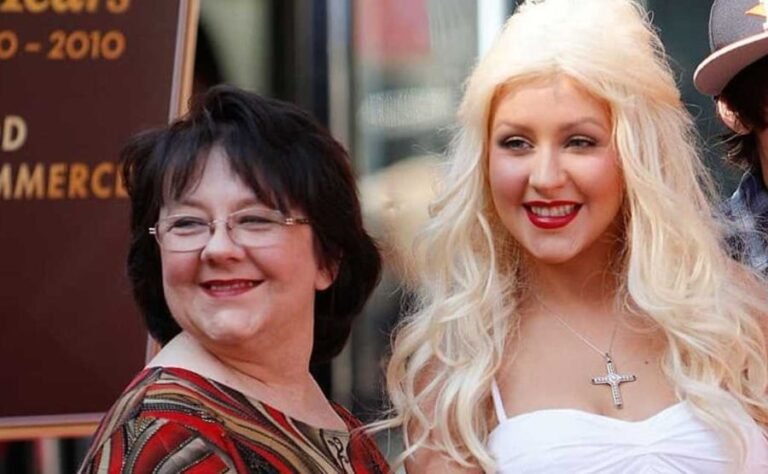
After her divorce, Rebecca retreated from the public world in a way that was clearly deliberate. She has an Instagram account, but it has remained private. The Foster daughters — particularly Sara and Erin, who have always been relatively candid about their family life in interviews — have occasionally shared photos of their mother on their own public platforms. In those glimpses, she appears warm, present, the kind of mother who shows up.
David Foster has remained in contact with the world through his music and his subsequent marriages — to Linda Thompson from 1991 to 2005, then to Yolanda Hadid from 2011 to 2017, and finally to singer Katharine McPhee, whom he wed in 2019. That’s four marriages in total. Rebecca was his second.
From what can be observed, Rebecca and David have maintained a functional co-parenting relationship. The Foster daughters appear in photos together frequently and have no evident fractured family dynamic — which suggests that whatever happened between their parents, it was handled with enough maturity to protect the children’s experience of both families.
Hardships and Difficult Phases
The truth about Rebecca Dyer’s hardships is that we don’t really know them in detail — which is itself telling. She has not shared them. What we can infer is that divorcing in 1986, as a woman in her early thirties with three daughters under five, while your ex-husband goes on to global superstardom, presents its own particular challenges.
There is a complicated emotional landscape in that situation. David Foster’s career after the divorce went stratospheric. He produced Céline Dion, Andrea Bocelli, Whitney Houston, and Michael Bublé, among dozens of others. His name became synonymous with adult contemporary pop at its most successful commercial peak. The man Rebecca had been married to — when he was still ascending, still grinding, still missing family dinners for studio sessions — became one of the most celebrated figures in the music industry.
Navigating that reality while raising his children, maintaining your own identity, and doing so without the financial and social infrastructure of a celebrity marriage is genuinely hard. That Rebecca did it without apparent bitterness, without public grievance, and without any of the tabloid drama that often accompanies high-profile divorces, suggests a woman of considerable emotional strength.
Money and Net Worth
Honest answers here require acknowledging the limits of what’s documented. Rebecca Dyer has never disclosed her financial details. Various websites have attached net worth estimates to her name, but these range so wildly — and are so clearly invented by content farms with no sourcing — that repeating them would be misleading.
What can be said reasonably: as the former wife of David Foster, there would likely have been a divorce settlement in 1986. Foster was already a successful producer by then, with significant earnings. Beyond that, Rebecca had her own professional income from her modeling and acting career. She has not been reported to be in financial difficulty at any point.
She lives her life away from wealth-signaling — no known luxury properties, no business ventures that have generated financial coverage. The absence of information about her finances is consistent with everything else we know about her: a person who keeps her affairs private.
What She’s Doing Now
Rebecca Dyer remains out of the public eye. Her Instagram is locked. She doesn’t show up at business gatherings. She is not building a brand or preparing a comeback. She simply lives.
Her daughters are thriving. Erin’s Netflix show Nobody Wants This introduced the Foster name to a whole new generation. Sara remains active in entertainment. Jordan continues her work in fashion styling. At family events and store openings for Favorite Daughter, photos have occasionally surfaced that include their mother — smiling, comfortable, clearly proud of what her daughters have built.
If there is a current lifestyle that can be identified for Rebecca Dyer, it appears to be: private person, devoted mother to adult daughters, grandmother figure in a bustling extended family. It doesn’t generate headlines. It doesn’t need to.
Final Words
Rebecca Dyer’s life story carries a lesson that the entertainment industry rarely celebrates, because it isn’t photogenic: sometimes the most powerful thing you can do is get out of the frame.
She came up through one of modeling’s most prestigious agencies. She made the transition into acting. She fell in love with a man who would become a music legend, married him, had three daughters, and then — when the marriage fell apart — did the hardest and least recognized work of all. She raised those three girls largely on her own, without fanfare, without a publicist, and without a reality TV deal to monetize the experience.
The result is a family that any parent would be proud of. Three daughters who are funny, talented, independent, and apparently close to each other and to their mother. That’s Rebecca Dyer’s real legacy — not the magazine pages she appeared on in the late 1970s, not the acting credits on IMDB, and certainly not her connection to David Foster’s Grammy collection.
She is a woman who understood early that privacy is not a failure. It’s a choice. And she made that choice clearly, consistently, and apparently without regret.
In an age when everyone’s life is a performance, Rebecca Dyer’s decision to live hers quietly is, in its own quiet way, remarkable.
FAQs
1. Who is Rebecca Dyer?
Rebecca Dyer is an American actress and former model, best known publicly as the second wife of music producer David Foster and the mother of Sara, Erin, and Jordan Foster. She worked with the Ford Modeling Agency and had an acting career before largely withdrawing from public life.
2. When was Rebecca Dyer born?
Her exact birth date has never been officially confirmed. The most credible available references suggest she was born around 1955 in the United States, though some sources cite different years. Rebecca has never publicly verified her birth date.
3. What did Rebecca Dyer do for a career?
Before her marriage, she was a professional model, represented by the prestigious Ford Modeling Agency in New York. She also worked as an actress, with credits listed on IMDB. Her career was active primarily in the late 1970s and early 1980s.
4. How did Rebecca Dyer and David Foster meet?
The specific circumstances of their first meeting have never been detailed in any public source. They were clearly together before their 1982 marriage, as their oldest daughter Sara was born in February 1981.
5. When did Rebecca and David Foster get married?
They married in 1982. Their relationship predates the marriage, given Sara’s birth in early 1981.
6. How long were Rebecca Dyer and David Foster married?
Their marriage lasted four years. They divorced in 1986.
7. How many children do Rebecca and David Foster have together?
Three daughters: Sara Foster (born February 1981), Erin Foster (born August 1982), and Jordan Foster (born September 1986).
8. What are Rebecca’s daughters doing now?
Sara is an actress and entrepreneur. Erin is a writer and producer whose Netflix show Nobody Wants This (2024) became a major hit. Jordan works as a celebrity hairstylist and fashion stylist in New York. All three are co-connected through the clothing brand Favorite Daughter, launched by Sara and Erin in 2020.
9. Did Rebecca remarry after David Foster?
There is no public record of Rebecca Dyer having remarried after her 1986 divorce from David Foster.
10. Why is Rebecca Dyer so private?
She has never explained her reasons publicly — which is consistent with the decision itself. She appears to have deliberately chosen a life away from media attention. Her Instagram account is set to private, and she does not give interviews or make public appearances.
11. What is Rebecca Dyer’s net worth?
No verified figure exists. Various websites have published estimates, but none are based on documented sources. As the former wife of a highly successful music producer and an alumna of the Ford Modeling Agency, she is presumed to be financially comfortable, but no reliable breakdown of her finances is publicly available.
12. What is Rebecca Dyer doing today?
She maintains a very private life. She surfaces occasionally in photos shared by her daughters on social media. By all appearances, she is focused on family — supporting her daughters’ careers from the background and enjoying a life of personal rather than public success.
Explore stories that inspire curiosity with The Imperial Magazine.

One Comment