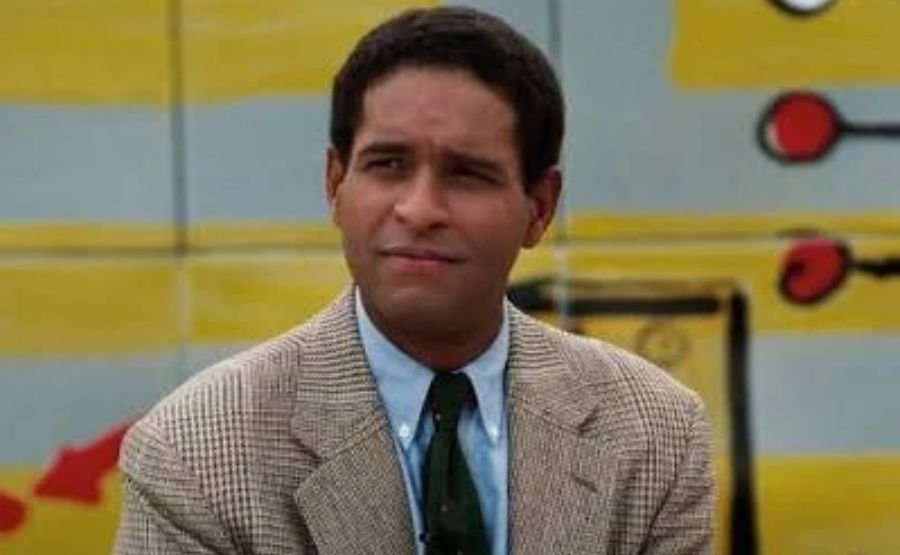
Judge Richard Dunbar Gumbel: Exploring His Background, Legal Career, Personal Life, and Lasting Legacy
Quick Bio
| Detail | Information |
| Full Name | Richard Dunbar Gumbel Jr. |
| Born | 1920, New Orleans, Louisiana |
| Died | 1972, outside his court chambers, Chicago, Illinois |
| Age at Death | 51–52 |
| Nationality | American |
| Ethnicity | Louisiana Creole — African, French, Ashkenazi Jewish, and other mixed heritage |
| Occupation | Attorney; Cook County Probate Judge, Illinois |
| Education | Georgetown University Law Center (worked two jobs to put himself through) |
| Wife | Rhea Alice LeCesne |
| Children | Greg Gumbel (sportscaster), Bryant Gumbel (journalist/anchor), Renee Gumbel-Farrahi, Rhonda Gumbel-Thomas |
| Legacy | Father of two of America’s most celebrated broadcast journalists; member of the distinguished New Orleans Creole community |
Why Richard Gumbel’s Story Deserves to Be Told
The search query that brings most people to Richard Dunbar Gumbel Jr. is some variation of “who was Bryant Gumbel’s father?” or “Greg Gumbel’s dad.” That’s understandable. His sons are the famous ones — Bryant spent fifteen years as the most recognisable anchor on American morning television; Greg was the voice of NFL games and college basketball for CBS for decades.
But the man who made both of those careers possible is genuinely worth understanding on his own terms. Richard Gumbel was a Black man from Louisiana Creole New Orleans who worked two jobs to put himself through one of America’s finest law schools, became a Cook County probate judge in mid-century Chicago, and raised four children with a focused deliberateness about education and language that shaped everything they became. He never saw either of his sons step in front of a camera professionally. He died at fifty-one, outside his courtroom, and by his son Greg’s own account that is the greatest regret of Greg’s life.
The fact that two of the most articulate, polished, and intellectually rigorous broadcast journalists in American history came from this one household is not a coincidence. It is Richard Gumbel’s legacy, running forward through time.
See also “Ann-Lorraine Carlsen Nantz: The Private Life Behind a Very Public Divorce“
The Creole World He Came From
To understand Richard Dunbar Gumbel Jr., you have to understand something about where he came from — because New Orleans Creole society in the first half of the twentieth century was a world unlike almost anywhere else in America, and the Gumbel family was woven into it deeply.
Louisiana Creoles of colour occupied a complicated and historically unique position in the American social landscape. With roots that blended African, French, Spanish, and in many cases European Jewish and other ancestries, the Creole community of New Orleans had developed over two centuries into a distinct cultural group with its own social institutions, traditions, and internal hierarchies. Many families, the Gumbels among them, carried ancestry that crossed the racial categories American society was attempting to enforce.
Richard’s paternal grandfather — Richard Dunbar Gumbel Sr. — was a founding member of the Autocrat Club, the famous New Orleans social organisation that served as one of the central gathering places for the city’s African American and Creole elite. Founded in 1886, the Autocrat Club hosted dances, civic events, and cultural gatherings that defined the social calendar of a community that was simultaneously constrained by Jim Crow society and operating with considerable internal sophistication and pride.
The genealogical picture of the Gumbel family extends to remarkable depths. Richard’s paternal great-great-grandfather was a German Jewish immigrant from the small village of Albisheim in what is now the Rhineland-Palatinate region of Germany — one of the thousands of German-Jewish immigrants who settled in New Orleans in the nineteenth century and whose descendants became fully integrated into Louisiana Creole society over subsequent generations. This ancestry, combined with the predominantly African and French Creole heritage, gave the family the layered ethnic complexity that characterised many New Orleans Creole families of their era.
His mother’s side connected the family to the LeCesne family, another prominent New Orleans Creole family. When Richard married Rhea Alice LeCesne, he was joining two streams of the same remarkable community, deepening the family’s roots in the particular culture that had produced them both.
Two Jobs and Georgetown Law
At some point in his young adulthood, Richard Gumbel made a decision that would shape everything that followed: he was going to get himself through law school. And he was going to do it while working two jobs.
Georgetown University Law Center in Washington, D.C. was then and remains today one of the most prestigious law schools in the United States. It was founded by Jesuits, rooted in a tradition of rigorous legal education and civic engagement, and not an easy place to find yourself admitted to or to succeed at once you were there. For a young Black man from New Orleans in mid-century America — navigating the racial barriers that made every step harder than it should have been — the accomplishment of getting himself through Georgetown Law while holding down two simultaneous jobs speaks to a quality of determination that would later show up, in different forms, in his children.
What those two jobs were, specifically, is not documented in the sources available to us. What is documented, repeatedly and directly from his son Greg’s testimony, is the fact of them — the labour that funded the education, the particular sacrifice required to stay in law school when every dollar had to be earned before it could be spent.
He graduated, was admitted to the bar, and began building a legal career. The family settled in Chicago, the great northern destination for Black Americans during the Great Migration who were seeking something beyond the enforced limitations of the Jim Crow South. Hyde Park, the South Side neighbourhood where the Gumbels established their household, was one of Chicago’s more integrated and intellectually active communities — home to the University of Chicago, to a population that included academics, professionals, artists, and activists who took education seriously as both a personal and a political matter.
The Cook County Courtroom
Richard Gumbel’s legal career progressed toward the bench. He became a Cook County probate judge — a position in Illinois’s court system responsible for handling matters of estates, wills, guardianships, and the administration of property after death. Probate court sits at an intersection of law and human experience that most people only encounter at the worst moments of their lives: when parents die, when estates are contested, when families must negotiate the material dimensions of grief. The judge who oversees those proceedings needs both legal precision and something like human wisdom.
Cook County is one of the largest and most complex judicial districts in the United States, encompassing Chicago and a wide swath of its surrounding communities. Reaching the bench in that system required not just legal ability but the kind of professional standing and community respect that accumulated over years of serious practice.
Richard Gumbel had his brother-in-law Archibald T. LeCesne as a kind of parallel figure in his professional world. Archibald — one of Rhea Alice’s siblings — had also entered the law and would eventually become an Associate Judge of the Circuit Court of Cook County. The two men were part of a broader network of Creole and African American legal professionals in Chicago who had come north, earned their credentials, and built careers that pushed against the professional ceilings the era was still trying to enforce.
The Father His Children Described
The most vivid portrait of Richard Gumbel as a person comes from his son Greg, who spoke about his father with the kind of specific, feeling-laden detail that tells you the memory never faded.
He stressed education. That’s the first thing Greg said, repeatedly and to multiple interviewers across decades. “Dad always stressed the value of education and speaking skills.” Not in an abstract way, not as a general parental exhortation, but in the deliberate, consistent manner of a man who had seen firsthand what education could accomplish and what its absence cost — who had worked two jobs to fund his own, and who was not going to let his children take that gift for granted.
He also organised. The family outings that Greg described in interviews were specific and purposeful: the Field Museum of Natural History, the Shedd Aquarium, the Museum of Science and Industry. These were not casual weekend diversions. They were a father building a cultural and intellectual landscape for his children to inhabit — bringing them into contact with science, natural history, technology, and the broader story of the world’s complexity. The message embedded in those visits was consistent: curiosity is valuable, knowledge is worth pursuing, the world is bigger than your immediate neighbourhood.
The family home hummed with four children across a narrow age range. Greg was born in 1946, Bryant in 1948, and their sisters Renee and Rhonda rounded out a lively household. Greg would later recall that he and Bryant were divided in their baseball allegiances — Greg for the White Sox, Bryant for the Cubs — a sibling rivalry that persisted into their broadcasting careers and gave both of them years of friendly material. But the more important shared inheritance was the father who set a standard for what intellectual engagement and professional seriousness actually looked like in practice.
The Marriage That Anchored the Family
Rhea Alice LeCesne Gumbel was Richard’s essential partner in everything they built. She had come to the marriage from the LeCesne family — connected to the same community networks, holding the same values about education and civic responsibility. Sources describe her as a city clerk, the practical municipal work of keeping governmental records, an unglamorous but essential occupation. While Richard built his legal career through the courts, Rhea Alice managed the daily life of a household of six in Hyde Park.
The two of them together modelled for their children what it looked like to work hard, to show up, to maintain standards without letting difficulty become an excuse. Their brother Archibald LeCesne, Rhea Alice’s sibling, was a present figure in the extended family — another attorney, another judicial figure, another example of what the community could produce when it was given access to education and opportunity.
The network around the Gumbel children was not accidental. It was the product of two parents who understood that the people around you shape who you become, and who chose those people carefully.
The Loss That Defined His Sons’ Careers
In 1972, Richard Dunbar Gumbel Jr. had a heart attack outside his court chambers. He was fifty-one or fifty-two years old. He died there.
The timing was specifically cruel. Bryant had just begun his television career — his first year working as a sportscaster at KNBC-TV in Los Angeles. Greg was still working for a hospital supply company, not yet in broadcasting. Neither son had yet stood in front of a camera in the roles that would eventually make their names.
Greg Gumbel said it plainly to multiple interviewers across the following decades: his greatest regret in life was that his father died before either of them had entered broadcasting. Richard had lived to build the foundation — the law school grind, the judicial career, the museum outings, the emphasis on speaking skills and education — without ever seeing the specific form that foundation eventually took.
“Dad always stressed the value of education and speaking skills,” Greg said. “He died in 1972, before Bryant and I had careers in television.”
The implication is obvious: that Richard Gumbel would have recognized, in his sons’ broadcasting careers, the precise expression of everything he had worked to give them. The speaking skills he insisted on. The curiosity he cultivated through those museum visits. The professional standards he modelled from the bench. All of it visible, recognisably his, in the two men who went on to become the faces of sports and news broadcasting for a generation of American viewers.
He never got to see it. That is the particular grief Greg carried.
A Heritage Worth Tracing
The genealogical depth of the Gumbel family adds another dimension to Richard Dunbar Gumbel Jr.’s story. His father Richard Dunbar Gumbel Sr. was the son of Cornelius Joseph Gumbel and Marie Valentine Allain Prevost. The family’s German-Jewish heritage — the emigrant from Albisheim who became the great-great-grandfather of two American television legends — is a strand in the larger fabric of Louisiana Creole history, in which European immigrant families, free people of colour, enslaved people, and their various descendants wove together over centuries into something distinctly American and distinctly Louisianan.
The Autocrat Club connection runs back through generations — Richard Sr.’s founding membership connecting to a tradition of community organisation and civic pride that defined the Creole elite of New Orleans. When Richard Jr. eventually moved his family to Chicago, he was carrying that tradition north, into a new city, into a new professional context, but with the same fundamental orientation toward community, education, and civic engagement that the Autocrat Club had always represented.
Greg and Bryant’s sons — and their daughters Renee and Rhonda — are the continuing expression of that tradition in its latest generation.
Personal Life: A Complete Picture
Richard and Rhea Alice built a full and apparently warm family life in Hyde Park. The four children grew up close to each other. The White Sox/Cubs rivalry between Greg and Bryant was affectionate rather than bitter. The sisters Renee Gumbel-Farrahi and Rhonda Gumbel-Thomas grew up alongside their brothers in the same household shaped by the same parental emphasis on education and culture.
Richard Gumbel was a devout enough member of his community that his family’s network extended across both the professional world of Black Chicago’s legal establishment and the social world of Creole New Orleans transplants who had brought their traditions with them to the city. The Autocrat Club legacy, the LeCesne family connections, the Georgetown Law credential — all of it added up to a life lived at the intersection of professional achievement and community belonging.
He had fifty-one or fifty-two years. It was not enough. But what he built in that time, and what he left behind in his children, turned out to be more than enough.
The Financial Dimension
Richard Gumbel’s financial life was that of a mid-century professional in one of America’s major cities. A Cook County probate judge in the 1960s and early 1970s earned a judicial salary — comfortable, stable, professional, without the wealth that private practice could occasionally generate. The two-jobs-through-law-school phase of his life suggests that the ascent from working-class New Orleans to Chicago’s professional class was not financially easy.
No estate figures, no personal financial disclosures, and no independent estimates of his wealth exist. He died before the age of fifty-two, which means whatever he had accumulated went to Rhea Alice and their four children. The real inheritance he left — the Georgetown Law credential, the judicial career, the culture of education and speaking — was not financial. It was something more lasting.
What He Would Have Seen
By the time Greg Gumbel was talking about his greatest regret in the 1990s, he had been the first Black play-by-play announcer at a Super Bowl (Super Bowl XXXV, January 2001). Bryant had co-hosted the Today show for fifteen years, anchored the CBS Evening News, and hosted HBO’s Real Sports for decades. Both of them had won Emmy Awards. Both of them had, in Greg’s phrase, “done things that were impossible to imagine when we were young.”
Richard Dunbar Gumbel Jr. had stressed education. He had stressed speaking skills. He had organised the museum outings. He had worked two jobs through Georgetown Law to get himself to the bench, and from the bench had tried to show his children what professional seriousness looked like. He had, in every deliberate and undramatic way available to a Black father in mid-century Chicago, invested in the people his children might become.
He died in 1972. The impossible things Greg mentioned — they all came after.
Final Words
Richard Dunbar Gumbel Jr. is one of those figures whose importance is obvious in retrospect but was not particularly visible in his own time. He was a Cook County probate judge in Chicago, a decent and serious man from a New Orleans Creole family who worked his way through Georgetown Law and raised four children with considerable intentionality. He was not famous. He was not powerful in the visible, public sense. He died at fifty-one, which is too young by any measure, and he left before he could see what he had built.
What he had built turned out to be two of the most recognisable voices in American broadcast history, produced by a household that understood before most households what it meant to combine education with articulate expression and professional ambition.
The Autocrat Club grandfather. The Georgetown Law graduate working two jobs. The probate judge organising museum outings for his children on weekends. The father who stressed speaking skills to sons who would spend their careers speaking.
That is the whole story, and it is a remarkable one.
FAQs
1. Who was Richard Dunbar Gumbel Jr.?
Richard Dunbar Gumbel Jr. was an American attorney and Cook County probate judge who lived from 1920 to 1972 in Chicago, Illinois. He is best known as the father of sports broadcaster Greg Gumbel and television journalist Bryant Gumbel. He came from a distinguished Louisiana Creole family in New Orleans and worked his way through Georgetown University Law Center while holding two jobs simultaneously.
2. When did Richard Dunbar Gumbel Jr. die?
He died in 1972 from a heart attack suffered outside his court chambers. He was approximately 51 or 52 years old. His death came just as his son Bryant was beginning his television career, and before either Greg or Bryant had entered broadcasting professionally — a timing that Greg Gumbel described as his greatest personal regret.
3. What was the origin of Richard Dunbar Gumbel Jr.?
He was born in New Orleans, Louisiana, in 1920, into the Louisiana Creole community that had its roots in the city’s distinctive mix of African, French, German-Jewish, and other ancestries. His family later moved to Chicago’s South Side, specifically the Hyde Park neighbourhood, where he built his legal career and raised his children.
4. What was Richard Dunbar Gumbel Jr.’s professional career?
He was a lawyer who eventually became a Cook County probate judge in Illinois — a judicial position responsible for handling estate matters, wills, guardianships, and the administration of property after death. In the US, Cook County is among the biggest and most intricate judicial districts.
5. Where did Richard Dunbar Gumbel Jr. go to law school?
He earned his law degree from Georgetown University Law Center in Washington, D.C. One of America’s most esteemed law schools. He famously worked two jobs to put himself through law school, a sacrifice that his son Greg cited repeatedly as evidence of his father’s character and determination.
6. Who were Richard Dunbar Gumbel Jr.’s children?
He had four children with his wife Rhea Alice LeCesne: Greg Gumbel (born 1946), who became a sportscaster for CBS; Bryant Gumbel (born 1948), who became a television journalist and Today show anchor; Renee Gumbel-Farrahi; and Rhonda Gumbel-Thomas.
7. What was the Gumbel family’s heritage?
The family was Louisiana Creole — an ethnic group with complex mixed ancestry developed over centuries in New Orleans. The Gumbel family heritage included African, French, Ashkenazi Jewish (through a German-Jewish immigrant great-great-grandfather from the village of Albisheim), and other European ancestries. Richard Dunbar Gumbel Sr., Richard Jr.’s father, was a founding member of the Autocrat Club, the prominent New Orleans Creole social organisation.
8. What influence did Richard Gumbel have on his sons’ careers?
Direct and profound. Greg Gumbel specifically cited his father’s consistent emphasis on education and speaking skills as foundational to both his and Bryant’s success in broadcasting. Richard also organised regular cultural outings for his family — to the Field Museum of Natural History, the Shedd Aquarium, and the Museum of Science and Industry — deliberately cultivating curiosity and intellectual engagement in his children from an early age.
9. Who was Rhea Alice LeCesne Gumbel?
She was Richard’s wife and the mother of their four children. She came from the LeCesne family, another prominent New Orleans Creole family. Her brother Archibald T. LeCesne eventually became an Associate Judge of the Circuit Court of Cook County — making the Gumbel-LeCesne family alliance a remarkable concentration of legal achievement in mid-century Chicago. Sources describe Rhea Alice as a city clerk by occupation.
10. Why is Greg Gumbel’s greatest regret connected to his father?
Greg Gumbel stated in multiple interviews over the decades that his greatest regret was that his father died in 1972 before either he or Bryant had entered broadcasting careers. Richard had spent his life emphasising education and speaking skills to his children, but died just as those investments were beginning to pay dividends in ways he could directly recognise. Bryant had just started his first year at KNBC-TV in Los Angeles; Greg was still working in a different industry. Neither had yet achieved the careers that would eventually define them both.
11. What was Richard Dunbar Gumbel Sr.’s significance?
Richard Sr. One of the most important African American and Creole social organizations in New Orleans’ history, the Autocrat Club, was founded by Richard Jr., who is also Greg and Bryant’s grandpa. Founded in 1886, the club served as a cultural and civic centre for the community. Richard Sr.’s foundational role in that institution placed the Gumbel family among the established leadership of New Orleans Creole society.
12. Where did Richard Dunbar Gumbel Jr.’s family settle in Chicago?
They settled in the Hyde Park neighbourhood on Chicago’s South Side. Hyde Park was notable as one of the more racially integrated and intellectually active communities in mid-twentieth century Chicago — home to the University of Chicago and a population that included academics, lawyers, doctors, and other professionals who took education and civic engagement seriously. It was an environment that suited and reinforced Richard Gumbel’s own values.






One Comment