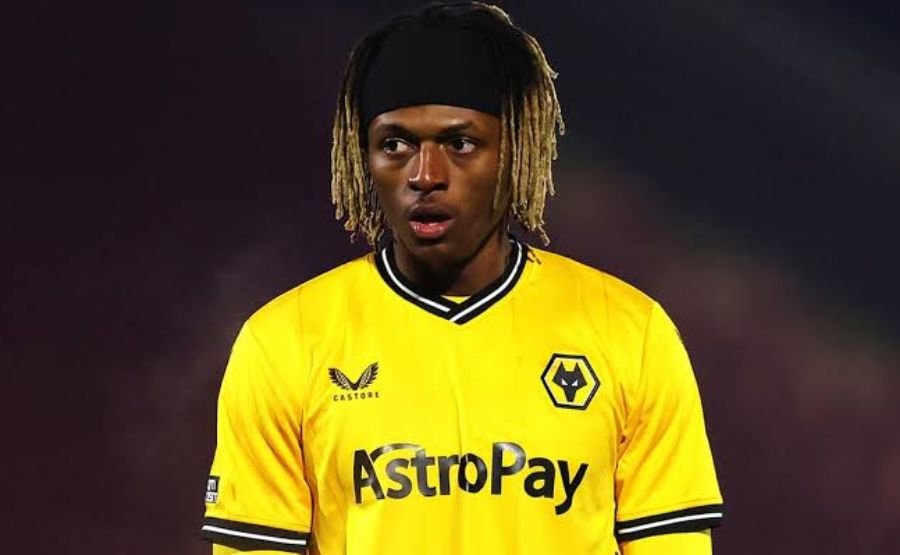
Ethan McLeod Accident: The Story Behind the Incident and What Followed
Quick Bio
| Detail | Information |
| Full Name | Ethan Lucius McLeod |
| Born | September 11, 2004, Birmingham, England |
| Died | December 16, 2025, M1 motorway near Junction 15, Northamptonshire |
| Age at Death | 21 |
| Nationality | English |
| Occupation | Professional Footballer (Forward) |
| Known For | Ten years in the Wolverhampton Wanderers academy; Macclesfield FC forward; England youth international |
| Clubs | Rushall Olympic, Stourbridge, Wolverhampton Wanderers (academy & professional), Alvechurch (loan), and Macclesfield FC |
| Brother | Conor McLeod — footballer in the Wolves under-21 squad |
| Professional Contract Signed | January 2023, Wolverhampton Wanderers |
| Last Match | December 16, 2025 — Macclesfield vs. Bedford Town (as substitute) |
| Legacy | Number 20 shirt retired by Macclesfield FC in his honour |
Why Ethan McLeod’s Story Matters
Some lives leave marks on the world that are completely out of proportion to how long those lives lasted. Ethan McLeod was twenty-one years old when he died. He had scored three goals for Macclesfield FC, made seven appearances in the sixth tier of English football, and was, by every account from teammates, coaches, and club officials, the kind of person who made every room he entered a better place.
He wasn’t famous. He was not a Premier League player. He had never made the back pages of a national newspaper before the night his white Mercedes hit a motorway barrier on the way home from a match in December 2025.
But his story — the decade in the Wolves academy, the injuries, the setbacks, the determination to keep going through the lower leagues, the smile that people keep mentioning — is the story of thousands of young footballers in England. Boys who fall in love with the game before they can properly tie their boots, who dedicate their childhoods to a system that only accommodates a tiny fraction of them, and who have to figure out who they are when the path gets harder than they imagined.
What made Ethan’s story different was how he responded to every one of those obstacles. And then it ended, all at once, on a dark stretch of motorway in Northamptonshire, and English football spent the next several weeks quietly mourning a young man most people had never heard of.
Birmingham Beginnings: Growing Up with a Ball
Ethan McLeod was born in Birmingham, England, in September 2004 — right in the heart of football country. Birmingham and the surrounding West Midlands region produce footballers the way rivers produce water; it’s just what the landscape does. Growing up there means growing up surrounded by clubs, by the traditions of Wolves and Villa and City and United, by pitches that see action from dawn to dusk every weekend.
From early childhood, the ball was clearly his obsession. He was the kind of kid who couldn’t stand still, who had pace and directness that stood out even when everything else was still unformed. His younger brother Conor shared the same passion and the same ability — a football family in the truest sense.
Not much is publicly documented about his parents beyond the fact that they were deeply present in his life and deeply proud of what he was building. When Macclesfield manager John Rooney described finding Ethan’s parents sitting in his office after the club’s famous FA Cup victory over Crystal Palace — a win that took place weeks after Ethan’s death — he spoke about it as one of the most moving moments of his career. These were people who had believed in their son for twenty-one years, who had driven him to training and stood on cold touchlines and watched him battle back from injuries, and who now found themselves inside a football club celebrating a victory dedicated to the boy they’d lost.
See also “David Mitchell and Victoria Coren: The Story Behind Their Marriage and Family Life“

Joining Wolves: Seven Years Old and Already a Silkman in Waiting
In 2014, when Ethan McLeod was just seven years old, Wolverhampton Wanderers invited him into their pre-academy setup. For a child from Birmingham, this was the beginning of everything. Wolves had one of the most respected academies in England, a production line of talent that took young boys from the local area and tried to turn them into professional footballers.
Ethan spent a decade inside that system. Ten years is a long time under any circumstances, but at a football academy it represents essentially your entire childhood and adolescence. You grow up inside the structure of the club — its rhythms, its expectations, its culture. The friendships you form are forged through shared training sessions and youth cup finals and long bus journeys to away games. Your identity gets tied to the crest on the shirt.
He progressed through the age groups steadily. He started as a midfielder — a common starting point for dynamic, energetic young players — but under the guidance of Darius Vassell, the former Aston Villa and England striker who served as a forward coach within the Wolves setup, he transitioned into an attacking role. That position suited him perfectly. Pace, directness, an eye for goal — Vassell spotted what was there and helped shape it into something more refined.
The progress was good enough that Ethan earned recognition at international level, representing England at youth age groups. That’s not nothing. England produces an enormous pool of young talent, and only a select group of academy players from any generation get called up to represent their country, even at youth level. Ethan did it. He wore the Three Lions.
Signing Professional Terms: January 2023
In January 2023, when Ethan was eighteen years old, Wolves rewarded him with his first professional contract. It was the moment every academy player dreams of — the formal transition from promising youth player to professional footballer, with everything that implies.
Jon Hunter-Barrett, the academy director at Wolves, spoke warmly about Ethan when the signing was announced. He described him as an exciting, dynamic player with genuine pace and the kind of development arc that justified the club’s long investment in him. He also noted, with characteristic honesty, that injuries had limited Ethan’s playing time in the previous months. The contract was partly a recognition of what the coaches had seen over years — and partly an act of faith that the setbacks were temporary.
That qualification — the injuries — is worth pausing on. For a forward whose primary weapons were pace and directness, physical setbacks are particularly cruel. They don’t just keep you off the pitch; they threaten the very thing that makes you dangerous. Ethan dealt with injury disruptions during the later stages of his academy career, and they limited the number of appearances he could rack up in the Wolves under-18 and under-21 systems. His stats across those years show a relatively modest number of appearances precisely because fitness was an intermittent problem.
What the stats can’t capture is the effort that went into returning from each setback. The rehabilitation sessions, the work to rebuild fitness and sharpness, the mental grind of watching your teammates play while you’re stuck in the gym. Everyone who knew Ethan mentioned his work ethic. That’s not a coincidence.
The End of One Chapter: Leaving Wolves
In September 2024, after ten years inside the Wolves family, Ethan’s time at the club came to a close. He was twenty years old, professionally contracted, and now suddenly without a club. It is one of the hardest transitions in professional football — the moment when an academy graduate who hasn’t quite broken into the first team finds themselves starting over at a different level.
He didn’t disappear. He kept going.
First he moved to Rushall Olympic, a non-league club playing in the lower tiers of the English pyramid. Then came Stourbridge — another non-league outfit, another chance to get minutes and stay sharp and remind the world that he could still play. Both clubs mourned him deeply when the news broke in December 2025, which tells you something about the impression he left even during brief stays.
These weren’t steps backward in Ethan’s mind, or in the minds of anyone watching him closely. They were steps sideways, steps taken by a young man refusing to accept that his football career was over just because the Premier League academy system had moved on.
Macclesfield and a Fresh Start
In July 2025, Ethan McLeod arrived at Macclesfield FC on trial. The club, nicknamed the Silkmen, competes in the National League North — England’s sixth tier of professional football, a long way from the Premier League environment where Ethan had spent most of his life.
Manager John Rooney — yes, the brother of Manchester United and England legend Wayne Rooney — liked what he saw immediately. Ethan had impressed during a friendly against Mansfield Town, showing the pace and attacking instinct that had made him stand out since childhood. Macclesfield signed him on July 14, 2025.
Ethan hit the ground running. He debuted against Chorley in September. By December, he had made seven appearances and scored three goals — a very healthy return for a player still finding his feet at a new club. He was becoming a fan favourite. His pace caused problems for defenses that hadn’t had to deal with someone quite like him at this level. His personality won over the dressing room. By all accounts, he was exactly what Macclesfield needed and exactly what he needed: a fresh start that was working.
On December 16, 2025, Macclesfield travelled to Bedford Town for a National League North fixture. They won 2-1. Ethan came on as a substitute. It was, as far as anyone knew at the time, just another Tuesday night match — a long drive, a win, the journey home.
The Night of December 16, 2025
The M1 motorway runs north through Northamptonshire like a grey ribbon connecting the Midlands to London and everything in between. At around 10:40 in the evening on December 16, near Junction 15, Ethan McLeod’s white Mercedes left the carriageway and collided with a metal barrier at the roadside. No other vehicles were involved.
Members of the public stopped. Police officers from Northamptonshire’s roads unit arrived. Everyone who could help tried to help. It wasn’t enough. Ethan was pronounced dead at the scene. He was twenty-one years old.
Macclesfield FC announced his passing the following morning in a statement that was, in its grief, genuinely beautiful. They spoke about his talent and his professionalism, yes, but mostly they spoke about who he was as a person — the infectious energy, the smile that seemed to work on everybody, the way he made the people around him feel like they could do more, be more, on their worst days as well as their best ones. They said his legacy would never fade. They meant it.
Wolverhampton Wanderers published their own tribute, noting that Ethan’s younger brother Conor was still part of the Wolves under-21 setup, and that the entire club would be rallying around the family. A minute’s silence was observed at Molineux before Wolves’ Premier League match against Brentford that Saturday. Stourbridge mourned. Rushall mourned. The Professional Footballers’ Association sent its condolences. The football world, in its small, interconnected way, paused.
The Football Family’s Response
In the weeks that followed, Macclesfield retired the number 20 shirt that Ethan had worn. No Silkman would wear that number again. It was a simple gesture and a profound one.
Then came the FA Cup. Macclesfield, a non-league club from Cheshire, drew Premier League holders Crystal Palace in the third round of the competition — one of those extraordinary cup draws that make the FA Cup unlike anything else in world football. The gap between the clubs in the football pyramid was 117 divisions. Macclesfield won.
John Rooney dedicated the victory to Ethan. He described walking into his office after the final whistle and finding Ethan’s parents sitting there, present for the moment. He said he couldn’t explain how he had managed to make the phone calls to individual players after Ethan’s death, one by one, breaking the same terrible news over and over. He called it the hardest thing he had ever done in football. And then he said that when it mattered most, with Ethan’s parents watching, his team had gone out and beaten the FA Cup holders.
If you wanted to write a football fairy tale for someone who couldn’t be there to see it, you’d be hard pressed to write a better one than that.
Personal Life
Ethan kept his private life quietly to himself, as many young professional footballers do. What is publicly known is that he came from a close family, that his younger brother Conor shared his passion for the game and his talent for it, and that his parents were deeply involved in and supportive of his career throughout. The image of them sitting in the manager’s office at Macclesfield on FA Cup day — their son gone a month, the club winning an impossible match — captures something about the people who raised him that no biographical fact could fully convey.
His teammates at every club consistently remarked on his character as much as his ability. That’s rare. Usually obituaries of footballers focus on goals and assists. With Ethan, everyone kept coming back to what it felt like to be around him — the energy, the laughter, the way he drove people to be better without making it feel like effort.
Financial Picture
Ethan McLeod was a young professional footballer playing at the non-league level at the time of his death. Non-league football in England does not pay like the Premier League — players at that level often earn modest wages, sometimes supplemented by part-time work. There is no public estimate of his net worth, and any figure would be speculative at best.
What he had at twenty-one was something harder to quantify: a career that was moving again, a club that believed in him, and three goals already banked for the season. In football terms, that is its own kind of currency.
What He Left Behind
Ethan McLeod left behind a family, a club that will never forget him, a brother still playing football at Wolves, and a number 20 shirt that will never be worn again at Macclesfield.
He left behind teammates who scored goals and pointed at the sky. He left behind a manager who can’t describe the night of the phone calls without his voice catching. He left behind an FA Cup banner strung between the dugouts at the most improbable cup upset of the 2025/26 season.
He left behind every coach who ever clapped him on the back after a training session, every youth team he represented for England, every friendly he lit up at Wolves, every dressing room he walked into and made better just by being in it.
He was twenty-one years old. He had his entire life ahead of him. That is the phrase his club used, and it is one of the saddest true things you can say about a person.
Final Words
The world of football is very good at producing stories of triumph — the kid from nowhere who makes it to the top, the player who comes back from injury to score the winner in a cup final. Ethan McLeod’s story doesn’t end like that, and there is no frame you can put around it that makes that feel okay.
What you can say is this: he earned every opportunity he got. He spent ten years at one of England’s finest academies, worked under coaches who shaped him seriously, represented his country at youth level, and when the system moved on he didn’t give up — he found another club, and then another, and then he found Macclesfield, and Macclesfield found him, and for a few months in the autumn of 2025 it looked like the kind of story that was just beginning rather than ending.
He was, by universal account, a genuinely wonderful human being. Not just a footballer. A person. One whose specific smile — and multiple people mentioned the smile — apparently had a quality that people struggled to describe but couldn’t forget.
The number 20 shirt at Macclesfield FC sits retired now. The football keeps being played. His brother Conor keeps training at Wolves. And in a small town in Cheshire, a football club that beat the FA Cup holders dedicated the whole beautiful impossible thing to a twenty-one-year-old forward from Birmingham who never got to see it.
Rest easy, Ethan.
See also “David Mitchell and Victoria Coren: The Story Behind Their Marriage and Family Life“
FAQs
1. Who was Ethan McLeod?
Ethan Lucius McLeod was a young English professional footballer who played as a forward. Born in Birmingham on September 11, 2004, he spent a decade in the Wolverhampton Wanderers academy before going on to play for Rushall Olympic, Stourbridge, and Macclesfield FC in the National League North.
2. How did Ethan McLeod die?
Ethan died in a single-vehicle road traffic accident on the M1 motorway near Junction 15 in Northamptonshire, late on the night of December 16, 2025. He had been driving home after Macclesfield’s away match against Bedford Town when his white Mercedes struck a metal roadside barrier at around 10:40 p.m. He was pronounced dead at the scene.
3. How old was Ethan McLeod when he died?
He was twenty-one years old. He had turned twenty-one in September 2025, just three months before the accident.
4. What club was Ethan McLeod playing for when he died?
He was playing for Macclesfield FC in the National League North — England’s sixth tier of professional football. He had joined the club in July 2025 after impressing on trial.
5. How long did Ethan McLeod spend at Wolverhampton Wanderers?
He was part of the Wolves setup for approximately ten years, having joined the pre-academy at the age of seven in 2014. He signed his first professional contract with the club in January 2023 and departed in September 2024.
6. Did Ethan McLeod ever play for England?
Yes. He represented England at youth international level. This was considered one of the highlights of his development at Wolves, where coaches like Darius Vassell helped shape him into a forward capable of attracting national attention.
7. Who is Conor McLeod?
Conor McLeod is Ethan’s younger brother. He is also a footballer, playing in the Wolverhampton Wanderers under-21 development squad. After Ethan’s death, Wolves publicly stated that the club would be providing support to Conor and to the wider family.
8. How did Macclesfield FC honour Ethan McLeod?
The club retired the number 20 shirt he wore, meaning no future Macclesfield player will wear that number. Manager John Rooney also dedicated the club’s stunning FA Cup third-round upset victory over Premier League holders Crystal Palace to Ethan’s memory in January 2026, with Ethan’s parents present at the match.
9. Who was Ethan McLeod coached by during his development?
Among the most significant figures in his development was Darius Vassell, the former Aston Villa and England striker who served as a forward coach within the Wolves academy. Vassell helped Ethan transition from midfield into an attacking role. Jon Hunter-Barrett, the academy’s football manager, was also closely involved and spoke warmly of Ethan’s progress when his professional contract was announced.
10. What were Ethan McLeod’s stats at Macclesfield?
In the 2025/26 season, Ethan made seven appearances for Macclesfield and scored three goals — a strong return for a player still establishing himself at the club. He was on the bench against Bedford Town on the night of his death, having come on as a substitute during the match.
11. What was Ethan McLeod’s career path after leaving Wolves?
After leaving Wolverhampton Wanderers in September 2024, he joined Rushall Olympic before moving to Stourbridge later in the same season. In July 2025, he joined Macclesfield FC following an impressive pre-season trial. He had also previously had a loan spell at Alvechurch while still a Wolves player.
12. How did the football world respond to Ethan McLeod’s death?
The response was widespread and deeply felt. Wolverhampton Wanderers observed a minute’s silence before their Premier League fixture against Brentford. The Professional Footballers’ Association issued a public tribute. Former clubs Rushall Olympic, Stourbridge, and Alvechurch all posted messages of condolence. Macclesfield’s statement described the grief in raw, unfiltered terms — describing wounds that would never fully heal — and the football community rallied around his family and his club in the weeks that followed.
Explore stories that inspire curiosity with The Imperial Magazine.