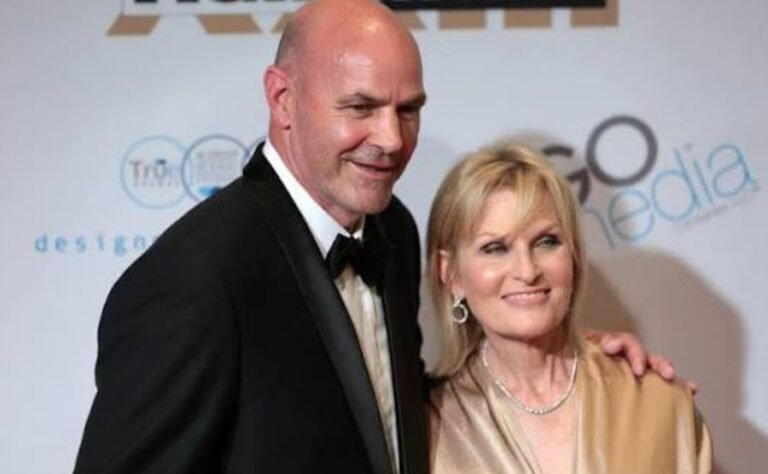
Is Dorothy Bowles Ford White? Exploring Her Ethnicity, Family Background, and Personal Life
Quick Bio
| Detail | Info |
| Full Name | Dorothy Jean Bowles Ford |
| Born | Around 1949, Memphis, Tennessee, USA |
| Nationality | American |
| Ethnicity | African American |
| Known For | First wife of Congressman Harold Ford Sr.; mother of Harold Ford Jr. |
| Occupation | Former consumer coordinator and regulatory functions administrator, Potomac Electric Power; homemaker; campaign supporter |
| Education | Geeter High School, Memphis; Memphis State University (some studies, did not complete) |
| Marriage | Married Harold Ford Sr. on February 10, 1969; divorced 1999 |
| Children | Harold Ford Jr. (b. 1970), Newton Jake Ford, Sir Isaac Ford |
| Grandchildren | Georgia Walker Ford, Harold Eugene Ford III (via Harold Jr.) |
| Post-Divorce Life | Largely private, out of public eye since 1999 |
| Is she white? | No. Dorothy Bowles Ford is African American |
A Memphis Woman Who Shaped Congressmen
There is a type of person in every generation of political life who does the essential, unglamorous, invisible work — the kind that holds everything together from behind the scenes while someone else takes the podium and collects the applause. Dorothy Bowles Ford was that person for the Ford political family of Memphis, Tennessee, one of the most influential African American political dynasties in the history of the American South.
She was not elected to anything. She did not write a memoir. She did not hold press conferences or give keynote speeches. What she did was raise three sons, support a husband’s historic 22-year career in Congress, run administrative operations for a family political machine, hold down a professional job of her own, and then, when the marriage ended after thirty years, quietly walk away from public life altogether.
That kind of story doesn’t get told often. But it deserves to be.
See also “Thomas Emil Sicks: The Private Son of a Very Public Canadian Dynasty“
Roots in Memphis: Where She Came From
Dorothy Jean Bowles was born in Memphis, Tennessee, the only child of her parents. The city she grew up in was not an easy place to come of age as an African American in the 1950s and 1960s. Memphis in those decades was a city of stark, enforced segregation — separate schools, separate public facilities, a city where the color line was drawn in concrete and law. It was also, however, a city with a rich, proud, tenacious Black community that refused to be defined by those limitations.
Dorothy grew up squarely within that community. The Bowles family was modest in means. Her parents raised her as their sole child, and from early on she developed the qualities that would define her adult life — quiet determination, a strong sense of family obligation, and the kind of practical intelligence that doesn’t require a formal credential to announce itself.
She attended Geeter High School in Memphis, a school that served the African American community on the city’s south side. Geeter High had a reputation as a school of substance in the Black community, and it was there that Dorothy’s story took its most consequential early turn. She met a young man named Harold Eugene Ford. He was ambitious, sharp-witted, and already thinking about his future in ways that went beyond what most teenagers his age were considering.
They were teenagers when they first met. Neither of them could have known then that their lives would be permanently intertwined — through love, through politics, through the raising of sons who would carry the family name into American political history.

Education and the Hard Reality of the 1960s
After graduating from Geeter High, Dorothy enrolled in Memphis State University. She was pursuing her education at a time when access to higher education for Black women in the American South was hard-won and financially fragile. The historical record on the specifics of her studies is incomplete — Dorothy has never spoken publicly about this period herself — but what multiple sources confirm is that financial pressure and family circumstances eventually forced her to leave college before completing her degree.
That kind of interrupted education was not unusual for young Black women in Memphis in the late 1960s. It was the product of systemic inequality, not of any failure of ability or ambition on Dorothy’s part. The same determination that had gotten her through Geeter High and into university would continue to drive her through every chapter of her life that followed.
The Marriage That Defined a Generation: Becoming Dorothy Ford
On February 10, 1969, Dorothy Bowles and Harold Eugene Ford Sr. were married. It was a private ceremony, modest in scale, but the life it inaugurated was anything but small.
Harold Ford Sr. was, by that point, already moving toward the political career that would make him famous. He had completed his degree at Tennessee State University in 1967, done graduate work, earned an associate’s degree in mortuary science from John Gupton College in Nashville in 1969, and had his eyes firmly on a future in public service. The Ford family was becoming a force in Memphis African American politics. Harold’s father, Newton Jackson Ford, had built a prominent funeral home business in the South Memphis community that was both a civic institution and an organizational base.
Dorothy stepped into that world fully. She was not a passive participant in Harold’s career — she was an active one. While Harold worked his way up through state politics and then toward Washington, Dorothy managed the administrative and logistical dimensions of the household and, in the early years, the family’s political operation. She worked as an administrator for her father-in-law, helping to manage operations at the family business level. Later, she built her own professional identity as a coordinator of consumer and regulatory functions at Potomac Electric Power, a utility company where she was known for her practical grasp of customer needs and her skills in navigating the complex intersection of consumer advocacy and regulatory compliance.
That is worth pausing on. Dorothy Bowles Ford was not simply a political wife keeping the home fires burning while her husband collected accolades. She was a working professional with her own career in an area — utility consumer advocacy — that served real people with real needs.
The Congressman’s Wife: 22 Years of Behind-the-Scenes Strength
Harold Ford Sr. was elected to represent Tennessee’s 9th congressional district in 1974, making history as the first African American ever to hold that seat. He would go on to represent that district for eleven consecutive terms — 22 years in total — before his son Harold Jr. succeeded him in 1996.
Throughout those two and a half decades, Dorothy was the steady presence behind the public figure. Congressional life is demanding in ways that rarely get acknowledged: the constant travel between district and capital, the relentless obligations of constituent service, the way political life bleeds into every corner of family existence, the scrutiny that comes with public prominence in a city and community where the Ford family name meant something.
Dorothy carried a great deal of that weight. She raised three sons — Harold Jr., Newton Jake, and Sir Isaac — in an environment that was at once politically charged and deeply community-rooted. The boys grew up understanding that their father’s work was not separate from their community’s life; it was an expression of it. And Dorothy was the one who made sure they understood that — not through lectures, but through the daily example of how she lived.
Harold Jr., the eldest, born on May 11, 1970, in Memphis, would go on to attend St. Albans School for Boys in Washington, D.C., the University of Pennsylvania for his undergraduate degree, and the University of Michigan Law School. He succeeded his father in Congress at the age of 26 and served until 2007. He subsequently built a career in investment banking, media commentary, and authorship. None of that happened in a vacuum. Dorothy raised him.
Newton Jake Ford and Sir Isaac Ford, the younger sons, have lived considerably more private lives than their famous elder brother — a reflection, perhaps, of a family culture shaped by a mother who always understood the value of keeping something back from the public eye.

Hardship: The Trials of Political Life and a Difficult Ending
Political life in the Ford family was not without turbulence. Harold Ford Sr., while celebrated for his historic representation of Memphis, faced serious legal difficulties during his career. In 1987, he was indicted on bank fraud charges. The trial lasted years, drawing in the whole family and placing enormous strain on the household Dorothy had worked so hard to hold together. He was ultimately acquitted in 1993 after a hung jury and eventual dismissal of charges, but the years of legal proceedings were an ordeal by any measure.
Living through a federal indictment as a politician’s wife means navigating a particular kind of public exposure — your family name becomes the subject of news coverage, speculation, and community conversation in ways you didn’t choose and cannot control. Dorothy did this without public complaint. She stayed. She supported. She kept going.
What makes this harder to contemplate is what came after. After the legal battles ended and Harold Sr. completed his congressional career, the marriage that had survived indictment, decades of political life, and the raising of three sons came to an end. Harold Sr. and Dorothy divorced in 1999 — the same year he remarried a woman named Michelle Roberts. After thirty years of marriage, Dorothy found herself navigating the end of the central partnership of her adult life.
She has never spoken publicly about the divorce. She simply withdrew. Post-1999, Dorothy Bowles Ford became almost entirely invisible to the public record — no social media, no interviews, no appearances at political events, no public statements. It was a choice she made, and it has been consistent.
Life After the Marriage: Chosen Privacy
Since 1999, Dorothy Bowles Ford has lived a life that is, by her own clear design, private. She is not on social media. There are no recent photographs of her in circulation. She does not give interviews. No public records indicate a subsequent marriage or romantic relationship.
What is known, through the occasional glimpse that emerges from her sons’ public lives, is that she maintains a close relationship with her children and grandchildren. Harold Ford Jr. married Emily Threlkeld in 2008, and the couple have two children together — Georgia Walker Ford and Harold Eugene Ford III. Dorothy is a grandmother. That role, one assumes, suits a woman who always placed family at the center of everything.
She is reported to be an animal lover — a small detail, but a humanizing one that slips through the otherwise near-total privacy she has maintained.
Her former brother-in-law, John Ford, served as a Tennessee State Senator. The Ford extended family has remained prominent in Memphis and Tennessee politics for decades. Dorothy chose to step away from all of it.
Net Worth and Financial Life
Dorothy Bowles Ford’s personal net worth is not publicly documented, and any figure assigned to her online should be treated with extreme caution — most are fabricated or derived by associating her with her ex-husband or son’s finances.
What we can honestly say is this: she built her own professional career before marriage, working at Potomac Electric Power in a consumer regulatory role. She was married to a sitting US Congressman for three decades, a position that brought a degree of financial stability. After the divorce, she had no publicized legal disputes over assets, suggesting the settlement was handled privately.
Harold Ford Jr. has an estimated net worth of around ten million dollars, built from his investment banking career and media work after Congress. Dorothy’s financial life is entirely separate from her son’s and entirely undisclosed. She lives quietly. That is all that can be honestly said.
What Dorothy Bowles Ford Represents
There is a question embedded in the original search query that led to this biography — “Is Dorothy Bowles Ford white?– and the simple response is no. Dorothy Bowles Ford is African American, the daughter of an African American family from Memphis, Tennessee, raised in the same segregated South that shaped Harold Ford Sr. himself. She attended Geeter High School, a historically Black institution. She married a man who would become the first African American congressman from Tennessee. She raised sons in the African American political tradition of Memphis.
The question itself — whether she is white — seems to arise from curiosity about why the Ford family looks and operates as it does in certain television appearances, possibly complicated by Harold Ford Jr.’s subsequent marriage to a white woman, Emily Threlkeld. But Dorothy herself is unambiguously an African American woman, and her entire life story is rooted in that community and that history.
Final Words
Dorothy Jean Bowles Ford is one of those people whose biography is worth writing precisely because it is so rarely told. She is not famous. She did not hold elected office. She did not build a media empire or publish a memoir. What she did was something arguably harder: she built a family that produced consequential people, sustained a historic political career during its most critical years, navigated extraordinary personal and legal pressures, and then chose — with evident intention — to live the rest of her life on her own terms, out of view.
Her legacy is walking around in the world. Harold Ford Jr. studied at Penn and Michigan, served in Congress, and built a career in finance and media commentary. Newton Jake and Sir Isaac Ford have lived their own lives. Georgia Walker Ford and Harold Eugene Ford III are growing up with the Ford name and all it carries. All of that traces back, in ways both visible and invisible, to a woman from Memphis who met a boy at Geeter High School, married him, worked hard, raised her sons, endured the turbulence, and then — when it was over — walked quietly away.
That is not a small life. That is an enormous one.
FAQs
1. Who is Dorothy Bowles Ford?
Dorothy Bowles Ford is an African American woman from Memphis, Tennessee, best known as the first wife of Harold Ford Sr. — the first African American congressman to represent Tennessee — and as the mother of Harold Ford Jr., himself a former US congressman and finance executive. She has lived a private life since her divorce in 1999.
2. Is Dorothy Bowles Ford white?
No. Dorothy Bowles Ford is African American. She was born and raised in Memphis, Tennessee, within the African American community there. She attended a historically Black high school, married an African American politician, and raised three sons in the African American political tradition of Memphis. The question sometimes arises online due to curiosity about the Ford family’s appearance or Harold Ford Jr.’s marriage to a white woman, Emily Threlkeld, but Dorothy herself is not white.
3. When and where was she born?
Dorothy was born around 1949 in Memphis, Tennessee. The exact date is not publicly documented, as she has maintained a private life and has not shared personal information with the media.
4. Where did she go to school?
She attended Geeter High School in Memphis, a school that served the African American community in South Memphis. After graduating, she enrolled at Memphis State University but was unable to complete her degree due to financial and family pressures — a common situation for young Black women navigating higher education in 1960s Memphis.
5. How did she meet Harold Ford Sr.?
Dorothy met Harold Ford Sr. as teenagers at Geeter High School in Memphis. They dated and eventually married on February 10, 1969, in a private ceremony.
6. How many children do Dorothy and Harold Sr. have together?
They have three sons: Harold Eugene Ford Jr. (born May 11, 1970), Newton Jake Ford, and Sir Isaac Ford. Harold Jr. is the most publicly prominent of the three, having served in Congress and built a subsequent career in finance and media.
7. What was Dorothy’s professional career?
Before and during her marriage, Dorothy worked as a coordinator of consumer and regulatory functions at Potomac Electric Power, a utility company. She was known for her strong understanding of customer needs and her ability to manage the intersection of consumer advocacy and utility regulation. She also served as an administrator for Harold Ford Sr.’s father, helping manage family operations.
8. How long were Dorothy and Harold Sr. married?
They were married for thirty years, from February 10, 1969, to their divorce in 1999 — a marriage that endured Harold Sr.’s rise from local Memphis politics to 22 years in the US Congress, as well as a federal indictment and trial in the late 1980s and early 1990s.
9. What happened after the divorce?
Harold Ford Sr. remarried in 1999, the same year the divorce was finalized. His second wife is Michelle Roberts, a former executive director of the National Basketball Players Association. Dorothy did not remarry and has largely stayed out of the public eye. She maintains no known social media presence and has given no public interviews since the divorce.
10. What was the federal indictment and how did it affect the family?
In 1987, Harold Ford Sr. was federally indicted on charges of bank fraud in connection with a Tennessee savings institution. The case lasted years and placed significant strain on the family. Ford was ultimately acquitted in 1993 when the jury could not reach a verdict and the charges were eventually dismissed. Dorothy stood by the family through the entire ordeal.
11. Who are Dorothy’s grandchildren?
Through her eldest son Harold Ford Jr. and his wife Emily Threlkeld, Dorothy has two grandchildren: Georgia Walker Ford and Harold Eugene Ford III. Information about grandchildren through her other sons, Newton Jake and Sir Isaac, is not in the public record.
12. Why is Dorothy Bowles Ford so private?
Dorothy has never explained her choice of privacy publicly — she is, by design, not publicly accessible. What can be inferred is that after thirty years at the center of a highly scrutinized political family, the decision to step away entirely from public life reflects both a natural desire for personal space and a consistent personality that always valued discretion over visibility. Everything in her documented history suggests she was most comfortable working behind the scenes, and her post-divorce life simply extends that preference to its logical conclusion.
Explore stories that inspire curiosity with The Imperial Magazine.