Gorilla Glue Net Worth: The Story Behind the Brand’s Wealth, Growth, and Success
Quick Bio
| Detail | Information |
| Full Name | Mark Singer |
| Known As | The person who introduced Gorilla Glue to the United States |
| Nationality | American |
| Occupation | Woodworker, Furniture Designer, Entrepreneur, Author, Inventor |
| Known For | Discovering, branding, and introducing Gorilla Glue to the US market; founding Giati Designs |
| Key Discovery | Danish moisture-cured polyurethane adhesive at a factory in Bandung, West Java, Indonesia (c. 1989–1991) |
| Company Founded | Giati Designs, Carpinteria, California (1991); introduced Gorilla Glue brand c. 1994 |
| Sold To | The Ragland family, Cincinnati, Ohio — who grew the company nearly one-hundredfold |
| Book | Heartwood: Lessons Learned During a Lifetime Working with Wood (self-published, 2013) |
| Gorilla Conservation | Donated a portion of every Gorilla Glue sale to Dian Fossey Gorilla Fund, The Gorilla Foundation, and Santa Barbara Zoo gorilla exhibit |
| Net Worth | Undisclosed; sale proceeds from Gorilla Glue unknown; Gorilla Glue Company now generates ~300M–500M annually under Ragland family ownership |
Why Mark Singer’s Story Is Worth Knowing
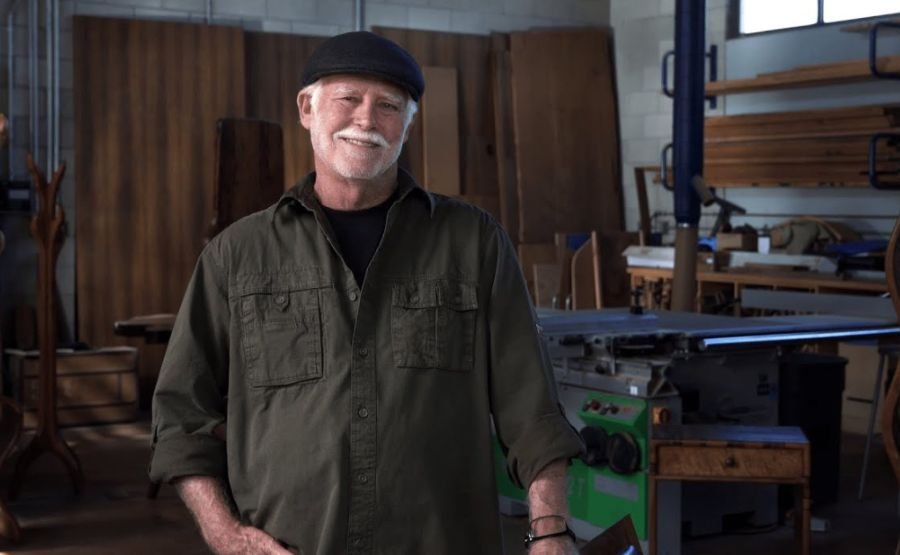
Here’s the thing about really great origin stories — they almost never start with someone saying “I’m going to invent something that changes an industry.” They start with a problem. Something broken, something missing, something that should exist but doesn’t. Mark Singer‘s story is exactly like that.
He wasn’t a chemist. He wasn’t a Silicon Valley entrepreneur or a corporate executive with a business plan and seed funding. He was a woodworker — a man who had spent his entire adult life shaping and joining pieces of timber — who needed better glue and ended up stumbling into one of the most successful adhesive brands in American history.
The fact that you probably have a yellow bottle or an orange tape roll with a gorilla on it sitting in your garage or kitchen drawer right now? That traces back to one man squinting at a glue pot in a furniture factory in West Java, thinking: I’ve never seen anything quite like this before.
What he did with that moment is the whole story.
A Childhood Shaped by Sawdust and Scraps
Mark Singer grew up in a household where wood was always nearby. His father was an amateur woodworker — the kind of dad who spent weekend hours in the garage shaping things with his hands, who understood instinctively that making something solid from raw material was its own reward. That early exposure left a deep mark.
Singer has described a childhood where tinkering with scraps of wood and metal came naturally, where the feel and smell of a workshop was simply the texture of home life. It wasn’t a grand formal education in craft — it was something quieter and more durable than that. It was the kind of learning that embeds itself in your hands before your head fully understands what’s happening.
The details of his specific upbringing — where exactly he grew up, precise dates, the broader family picture — he has kept largely private. What he has shared, through his own writing, is the thread that runs through everything: wood. Always wood. From the earliest years through to the memoir he wrote decades later for his children to read, the material at the centre of his life barely changed. The context around it transformed completely. But the wood stayed.
Learning the Craft the Hard Way
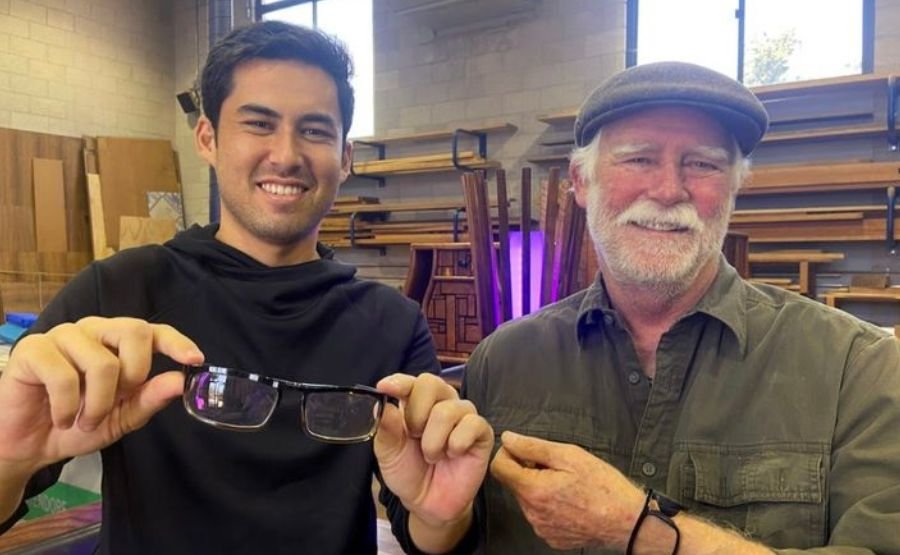
Singer didn’t arrive at mastery through a single institution or a linear educational path. He built his skills the way serious craftspeople tend to — by working alongside people who were better than him, by taking jobs that challenged him, by failing at things in ways that taught him more than success would have.
Early in his career he framed tract homes — the unglamorous, physical grind of residential construction work that gives you an intimate understanding of how buildings actually hold together. There’s no romanticism in framing. You learn what works and what doesn’t by doing it repetitively, in all kinds of conditions, until the decisions become automatic.
From there his path took him to Knoll International, the renowned furniture company whose products sit at the intersection of industrial design and fine craftsmanship. Working within a company of Knoll’s calibre meant absorbing professional standards for design, materials, and production quality that most woodworkers never encounter. It was a significant educational step up from residential framing.
He also spent time learning from Bob Stocksdale, the celebrated wood turner whose pieces are held in museum collections across the country, and devoted two years to working directly for Sam Maloof — one of the most respected furniture makers in American history, a craftsman whose rocking chairs became cultural objects as much as functional furniture. Two years with Sam Maloof is not an apprenticeship. It’s a graduate degree.
Then came Harvard University, where Singer supervised the Design Workshop — a position that put him in charge of guiding other people’s design process while continuing to develop his own understanding of what good design actually demands.
Along the way he successfully sold his furniture designs in Japan, navigating a market with exacting standards for quality and an aesthetic sensibility quite different from American tastes. That international commercial experience proved, if proof were needed, that Singer’s work could stand on its own across cultural contexts.
By the time he founded his own company, he had been a journeyman carpenter, a student of masters, a design educator, and an international commercial furniture designer. He had earned every bit of what came next.
Giati Designs and the Trip That Changed Everything
In 1991, Mark Singer founded Giati Designs in Carpinteria, California. The company had a clear and specific purpose: to design and sell high-end outdoor teak furniture. Indonesia was, at the time, one of the very few places where certified plantation-grown teak was available — the right material, from the right source, at a scale that could support commercial production. So Singer began making regular trips to Indonesian furniture factories to oversee the manufacture of his designs.
It was on one of those trips, in late 1989 or early 1990, that he first noticed something unusual.
At a furniture factory in Bandung, West Java, the workers were using an adhesive he had never encountered before. As a woodworker with decades of experience working with glues of every description — hide glue, epoxy, PVA, you name it — Singer could tell immediately that this was something different. The bond it created was extraordinary. He asked about it, filed the observation away, and kept working.
A year or so later, at a different factory outside Surabaya, he came across the same type of adhesive again. This time he investigated more thoroughly. It turned out to be a moisture-cured polyurethane formula produced by a small Danish manufacturer — a type of glue being developed as an alternative to epoxy for environmental reasons. It used the moisture in wood and in ambient air to trigger its curing process, which meant it formed an exceptionally powerful mechanical bond with virtually any porous material. As a woodworker, Singer understood exactly what he was looking at.
This glue was extraordinary. And it wasn’t available in the United States.
Naming a Gorilla
Singer had a problem he needed solving for Giati. The teak furniture his factories were producing required a better adhesive than anything currently on the American market. He needed this glue. So he tracked down the Danish manufacturer and arranged to import it.
Then, thinking about the American retail market and what it would take to sell this product to woodworkers and DIY enthusiasts who had never heard of polyurethane adhesive, he did what entrepreneurs with a good eye do: he built a brand around it.
He came up with the name. He drew up the logo. The gorilla — strong, powerful, built to endure — captured exactly the qualities the product delivered. As a small gesture of thanks toward both the animal that lent its identity to the brand and the good fortune that had brought him to those Indonesian factories at the right moment, Singer committed to donating a portion of every sale to gorilla conservation. The Dian Fossey Gorilla Fund, The Gorilla Foundation, and the gorilla exhibit at the Santa Barbara Zoo all received contributions from the brand’s early revenue.
Gorilla Glue was born in the early-to-mid 1990s, sold initially almost entirely to woodworkers — the community Singer knew best and trusted to understand what they were using. The Woodworker’s Journal noted years later that Singer was the first person to make polyurethane adhesive available to hobbyist and small-shop woodworkers in America. That was the market he started with, because that was the market he understood intimately.
Word spread. Woodworkers told other woodworkers. The product’s performance spoke for itself. Demand began to grow beyond the woodworking niche, and Singer found himself managing something that was rapidly outgrowing its origins as a side solution to Giati’s furniture production needs.
The Sale: Handing the Gorilla to Cincinnati
At some point in the late 1990s, Mark Singer made a decision that would define his legacy more than any business achievement of his own could: he sold Gorilla Glue to a family in Cincinnati, Ohio.
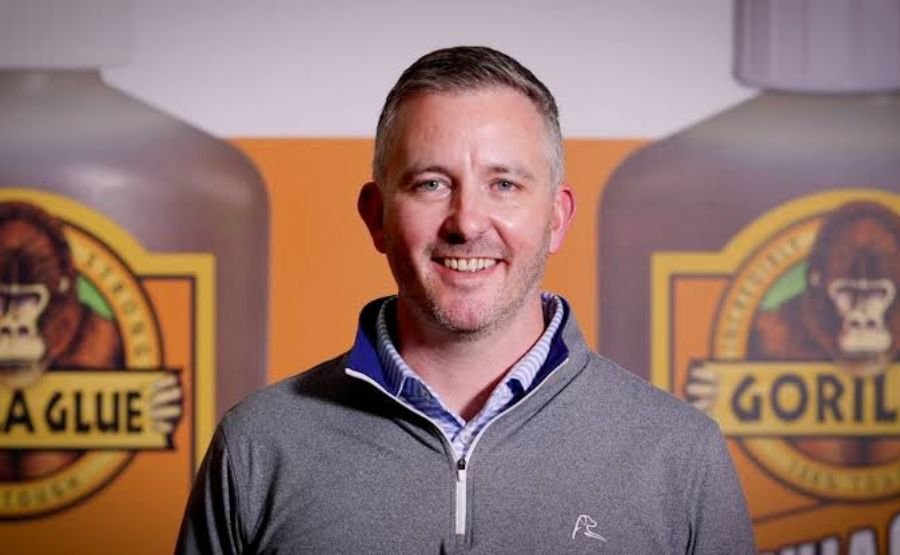
The Ragland family, who acquired the brand and business, turned out to be exactly the right people for the job. Singer himself has written about them with evident warmth and admiration. Through their stewardship, Gorilla Glue grew by nearly one hundred times its size at the point of sale — an expansion so dramatic it barely seems real unless you consider what the brand eventually became.
The Raglands moved operations to what is now their headquarters in Sharonville, Ohio, a suburb of Cincinnati. They expanded the product line with the methodical focus of people who understood what the core brand stood for: toughness, reliability, versatility. Gorilla Tape came first — taking the brand’s reputation into the heavy-duty tape market. Gorilla Super Glue followed. Then Gorilla Wood Glue, Gorilla Epoxy, construction adhesives, hot glue guns, sealants. The company eventually acquired O’Keeffe’s Hardworking Skincare and Lutz Tools, broadening into adjacent consumer categories. Today The Gorilla Glue Company employs somewhere between 500 and 1,000 people and generates annual revenues estimated in the range of $300 million to $500 million, all under the Ragland family’s private ownership.
Mark Singer started something. The Ragland family built it into an institution. Singer himself has noted that he and the Raglands have shared in that success — the precise nature of the financial arrangements from the original sale are private.
The Awards, the Gorilla Conservation Commitment, and the Brand’s Cultural Reach
Gorilla Glue under the Ragland family’s expansion became something remarkable: a consumer brand that genuinely meant something to the people who used it. This doesn’t happen automatically. It happens when the product reliably does what it claims, when the brand identity is consistent and clear, and when there’s a story underneath it that makes people feel they’re part of something.
The gorilla conservation donations that Singer built into the brand from the beginning gave it an unusual moral dimension for an adhesive product. By the time the brand was appearing in ten thousand stores across North America, Mexico, and the UK, the gorilla imagery wasn’t just marketing. It was a small ongoing commitment to the creatures that had, in a roundabout way, helped Singer see what he had found in that Indonesian factory.
The company has been recognised over many years as one of the best places to work in the Cincinnati area — a recognition from the Cincinnati Enquirer that speaks to how the Raglands built the internal culture of the organisation, not just its product line.
Personal Life: A Memoir for His Children
Mark Singer is, at his core, a private person. What is publicly known about his personal life comes almost entirely from his own writing — specifically from Heartwood: Lessons Learned During a Lifetime Working with Wood, the memoir he self-published in 2013.
He wrote the book initially as a portfolio of his work — a way of documenting the furniture, the projects, the career arc. But it grew into something more personal: a reflection on what six decades of working with wood had taught him about craft, about life, and about what matters. He wrote it explicitly for his children to read. That impulse — to leave a record not for public consumption but for the people who would carry his story forward — says something important about what he values.
He is based in Carpinteria, California, where Giati Designs continues to operate. He remains the company’s founder and guiding creative force.
Beyond the broad strokes, Singer keeps the personal details — family members, relationships, the texture of daily life — out of the public record. This is a man who has always been more interested in making things than in talking about himself.
The Harder Chapters
Running a furniture company and simultaneously scaling a brand-new adhesive product from scratch is not simple work. Both Giati Designs and the early Gorilla Glue operation required Singer to operate as a designer, manufacturer, logistics manager, brand builder, and salesperson simultaneously — often with the small budgets and limited infrastructure that come with being early and independent.
The nature of manufacturing anything in Indonesia and selling it in the United States involves supply chain complexities, shipping logistics, customs considerations, and the constant challenge of maintaining quality control across a production operation you can’t simply walk over and check on. Singer has described this period with characteristic honesty — woodworking had taught him a lot about glue, but the glue business was going to teach him a great deal about logistics and life.
There is also the particular difficulty of knowing when to let something go. Selling Gorilla Glue — watching what you created become something one hundred times larger in other people’s hands — requires a clarity about what you actually want from the work you do. Singer had that clarity. He wanted to be a woodworker. He was, in his own words, mostly a woodworker. The entrepreneurship was real and the success was real, but the bench was always calling him back.
The Money Side: What We Know and What We Don’t
This is the part where honesty matters most, because the internet is full of confident-sounding nonsense on this specific topic.
The query “Gorilla Glue net worth” generates hundreds of web pages claiming that Mark Singer is worth anywhere from $4 million to $500 million. Most of these figures are fabricated by content mills and AI-generated websites that combine the brand’s impressive revenues with Singer’s name without any factual basis for the specific number they attach to him.
Here is what is actually verifiable: Mark Singer sold Gorilla Glue to the Ragland family at some point in the late 1990s. The terms of that sale were private. The Raglands subsequently grew the company nearly one-hundredfold. Singer has noted that he shared in that success — a phrase that suggests the sale involved some ongoing financial arrangement, though the details remain undisclosed.
The Gorilla Glue Company itself generates annual revenues now estimated at $300 million to $500 million and is entirely privately held by the Ragland family. Mark Singer’s personal wealth is not publicly documented. Given the scale of what he created and sold, and his note that he shared in the Raglands’ subsequent success, it is reasonable to assume he is financially comfortable — but attaching a specific dollar figure would be speculation dressed up as fact.
He lives in California, runs Giati Designs, and by his own account finds his deepest satisfaction back at the workbench. That is probably the most honest financial portrait available: a man who made something valuable enough that he could afford to go back to doing exactly what he loved.
What He Is Doing Now
Mark Singer is, as he has always insisted, mostly a woodworker.
Giati Designs continues operating out of Carpinteria, California, where Singer remains the founder. The company produces high-quality outdoor teak furniture and related products — the original business that sent him to those Indonesian factories in the first place. He describes having finally found his voice as a woodworker, a phrase that suggests the entrepreneurial years — real and significant as they were — were always something he undertook in service of the craft rather than as an end in themselves.
He published Heartwood in 2013 and has continued sharing his perspective through columns in publications like Fine Woodworking magazine, where his “From the Bench” column offered reflections on a career spanning nearly six decades of working with wood. His writing is direct, modest, and warm — the voice of someone who has genuinely thought about what the work meant rather than what it produced.
The Gorilla Glue brand continues to thrive spectacularly under the Ragland family. Singer watches from Carpinteria, California, from behind a workbench covered in things he’s still making.
Final Words
There’s a particular kind of American entrepreneurial story that gets told over and over — the genius inventor, the dramatic pivot, the billion-dollar exit, the profile in a business magazine. Mark Singer’s story isn’t quite that. It’s quieter, stranger, and ultimately more interesting.
He was a craftsman who spent sixty years learning to work with wood. He stumbled onto a remarkable product halfway across the world because he needed better glue for the furniture he was already making. He gave it a great name, attached it to a cause he cared about, and sold it to people who turned it into a genuine American institution. Then he went back to his workbench.
What’s remarkable about Singer isn’t the entrepreneurship. It’s the coherence. The same values — craftsmanship, quality, honest materials, making things that actually work — run through every phase of his life. The furniture at Knoll, the years with Sam Maloof, the teak designs for Giati, the polyurethane glue discovered in Indonesia, the memoir written for his children. It’s all the same story, told in different materials.
Somewhere in your garage right now, there’s probably a yellow bottle that began in a furniture factory in West Java and ended up in your hands because one woodworker was paying close enough attention to recognise something extraordinary when he saw it.
That’s a legacy most people would be very happy to leave.
FAQs
1. Who is Mark Singer and what does he have to do with Gorilla Glue?
Mark Singer is an American woodworker, furniture designer, and entrepreneur who is responsible for introducing Gorilla Glue to the North American market. He discovered the product — a Danish moisture-cured polyurethane adhesive — while visiting furniture factories in Indonesia in the late 1980s and early 1990s. He brought the formula to the US, created the Gorilla Glue brand name and logo, and sold the product initially to woodworkers before eventually selling the entire business to the Ragland family in Cincinnati, Ohio.
2. Did Mark Singer invent Gorilla Glue?
No — and this is an important distinction. Mark Singer did not invent polyurethane adhesive. He discovered an existing Danish formula being used at furniture factories in Indonesia, recognised its exceptional qualities, arranged to import it to the United States, and built the Gorilla Glue brand around it. He was the entrepreneur who introduced the product to North America, not the chemist who created it.
3. How did Mark Singer discover the glue that became Gorilla Glue?
Singer was travelling to Indonesia for his outdoor teak furniture company, Giati Designs, overseeing the manufacture of his high-end furniture designs. In 1989–1990 he first noticed factory workers using an unfamiliar adhesive at a plant in Bandung, West Java. About a year later he encountered the same product again at a factory near Surabaya. As an experienced woodworker who understood glue deeply, he immediately recognised that this moisture-cured polyurethane formula created bonds unlike anything available in the American market.
4. What is Giati Designs?
Giati Designs is the outdoor furniture company Mark Singer founded in Carpinteria, California in 1991. The company was created specifically to design and sell high-end teak outdoor furniture manufactured in Indonesia, where certified plantation-grown teak was available. The company still operates today, with Singer as its founder, and predates Gorilla Glue as a business venture.
5. Why is it called Gorilla Glue?
Singer came up with the name himself when he was preparing to sell the product in the United States. He wanted a name that conveyed extreme strength and durability in an immediately understandable way. As a nod of gratitude toward the gorilla imagery he was using and toward the good fortune that had brought him to the product, he donated a portion of every sale to gorilla conservation organisations including the Dian Fossey Gorilla Fund, The Gorilla Foundation, and the gorilla exhibit at the Santa Barbara Zoo.
6. Who owns Gorilla Glue now?
The Gorilla Glue Company is owned by the Ragland family of Cincinnati, Ohio, who purchased it from Mark Singer at some point in the late 1990s. Under the Raglands’ ownership, the company grew by nearly one hundred times its original size. It is headquartered in Sharonville, Ohio, employs between 500 and 1,000 people, and generates annual revenues estimated at $300 million to $500 million. It is entirely privately held and has never gone public.
7. What is Mark Singer’s net worth?
No verified, reliable figure for Mark Singer’s personal net worth has ever been publicly documented. Online sources claiming he is worth anywhere from $4 million to $500 million are largely fabricated by AI-generated content sites. Singer sold Gorilla Glue to the Ragland family under private terms and has noted in his own writing that he shared in their subsequent success. His actual financial position is unknown to the public. The Gorilla Glue Company’s revenues are in the hundreds of millions annually, but Singer no longer owns it.
8. What other work has Mark Singer done besides Gorilla Glue?
His career as a craftsman and designer spans decades. He framed tract homes as a young man, worked for Knoll International (the prestigious furniture manufacturer), learned wood turning from Bob Stocksdale, spent two years working directly for Sam Maloof (one of America’s most celebrated furniture makers), supervised the Design Workshop at Harvard University, successfully sold his furniture designs in Japan, and founded Giati Designs. He also wrote and self-published a memoir, Heartwood: Lessons Learned During a Lifetime Working with Wood, in 2013.
9. What is Heartwood and why did Singer write it?
Heartwood: Lessons Learned During a Lifetime Working with Wood is a memoir that Mark Singer self-published in 2013. It began as a portfolio documenting his furniture work and gradually evolved into a broader reflection on what nearly six decades of working with wood had taught him. He wrote it primarily for his children — as a record of his life’s work and the values it had shaped — rather than for commercial publication or public promotion.
10. What products does Gorilla Glue sell today?
Under the Ragland family’s ownership, The Gorilla Glue Company expanded far beyond the single polyurethane adhesive Singer introduced. Its current product range includes Original Gorilla Glue, Gorilla Super Glue, Gorilla Wood Glue, Gorilla Tape, Gorilla Epoxy, construction adhesives, hot glue guns, spray adhesives, sealants, and waterproof patches. The company also owns O’Keeffe’s Hardworking Skincare and Lutz Tools, extending its portfolio into adjacent consumer goods categories.
11. Where is Gorilla Glue sold?
Gorilla Glue products are sold in major hardware stores, home improvement centres, mass merchandise retailers, grocery stores, drug stores, and online retailers across North America, the UK, Mexico, and various international markets. The original Gorilla Glue was available in approximately 10,000 stores across North America alone at one point in the brand’s early expansion under Ragland family leadership.
12. Where is Mark Singer now?
Mark Singer continues to work at Giati Designs in Carpinteria, California. In his own writing he has described finally finding his voice as a woodworker after the entrepreneurial chapters of his career — suggesting that the bench, the materials, and the direct act of making things remain his primary focus. He has contributed columns to Fine Woodworking magazine and published Heartwood as a reflection on his lifetime of craft. He is, as he has consistently described himself, mostly a woodworker.
Explore stories that inspire curiosity with The Imperial Magazine.