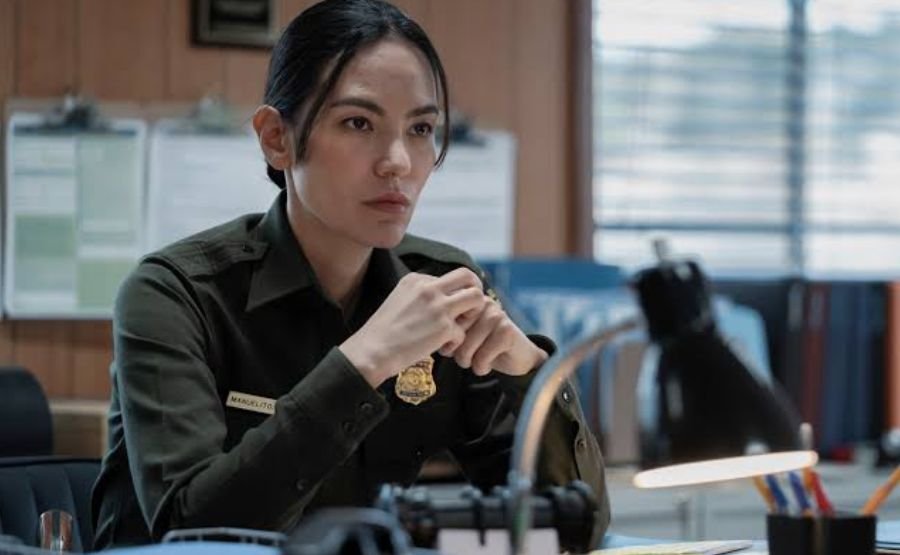
Jessica Matten: The Woman Who Changed What Indigenous Looks Like on Screen
Quick Bio
| Detail | Information |
| Full Name | Jessica Matten |
| Born | November 30, 1985, Edmonton, Alberta, Canada |
| Nationality | Canadian |
| Heritage | Red River Métis and Cree (Saulteaux); direct descendant of Cuthbert Grant |
| Occupation | Actress, producer, model, Indigenous advocate, entrepreneur |
| Known For | Sergeant Bernadette Manuelito in AMC’s Dark Winds; Sokanon in Netflix’s Frontier; Rez Ball |
| Education | University of Alberta (B.S.) |
| Companies | 7 Forward Entertainment (president); Lemon Cree (co-founder); Indigenous Film & Arts Academy |
| AMC Partnership | Announced November 2025 — formal talent pipeline program for Indigenous artists |
| Estimated Net Worth | ~$1–3 million |
| Relationship Status | Private; not publicly married as of 2026 |
| Based In | Edmonton, Alberta, Canada |
More Than Just an Actress
Let’s start with a number: twenty years. That’s how long Jessica Matten has been doing community work with Indigenous people across Canada. Long before Dark Winds made her recognizable to American audiences, before Netflix gave her a global platform, before any partnership with a major television network materialized — she was already in the field. Running programs. Working with youth. Trying to interrupt cycles of trauma that don’t respond to press releases or awards seasons.
That context matters enormously when you try to understand who Jessica Matten actually is. Because she’s not someone who built a career and then discovered a cause. She’s someone who had a cause from the beginning and built a career in its service. The acting, the producing, the on-screen presence — all of it has been, in her own framing, a vehicle for something larger than entertainment.
She’s also, it needs to be said plainly, very good at her job. The kind of good that has kept her continuously employed across an industry that tends to chew through talent without ceremony. The kind of good that earns a lead role on a critically acclaimed AMC series and then keeps it through four seasons.
Both things are true simultaneously. The activist and the actress aren’t in tension. They’re the same person doing the same work through different means.
Roots in Edmonton: Where It All Started
Edmonton, Alberta, is the kind of city that people from elsewhere in Canada sometimes underestimate. It’s the provincial capital, a northern city with serious winters and a working-class industrial backbone alongside its university culture. Jessica Matten was born here in November 1985 and grew up with deep connections to the land, to family, and to the particular web of identities that make up her heritage.
She is Red River Métis and Cree, with Saulteaux lineage on her maternal side — and not in an abstract, documentary-footnote sense. Her connection to that heritage runs through specific people and specific history. She is a direct descendant of Cuthbert Grant, the Métis leader who became famous for the Battle of Seven Oaks in 1816, widely considered one of the founding moments of Métis national identity in Canada. That lineage is not a detail Jessica carries lightly. It appears in how she talks about her work, her purpose, and the weight she feels toward the communities she comes from.
Her family was not wealthy. Her parents worked hard for modest means, and Jessica grew up understanding that financial security is not something to take for granted. That awareness — of what it costs to survive, of what it means to navigate a world that doesn’t always see you clearly — became central to everything she’d later try to do through her work.
She was performing almost before she could articulate why. By the time she was six years old, she had begun modeling — a fact that sounds almost surreal against the backdrop of what would come later, but that reveals something real about her early confidence in front of a camera and her family’s willingness to support that instinct.
See also “Suzanne Chase: The Private Life and Story Behind the Name“

Education: Taking the Long Road
Jessica’s academic path was more deliberate than dramatic. She eventually earned a Bachelor of Science from the University of Alberta — which makes her both better educated than most of her Hollywood peers realize and working in an industry that rarely asks for credentials.
The University of Alberta gave her more than a degree. It gave her the analytical framework to think systematically about the communities she wanted to serve, about the mechanics of trauma and resilience, about what it actually takes to build organizations that outlast individual effort. You can see the influence of that structured thinking in how she’s approached her advocacy work — not as spontaneous passion projects but as sustained, institutional efforts with defined purposes and measurable goals.
She continued modeling into her adult years while simultaneously building her community engagement work. The modeling money was practical. It funded time. Time to develop programs, to travel to communities, to do the unglamorous work of showing up repeatedly in places that needed consistent presence rather than occasional celebrity visits.
The acting came later than the community work. Which is an unusual trajectory. Most actors find their cause after their career. Jessica moved in the opposite direction.
The Early Career: Building Quietly
Her entry into professional acting was gradual and rooted in Indigenous broadcasting — the part of the Canadian media landscape that mainstream entertainment journalism rarely covers but that has sustained Indigenous storytelling in Canada for decades.
Her first significant television work came through Indigenous-focused productions, building credits and craft across a succession of Canadian series before landing a role that would expand her visibility dramatically. Blackstone, the unflinching Canadian drama set on a fictional First Nations reserve in Alberta, brought her in as Gina for twelve episodes beginning in 2014. The show was not comfortable television. It dealt with addiction, violence, political corruption, and the lived reality of reserve life with a directness that mainstream Canadian drama rarely attempted. It was also critically recognized — earning multiple Gemini and Leo Award nominations. For Jessica, it was the confirmation that Indigenous stories told with full honesty could find audiences and earn respect.
She was also developing something else in parallel: her production company, 7 Forward Entertainment, which she founded with an explicit mission of creating and supporting content that serves Indigenous communities. The name signals the philosophy — movement forward, across seven directions of meaning in Cree cosmology. This wasn’t a vanity label. It became the infrastructure through which she would eventually build the Indigenous Film & Arts Academy, training the next generation of Indigenous filmmakers, performers, and stunt professionals.
Frontier, Tribal, and the Years of Building
Frontier arrived in 2016 and marked a meaningful step upward in profile. The Netflix and Discovery Canada co-production was a period drama set in the brutal fur trade era of eighteenth-century North America, starring Jason Momoa and shot across Canada and Ireland. Jessica played Sokanon across eighteen episodes — a recurring role that held through three seasons until 2018. The character was Indigenous, layered, and central rather than decorative. Working alongside Momoa on a Netflix production put Jessica in front of an international audience for the first time.
After Frontier, she moved into Burden of Truth (2018–2019) and then Tribal (2020–2021), a Canadian police procedural that gave her one of her more complex leading roles to date. The show explored the relationship between Indigenous and non-Indigenous law enforcement in a contemporary setting — territory that Jessica was genuinely equipped to inhabit, given the depth of her community engagement work. The Canadian Screen Award nominations that followed for these series weren’t surprises to anyone who had been watching her build her portfolio.
By the time she was cast in Dark Winds, she had logged five international television series across eight years. That is the career of someone who kept working, kept improving, and kept choosing projects that reflected her values rather than simply her availability.
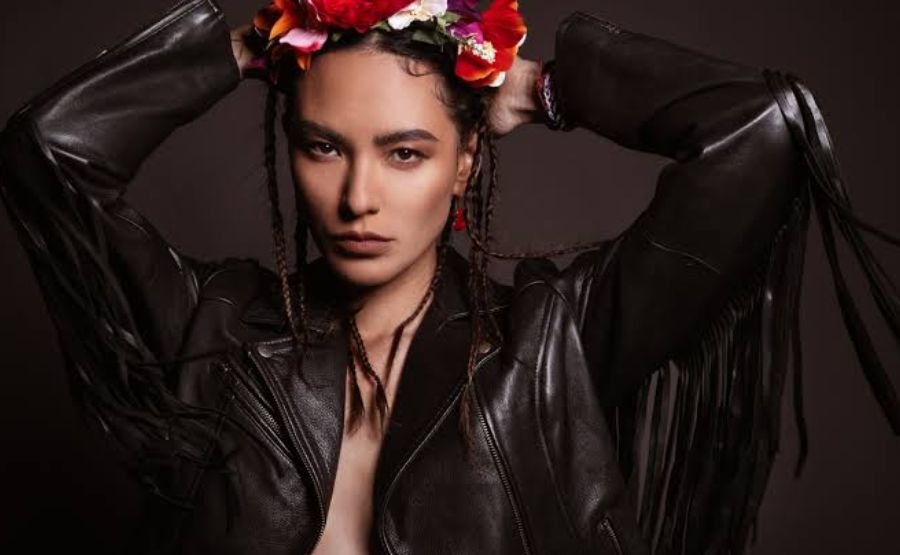
Dark Winds: The Role That Changed Everything
When AMC announced its adaptation of Tony Hillerman’s Leaphorn and Chee mystery novels in 2021, the casting of Jessica Matten as Sergeant Bernadette Manuelito was the right decision and also a statement. Dark Winds was being produced with meaningful consultation from the Navajo Nation, was set on a Navajo reservation in the 1970s, and was committed to authentic Indigenous representation in front of and behind the camera. Putting a Red River Métis-Cree actress at the center of the main cast alongside Zahn McClarnon — himself one of the most respected Indigenous actors working in Hollywood — signaled that the show understood its responsibilities.
Bernadette Manuelito is the only female sergeant in a Navajo reservation police department. She is tough, perceptive, emotionally complex, and consistently the most clear-eyed person in any room. She is also, crucially, not a stereotype in any direction — not a victim, not a warrior archetype, not a token presence designed to signal progressiveness without doing the actual work. She is a character. Jessica has played her across four seasons with consistency and depth, letting the role breathe and develop as the show itself has matured.
Dark Winds became one of AMC’s most critically lauded productions of recent years, compared favorably to the network’s legacy of quality prestige drama. Season 4 premiered in February 2026. The show streams simultaneously on AMC, AMC+, and Netflix, giving it reach well beyond the cable audience that might have been its natural home.
For Jessica, the role did something beyond advancing a career. It gave her a platform from which to speak about Indigenous representation, missing and murdered Indigenous women, intergenerational trauma, and the specific experiences of Métis and Cree communities — and it gave her that platform in mainstream entertainment spaces that hadn’t previously made much room for those conversations.
Rez Ball and the Voice Acting Frontier
In 2024, Rez Ball arrived on Netflix and found a significant audience. Produced by LeBron James’s SpringHill Entertainment, the film centers on a Native American high school basketball team from Chuska Valley, New Mexico, competing for the state championship after losing their star player. Jessica played Coach Heather Hobbs — a supporting role, but a visible one in a film that Netflix promoted heavily and that reached audiences well beyond the usual circle of Indigenous cinema fans.
More quietly, she also entered voice acting — a medium that opened new possibilities for her particular skill set. Reports indicate she voices a character in The Legend of Aang: The Last Airbender animated adaptation, extending her presence into the animation space alongside her live-action work.
The cumulative effect of Dark Winds seasons, Rez Ball, and voice acting is a career that no longer depends on any single project — which is exactly where a working actress wants to be.
The AMC Partnership: Institutional Change, Not Symbolic Gestures
In November 2025, something historically significant was announced quietly enough that many entertainment journalists missed its importance.
AMC Networks formally partnered with the Institute of American Indian Arts, 7 Forward Entertainment, and Jessica Matten’s Indigenous Film & Arts Academy. The partnership created a training program and cross-border apprenticeship program placing Indigenous interns directly on the set of Dark Winds and other AMC productions. AMC+ committed to streaming Tales from the Rez, a series created by graduates of the Indigenous Film Academy. A spotlight collection on AMC+ was launched to celebrate and amplify Indigenous content.
Jessica’s statement for the announcement cut to the core of what it meant: the initiative was not about representation, she said. It was about restoration. The distinction is important. Representation is counting faces on screen. Restoration is building the infrastructure through which Indigenous artists can sustain careers, train successors, and maintain creative control across generations.
For someone who had spent twenty years doing community work before this partnership existed, the moment represented the kind of institutional validation that actually changes things — not a diversity initiative, but a structural commitment with real resources and real accountability behind it.
Personal Life: Private and Purposeful
Jessica Matten is not married as of 2026 and has kept her romantic life largely away from public view. This is a consistent pattern: she is open about her professional work, her advocacy, her community commitments, and her Indigenous identity, but private about her personal relationships. In a media culture that treats celebrities’ personal lives as public property, the choice to maintain that boundary is itself a statement.
What she has made visible is her family’s involvement in her wellness work. Lemon Cree, the Indigenous wellness and fitness company she co-founded, is a family venture — a reminder that her network of support is not separate from her professional life but woven through it.
She continues to be based in Edmonton, the city where her story started. The choice to stay rooted in Alberta rather than relocating to Los Angeles or Vancouver is consistent with everything else about her approach. Proximity to community is not incidental to her work. It is the work.
The Hard Parts: What Advocacy Actually Costs
Being as public as Jessica is about missing and murdered Indigenous women is not costless. Her #N8Vgirls campaign, which aims to increase awareness of the same issue that the #MMIW movement tackles, necessitates consistent interaction with emotionally harsh content. These are real women. Real families. Real violence. The work of keeping those stories alive in public consciousness, of refusing to let the media cycle move on, takes something from the people who do it.
She has also been explicit about intergenerational trauma in Indigenous communities — the kind of wound that travels through families across decades and that doesn’t respond to individual effort alone. Part of why she built 7 Forward Entertainment and the Film Academy is the recognition that entertainment industry access is not enough. The underlying trauma needs to be addressed alongside the career opportunities. You can’t train someone for a film set and ignore what they’ve survived to get there.
The work itself is the hardship and the meaning simultaneously. Most people who do this kind of sustained advocacy at this level carry significant personal weight alongside their professional success. Jessica has been open about that weight without being defeated by it.
Money: An Honest Picture
Jessica Matten’s estimated net worth sits in the range of $1 to $3 million, a figure that reflects a career built steadily across Canadian television rather than through a single blockbuster windfall.
Her income streams are multiple: television acting fees from Dark Winds (her primary earner as a lead on an AMC production), Frontier, Tribal, and other series; film appearances including Rez Ball; modeling work; and the revenue generated by her production company and wellness business.
She is not wealthy in the Hollywood sense of the word. She is financially stable in the way that a working actress with twenty years of consistent employment and multiple revenue streams tends to be — comfortable enough to sustain her community work without sacrificing it to financial pressure, independent enough to choose projects that align with her values rather than simply whatever pays most.
The AMC partnership, notably, is not primarily a financial arrangement. It is a structural one — creating pipelines rather than paychecks. That distinction is entirely in keeping with how Jessica has consistently prioritized durable institutional change over personal gain.
What She’s Doing Right Now
In 2026, Jessica Matten is forty years old, filming the ongoing Dark Winds franchise, managing her production company, overseeing the AMC talent pipeline program, co-running Lemon Cree, and presumably doing all of this from Edmonton rather than from a Hollywood hill.
Dark Winds Season 4 premiered in February 2026 on AMC and AMC+, with strong early reception. She remains a central figure in the show’s creative identity — not just an actress delivering lines but someone whose understanding of Indigenous experience informs what the production gets right.
Tales from the Rez is streaming on AMC+, representing the first direct public fruit of the AMC partnership. For anyone who has followed Jessica’s work, watching her students’ projects reach a streaming platform is more meaningful than watching any award she might receive.
Final Words
There’s a version of the Jessica Matten story that focuses on the career progression: the Edmonton model who became a working actress who became a prestige TV lead. That version is true and worth telling.
But the more accurate version starts differently. It starts with a woman who decided, very early, that Indigenous communities needed people who would stay — not visit, not extract stories, not use community proximity as a career credential and then leave. She stayed. She built. She trained people. She created infrastructure. And then, alongside all of that, she also built one of the more quietly impressive acting careers in Canadian television history.
What makes Jessica Matten distinctive is not the intersection of these things — activist and actress is a familiar type in entertainment — but the depth of each. The activism is institutional, long-running, and produces concrete results. The acting is sustained, skilled, and earns her recurring leading roles on major productions. Neither is decorative. Both are real.
She is, in the truest sense, someone who knows exactly why she is doing what she is doing. That kind of clarity is rarer than talent. In a career, it is more useful than either.
FAQs
1. Who is Jessica Matten?
Jessica Matten is a Canadian actress, producer, model, and Indigenous advocate born on November 30, 1985, in Edmonton, Alberta. She is Red River Métis and Cree, and is best known for playing Sergeant Bernadette Manuelito in AMC’s critically acclaimed crime drama Dark Winds, which is now in its fourth season.
2. What is Jessica Matten’s heritage?
She is Red River Métis and Cree, with Saulteaux lineage on her maternal side. She is a direct descendant of Cuthbert Grant, the first rebel Métis leader in Canadian history, famous for the Battle of Seven Oaks in 1816. Her Indigenous heritage is central to her identity and informs her advocacy and creative work.
3. What is Dark Winds and who does Jessica play in it?
Dark Winds is an AMC crime drama series based on Tony Hillerman’s Leaphorn and Chee mystery novels, set on a Navajo reservation in the 1970s. Jessica plays Sergeant Bernadette Manuelito, the only female sergeant on the reservation’s police force. The show has aired four seasons and streams on AMC, AMC+, and Netflix. It is produced with significant involvement from the Navajo Nation.
4. What is 7 Forward Entertainment?
It is an Indigenous-owned production company of which Jessica is president, based on the West Coast of Canada. The company generates and supports film and television programming founded in Indigenous narrative and administers the Indigenous Film & Arts Academy, which trains First Nations kids in filmmaking, acting, and stunt work.
5. What was the AMC Networks partnership about?
The collaboration between 7 Forward Entertainment, Jessica Matten’s Indigenous Film & Arts Academy, AMC Networks, and the Institute of American Indian Arts created training programs, cross-border apprenticeships placing Indigenous interns on sets like Dark Winds, and a commitment to streaming Tales from the Rez — a series made by Film Academy graduates — on AMC+.
6. What other major shows has Jessica Matten appeared in?
Her most significant roles before Dark Winds include Sokanon across eighteen episodes of Frontier (Netflix/Discovery Canada, 2016–2018), which starred Jason Momoa; Gina in Blackstone (2014–2015), a critically recognized Canadian drama about reserve life; and recurring roles in Tribal (2020–2021) and Burden of Truth (2018–2019). All three of the latter earned Canadian Screen Award nominations.
7. What is Rez Ball and what was Jessica’s role?
Rez Ball is a 2024 Netflix sports drama produced by LeBron James’s SpringHill Entertainment. It follows a Native American high school basketball team from Chuska Valley, New Mexico, competing for the state championship after losing their star player. Jessica played Coach Heather Hobbs. The film was widely seen as part of a growing wave of Indigenous-led content reaching mainstream streaming audiences.
8. What is the #N8Vgirls campaign?
Jessica conducts a social media awareness campaign to raise notice of Canada’s murdered and missing Indigenous women, a problem that the #MMIW movement is addressing. She has described the campaign as a way of keeping these women’s stories visible and honoring lives that have been ignored by mainstream institutions.
9. What is Lemon Cree?
Lemon Cree is an Indigenous wellness and fitness company that Jessica co-founded with members of her family. It represents her work in the health and wellness space alongside her entertainment career, and reflects her broader commitment to supporting Indigenous community wellbeing beyond the screen.
10. Has Jessica Matten won any awards?
She has been part of multiple Canadian Screen Award-nominated productions including Frontier, Blackstone, and Mohawk Girls. Dark Winds has received widespread critical recognition. While she has not won a major individual acting award as of 2026, her institutional work through the AMC partnership and the Indigenous Film Academy represents recognition of a different and arguably more durable kind.
11. Is Jessica Matten married?
As of 2026, Jessica Matten is not publicly married and keeps her personal romantic life private. She has not disclosed a partner publicly and has consistently maintained a clear boundary between her professional visibility and her personal relationships.
12. Where does Jessica Matten live?
She lives in Edmonton, Alberta — the city where she was born and raised. Despite the international scope of her career and the American productions she works on, she has chosen to remain rooted in her home city and community, which is consistent with her overall approach of staying connected to the people and places that inform her work.




One Comment