
Bryna Lublin: The Woman Behind the Music
Quick Bio
| Detail | Information |
| Full Name | Bryna Lublin |
| Born | Estimated late 1940s (exact date unknown) |
| Nationality | American |
| Religion | Jewish |
| Known For | First wife of musician Daryl Hall (Hall & Oates) |
| Marriage | Married Daryl Hall, June 1969 |
| Divorced | 1972 |
| Children | None with Daryl Hall (disputed; some sources claim no children) |
| Song Connection | Believed by many to have inspired “She’s Gone” (1973) |
| Post-divorce life | Entirely private; whereabouts and career unknown |
| Net Worth | Not publicly known |
A Note on the Record
Before we go any further, it’s worth being straight with you: Bryna Lublin is one of the most private figures in celebrity-adjacent history. She has never given an interview. She has never sought the spotlight. The internet is full of articles about her — some claiming she was an artist, some saying she was a journalist, others suggesting she was a model — but almost none of those claims come from verified sources. Many of those articles appear to be low-quality content farms that have invented details wholesale.
What we actually know about Bryna Lublin, confirmed by credible sources including Wikipedia’s Hall & Oates article, Daryl Hall’s biography, and a 1985 Rolling Stone piece, boils down to a handful of real facts: she was Jewish, she attended Temple University in Philadelphia in the late 1960s, she married Daryl Hall in June 1969, they divorced in 1972, and she thereafter disappeared entirely from public life.
This biography will work with what is real and be honest where the picture gets fuzzy. That feels like the right way to tell the story of a person who clearly, deliberately, chose not to be a story at all.
See also “Kirsten Barlow: The Quiet Constant Behind a Television Icon“
The Philadelphia Years: Where Two Worlds Collided
To understand Bryna Lublin, you first have to understand the world she was moving through when she met the man who would become her husband.
Late-1960s Philadelphia was electric. The city’s music scene was in full bloom — Kenny Gamble and Leon Huff were building the foundations of Philadelphia Soul from their studios, and Temple University had become an unlikely crossroads where young white musicians from Pennsylvania suburbs were soaking up the influence of Black R&B artists and gospel choirs. The whole city felt like a pressure cooker of creative energy.
Daryl Hall — born Daryl Franklin Hohl in Pottstown, Pennsylvania, in 1946 — arrived at Temple University to study music and quickly embedded himself in that scene. He formed a vocal harmony group called the Temptones, did session work for Gamble and Huff, and was well on his way to becoming a serious soul musician. He was talented, ambitious, and hungry. He was also, by his own account, completely absorbed in music in a way that would eventually cost him in other areas of his life.
It was during his time at Temple that Hall crossed paths with Bryna Lublin. The exact circumstances of how they met have never been detailed publicly — Hall has spoken in broad terms about his college years but has rarely gone into specifics about Bryna herself. What we know is that she was there, in that world, in that city, at that exact moment when Hall was figuring out who he wanted to be.
Bryna came from a Jewish background, and this detail turns out to be historically significant: according to multiple accounts, including the Wikipedia biography of Daryl Hall, he converted to Judaism in order to marry her. That is not a small thing. Converting to a religion for another person reflects genuine commitment. Whatever the full story of their relationship was, it clearly mattered deeply enough to Hall that he was willing to change something fundamental about himself to be with her.

Marriage at the Edge of Fame
They married in June 1969. Hall was around 22 or 23 years old. Bryna was likely around the same age, given what we know of the timeline. The wedding happened before Hall was famous — before Hall & Oates even formally existed as a duo. John Oates had entered Hall’s orbit at Temple in 1967, but the two wouldn’t record their debut album until 1972.
In other words, Bryna married a musician who was grinding away at the edges of the industry, not a star. She married someone with potential, not someone with a platinum record. That matters because it speaks to what their relationship actually was: two young people in the same city, bound up in each other’s lives before the machinery of fame had a chance to get in the way.
The years between 1969 and 1972 were a critical stretch for Hall professionally. He was doing session work, playing gigs, building the connection with Oates that would eventually reshape American pop music. It was busy, uncertain, forward-leaning work. What that meant for the marriage is unknown. Hall has never publicly detailed why things broke down. No conflict, no dramatic falling-out, no public statement has ever been attributed to either of them about the end of their relationship.
What we know is simply that they divorced in 1972, the same year Hall & Oates released their debut album, Whole Oats. The timing is striking. The music was finally taking off. The marriage was ending. Those two facts share a year.
The Song That Keeps Her Name Alive
Here is where Bryna Lublin’s story connects to something millions of people have heard without knowing her name.
“She’s Gone” is one of Hall & Oates’ most emotionally raw recordings. It was written in 1973, recorded for their second album Abandoned Luncheonette, and released as a single that same year. It didn’t become a massive hit on its first run, but a 1976 reissue pushed it into the top 10, and it has remained one of the duo’s signature songs ever since — a gorgeous, aching piece about loss and longing.
The question of who the song is actually about has been debated for decades. A 1985 Rolling Stone article reported that the song was written about Hall’s divorce from Bryna. However, John Oates told American Songwriter in 2009 that his contribution to the song was inspired by being stood up by a girlfriend on New Year’s Eve. The Wikipedia article on Hall & Oates notes the song was “written for Hall’s first wife, Bryna Lublin,” while also acknowledging Oates’ separate inspiration for his portions of the song.
Daryl Hall himself has never publicly and definitively confirmed that “She’s Gone” is about Bryna. He has been careful and somewhat evasive on the subject over the years, neither fully confirming nor denying it. What seems most honest to say is this: the song emerged from a period of genuine personal pain in Hall’s life, specifically the collapse of his first marriage, and the emotional raw material almost certainly drew from his feelings about Bryna, whatever other influences may have mixed into the writing.
If that is true — and the evidence is strong that it at least partly is — then Bryna Lublin has the curious distinction of having arguably inspired one of the most emotionally enduring American pop songs of the 1970s, without ever seeking credit for it, without ever discussing it publicly, and without most listeners having any idea who she is.
That is an extraordinary kind of quiet influence.
After 1972: The Deliberate Disappearance
What happened to Bryna Lublin after the divorce is, to put it plainly, unknown.
She did not write a memoir. She did not give interviews. She did not appear at Hall & Oates events, benefit concerts, or industry gatherings. She did not pursue celebrity by association in any detectable way. At a time when simply being the ex-wife of a rising rock star might have opened doors — to magazine profiles, to television appearances, to any number of opportunities that fame-adjacent people sometimes chase — Bryna Lublin walked in the opposite direction.
This is genuinely unusual behavior, and in its own quiet way, it is admirable. The music industry of the 1970s and beyond has been full of people eager to trade on even the most tenuous connection to a successful artist. Bryna had a real connection — a three-year marriage, a likely role in one of the decade’s most memorable songs — and she chose to do absolutely nothing with it publicly.
Some sources have speculated that she went on to work as a journalist or correspondent. One source mentions an Associated Press connection, though this claim cannot be verified and may be an error or fabrication. Other sources have described her as an artist, a model, or a community organizer — again, with no verifiable backing. The honest answer is that we simply don’t know what career path she took, where she settled, or what her life looked like after the marriage ended.
Based purely on the known timeline — a marriage at approximately age 21-22 — she would likely be in her mid-to-late seventies today, if she is still living.
The Religion Question: A Meaningful Detail
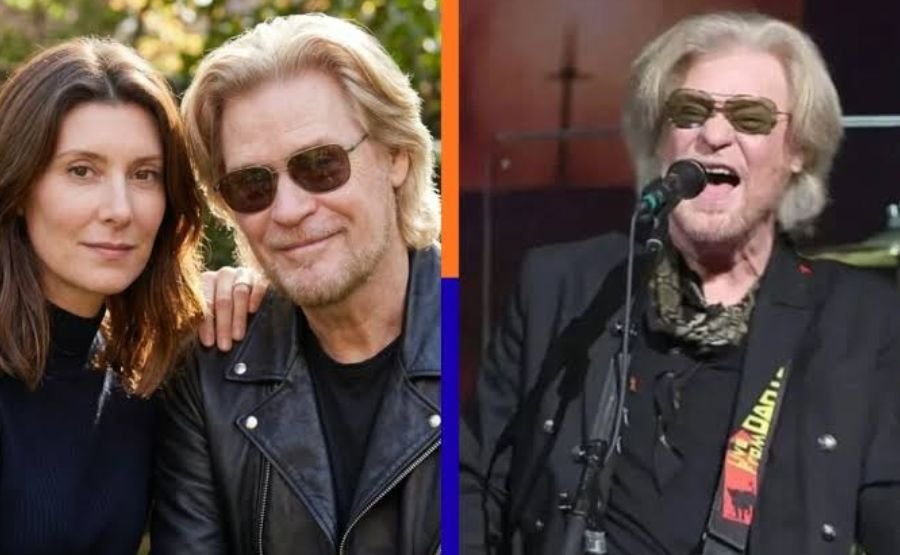
One piece of the story that often gets glossed over is worth sitting with: Daryl Hall converted to Judaism to marry Bryna.
Conversion is not a casual act. It involves study, community engagement, and in many traditions, a formal process that can take months or years. For Hall — a Pennsylvania kid raised in a Protestant household, steeped in gospel music and R&B but not in Jewish religious tradition — this was a meaningful step. It suggests the relationship had depth and intention behind it. It wasn’t a rushed decision.
What this tells us about Bryna is subtle but real: she came from a background where her faith mattered enough to shape the conditions of her marriage. Whether she was personally observant or whether this was more of a family expectation isn’t clear. But it’s a window into who she was — someone with cultural roots she held onto, and a partner willing to meet her there.
Net Worth and Financial Picture
There is no meaningful information about Bryna Lublin’s finances. None. Various online sources either declare her net worth “unknown” or invent figures with no sourcing whatsoever.
What we can say reasonably is that she would not have received substantial financial benefit from Hall’s later success, since they divorced in 1972 — before Hall & Oates became commercially enormous. The duo’s breakthrough hits came in the mid-1970s and their peak commercial period was the early 1980s. By that point, any financial arrangements from the divorce would have been long settled. Bryna’s financial story is entirely her own, built on whatever path she took after leaving that marriage — and that path remains invisible to the public record.
Personal Life: What We Actually Know
Bryna and Daryl Hall had no children together during their marriage. This is confirmed across multiple sources.
After the divorce, Hall went on to have a long-term relationship with Sara Allen, who inspired the hit “Sara Smile.” He later had a son, Darren, with Andrea Zabloski, and married Amanda Aspinall in 2009 (a marriage that later ended in divorce). Hall’s subsequent romantic life has been well-documented.
Bryna’s life after Hall is a blank page. There are no reports of subsequent marriages, no records of children, no professional profiles, no social media presence. She has maintained a level of privacy that is remarkable in an era when everyone seems to leave digital traces everywhere.
Whether this is a principled choice, a preference for quietude, or simply the result of a person living a very ordinary and contented private life is impossible to say. But the absence itself is striking. In an age of oversharing, Bryna Lublin is a true ghost — present in history, invisible in the present.
What She Represents
It might seem strange to write thousands of words about someone who clearly doesn’t want to be written about. But Bryna Lublin matters to the story of American music in a way that is worth acknowledging honestly.
She was there at the beginning. She was part of the emotional architecture of a man who went on to become one of the most successful musicians of his generation. She was the person Daryl Hall loved before he was famous, the woman he converted his religious identity for, the marriage whose ending seems to have unlocked some of the most emotionally honest writing of his early career.
And then she stepped back. Completely. Without complaint, without negotiation, without seeking compensation in public attention.
There is something quietly dignified about that. In a culture that constantly demands people perform their own stories for an audience, Bryna Lublin declined to perform hers. She lived it privately, moved on from it privately, and left only the faintest impressions on the historical record.
The song endures. The story is mostly hers to keep.
Final Words
Bryna Lublin is one of those rare figures in celebrity history who achieved a kind of reverse fame — known primarily for not being known. She was a real person who shared her life with a real musician during the period when that musician was first becoming himself artistically. Their three-year marriage captured something important enough to leave a trace in the music. After that, she moved away from everything.
What makes her story distinctive isn’t drama or achievement in the conventional sense. It’s the choice she made: to let the music speak for itself, to let her ex-husband have his fame without intruding on it, and to live whatever life she built for herself without asking anyone to watch.
That is its own kind of legacy. Not the loudest one. But real.
FAQs
1. Who is Bryna Lublin?
Bryna Lublin is best known as the first wife of Daryl Hall, the singer and songwriter who, along with John Oates, formed one of the most commercially successful duos in American music history.
2. When did Bryna Lublin and Daryl Hall get married?
They married in June 1969, while Hall was still a relatively unknown musician building his career in the Philadelphia music scene.
3. When did they divorce?
Their marriage ended in 1972, the same year Hall & Oates released their debut album.
4. Did Bryna Lublin and Daryl Hall have children together?
No. Multiple sources confirm they had no children during their marriage.
5. Why did Daryl Hall convert to Judaism?
According to his Wikipedia biography, Hall converted to Judaism in order to marry Bryna Lublin, who came from a Jewish background.
6. Is “She’s Gone” about Bryna Lublin?
Almost certainly in part. A 1985 Rolling Stone article reported the song was connected to Hall’s divorce from Bryna. Hall himself has never fully confirmed or denied this. John Oates has said his own contribution to the song was inspired by a different personal experience. The most likely truth is that Hall’s portion of the song drew from the emotional pain of his marriage ending.
7. Where is Bryna Lublin now?
Unknown. She has maintained a completely private life since the divorce and has not appeared in any interviews, public records, or media coverage.
8. What was Bryna Lublin’s career?
This is genuinely unknown. Various sources make claims ranging from journalist to artist to model, but none of these are supported by verifiable records. Many online articles about her appear to have fabricated professional details.
9. How old is Bryna Lublin?
Based on her marriage timeline, she was likely born in the late 1940s, which would place her in her mid-to-late seventies today.
10. How long were Bryna Lublin and Daryl Hall married?
Approximately three years, from June 1969 to sometime in 1972.
11. Did Bryna Lublin benefit financially from Daryl Hall’s success?
Very unlikely in any significant way, since they divorced in 1972 — years before Hall & Oates achieved their commercial peak in the mid-to-late 1970s and early 1980s.
12. Why do people search for Bryna Lublin?
Primarily because of the “She’s Gone” connection — fans who learn the song was linked to Hall’s first wife naturally want to know who she was. Her extreme privacy also creates a kind of curiosity. She is one of the rare people who could have leveraged a famous connection and simply chose not to.
Explore stories that inspire curiosity with The Imperial Magazine.



One Comment