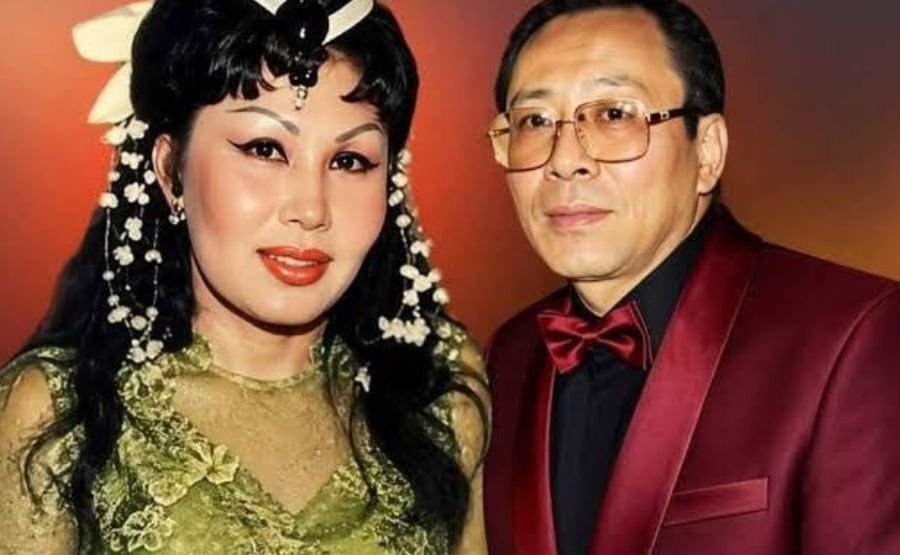
Antonio Chi Su: The Quiet Man Behind the Spotlight
Quick Bio
| Detail | Information |
| Full Name | Antonio Chi Su (also written Chi-Xuo) |
| Died | January 2008 |
| Nationality | Chinese-Mexican |
| Occupation | Restaurateur, Entrepreneur |
| Known For | Founding Chinese restaurants in Mexico City; husband of vedette Lyn May |
| Restaurant(s) | Siete Mares chain; restaurant on Avenida Bucareli, Mexico City |
| Marriage | Married Lyn May c. 1988–1989; together approximately 25 years |
| Health | Diagnosed with prostate cancer, 2004 |
| Legacy | Symbol of Chinese-Mexican entrepreneurship and cultural fusion |
Who Was Antonio Chi Su, and Why Does His Story Matter?
There are some people who never chase fame — and yet somehow, through the life they build and the love they give, they end up living a story worth telling. Antonio Chi Su was exactly that kind of person.
He was a businessman of Chinese heritage who made Mexico City his home and his canvas. While the name might not ring bells the way a politician’s or pop star’s would, in certain circles — especially among fans of classic Mexican entertainment culture — it carries real weight. He became the cornerstone of one of Mexico’s most beloved vedettes’ personal life, and he built a small restaurant empire that brought authentic Chinese flavors into the heart of a Mexican metropolis.
His is a story about immigration, quiet resilience, and the kind of love that apparently transcends even death — given what his widow famously did after losing him. But we’ll get there.
Origins and Early Life
The honest truth about Antonio Chi Su’s early years is that they remain largely undocumented. This is not unusual for Chinese immigrants who built lives in Mexico during the mid-twentieth century — a generation of entrepreneurs who arrived quietly, worked constantly, and rarely courted public attention.
What is known is that Antonio was born to Chinese parents, and that he grew up with the dual identity so common among Mexican-Chinese families of that era. The Chinese community in Mexico has deep roots — the earliest waves arrived as workers during the late nineteenth and early twentieth centuries, settling most heavily in border cities like Mexicali and in the capital. By the time Antonio came of age, there were established Chinese communities in Mexico City, centered around the historic Dolores Street area, and spreading outward into neighborhoods like Viaducto-Piedad.
Growing up Chinese-Mexican means navigating two worlds at once. It means learning to cook the flavors your grandmother knew while your friends outside the door are eating tamales and drinking atole. It means inheriting a work ethic shaped by immigrant survival and a cultural pride that refuses to disappear. All of this, one senses, shaped who Antonio became.
His exact birthdate is not in the public record. His schooling is similarly unrecorded. What is clear is that by adulthood, he had developed the instincts and drive of someone determined to build something real.

Building a Business in the Heart of Mexico City
Antonio Chi Su arrived at entrepreneurship the way many immigrants do — through food. Food is portable in a way that language sometimes isn’t. It carries home in its smell and texture, and it has a unique power to draw people in across cultural lines.
He started working in the restaurant world in Mexico City during the 1970s, eventually building toward owning his own establishments. His flagship became a Chinese restaurant situated on Avenida Bucareli, one of Mexico City’s storied commercial streets running through the Cuauhtémoc district — a thoroughfare humming with journalists, artists, and everyday city life. The restaurant was not a tucked-away niche spot. It sat squarely in the urban pulse of the capital.
What made his restaurants distinctive — particularly the Siete Mares chain he would later develop — was the fusion of genuine Chinese culinary tradition with the tastes and sensibilities of Mexican diners. He wasn’t trying to create a theme park of Chinese culture, nor was he watering down his heritage to please local palates. He found a middle ground, and customers came for it. Politicians, artists, journalists, and working families all found their way through his doors.
By the 1980s, Antonio was a recognized figure in his industry — not a celebrity, never a headline himself, but the kind of steady, respected presence that holds a neighborhood together. His restaurants became meeting places, the sort of spots where conversations stretched long past the meal.
A Meeting That Changed Everything
The story of how Antonio Chi Su met Lyn May has the quality of a small urban legend, the kind that improves slightly with each telling.
Lyn May — born Lilia Guadalupe Mendiola Mayares in Acapulco in 1952 — was by the late 1970s and early 1980s one of Mexico’s most recognizable entertainers. A dancer, actress, and vedette, she had made her name in the booming ficheras cinema of Mexico — the raucous, risqué, enormously popular genre of Mexican comedy-erotica that dominated national screens through the seventies. She had beauty that turned heads across the country, an Asian-Mexican look that was striking and distinctive, and a reputation for not playing by anyone else’s rules.
The two reportedly crossed paths sometime around 1980, when Lyn was filming near one of Antonio’s restaurants. The cast and crew would stop in to eat between takes. He noticed her; she noticed him. What grew between them was apparently very different from the chaotic romantic landscape Lyn May had navigated before — she had been in several significant relationships by then, and had been through considerable personal upheaval.
Antonio was not a showman. He was not glamorous in the entertainment sense. He was grounded, steady, and genuine — qualities that proved enormously attractive to someone who had spent her entire adult life surrounded by the theater of fame. She later described him as unlike any man she had ever known.
They married around 1988–1989, with the ceremony performed in a Catholic church — a point Lyn May would emphasize repeatedly over the years. Among all the men in her life, Antonio was the only one she married in the eyes of the Church. That meant something to her.
Marriage, Partnership, and Life Together
The marriage between Antonio Chi Su and Lyn May was, by virtually every account she gave across decades of interviews, the central relationship of her life. She was not shy about saying so.
They were an unlikely pairing on paper — the quiet Chinese-Mexican restaurateur and the flamboyant national icon of erotic dance and cabaret cinema. But those who knew them described a genuine complementarity. He gave her stability and a kind of private peace that the stage never could. She brought warmth, color, and energy into his world.
Together, they also operated as business partners. The restaurant on Avenida Bucareli, in particular, became as much Lyn May’s as Antonio’s during their marriage. She was not merely a celebrity spouse who sat back — she was present, invested, and proud of what they were building together. The restaurant, in turn, became a destination partly because of her connection to it. When you have one of Mexico’s most famous entertainers co-running your dining room, it doesn’t hurt the reservation book.
Antonio is remembered by those who crossed his path as protective, loyal, and deeply private. He reportedly had no interest in trading on his wife’s fame. He was not interested in cameras or columns. What he wanted was a good table, good food, and a good evening — and he built his life around providing exactly that for others.
Their life together spanned roughly twenty-five years, through the highs and quieter periods of Lyn May’s career, through the ups and downs that any long marriage accumulates, and eventually through his illness.
The Illness and Loss
Antonio Chi Su received a prostate cancer diagnosis in 2004. He was not a young man by then, and the disease is among the more common and serious cancers affecting men of his generation and demographic. The diagnosis marked the beginning of a difficult final chapter.
Lyn May was characteristically devoted. She spoke in later interviews about sleeping on the floor of the hospital to stay near him during treatment — a detail so specific and so raw that it needs no embellishment. The woman who had danced under stage lights for thirty years sat vigil on a hospital floor because she could not bear to be somewhere else.
Antonio fought for four years. He died in January 2008.
The grief that followed was described by Lyn May herself in terms that most people would struggle to find in language. She loved him in a way that did not follow ordinary rules, and her mourning did not follow ordinary rules either. She famously paid to have his body exhumed the day after his burial so she could have him home for a few more days — staying close to him, holding him, refusing to let the finality settle too quickly. It was her mother who eventually persuaded her to let go. Antonio’s remains were then cremated, and Lyn May scattered his ashes throughout her home, so that some part of him, she felt, would always be with her.
It is a strange and haunting postscript to a love story — and yet it also says something true about the depth of what they had built over a quarter century.
Personal Character and Cultural Legacy
Antonio Chi Su did not participate in a significant interview. There are no speeches, no columns under his byline, no awards acceptance addresses. His legacy exists mostly in the impressions he left on others and in what his wife carried with her into every telling of his story.
What emerges is the portrait of a man who took real pride in his dual heritage. He navigated the Chinese-Mexican experience not as a liability but as an asset — building a restaurant identity that was authentically neither one nor the other, but genuinely both. In a city where the Chinese community had faced periodic waves of discrimination throughout the twentieth century, his success on a prominent commercial street was not nothing. It was a subdued kind of cultural tenacity.
He was described as a generous mentor to others in the food industry, willing to share what he knew with younger entrepreneurs who came to him for guidance. His restaurant reportedly drew an eclectic crowd — politicians, journalists, artists, neighborhood regulars — which speaks to a certain kind of hospitality philosophy. Good food, good welcome, no pretense.
He was also, by all accounts, an extremely devoted stepfather to Lyn May’s children. Though Antonio and Lyn did not have biological children together, her family became his, and he embraced that role fully.
Money and the Business Legacy
Antonio Chi Su was never discussed in terms of great personal wealth, but he built a genuinely successful operation over the course of his working life. The Siete Mares restaurant chain represented a meaningful commercial achievement — a multi-location business in one of the world’s largest cities, sustaining itself across multiple decades.
No specific figures for his net worth have ever been published, and given his intensely private nature, that is unlikely to change. What is clear is that his business was substantial enough that after his death, Lyn May inherited the Avenida Bucareli restaurant and continued to operate it. That a business survives its founder’s death and remains viable is, in its own quiet way, a measure of what was built.
His financial legacy, then, is best understood not in dollar figures but in footprint — a restaurant on one of Mexico City’s main commercial streets, a chain of Siete Mares locations, and a reputation in his industry that outlasted him.
What Came After
Antonio Chi Su passed from the scene, but his memory did not. Lyn May, in her many subsequent interviews, returned to him again and again — not in a mournful or obsessive way, but in the way someone refers to the most solid ground they ever stood on.
She remarried after his death — to Guillermo Calderón Stell, whom she wed also in 2008 in what seemed an attempt to find footing after devastating loss. That marriage also ended in death, with Calderón passing in 2018. Lyn May went on to have other companions in her later years.
But in every conversation about the loves of her life, Antonio Chi Su consistently emerged as the benchmark — the man she measured others against, the one she said she would ask the universe to give her back if she could.
The restaurant on Avenida Bucareli became a living memorial of sorts, continuing to serve customers in a city that never entirely sits still.
Final Words
Antonio Chi Su’s life does not fit the standard shape of a biography subject. He did not write books or win prizes. He did not hold office or appear on television. He gave no grand speeches about the immigrant experience or the power of food to build bridges — even though his life was essentially a living argument for both.
What he did was show up: to his restaurants, to his marriage, to his community, and to his wife when she needed him most. He brought two cultures into conversation through the simple, profound act of feeding people well. He loved a remarkable woman steadily across a quarter-century, and that love apparently left a mark so deep it resisted even the ordinary passage of grief.
There is something worth noting about lives like his — the ones that never sought a spotlight but ended up illuminating something important anyway. In the story of Chinese-Mexican identity, in the history of Mexico City’s restaurant culture, and in the personal mythology of one of Mexico’s most enduring entertainers, Antonio Chi Su is there. Quiet, present, and impossible to truly replace.
His story is a reminder that you do not have to be famous to matter. You just have to build something real.
FAQs
1. Who exactly was Antonio Chi Su?
Antonio Chi Su (also recorded as Chi-Xuo) was a Chinese-Mexican businessman and restaurateur based in Mexico City. He is best known for running a chain of Chinese restaurants — including the Siete Mares group — and for being the long-term husband of Mexican vedette, actress, and dancer Lyn May. He died in January 2008.
2. When was Antonio Chi Su born?
There is no published record of his precise birthdate. No birth certificate, official documentation, or verified personal statement has been published giving a specific date. He was born to Chinese parents and grew up in Mexico, but the precise year remains unknown.
3. How did Antonio Chi Su and Lyn May meet?
They reportedly met around 1980 when Lyn May was filming a movie near one of Antonio’s restaurants in Mexico City. The film crew would eat at his restaurant between shoots, and the two developed a connection from there. They did not marry immediately — the relationship grew over several years before they wed around 1988–1989.
4. What restaurants did Antonio Chi Su own?
He owned and operated the Siete Mares restaurant chain, which had multiple locations in Mexico City. His most referenced establishment was a Chinese restaurant on Avenida Bucareli in the city’s Cuauhtémoc district — a prominent commercial street in central Mexico City.
5. Did Antonio and Lyn May have children together?
No. Antonio Chi Su had no biological children with Lyn May, but he served as a stepfather figure to her children from previous relationships. By most accounts, he embraced that role wholeheartedly.
6. What was the cause of Antonio Chi Su’s death?
He was diagnosed with prostate cancer in 2004 and battled the illness for approximately four years before passing away in January 2008.
7. Why did Lyn May exhume Antonio’s body?
Lyn May has spoken publicly about being so devastated by Antonio’s death that she paid to have his body exhumed the day after burial and brought home. She spent several days with the embalmed body before her mother convinced her to let go. She subsequently had him cremated and spread his ashes throughout her home. It was a deeply unconventional act of grief that she has never tried to fully explain beyond saying she simply could not accept losing him.
8. Was Antonio Chi Su famous in Mexico during his lifetime?
Not in the celebrity sense. He was a respected and successful figure within Mexico City’s business and restaurant community, and was known in circles connected to the entertainment world through Lyn May. But he deliberately kept a low public profile and had no interest in personal fame.
9. What is Antonio Chi Su’s approximate net worth?
No verified figure has ever been published. He built a multi-location restaurant business that was clearly profitable enough to sustain itself over decades and to leave Lyn May with an inheritance after his death. It is fair to say he was financially comfortable, but he was not known as an especially wealthy individual in the broader sense.
10. How is Antonio Chi Su remembered today?
Primarily through Lyn May’s ongoing interviews and public statements, in which she consistently identifies him as the greatest love of her life and the man she would bring back if she could. He is also remembered as an example of Chinese-Mexican entrepreneurship — someone who quietly represented the possibilities of cultural fusion in business.
11. What was Antonio Chi Su’s personality like?
Based on what Lyn May and others have said, he was private, steady, and deeply loyal. He was not drawn to attention or celebrity culture, despite his wife’s prominence. He was described as protective, generous with his knowledge, and genuinely warm with the people closest to him. He was also said to be a devoted presence at the hospital when his health declined — and in return, Lyn May was equally devoted in staying by his side.
12. What is the broader significance of Antonio Chi Su’s story?
In a small but meaningful way, his story contributes to the larger narrative of Chinese immigration to Mexico — a community that survived anti-Chinese persecution in the early twentieth century and rebuilt itself across generations. His success as a restaurateur on a prominent Mexico City street was a form of persistence and integration. Beyond that, the relationship between him and Lyn May became one of the most emotionally resonant love stories in Mexican popular culture — not because it was glamorous, but because it was real.
Explore stories that inspire curiosity with The Imperial Magazine.




One Comment