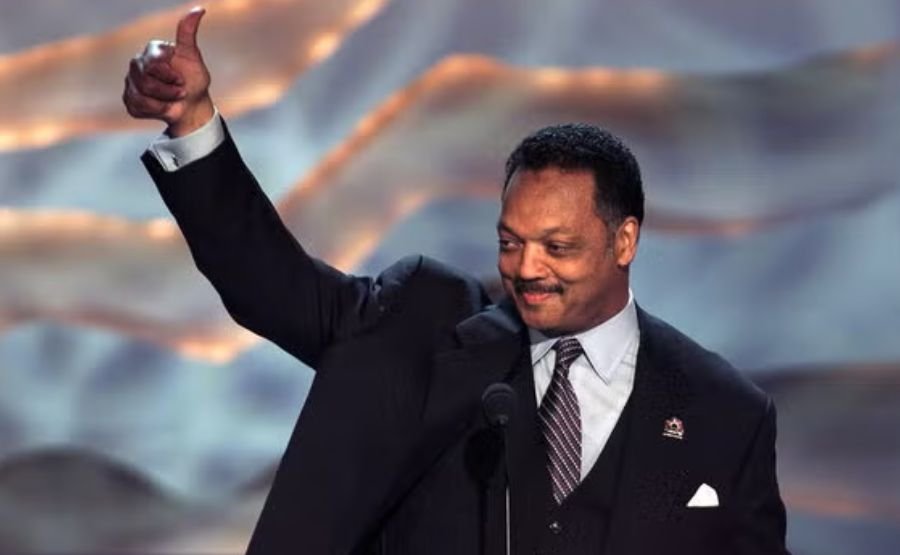
Jesse Jackson: The Voice That Would Not Be Silenced
A tribute to the Reverend Jesse Louis Jackson (October 8, 1941 – February 17, 2026)
Quick Bio
| Detail | Information |
| Full Name | Jesse Louis Jackson (born Jesse Louis Burns) |
| Born | October 8, 1941, Greenville, South Carolina |
| Died | February 17, 2026, aged 84 |
| Nationality | American |
| Occupation | Civil Rights Leader, Baptist Minister, Politician, Activist |
| Known For | SCLC Operation Breadbasket; Operation PUSH; two Democratic presidential campaigns (1984, 1988); Rainbow PUSH Coalition; Presidential Medal of Freedom (2000) |
| Education | B.S. Sociology, NC A&T (1964); Master of Divinity, Chicago Theological Seminary (2000) |
| Wife | Jacqueline Lavinia Brown (married 1962; survived him) |
| Children | Six, including Rep. Jonathan Jackson (D-IL) and former Rep. Jesse Jackson Jr. |
| Diagnosed | Parkinson’s disease, 2017 |
| Estimated Net Worth | Approximately $10 million |
Why Jesse Jackson’s Life Matters
Imagine America without the voice. Without the phrase that rang through convention halls in 1984 — “I was born in the slum, but the slum was not born in me.” Without the man who stood before the Democratic National Convention in 1988 and made millions of people who had never seen themselves in a presidential race lean forward in their chairs. Without the minister who flew into Damascus to bring home a captured American soldier, who marched into apartheid-era South Africa, who took his protests to boardrooms and ballot boxes with equal fearlessness.
Jesse Jackson was that voice. For more than six decades, he occupied a position in American public life that is almost impossible to fully categorise: part preacher, part politician, part negotiator, part provocateur, wholly committed to the idea that the arc of history bends toward justice only when someone grabs it and pulls.
He was not a perfect man. That’s what he would tell you first. But he was an enormously consequential one. And on February 17, 2026, at the age of eighty-four, with his family around him, he took his leave of a country he had spent his entire life trying to make better.
See also “Dick Cheney: The Man in the Shadows Who Shaped a Superpower“
Greenville, Jim Crow, and a Difficult Beginning
Jesse Louis Burns came into the world on October 8, 1941, in Greenville, South Carolina, the son of Helen Burns, who was sixteen years old at the time and unmarried. His biological father, Noah Robinson, was a married neighbour who did not take any public role in Jesse’s upbringing. The circumstances of his birth — well known in the tight neighbourhood where they lived — became ammunition for the cruelty that children sometimes inflict on each other, and the taunting young Jesse endured about being born illegitimate left marks that, by most accounts, stoked the engine of his ambition throughout his life.
His mother married Charles Henry Jackson when Jesse was a toddler. The family settled into the rhythms of working-class Black life in Greenville, South Carolina — which in the early 1940s meant navigating the full apparatus of Jim Crow segregation. Separate water fountains. Separate waiting rooms. Separate everything. A world designed to communicate, every day and in every possible way, that Black people occupied a lesser category of humanity.
Jesse absorbed that message and rejected it completely. He was by all accounts a high-achieving, determined boy from early on, as if the insults delivered by circumstance had been metabolised into an almost physical need to prove something. He was chosen as the school’s class president. He was good enough at football to be awarded a scholarship. At around age fifteen he took his stepfather’s surname, becoming Jesse Jackson — the name he would carry into history.

He Was Found by the Movement at North Carolina A&T
When Jesse left South Carolina for college, he initially headed north to the University of Illinois on a football scholarship in 1959. But he encountered discrimination there — excluded, as a Black student, from opportunities available to white teammates — and transferred after a year to North Carolina Agricultural and Technical College in Greensboro, the historically Black institution that would become one of the most charged addresses in American civil rights geography.
In February 1960, four Black students from NC A&T sat down at the whites-only Woolworth’s lunch counter in downtown Greensboro and refused to leave. The Greensboro sit-ins spread across the country and became one of the defining acts of creative nonviolent resistance in the civil rights era. Jesse arrived in this atmosphere and was immediately drawn into it. He played quarterback on the football team, was elected student body president, and threw himself into the movement’s local actions — sit-ins, protest marches, the whole urgent business of demanding that America live up to its stated values.
He graduated with a bachelor’s degree in sociology in 1964, then enrolled at the Chicago Theological Seminary, drawn by the idea that faith and social justice could not and should not be separated. He was three credits short of completing his master’s degree when he left in 1966. The movement needed him. More specifically, Dr. Martin Luther King Jr. needed organizers, and Jesse Jackson was one of the most energetic young organizers the Southern Christian Leadership Conference had encountered.
He was ordained a Baptist minister in 1968. Decades later, in 2000, the Chicago Theological Seminary awarded him the Master of Divinity degree he had been so close to completing — granting it based on his accumulated credits and the outstanding track record of his efforts in later life. That ceremony had a poetic quality. The degree the movement had interrupted was finally in his hands.
King, Memphis, and Operation Breadbasket
The trajectory of Jesse’s early career was shaped profoundly by his relationship with Martin Luther King Jr. He became a trusted lieutenant of King’s, eventually heading the SCLC’s Operation Breadbasket program in Chicago — an initiative that used the economic leverage of Black consumer spending to pressure companies into hiring more Black workers and doing business with Black-owned suppliers. Jackson had a genius for this kind of strategic economic thinking. He understood that marching was one kind of power and purchasing was another.
On April 4, 1968, Jesse Jackson was in Memphis, Tennessee, when Martin Luther King was assassinated on the balcony of the Lorraine Motel. What exactly Jackson saw or experienced in those moments, and what he said in the days immediately after, became the subject of lasting controversy — some accounts contradicted others, and some of the narratives Jackson told about the immediate aftermath were disputed by other witnesses. What is uncontested is that the assassination of King left Jackson without the moral anchor who had guided his work, and that Jackson responded by pressing forward with doubled intensity.
In 1971, he broke from the SCLC and founded his own organisation in Chicago, Operation PUSH — People United to Save Humanity. PUSH continued and expanded the economic justice work he had been doing, using boycott campaigns to compel major American corporations including Coca-Cola, Anheuser-Busch, and Nike to increase their commitments to Black employment, Black suppliers, and Black communities. These were not symbolic campaigns. They produced real, measurable changes in corporate behaviour.
The Presidential Campaigns That Rewrote American Politics
By the early 1980s, Jesse Jackson had become the most prominent Black political figure in America, and he started saying publicly what many people privately thought: it was time for a serious Black presidential candidate. Not a protest candidate. Not a symbolic gesture. A real campaign.
In 1984 he ran for the Democratic presidential nomination under the banner of a “Rainbow Coalition” — a deliberately inclusive politics that brought together African Americans, Latino voters, poor white working families, women, peace activists, farmers, and gay Americans under a single progressive umbrella. The campaign was historic. It was also imperfect. Early in the race, a private conversation in which Jackson used an anti-Semitic slur about New York City — overheard by a reporter — became a national controversy that badly damaged his standing and defined a painful chapter of the campaign. He came in a distant third behind Walter Mondale and Gary Hart.
But he didn’t stop. The 1988 campaign was different in kind as well as scale. Jackson ran again, and this time the country was more prepared for what he was offering. He won thirteen states. He came in second overall in the primaries, finishing behind Michael Dukakis, the eventual nominee, by a margin that was closer than most people expected. He gave one of the most celebrated speeches in modern Democratic National Convention history — a cascade of empathy, poetry, and political argument that brought the hall to its feet. People who watched it still remember where they were.
He did not win the presidency. No Black American would do that until Barack Obama in 2008, a moment that Obama himself publicly acknowledged was made possible by the generation of organizers and candidates who had broken ground before him. Jackson was central to that ground-breaking.
Rainbow PUSH and a Life of Persistent Engagement
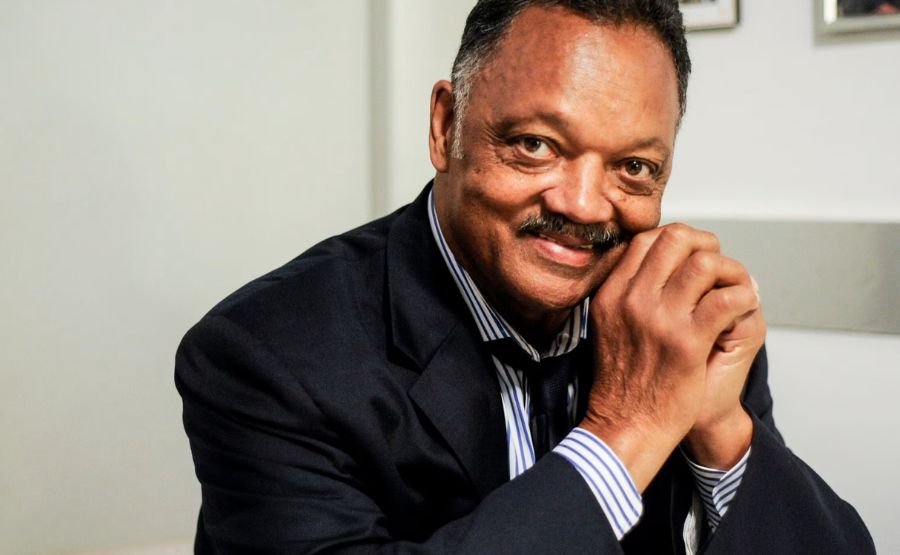
After the presidential campaigns, Jackson merged the Rainbow Coalition with Operation PUSH to form the Rainbow PUSH Coalition, based in Chicago, which remained his primary institutional home for the rest of his life. He represented Washington, D.C. as the Shadow Senator. — a position created to highlight the district’s lack of voting representation in Congress — and continued using his platform to engage with virtually every significant domestic and international controversy that arose.
His international work deserves special attention. In 1983 he flew to Syria and negotiated the release of Navy Lieutenant Robert Goodman Jr., an American aviator who had been shot down and captured. The Reagan administration had made little progress through official channels. Jackson went anyway, met with Syrian President Hafez al-Assad, and came home with Goodman on a plane beside him. It was a remarkable piece of personal diplomacy by a private citizen with no official government status.
He made similar missions across his career — to Kosovo during the NATO campaign, to Cuba, to South Africa, to meet with various world leaders at moments when official channels had stalled. He was not always welcomed by the sitting American government. He went anyway.
In 1997, President Clinton appointed him Special Envoy to Africa, a more formal role that gave his international instincts an official address. He also received the Presidential Medal of Freedom in 2000 — the nation’s highest civilian honour — from President Clinton at a White House ceremony.
Personal Life: Jackie, Six Children, and the Family He Built
In 1962, Jesse married Jacqueline Lavinia Brown, who had been his girlfriend through his college years at NC A&T. They remained married for the rest of his life — more than sixty years together, raising six children in the particular fishbowl of a public life that never really had an off-season.
Their children included Santita Jackson, a broadcaster and politician; Jesse Jackson Jr., who served multiple terms as a US Representative for Illinois before a federal corruption conviction derailed his career; Jonathan Jackson, who won Jesse Jr.’s former congressional seat in 2022 and has served in Congress as a representative; and several other children who maintained lower public profiles.
In 2001, it emerged that Jackson had fathered a daughter, Ashley, with Karin Stanford, a researcher who had worked for the Rainbow PUSH Coalition. The affair had taken place while Jackson was serving as a spiritual counsellor to President Clinton during the Monica Lewinsky scandal — the timing making it an obvious point of public irony. Jackson publicly acknowledged the child and took responsibility for supporting her financially. It was among the most painful chapters of his public life, and a moment that complicated his status as a moral leader for many who had looked up to him.
Jacqueline Jackson remained with him through that and through the decades that followed. She survived him.
The Hardships: Controversy, Parkinson’s, and Aging in Public
Jesse Jackson’s career was never without controversy. Beyond the 1984 anti-Semitic remark and the 2001 affair disclosure, he was accused at various points of financial irregularities involving the Rainbow PUSH Coalition, of grandstanding on issues for personal benefit rather than community gain, of a certain authoritarian quality in how he ran his organisations, and — perhaps most publicly in later years — of a moment in 2008 when a microphone caught him making a crude and threatening comment about Barack Obama during what he believed to be a private conversation at a Fox News studio. He apologised. The damage was real and the embarrassment was total.
In late 2017, at age seventy-six, Jackson disclosed publicly that he had been diagnosed with Parkinson’s disease — the same progressive neurological condition that had afflicted his colleague Muhammad Ali and that would increasingly limit his physical capacity. The announcement was characteristically Jackson: he made it himself, on his own terms, and framed it as a call for continued service rather than a retreat from it. He said he would spend his remaining energy fighting for the communities he had always served.
The Parkinson’s progressed. His physical capacities diminished. His voice, once one of the most commanding in American political life, became harder to project. He used a wheelchair in his final years. But he kept appearing at events, kept making his presence felt at moments that mattered, kept being Jesse Jackson until the very end.
The Financial Picture
Jesse Jackson’s net worth is generally estimated at approximately ten million dollars — a figure accumulated across decades of speaking fees, book royalties, his role at the Rainbow PUSH Coalition, and income from various ventures. He was a sought-after speaker for much of his career, commanding significant fees at universities, corporations, and political events. The Rainbow PUSH Coalition, a nonprofit organisation, was his primary institutional vehicle, but he maintained separate personal finances through his speaking and media work.
He hosted a CNN programme, Both Sides with Jesse Jackson, from 1992 to 2000. He wrote several books. He was compensated for the diplomatic and advocacy work he did at various points through different institutional arrangements.
The financial picture was never entirely clean — there were periodic questions about the separation of personal and organisational finances at Rainbow PUSH — but the overall picture is of a man who built genuine economic stability from a starting point of nothing, in a time when the society around him was structured to prevent exactly that.
His Final Years
In the years following his Parkinson’s diagnosis, Jesse Jackson continued to show up — at protests, at marches, at congressional hearings, at moments of racial crisis and political urgency. When George Floyd was murdered in 2020 and the country erupted in the most widespread civil rights protests since the 1960s, he spoke. When voting rights came under legislative threat, he testified. When his son Jonathan won his congressional seat in 2022, he was there to see it.
He died on February 17, 2026, at age eighty-four, survived by his wife Jacqueline and his six children. The outpouring of grief from across American political life — from the White House, from Congress, from community organisations and churches and civil rights groups across the country — reflected the scale of what he had meant across more than six decades of engagement with American public life.
See also “Dick Cheney: The Man in the Shadows Who Shaped a Superpower“
Final Thoughts
Jesse Jackson’s legacy is layered and complicated in the way that any life of genuine scale must be. He was the man who turned the Democratic presidential primary into something that had to reckon with Black Americans as full political agents rather than a bloc to be managed. He was the preacher who understood that sermons and boycotts and ballot boxes were all forms of the same argument. He was the diplomat who went places the government wouldn’t and came back with results. Additionally, he was a guy whose personal behavior occasionally compromised the moral authority he had spent his whole life establishing.
What endures is the body of work — the organisations he built and led, the campaigns he ran that moved the goalposts, the young people he inspired across generations who became organisers and politicians and community leaders in their own right. Every Black candidate who has run for significant national office since 1984 has run in a world shaped partly by those two campaigns. Jesse Jackson made that possible.
He came from a sixteen-year-old single mother in Jim Crow South Carolina. He stood on stages before tens of millions of people and made them believe the country could be better. He was, from beginning to end, a voice that would not be silenced — not by poverty, not by segregation, not by controversy, not by illness, not even by age. The silence only came at the very end, and even then it was not the silence of defeat. It was the silence of completion.
FAQs
1. Who was Jesse Jackson?
Jesse Jackson was an American civil rights leader, ordained Baptist minister, and politician. Born in Greenville, South Carolina in 1941, he rose from poverty in the Jim Crow South to become one of the most influential figures in twentieth and twenty-first century American political life. He was a close associate of Martin Luther King Jr., founded Operation PUSH and the Rainbow PUSH Coalition, ran for the Democratic presidential nomination in 1984 and 1988, and remained active as an organiser, preacher, and advocate until his death on February 17, 2026, at age 84.
2. When and where was Jesse Jackson born?
He was born Jesse Louis Burns on October 8, 1941, in Greenville, South Carolina, to Helen Burns, a sixteen-year-old single mother. He later took the surname of his stepfather, Charles Henry Jackson, at around age fifteen. His biological father was Noah Robinson, a married neighbour who was not publicly involved in his upbringing.
3. What was Jesse Jackson’s relationship with Martin Luther King Jr.?
Jackson became a significant figure within King’s Southern Christian Leadership Conference in the mid-1960s, eventually heading the SCLC’s economic justice initiative, Operation Breadbasket, in Chicago. He was present in Memphis, Tennessee, on April 4, 1968, when King was assassinated. The precise details of his proximity to the shooting have been disputed over the years, but his connection to King’s movement was central to his early career and enduring identity.
4. What were Operation Breadbasket and Operation PUSH?
Operation Breadbasket was the SCLC’s economic division, which Jackson led in Chicago. It used Black consumer power to pressure corporations into hiring more Black employees and supporting Black-owned businesses. In 1971, after leaving the SCLC, Jackson founded his own organisation, Operation PUSH (People United to Save Humanity), which continued and expanded this economic justice work through boycotts of major corporations including Coca-Cola, Nike, and Anheuser-Busch.
5. What were Jesse Jackson’s presidential campaigns about?
Jackson ran for the Democratic presidential nomination in 1984 and 1988, both times under the platform of his Rainbow Coalition — a progressive political programme that sought to unite African Americans, Latino voters, poor white working families, women, anti-war activists, farmers, and LGBTQ Americans. He finished third in 1984 and second in 1988, winning thirteen states in his second campaign. His candidacies fundamentally expanded ideas about who could run for president and whose interests a presidential campaign could speak to.
6. What is the Rainbow PUSH Coalition?
The Rainbow PUSH Coalition was formed when Jackson merged his National Rainbow Coalition — which grew out of his presidential campaigns — with Operation PUSH. It is based in Chicago and focuses on civil rights, economic justice, international human rights, and political empowerment. It served as Jackson’s primary institutional home for the final decades of his career.
7. What was Jesse Jackson’s most famous diplomatic achievement?
His most celebrated piece of personal diplomacy was his 1983 mission to Syria, where he negotiated the release of US Navy Lieutenant Robert Goodman Jr., an aviator who had been shot down and captured. Jackson went without official government backing, met personally with Syrian President Hafez al-Assad, and returned home with the freed airman. He also conducted significant diplomatic missions to Kosovo, Cuba, Africa, and other crisis points throughout his career.
8. What controversies defined Jesse Jackson’s career?
Several significant controversies marked his public life. During the 1984 presidential campaign, a private remark using an anti-Semitic slur about New York City became public and caused serious political damage. In 2001, he acknowledged fathering a child with a Rainbow PUSH Coalition staff member during an extramarital affair. In 2008, a hot microphone captured him making a crude comment about Barack Obama. Financial questions about the management of Rainbow PUSH also arose periodically. Jackson addressed each of these publicly, though the controversies left lasting marks on his reputation.
9. What was Jesse Jackson’s health situation in later years?
In late 2017, Jackson publicly disclosed that he had been diagnosed with Parkinson’s disease — a progressive neurological condition that affects movement and speech. He announced the diagnosis himself and vowed to continue his advocacy work. His illness worsened during the ensuing years, restricting his range of motion and ultimately necessitating the use of a wheelchair. He continued to appear at significant public events despite the disease’s progression, remaining engaged until very close to his death in February 2026.
10. Who are Jesse Jackson’s children?
Jesse and Jacqueline Jackson had six children together. Among the best known are Santita Jackson, a broadcaster and political figure; Jesse Jackson Jr., who served several terms as a US Representative for Illinois’s second congressional district before a federal corruption conviction ended his political career; and Jonathan Jackson, who won and held his brother’s former congressional seat beginning in 2022. Jesse also had a daughter, Ashley, born in 2001 from an affair he acknowledged publicly.
11. What honours did Jesse Jackson receive?
Among his most significant honours was the Presidential Medal of Freedom, awarded to him in 2000 by President Bill Clinton — the highest civilian honour in the United States. He also received the NAACP Spingarn Medal in 1989 for his civil rights contributions, was inducted into the International Civil Rights Walk of Fame in 2004, and was awarded the Master of Divinity degree from the Chicago Theological Seminary in 2000, completing the graduate studies he had left unfinished in 1966.
12. What is Jesse Jackson’s estimated net worth?
His net worth is generally estimated at approximately ten million dollars, accumulated across decades of speaking fees, book royalties, media work including his CNN programme Both Sides with Jesse Jackson (1992–2000), and his various advocacy and organisational roles. He came from extremely modest beginnings, and the financial stability he built represented a complete transformation from his childhood circumstances in segregated South Carolina.




2 Comments