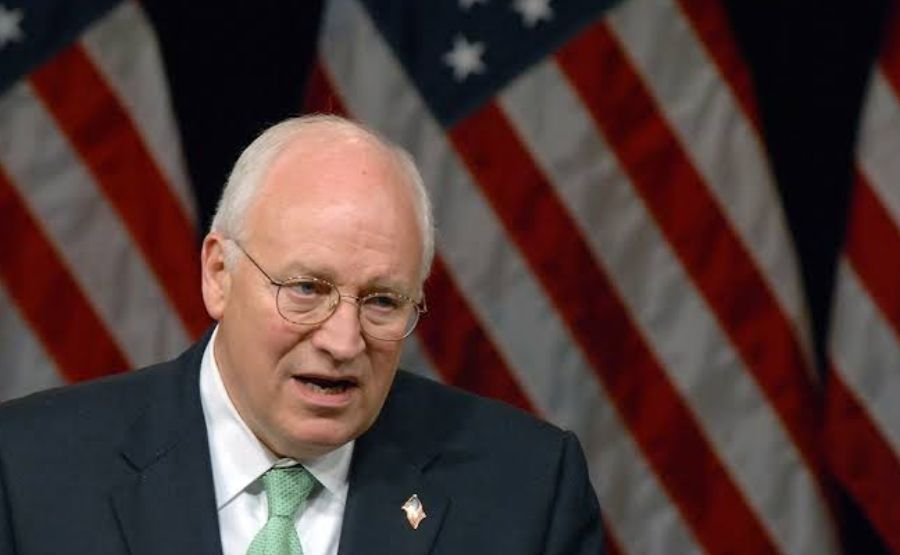
Dick Cheney: The Man in the Shadows Who Shaped a Superpower
Quick Bio
| Detail | Info |
| Full Name | Richard Bruce Cheney |
| Born | January 30, 1941, Lincoln, Nebraska, USA |
| Died | November 3, 2025, aged 84 (complications from pneumonia and cardiac/vascular disease) |
| Nationality | American |
| Occupation | Politician, business executive, author |
| Known For | 46th Vice President of the United States (2001–2009); key architect of the Iraq War; most powerful VP in modern history |
| Spouse | Lynne Cheney (married 1964; 61 years) |
| Children | Liz Cheney, Mary Cheney |
| Major Roles | White House Chief of Staff (Ford); U.S. Congressman (Wyoming, 1979–89); Secretary of Defense (1989–93); CEO of Halliburton (1995–2000); Vice President under George W. Bush |
| Estimated Net Worth | ~$150 million at death |
| Health | Survived five heart attacks; received a heart transplant in 2012 |
Why Dick Cheney’s Story Matters
There’s a version of political history where the most powerful person in the room is never the one with the fanciest title. For eight years spanning two wars, one catastrophic terrorist attack, and a transformation of American foreign policy that the world is still reckoning with, that person was Dick Cheney.
He was referred to as the Bush White House’s “Darth Vader.” He preferred it that way. A man who spent his career operating in the background — steering things, shaping decisions, accumulating influence like compound interest — Cheney understood that real power rarely announces itself. He once remarked, when someone commented on his behind-the-scenes reputation, “It’s a nice way to operate, actually.”
Love him or despise him — and plenty of people did both with intensity — Cheney was without question one of the most consequential American political figures of the past fifty years. His story stretches from a modest childhood in Wyoming all the way to heart transplants, oil company boardrooms, shooting accidents, and a late-life split with the Republican Party he’d served for decades. It’s a remarkable run. Let’s go through it.
See also “Gypsy Rose: Survival, Consequence, and the Long Road Back to Life“
Born in Nebraska, Raised in Wyoming
Richard Bruce Cheney came into the world on January 30, 1941, in Lincoln, Nebraska. His father, Richard Herbert Cheney, worked as a soil conservationist for the U.S. Department of Agriculture — a government man, practically speaking, though deeply ordinary compared to what his son would become. Marjorie, his mother, had played softball. The family was Democratic, which is almost funny in retrospect given what Dick Cheney would represent politically.
When Cheney was about thirteen, the family’s circumstances required a move to Casper, Wyoming. That turned out to matter enormously. Wyoming was — and is — wide-open country, a state that prizes individual toughness and quiet resolve over showiness. Cheney absorbed that culture completely. He fished, hunted, played football, and attended Natrona County High School, where he was a star athlete and, more importantly, met a girl named Lynne Vincent. She would become his wife and his partner for the rest of his life.
He was not, by any measure, on a fast track to Washington in those years. He was just a solid kid from a small Western city figuring out what came next.

Yale, Failure, Wyoming, and a Second Chance
Here’s a part of Cheney’s story that tends to get glossed over: he was, at least initially, not especially successful.
He got into Yale University on a full scholarship, which was genuinely impressive for a kid from Casper. But Yale didn’t suit him — or, more accurately, he didn’t suit Yale. He later described falling in with friends who considered beer a primary food group. His grades collapsed. After a couple of semesters, he dropped out and headed home. He spent time as a lineman stringing electrical wire through the brutal Wyoming winters, which was honest work but not exactly a path toward anything in particular.
What it gave him, though, was a sense of something real. He had experienced the actual working world, not a coddled version of it. When he finally decided to take academics seriously, he enrolled at the University of Wyoming with clear purpose. He threw himself into political science and graduated with a bachelor’s degree in 1965 and a master’s in 1966. He then started a Ph.D. program at the University of Wisconsin, but abandoned that too — this time for a more deliberate reason. He wanted to get into politics.
He did, briefly, work in Wisconsin state government. Then he applied for a congressional fellowship that sent him to Washington.
The Rumsfeld Connection and the Rise Through Washington
Arriving in Washington in the late 1960s as a congressional fellow, Cheney was not an obviously destined figure. He was smart and hardworking, but so were thousands of other young men filing through the capital’s hallways. What set him apart was a combination of quiet strategic intelligence and a particular stroke of luck in the form of Donald Rumsfeld.
Rumsfeld was then a congressman from Illinois. Cheney wrote a memo — not for Rumsfeld specifically, but one that caught Rumsfeld’s eye — about how Rumsfeld should handle his upcoming confirmation hearings to lead the Office of Economic Opportunity. Rumsfeld read it, tracked down who wrote it, and hired Cheney on the spot.
The partnership would define both men’s careers. When Nixon asked Rumsfeld to join his administration, Cheney followed him in. When Nixon resigned and Gerald Ford took over, Rumsfeld became White House Chief of Staff, with Cheney as his deputy. And then, in the famous “Halloween Massacre” of 1975 — when Ford dramatically reshuffled his entire cabinet — Rumsfeld moved over to become Secretary of Defense. Cheney stepped into the Chief of Staff role.
He was thirty-four years old. The youngest White House Chief of Staff in American history. The man whom President Ford’s national security adviser Brent Scowcroft described plainly as someone who “made the system run.”
Ford lost the 1976 election to Jimmy Carter, and Cheney’s White House run ended. He headed back to Wyoming.
Six Terms in Congress, One Heart Attack, and a Desert Storm
Back home in Casper in 1978, Cheney decided to run for Wyoming’s single at-large congressional seat. The campaign was grueling. And somewhere in the middle of it, Cheney suffered his first heart attack. He was thirty-seven.
He won anyway.
Over the next decade, Cheney built a formidable congressional career. He served six terms, rose to chair the House Republican Policy Committee, then the Republican Conference, and by 1989 had become House Minority Whip — the second-ranking Republican in the chamber. He was a reliable conservative vote, skeptical of regulation and government spending, and increasingly trusted by colleagues and party leadership alike.
Then George H.W. Bush entered the White House and needed a Secretary of Defense. His first choice — Senator John Tower of Texas — was rejected by the Senate. His second choice was Dick Cheney. The Senate confirmed Cheney easily, and suddenly he was in charge of the entire U.S. military.
The timing was historic. In 1989, Cheney oversaw the American invasion of Panama to remove Manuel Noriega. Then, in 1990, Saddam Hussein’s Iraq invaded Kuwait. Cheney spent the following months coordinating the coalition response — working with Chairman of the Joint Chiefs Colin Powell, building international support, and planning the operation that would liberate Kuwait in 1991. The Gulf War was, by military standards, a stunning success: coalition forces drove Iraqi troops from Kuwait in a matter of weeks, with casualties far below projections. Cheney emerged from it with his reputation greatly enhanced.
When Bush lost his re-election bid to Bill Clinton in 1992, Cheney left government. For the first time since the early 1970s, he had no official role.
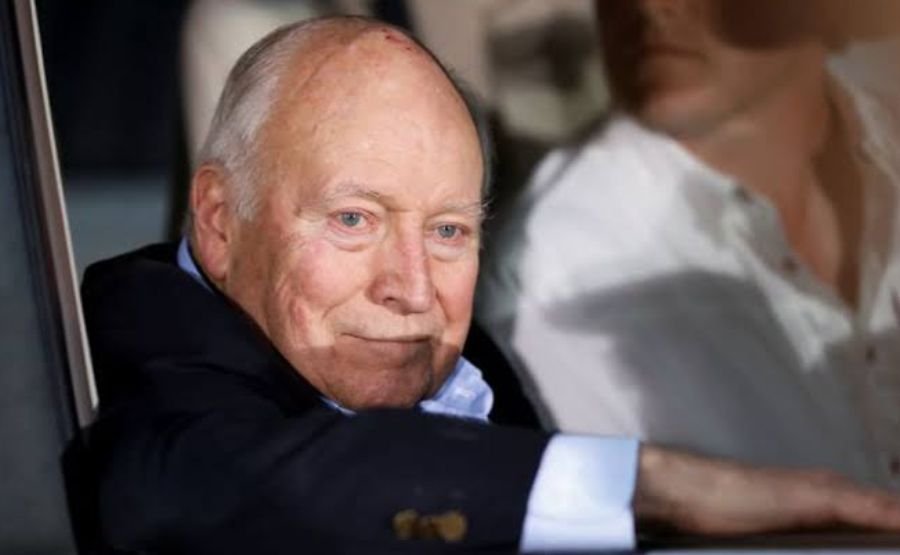
Halliburton, Private Power, and a $35 Million Exit
The Clinton years turned out to be very profitable for Dick Cheney.
In 1995, he was named CEO and Chairman of Halliburton, one of the largest energy services and engineering companies in the world, headquartered in Dallas, Texas. Cheney had no background as a business executive per se, but he had something Halliburton’s board wanted: unmatched connections throughout the U.S. government and military-industrial establishment. He spent five years building the company’s revenues and its government contracting business.
When George W. Bush began planning his 2000 presidential campaign and asked Cheney to lead the search for a vice-presidential candidate, Cheney went through a thorough vetting process — and ultimately recommended himself. Bush asked him to join the ticket. Cheney left Halliburton with a severance package worth somewhere between $33 and $35 million (depending on the source), plus more than 400,000 unexercised stock options that he agreed to donate, at least partly, to charity before taking office.
Following the start of the Iraq War in 2003 and the company’s acquisition of significant reconstruction contracts in the country, the Halliburton connection became extremely contentious. Critics pointed out the obvious conflict of interest. Cheney maintained he had no involvement in those decisions. The argument was never fully resolved in the public’s mind.
The Most Powerful Vice President in History
Dick Cheney did not approach the vice presidency the way his predecessors had. Traditionally, the office had been, as one famous nineteenth-century occupant put it, “not worth a bucket of warm spit.” Cheney had other ideas.
From his first day, he carved out an unprecedented scope of influence. He had his own staff, his own policy shop, access to every classified document flowing through the White House, and a direct line to foreign policy decisions that previous vice presidents could only have dreamed of. He attended virtually every important meeting. He built an operation within the executive branch that operated almost as a parallel administration.
After the September 11, 2001 attacks — which Cheney spent partly in an undisclosed secure location, managing the government’s emergency response from an underground bunker — he became the most forceful voice inside the Bush White House for a maximalist response. That meant the invasion of Afghanistan. It meant the expansion of surveillance authorities. It meant the authorization of “enhanced interrogation” techniques that critics called torture. And above all, it meant Iraq.
Cheney was perhaps the single most aggressive proponent of the 2003 invasion of Iraq within the administration. He argued repeatedly, publicly and privately, that Saddam Hussein’s regime possessed active weapons of mass destruction and had operational ties to al-Qaeda. In an August 2002 speech to the Veterans of Foreign Wars, he declared, in chilling terms, that Hussein was stockpiling weapons specifically to use against the United States and its allies — a claim that helped build the political case for war months before the invasion was launched.
No weapons of mass destruction were found. The al-Qaeda connection was never substantiated. The war, which initially went quickly militarily, descended into a years-long insurgency that cost tens of thousands of lives and trillions of dollars, and fundamentally destabilized the Middle East. Cheney, even as the years passed and the evidence mounted, never recanted. He remained convinced, in some bedrock way, that the intervention had been justified.
Personal Life: Lynne, Liz, Mary, and a Family That Endured
Behind the granite-faced public image was a man who was apparently quite devoted to his family.
He married Lynne Vincent in 1964, the same high school sweetheart he’d met back in Casper. They stayed together for sixty-one years, through every career turn and health crisis and public storm. She was his intellectual equal — a scholar and author in her own right, who wrote novels and served as Chairman of the National Endowment for the Humanities. Theirs was a real partnership, by all accounts.
Their older daughter Liz grew up to become a Wyoming congresswoman and, more dramatically, one of the most outspoken Republican critics of Donald Trump — eventually serving as vice chair of the January 6th House Select Committee. Their younger daughter Mary, who came out as gay in the 1990s, created a complicated moment for Cheney when same-sex marriage became a national political issue. He was a conservative Republican whose party officially opposed gay marriage — and he had a gay daughter. He navigated it by saying publicly that he personally believed in leaving the decision to individual states, a position that was somewhat more liberal than the party line. It was, for Cheney, an unusually personal collision between political ideology and private loyalty.
Cheney also loved to hunt and fish, which eventually led to one of the most famous accidents of his vice presidency: in February 2006, during a quail hunt at a ranch in south Texas, he accidentally discharged his shotgun while swinging on a bird, striking his companion Harry Whittington in the face, neck, and chest with birdshot. Whittington survived, though a pellet that migrated toward his heart later caused a minor cardiac event. Whittington himself, gracious under pressure, apologized publicly to Cheney for the trouble it caused — a moment that struck many observers as faintly surreal.
Five Heart Attacks and a Borrowed Heart
Dick Cheney’s health was a running story for literally his entire adult public life. The first heart attack came in 1978, during his first congressional campaign, when he was just thirty-seven. Four more followed over the subsequent decades, each one survived, each one quietly documented in the public record. He underwent multiple cardiac procedures, stents, defibrillator implants, and eventually — in early 2012 — a complete heart transplant. He was seventy-one years old when he received someone else’s heart, making him one of the oldest transplant recipients at that time.
He was also, famously, on a Ventricular Assist Device — a mechanical pump that maintained blood flow — for more than a year before the transplant. During that period he had no discernible pulse. While they awaited a donor organ, the doctors had essentially replaced his dying heart with a machine. He joked about it afterward with characteristic dry humor.
The transplant extended his life by more than thirteen years.
Money and Net Worth: The Halliburton Windfall
Dick Cheney was not born into money. His father was a federal government employee, solidly middle-class by the standards of postwar Wyoming. His early career in politics was not particularly lucrative — public servants in that era rarely accumulated wealth through their salaries.
The Halliburton years changed everything. From 1995 to 2000, Cheney drew a substantial compensation package as CEO, including stock options and bonuses, and left the company with a departure payment estimated at around $33–35 million. His stock options added further to that. Even after he donated a portion of profits to charity — as he pledged upon becoming vice president — the financial windfall was enormous.
He also owned property, including real estate in Virginia and Wyoming. After leaving the vice presidency in 2009, he earned additional income from speaking engagements, and he co-authored two books with Liz: a memoir, In My Time, published in 2011, and Exceptional: Why the World Needs a Powerful America, in 2015. Both sold well.
By the time of his death in November 2025, estimates placed his net worth at approximately $150 million — a figure that reflects the enormous financial rewards available at the intersection of government service and the private energy sector.
The Final Chapter: Breaking With His Own Party
Something interesting happened to Dick Cheney in his later years. The man who had spent four decades as one of the most reliable Republican power brokers in Washington found himself watching his party become something he didn’t recognize.
He was openly critical of Barack Obama’s presidency. But when Donald Trump rose to dominate the Republican Party, Cheney’s critique shifted into something deeper and more personal. In 2022, he appeared in a campaign advertisement for his daughter Liz, who was facing a primary challenge from a Trump-backed candidate. In it, he called Trump, in stark terms, the greatest threat to the American republic in its 246-year history. Coming from Dick Cheney — a man who had never been known for public passion about democratic norms — it was a striking statement.
Then, in 2024, he went further. He publicly endorsed Kamala Harris for president over Trump, completing a journey that would have been difficult to predict from his earlier career.
Liz lost her congressional primary by a wide margin to a Trump-backed challenger. Cheney watched it happen and didn’t flinch.
He fly-fished, spent time with his grandchildren, and made sporadic statements throughout his latter years in Wyoming, mostly out of the spotlight. By all accounts he remained sharp and self-possessed to the end.
He died on November 3, 2025, at the age of eighty-four. His family noted that complications from pneumonia and long-running cardiac and vascular disease ultimately took him. He was accompanied by his children Liz and Mary, as well as his wife Lynne.
See also “Gypsy Rose: Survival, Consequence, and the Long Road Back to Life“
Final Words
Dick Cheney’s legacy is genuinely one of the most contested in recent American political history, and there’s no honest way to flatten it into something comfortable.
On one hand: he served his country in positions of extraordinary responsibility across five decades, helped manage the Gulf War with skill and discipline, built institutional competence wherever he served, and in his final years showed a kind of moral courage in standing against the most powerful figure in his own party.
On the other hand: he was a chief architect of the Iraq War — a conflict built at least partly on intelligence he overstated or distorted — and a committed defender of interrogation programs and surveillance authorities that remain deeply controversial. He left office in 2009 as one of the most unpopular figures in American public life, with approval ratings in the low twenties.
What makes him distinctive, though, is something apart from both the praise and the condemnation. He was fundamentally a creature of American governmental power — someone who understood its mechanics more deeply than almost anyone of his generation, who was willing to wield it without apology, and who operated for most of his career entirely behind the curtain. He never ran for president. He never pursued fame for its own sake. He just wanted to be in the room where decisions were made.
For better and worse, he usually was.
FAQs
1. When and where was Dick Cheney born?
He was born on January 30, 1941, in Lincoln, Nebraska. His family later relocated to Casper, Wyoming, when he was about thirteen, and that state became his political home throughout his life.
2. Why did Dick Cheney leave Yale?
He enrolled at Yale on a full scholarship after high school but dropped out after about two semesters due to poor academic performance. He later described falling in with friends who were not especially focused on their studies. He returned to Wyoming, worked briefly as a power lineman, and then enrolled at the University of Wyoming, where he took his academics seriously and earned both bachelor’s and master’s degrees in political science.
3. How did Cheney get his start in Washington?
He arrived in the late 1960s as a congressional fellow. While working as an aide to Wisconsin Congressman William Steiger, he wrote a memo that came to the attention of Donald Rumsfeld, who was then preparing for a confirmation hearing. Rumsfeld was impressed enough to hire Cheney, and the two formed a partnership that lasted decades and carried Cheney all the way to the White House.
4. What is Cheney’s connection to Gerald Ford?
When Rumsfeld became White House Chief of Staff under President Ford following Nixon’s resignation, Cheney served as his deputy. After Ford reshuffled his cabinet in the “Halloween Massacre” of 1975 and moved Rumsfeld to Secretary of Defense, Cheney took over as Chief of Staff. At thirty-four, he was the youngest person ever to hold that position.
5. What was Cheney’s role in the 1991 Gulf War?
As Secretary of Defense under President George H.W. Bush, Cheney oversaw the entire military planning and execution of Operation Desert Storm, which expelled Iraqi forces from Kuwait. The campaign was considered a significant success and greatly enhanced Cheney’s reputation for competent, methodical leadership.
6. What was Cheney’s role at Halliburton?
From 1995 to 2000, during the Clinton administration, Cheney served as Chairman and CEO of Halliburton, a major energy services and construction company. He left with a departure package worth approximately $33–35 million. When Halliburton was awarded significant government contracts to rebuild Iraq following the 2003 invasion, the relationship became contentious.
7. What made Cheney’s vice presidency so unusual?
He fundamentally expanded the scope and power of the office. He had his own policy staff, sat in on nearly every significant meeting, had broad access to classified intelligence, and played a decisive role in shaping foreign policy, energy policy, and national security decisions. Most historians and observers consider him the most operationally powerful vice president in American history.
8. Was Cheney’s case for the Iraq War accurate?
No. The two central claims Cheney made most forcefully — that Iraq possessed active weapons of mass destruction and that Saddam Hussein’s regime had operational connections to al-Qaeda — were never substantiated. No WMDs were found after the invasion, and the intelligence agencies ultimately concluded the al-Qaeda link was not credible. Cheney maintained throughout his life that the broader decision to invade was still justified, even as he acknowledged the intelligence had been wrong.
9. What happened in the 2006 hunting accident?
In February 2006, Cheney accidentally shot his companion Harry Whittington while the two were quail hunting on a ranch in south Texas. Whittington was struck in the face, neck, and chest by birdshot. He was hospitalized and later suffered a minor cardiac event when a pellet migrated near his heart. He ultimately recovered fully. Whittington himself publicly expressed concern for Cheney’s wellbeing after the incident.
10. How serious was Cheney’s heart disease?
Extremely serious, throughout his adult life. He suffered five heart attacks, beginning at age thirty-seven during his first congressional campaign in 1978. He underwent multiple cardiac procedures over the decades. For more than a year before his heart transplant, he was kept alive by a mechanical assist device that replaced his heart function. He received a donated heart in March 2012, at age seventy-one, and lived another thirteen-plus years afterward.
11. Did Cheney support Donald Trump?
No. He became one of Trump’s most prominent Republican critics in his final years. In 2022 he appeared in a campaign ad for his daughter Liz — who had voted for Trump’s impeachment and served on the January 6th committee — calling Trump the greatest single threat to American democracy in the nation’s history. He endorsed Democrat Kamala Harris over Trump in the 2024 presidential election.
12. What was Dick Cheney’s estimated net worth at death?
At the time of his death in November 2025, his net worth was estimated at approximately $150 million. The vast majority of that wealth originated from his time as CEO of Halliburton, including his severance package, stock compensation, and the appreciation of company holdings during his tenure. He also owned significant real estate and earned income from writing and speaking after leaving office.
Explore stories that inspire curiosity with The Imperial Magazine.
One Comment