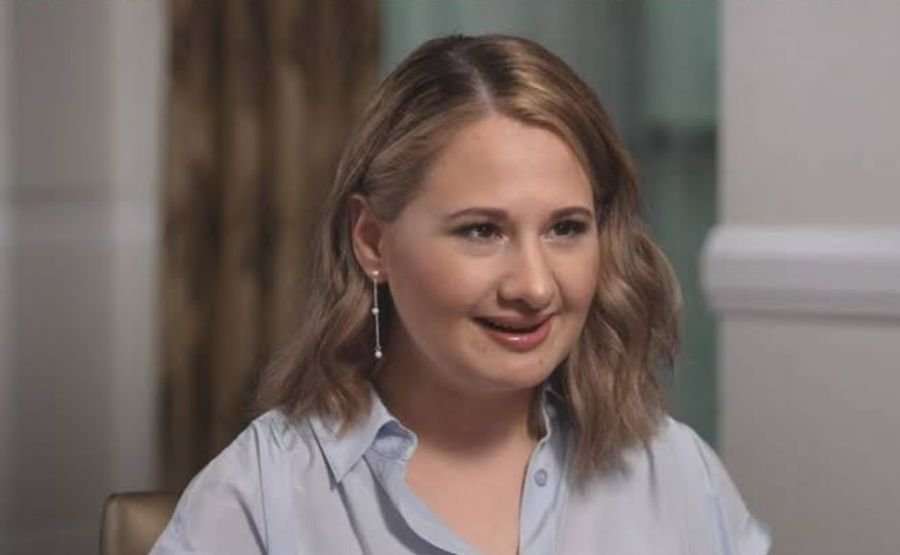
Gypsy Rose: Survival, Consequence, and the Long Road Back to Life
Quick Bio
| Detail | Info |
| Full Name | Clauddine Gipsy Rose Blanchard |
| Born | July 27, 1991 — Golden Meadow, Louisiana, USA |
| Age | 34 (as of 2026) |
| Nationality | American |
| Known For | Victim of prolonged medical child abuse (Munchausen by proxy); convicted of second-degree murder of her mother Clauddine “Dee Dee” Blanchard (2016); subject of multiple documentaries, the Hulu series The Act, and Lifetime’s Gypsy Rose: Life After Lockup |
| Prison | Chillicothe Correctional Center, Missouri (2015–2023) |
| Released | December 28, 2023 (eight years served) |
| Father | Rod Blanchard |
| Relationships | Ryan Scott Anderson (married July 2022; divorced 2024); Ken Urker (current partner) |
| Child | Aurora (born January 2025, with Ken Urker) |
| Net Worth | Estimated 1–2 million (post-release) |
A Story That Cannot Be Summarized Simply
There are stories that make you stop and rethink what you think you know about guilt, victimhood, and the limits of human desperation. Among them is the tale of Gypsy Rose Blanchard.
She is not simply a murderer. She is not simply a victim. She is both, in a way that defies easy moral categorization, and the fact that most people who hear her story come away feeling genuine sympathy for her — even knowing what she did — says something important about how extraordinary her circumstances were.
She spent her entire childhood as the captive of a mother who convinced doctors, neighbors, donors, and the entire American charity apparatus that her daughter was profoundly ill. Gypsy was made to use a wheelchair she did not need, to take medications that damaged her health, to present herself to the world as a fragile, dying child when she was nothing of the sort. She was kept from education, from independence, from knowledge of her own medical history. She was imprisoned, in the most fundamental sense, by the person responsible for her wellbeing.
When she finally escaped, she did it the only way she believed available to her — through a plan that ended in her mother’s death and her own imprisonment.
And then she came out the other side. And she is still here, figuring out what a life actually looks like.
See also “Alexander Hamilton: The Immigrant Who Built a Nation’s Economy“
Golden Meadow: A Louisiana Childhood That Wasn’t
Gypsy Rose was born on July 27, 1991, in Golden Meadow, Louisiana — a small coastal community in Lafourche Parish, where the bayou culture runs deep and family and church remain the organizing structures of most people’s lives.
Her parents, Clauddine “Dee Dee” Blanchard and Rod Blanchard, were never a lasting couple. Rod was a teenager when Gypsy was born, and the relationship dissolved quickly. Rod went on to start his own life, eventually getting married again and starting a solid family, while Dee Dee kept primary and then complete custody. He remained, for most of Gypsy’s childhood, a distant figure. The distance would turn out to be one of the few things that protected him.
Dee Dee Blanchard was a complicated and ultimately deeply disturbed woman. On the surface, she appeared to be one of the most devoted, sacrificial mothers imaginable — a single woman who had dedicated her entire existence to caring for a profoundly sick child. She presented Gypsy to the world as having leukemia, muscular dystrophy, severe asthma, impaired vision, hearing problems, intellectual disabilities, and a host of other conditions. Gypsy was kept in a wheelchair. Her teeth deteriorated from the medications Dee Dee administered. Her hair was shaved. She was tube-fed at various points. She was dressed in the costumes of innocent childhood — princess dresses, fairy accessories — while being deprived of the actual substance of a childhood.
What Dee Dee had was what is clinically known as Factitious Disorder Imposed on Another — once called Munchausen syndrome by proxy. She was manufacturing and maintaining her daughter’s illness for reasons that were psychological, financial, and social. The charity the family received over the years was substantial: donated homes (twice after Hurricane Katrina displaced them), theme park tickets, wish foundation trips, community support. Dee Dee built an identity around being the heroic mother of the suffering child.
What Gypsy actually had, and when the first medical professional genuinely questioned Dee Dee’s claims, and exactly how Gypsy came to understand the truth of her own body — these are pieces of the story that emerged slowly, across years of legal proceedings and documentary interviews, and they paint a portrait of systematic, sustained deception that lasted nearly her entire childhood.
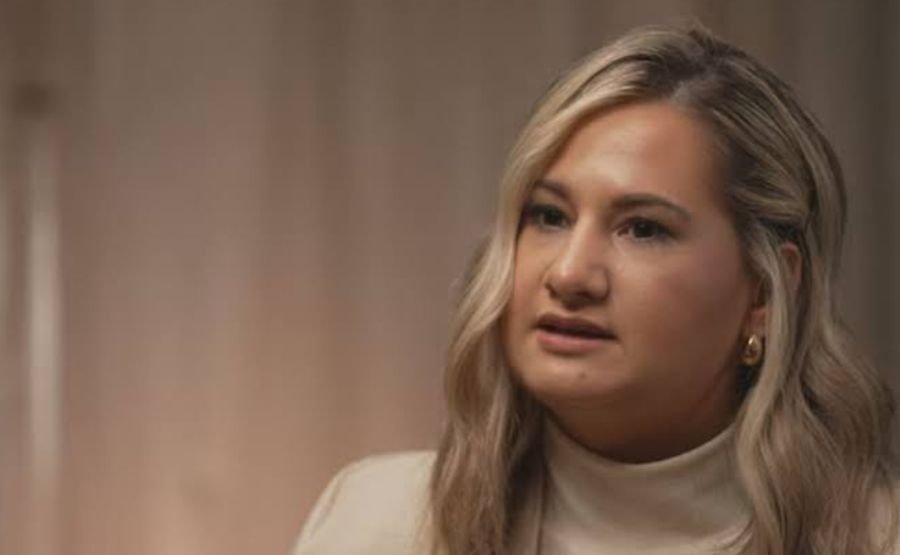
Living Inside the Lie
Gypsy’s formal education was essentially nonexistent. Dee Dee kept her at home, presenting her learning as limited by her supposed intellectual disabilities. Gypsy could read and think and reason far better than Dee Dee allowed the outside world to know.
What did Gypsy have, inside all of this? She had the internet, accessed secretly on devices Dee Dee didn’t know she used. She had a genuine longing for ordinary life — for romance, for freedom, for the experience of being a young woman rather than a patient. She had a mind that was sharper and more intact than anyone in her external life had been permitted to see.
She also had, eventually, Nicholas Godejohn — a man she met through a Christian singles website in 2012. Godejohn had his own psychological complexities, including diagnoses that would later become relevant to his legal case. Their relationship was conducted online and in secret for years. It was intense, controlling in its own way, and ultimately the mechanism through which Gypsy found what she believed was her exit from the life she had been trapped in.
The Night That Changed Everything
On June 14, 2015, Dee Dee Blanchard was stabbed to death in her bedroom in Springfield, Missouri, where the family had relocated after Hurricane Katrina. Gypsy and Nicholas Godejohn had traveled to the house together. Gypsy waited outside the bedroom while Godejohn carried out the killing. Afterward, the two fled to Godejohn’s Wisconsin home.
In the days that followed, Gypsy posted a shocking status update on Dee Dee’s Facebook page suggesting that the “bitch” was dead and her body was in the backyard. Friends and community members who had known the family as a heartwarming story of mother-daughter devotion were horrified. When police arrived at the house, they found Dee Dee’s body.
Gypsy and Godejohn were apprehended in Wisconsin within days.
The investigation that followed peeled back the reality of Gypsy’s childhood layer by layer. Medical records revealed that doctors had found no evidence for most of Dee Dee’s claimed diagnoses. Surveillance footage and testimony documented the systematic deception. Gypsy’s own statements — given in multiple interviews and court appearances — filled in the personal details of what it had felt like to live inside that particular prison.
She was twenty-three years old. She had never had a real job, a driver’s license, or an unmonitored medical appointment. She had lived her entire conscious life as someone else’s performance.
Plea, Prison, and the Long Eight Years
In 2016, Gypsy Rose pleaded guilty to second-degree murder. Her defense centered on the abuse she had endured — the argument being that she had acted under conditions of sustained psychological trauma that a reasonable legal system should weigh against the severity of the charge. The Missouri court sentenced her to ten years in the Chillicothe Correctional Center.
Nicholas Godejohn, who had done the actual killing, went to trial, was convicted of first-degree murder, and was sentenced to life without parole in 2019. The legal outcomes, which gave Godejohn a harsher sentence than Gypsy despite his being the one who committed the physical act, reflected the court’s recognition that their circumstances and culpability were meaningfully different.
Inside Chillicothe, Gypsy built what she later described as the most stable, peaceful period of her entire life. That is a statement that should land with the weight it carries — that a woman found more peace in a Missouri women’s prison than she had in twenty-three years of life with her mother. She earned her GED. She mentored other inmates. She worked. She developed genuine friendships. She began corresponding with men through pen pal programs.
One of those men was Ken Urker, who first wrote to her around 2018. They grew close to one another and eventually got engaged. That engagement ultimately did not survive the pressures of communication across prison walls, and they ended things in 2019.
Another pen pal who wrote to her from 2020 onward was Ryan Scott Anderson, a Louisiana middle school special education teacher. Unlike the Urker engagement, the relationship with Anderson moved steadily toward a formal commitment. They married in July 2022, in a prison ceremony. Anderson waited two years for Gypsy’s release.

Freedom, Fame, and a Marriage That Didn’t Last
On December 28, 2023, Gypsy Rose Blanchard walked out of Chillicothe Correctional Center on parole, more than a year before the completion of her ten-year sentence. She had served eight years and two months.
The release was a media event. The level of public attention surrounding Gypsy Rose’s freedom — built up through years of true crime coverage, two Oxygen documentaries, the acclaimed Hulu dramatization The Act (in which Joey King played Gypsy), and massive social media interest — meant that she stepped immediately into a kind of celebrity that she had neither sought nor fully anticipated.
She and Ryan attended red carpet events. She appeared on The Prison Confessions of Gypsy Rose Blanchard on Lifetime. She posted on social media. She signed a deal for Gypsy Rose: Life After Lockup. She was, suddenly, a public figure in a country that had been fascinated by her story for the better part of a decade.
By March 2024, just three months after her release, she announced on a private Facebook post that she and Ryan Anderson were separating. By April 8, she had filed for divorce. Shortly after, she filed a temporary restraining order against him. The relationship, which had been built entirely across the controlled environment of prison correspondence and visitation, had not survived contact with the actual demands of free life.
Ken Urker, Aurora, and the New Chapter
Almost immediately after the Anderson separation became public, Gypsy reconnected with Ken Urker — her first serious prison relationship, the man she had become engaged to years earlier. He relocated to Louisiana to be closer to her. They rebuilt what they had started and found it held.
In July 2024, Gypsy announced she was eleven weeks pregnant. The baby was unexpected. She said so clearly and without hedging. She also said something that stopped a lot of people in their tracks: that she wanted to be everything for this child that her own mother had not been. To protect. To love honestly. To let the child exist as themselves rather than as a projection of her own needs.
On approximately New Year’s Day 2025, she and Ken welcomed a daughter. They named her Aurora.
The name carries its own resonance for anyone who knows Gypsy’s story. Aurora — the dawn — arriving at the literal beginning of a new year, born to a woman who spent her entire childhood in the dark and has been making her way toward light for the last decade.
Hardships That Are Almost Beyond Description
It would be both redundant and inadequate to list Gypsy Rose Blanchard’s hardships as if they were a set of unfortunate life events. They were not events. They were the entire architecture of her childhood.
She did not know for most of her life that she could walk unassisted, because she had never been permitted to. She underwent unnecessary medical procedures. She had teeth pulled. She was given medications that had no clinical basis. She was kept from the knowledge of her own birth year for a period. She had no education, no peer relationships, no understanding of how adult life actually functioned.
And then she made a choice that resulted in a death, and she carried the consequences of that choice through eight years of incarceration, and then she stepped into a world that was completely foreign to her and navigated it imperfectly — a brief and tumultuous public marriage, a divorce, a restraining order, a pregnancy — while the entire country watched.
The specific cruelty of her situation is that she will carry all of it forever. There is no version of her future in which she is simply a woman named Gypsy Rose who lives in Louisiana with her boyfriend and her daughter. She is, and will always be, the Gypsy Rose Blanchard. The story will follow her.
Net Worth and Financial Reality
Gypsy Rose Blanchard’s estimated net worth is approximately $1 to $2 million, accumulated since her release through a combination of television contracts, social media monetization, documentary deals, and the various appearances and media engagements that accompanied her celebrity.
She received payment for Gypsy Rose: Life After Lockup and The Prison Confessions of Gypsy Rose Blanchard. She signed deals related to her story that generate ongoing income. She has a social media presence — though she periodically steps back from it, famously removing her public figure status on Instagram at one point while stating she did not want to live under a microscope.
She received nothing from Hulu’s The Act — the dramatization of her life — which starred Joey King and earned Emmy nominations. Compensation for that project went to the rights holders and production company, not to Gypsy. The fact that she watched a fictionalized version of her own most traumatic years play out on a streaming service without financial participation is one of the more uncomfortable aspects of how true crime media functions.
Life Now: Louisiana, Aurora, and What Comes Next
As of 2026, Gypsy Rose Blanchard is thirty-four years old, living in Louisiana with Ken Urker and their daughter Aurora, who was born just over a year ago. Her parole conditions have been described as having eased or concluded, giving her more movement and autonomy than she had in the immediate years after release.
She has pulled back substantially from the intense public media engagement of 2024. The trajectory of her social media presence — a rapid, highly visible arrival followed by deliberate stepping back — reflects the tension she has always expressed between a genuine desire for connection and a genuine need for privacy.
She has spoken about wanting to marry Ken Urker. She has spoken about being happy for the first time. She has spoken about her daughter in terms that anyone who knows her history will read with a particular kind of feeling — a young woman who was the most controlled child in any story she ever heard, now holding an infant and promising something different.
Final Words
What makes Gypsy Rose Blanchard’s story so profoundly disorienting is that there is no clean moral architecture available for it.
She was a victim of one of the most sustained, documented cases of medical child abuse in recent American history. And she participated in a plan that killed the person who abused her. Both of those statements are true at the same time and do not negate one another.
The American legal system acknowledged the complexity when it gave her a sentence that allowed her to be free in her thirties. The cultural response — the documentaries, the dramatizations, the true crime industry that built up around her case — acknowledged the complexity by generating sustained fascination rather than simple condemnation.
What makes her distinctive is the survival. Not the crime, not the abuse, not the celebrity — the survival. The fact that a woman who had never genuinely inhabited her own life until her mid-twenties is now in her mid-thirties, free, in a relationship she chose, with a daughter she is choosing to raise honestly, having navigated fame and prison and abuse and all of it with a degree of self-awareness and emotional intelligence that is, frankly, remarkable given where she started.
She said she wanted to be everything her mother was not. The story of whether she succeeds is still being written.
FAQs
1. Who is Gypsy Rose Blanchard?
Gypsy Rose Blanchard, born July 27, 1991, in Golden Meadow, Louisiana, is a woman whose childhood was defined by sustained medical child abuse inflicted by her mother Clauddine “Dee Dee” Blanchard — a condition known as Factitious Disorder Imposed on Another (previously called Munchausen by proxy). After years of being falsely presented as severely ill and confined to a wheelchair she did not need, Gypsy participated in the 2015 killing of her mother, for which she was sentenced to ten years in prison. She was released in December 2023.
2. What conditions did Dee Dee Blanchard falsely claim Gypsy had?
Dee Dee claimed Gypsy suffered from leukemia, muscular dystrophy, severe asthma, visual and hearing impairments, intellectual disabilities, and various other conditions over the years. Subsequent medical investigation found no clinical basis for most of these diagnoses. Gypsy was capable of walking and had normal or near-normal cognitive function.
3. Who killed Dee Dee Blanchard?
Dee Dee Blanchard was stabbed to death on June 14, 2015, in their Springfield, Missouri home by Nicholas Godejohn, Gypsy’s then-boyfriend, who had traveled to the house with Gypsy. Gypsy waited outside the bedroom during the killing. Both were subsequently arrested.
4. What sentence did Gypsy Rose receive?
Gypsy Rose pleaded guilty to second-degree murder in 2016 and was sentenced to ten years in the Chillicothe Correctional Center in Missouri. She was released on parole in December 2023 after serving approximately eight years and two months.
5. Who is Ken Urker?
Ken Urker is Gypsy Rose’s current partner and the father of her daughter Aurora. He first connected with Gypsy through a prison pen pal program around 2018, and they became engaged before ending that relationship in 2019. They reconnected in early 2024 after Gypsy separated from her husband Ryan Anderson. Urker relocated to Louisiana to be with her.
6. Who was Ryan Scott Anderson and why did they divorce?
Ryan Scott Anderson was a Louisiana middle school special education teacher who began corresponding with Gypsy through a pen pal program in 2020. In July 2022, they were married in a jail ceremony. Following Gypsy’s release in December 2023, the relationship quickly deteriorated. In March 2024, she declared their separation, and on April 8, 2024, she filed for divorce. In addition, she requested a temporary restraining order for Anderson. The divorce was finalized before the originally scheduled January 2025 court date.
7. Does Gypsy Rose have children?
Yes. She and Ken Urker welcomed their first child, a daughter named Aurora, around New Year’s Day 2025. Gypsy announced her pregnancy in July 2024, describing it as completely unexpected. She has spoken publicly about her desire to be the kind of mother that her own childhood so profoundly lacked.
8. What is The Act, and was Gypsy involved?
The Act is a 2019 Hulu limited series dramatizing the story of Gypsy Rose and Dee Dee Blanchard. Joey King played Gypsy and Patricia Arquette played Dee Dee. The series earned multiple Emmy nominations. Gypsy Rose was not involved in its production and received no compensation from the project, as she held no rights to the story at the time.
9. What documentaries cover Gypsy Rose’s case?
Multiple documentaries have covered her story. Mommy Dead and Dearest (2017, HBO) was among the first serious investigative treatments. The Prison Confessions of Gypsy Rose Blanchard aired on Lifetime in early 2024, shortly after her release. The Lifetime series Gypsy Rose: Life After Lockup documented the period following her prison release.
10. What is Gypsy Rose Blanchard’s estimated net worth?
Her estimated net worth is approximately $1 to $2 million, accumulated primarily since her December 2023 release through television contracts, documentary deals, and social media monetization. She received no payment from Hulu’s The Act.
11. Where does Gypsy Rose Blanchard live now?
She resides in Louisiana with Aurora, their daughter, and Ken Urker. Louisiana — where she was born and where she has family connections through her father Rod Blanchard and his family — has been her home base since her release from the Missouri correctional facility.
12. What has Gypsy Rose said about her own future and motherhood?
She has spoken publicly about wanting to give her daughter Aurora the kind of childhood she herself was denied — genuine protection, honest love, and the freedom to be her own person. She has expressed that she wants to be everything her mother was not. She has also spoken about wanting to marry Ken Urker and about her desire to step back from intense public scrutiny in order to build a genuinely private family life.
Explore stories that inspire curiosity with The Imperial Magazine.


One Comment