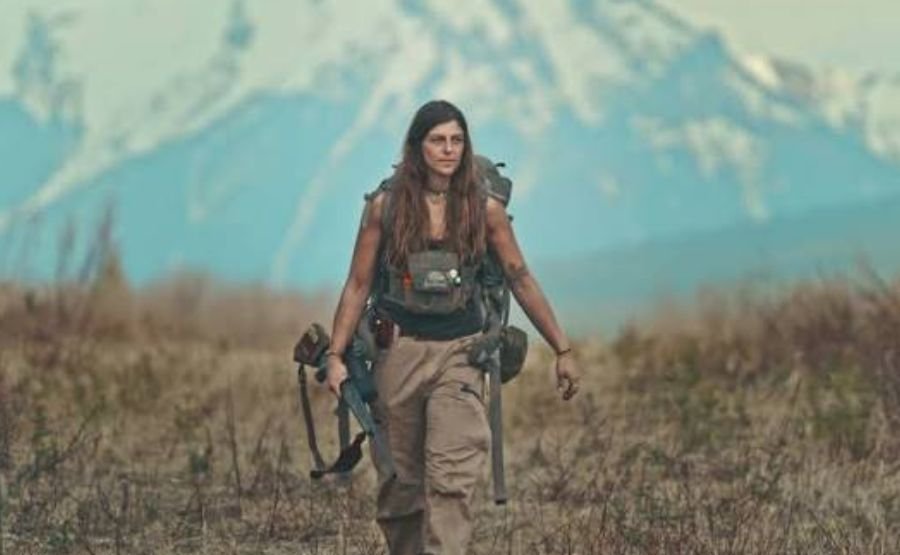
is margot bossus married: From the French Alps to the Frozen Yukon
Quick Bio
| Detail | Information |
| Full Name | Margot Bossus |
| Born | Exact date not publicly disclosed; estimated late 1990s |
| Birthplace | Perrignier, Haute-Savoie, France |
| Nationality | French |
| Occupation | Wilderness guide, dog musher, hunting guide, television personality |
| Known For | Hard North (Amazon Prime Video, 2024), Northwoods Survival (National Geographic, 2024) |
| Business | Founder and operator, Rugged North Expeditions |
| Current Residence | Yukon Territory, Canada (off-grid) |
| Partner | Alex Pirouz-Schlütter (as of 2024; some profiles also name Corentin Favre) |
| Marital Status | Not married |
| Estimated Net Worth | $100,000–$500,000 (estimated; not officially confirmed) |
Who Is Margot Bossus, and Why Does Her Story Matter?
There’s a type of person who, when they hear the words “remote” and “Arctic” and “off-grid,” feels a spark rather than a shudder. Margot Bossus is unambiguously that type. She’s a young Frenchwoman who grew up in one of Europe’s most picturesque mountain regions, and instead of building a comfortable, conventional life there — the kind most people would envy from the outside — she packed up at nineteen, crossed an ocean, and eventually planted herself in the Yukon Territory, one of the most demanding places on the planet to actually live and work.
What makes her story compelling isn’t the dramatic contrast of “small-town French girl meets frozen Canadian wilderness,” although that contrast is certainly striking. It’s the methodical, deliberate nature of how she got there. She studied. She trained. She joined organizations. She built a business from scratch. She appeared on two separate television programs — not as a contestant chasing cash or fame, but as a practitioner demonstrating a lifestyle she’d already committed to long before any camera showed up. By the time audiences were watching her on-screen, Margot Bossus had already spent years doing those things in real life, in real cold, with real consequences if something went wrong.
That authenticity is rare in the survival television genre, and it’s a big part of why people keep searching her name.
See also “Tristyn Kalama: The Counselor Who Turned Hawaii’s Broken Houses Into Homes“
Childhood and Family Background: Roots in the French Alps
To understand why Margot went north, you have to start in the south — specifically in the southeastern corner of France, where the land rises sharply into the Alps and the culture is shaped as much by mountain winters as anything else.
She was born and raised in Perrignier, a small commune in the Haute-Savoie department. If you’ve never heard of it, don’t feel bad — it’s genuinely small, the kind of French town where everyone knows roughly what everyone else is doing and outdoor life isn’t a hobby but a default setting. The surrounding region is spectacular in the way that makes tourists gasp and locals take for granted: massive mountain ridges, long cold winters, forests thick with wildlife, and a sky that seems bigger than it has any right to be.
The specific details of Margot’s family life — her parents, siblings if any, what her household was like — haven’t been shared publicly, and she hasn’t volunteered much in that direction. What comes through clearly, though, from every account of her life, is that growing up in that landscape imprinted something lasting on her. She developed an early and genuine connection to wild spaces, to animals, to the rhythms of seasons in a place where seasons are actually felt rather than merely noted on a calendar.
Haute-Savoie wasn’t a soft place to grow up, climate-wise. It prepared her, even if it didn’t yet know it was doing so, for the far harsher conditions she’d later choose voluntarily. The difference between an Alpine winter and a Yukon winter is real and significant, but someone who already knows how snow feels against your face at thirty below, who already knows what it means to plan your day around weather rather than schedules, has a head start that no amount of classroom training can fully replace.
Education and Early Influences: Studying the Wild
At nineteen years old, Margot Bossus made the first of what would become a series of bold geographic decisions. She left France. That alone is worth pausing on — nineteen is young, and leaving your country, your language, your family network, and everything familiar requires a particular kind of stubbornness about where you think your life should go.
She landed in Quebec, Canada’s French-speaking province, which likely made the cultural and linguistic leap somewhat more manageable. There, she enrolled in a program focused on animal conservation and forestry — fields that weren’t glamorous career choices but that suited her interests exactly. She studied for roughly three years, grounding herself in the science and practice of working with animals and wild ecosystems rather than simply enjoying them recreationally.
What’s notable about this period is that she didn’t just study. While completing her education, she also started working as a musher — someone who drives a team of sled dogs. This wasn’t a detour from her studies; it was part of the same larger project of becoming a person who could survive and thrive in northern wilderness environments. She was accumulating knowledge and skill simultaneously, the academic understanding from her coursework and the physical, practical understanding that comes only from actually handling a team of large, powerful dogs in cold conditions where mistakes have consequences.
By the time she finished her degree, she had already begun a professional life. The transition from student to practitioner wasn’t a leap — it was a continuation.
First Steps and Career Ascent: Building a Life in the Wilderness
After wrapping up her studies in Quebec, Margot didn’t come back to France. She went further in. The Yukon Territory, located in Canada’s northwest, is one of those places that sounds extreme until you realize that for the right kind of person, it sounds like home. It has some of the lowest population density on the continent, winters that can drop temperatures to brutal lows, vast stretches of roadless backcountry, and a culture built around self-sufficiency, hunting, trapping, and working with animals. For Margot, it checked every box.
She settled in the Yukon and began building her professional identity from the ground up. She became a certified hunting guide — a role that in this part of the world carries serious weight, since guides are responsible for the safety and success of clients in terrain that doesn’t forgive carelessness. She became a professional musher, training and driving her own teams of sled dogs across landscapes that most people would barely want to look at from inside a heated vehicle. She joined the Dog Powered Sports Association of the Yukon (DPSAY), a regional organization that connects and supports mushers throughout the territory.
She also established her own company: Rugged North Expeditions. This is probably one of the most telling things about her character. Rather than signing on with an established guiding operation and working her way up someone else’s ladder, she built her own. Rugged North Expeditions offers a range of wilderness experiences — multi-day dog sledding expeditions, skijoring (skiing pulled by dogs), “mush to peaks” journeys combining dog team travel with mountain terrain, and winter survival experiences for clients who want a genuine taste of Yukon life rather than a resort approximation of it.
The business is deliberately small-scale and experience-focused. It runs on her own expertise and reputation. There’s no big marketing apparatus behind it, no corporate structure — it’s the kind of enterprise that only works because the person running it is genuinely credible in the field.
Biggest Achievements, Television Work, and Turning Points
Margot’s connection to television started earlier than many people realize. Her IMDb credits include a 2014 short project, Jeunes et Frontaliers, from before her Canadian life fully took shape. So she wasn’t a complete stranger to being on camera when the bigger opportunities arrived.
The two productions that brought her to a wider audience both appeared in 2024. The first was Hard North, which streams on Amazon Prime Video. This series follows several individuals building self-sufficient homestead lives in different parts of Canada’s wilderness. Margot’s portion of the show focuses on the Yukon — scouting land, selecting a site, and working toward constructing a cabin in a region that is, depending on the season, either breathtakingly beautiful or genuinely trying to kill you. The show has an IMDb rating of 7.4 out of 10, suggesting it landed well with audiences who seek out this kind of content.
The second was Northwoods Survival, appearing on National Geographic. This program follows her actual day-to-day wilderness work: cabin-building, land scouting, navigating the demands of off-grid life in the Yukon. It carries an even higher viewer rating of 8.5, which suggests that audiences found her portrayal of Yukon life particularly compelling.
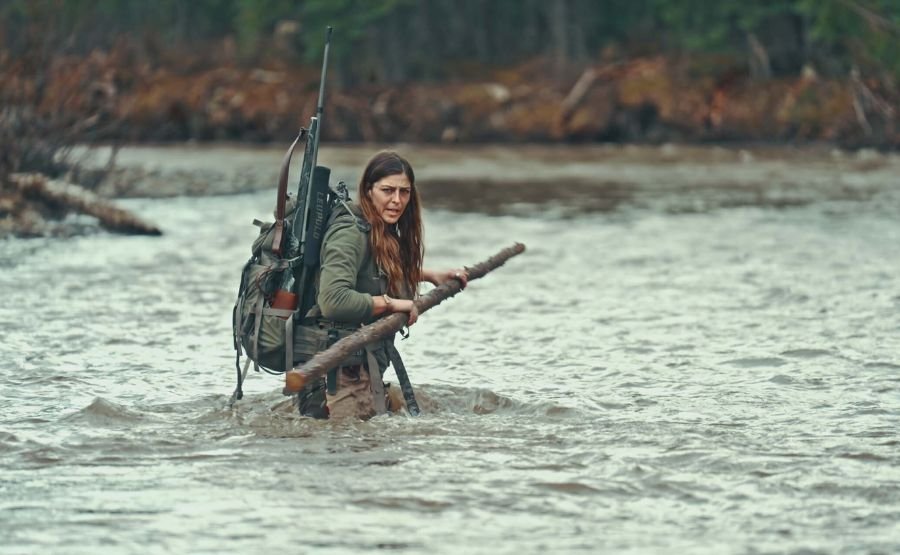
One of the specific, documented moments from her wilderness life that made it onto screen and social media was a March 2024 period when she and her partner constructed a log cabin on a trapline in the northern Yukon — a location described as roughly 200 kilometers from the nearest significant human settlement. The couple reportedly spent months there, traveling by dog sled, ski, and snowmobile through completely roadless terrain.
These aren’t scripted moments of artificial hardship engineered for dramatic effect. They’re the kind of things Margot Bossus was already doing before television found her.
Personal Life: Love, Partnership, and Life Off the Grid
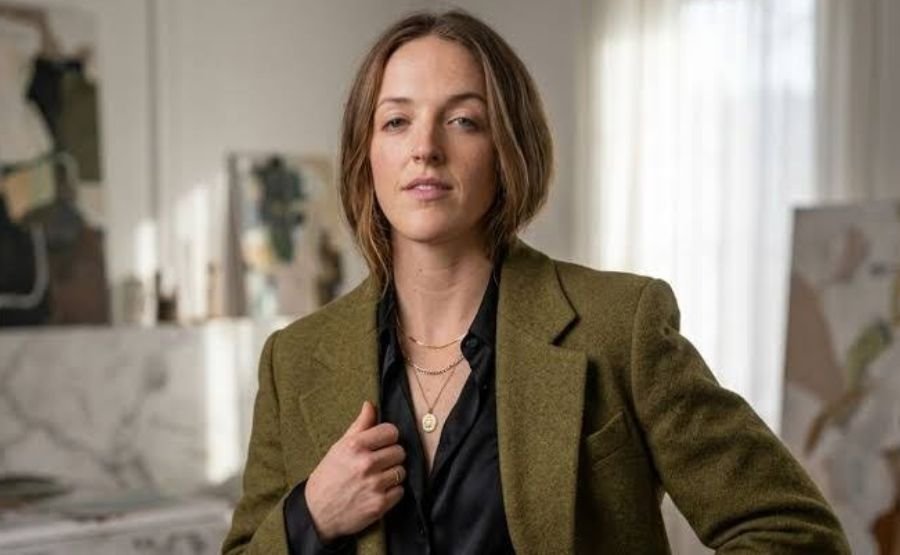
Margot Bossus keeps her personal life relatively private, which is quite consistent with someone who chooses to live 200 kilometers from most other people for extended stretches of time.
What is publicly known is that she shares her life and her wilderness existence with a partner named Alex Pirouz-Schlütter, who appears to share her deep investment in Yukon outdoor life. The two have documented several adventures together, across all seasons, in and around the Yukon. In early 2024, they jointly built a log cabin on a trapline in the northern part of the territory — a project that is about as hands-on as cohabitation gets, involving axes, raw timber, and subzero temperatures rather than anything resembling an IKEA flatpack.
She is not married — multiple sources confirm this clearly. The relationship with Alex appears to be a genuine partnership of two people who have chosen the same demanding lifestyle and support each other through it. Some earlier profiles and secondary sources named Corentin Favre as her partner, suggesting this detail may have changed or that some sources were working from outdated information.
Beyond her partner, Margot’s most emotionally consistent companions appear to be her pack of huskies. Dog ownership in this context isn’t the casual suburban kind — these animals are working partners, trained athletes, and essential tools of her professional life. The bond between a musher and her dogs is built over thousands of kilometers of trail and cannot be faked or rushed.
She is also candid about one specific aspect of her personality: she has openly described herself as socially awkward and uncomfortable in city environments. For someone who travels to remote Italian towns (she reportedly visited Matera, Italy, in spring 2024, which was described as testing her social limits) and spends most of her year in environments with more wildlife than human interaction, this self-awareness makes sense. She has found a life that suits her actual personality, rather than contorting herself to fit a social norm.
Hardships, Setbacks, and the Difficulty of the Chosen Path
Living the life Margot Bossus has built for herself is not romantic in the Instagram sense. It’s romantic in the older, harder sense — it involves genuine sacrifice, real physical discomfort, and constant uncertainty.
The practical challenges of off-grid Yukon life are substantial. Heating a cabin in temperatures that can plunge to minus forty or below requires planning, wood, and constant attention. Food isn’t something you order; it’s something you hunt, trap, or store before winter closes the season. Medical care, if you need it, is hours away. Equipment failures — a sled breaking, dogs getting injured, a snow machine refusing to start in deep cold — have to be solved on the spot, by you, with whatever you have on hand.
Her career path itself involved real uncertainty. Building a guiding business in one of the most remote territories in North America, with no inherited customer base or established brand, requires years of work before it generates consistent income. She entered a field — hunting guiding — that is traditionally male-dominated, and had to establish credibility in an environment where reputation is built slowly and lost quickly if you can’t deliver what you promise.
There’s also the psychological weight of genuine isolation. Spending months at a stretch far from other humans is not something everyone can do, and even people who choose it don’t do it without cost. Margot has not spoken extensively about psychological hardship, but the kind of life she describes — particularly those months on the trapline 200 kilometers from everything — demands a mental resilience that most people haven’t been asked to develop.
The television work, while it has brought visibility and presumably some income, also comes with its own friction. Sharing an intensely private, off-grid life with cameras and production teams is an inherent contradiction, and navigating the balance between authentic wilderness life and entertainment product is something she appears to manage carefully, keeping significant portions of her personal world away from public view.
Money and Net Worth: What Her Life Costs and Earns
Margot has never publicly discussed her finances, so any figures floating around the internet should be understood as educated estimates rather than factual statements.
The most credible range, drawing from multiple independent sources and factoring in her various income streams, places her estimated net worth somewhere between $100,000 and $500,000 as of 2026. That’s a wide range, which honestly reflects how little hard data is available.
Her income comes from several directions. The most consistent and primary source is likely her guiding business, Rugged North Expeditions. Small-group wilderness expeditions in the Yukon carry premium pricing because the experience is genuinely rare, the logistics are complex, and clients are paying for expertise they can’t easily find elsewhere. Dog sledding trips, winter survival experiences, and multi-day backcountry expeditions all command meaningful rates per person.
Her television appearances on Hard North and Northwoods Survival would have contributed payment for her participation, though documentary and reality television rarely makes regular participants wealthy on its own. It does, however, deliver something arguably more valuable in the long run: brand recognition that brings more clients to Rugged North Expeditions.
There may also be income from brand partnerships — outdoor gear companies, expedition equipment brands, and similar businesses regularly work with credible wilderness practitioners — though nothing specific has been confirmed.
It’s worth noting that the concept of “wealth” maps somewhat differently onto a person living off-grid in the Yukon. Margot has been described as someone who measures her life in experiences, independence, and self-sufficiency rather than material accumulation. Her lifestyle’s overhead is real — sled dogs are expensive to keep, equipment in extreme conditions wears out fast, and remote living carries its own logistical costs — but she is clearly not building toward a penthouse in Paris.
What She’s Doing Now
As of 2026, Margot Bossus continues to live and work in the Yukon Territory. Rugged North Expeditions remains operational, offering expedition experiences to clients who want genuine access to Arctic wilderness life under expert guidance.
Her television profile has expanded following the 2024 releases of both Hard North and Northwoods Survival, and she remains active in the Dog Powered Sports Association of the Yukon. Her connection to the mushing community runs deeper than casual membership — she is a practitioner in a tradition that is central to Yukon culture and survival history.
She continues to live off-grid, with her dogs, with Alex Pirouz-Schlütter, and in the kind of daily relationship with her environment that most people only read about. The log cabin built on that northern trapline in early 2024 represents the kind of project she gravitates toward: building something with her own hands in a place that demands that she be totally capable, totally committed, and totally present.
Final Words
There is no shortage of people who romanticize wilderness living from a comfortable distance. What makes Margot Bossus unusual — and genuinely interesting — is that she did the actual work of making it real.
She didn’t stumble into the Yukon on a reality show dare. She left her home country at nineteen, spent years studying and training, built a business, joined professional organizations, earned credentials in a male-dominated field, and then — only then — found herself in front of cameras documenting what she’d already built. The television exposure is a consequence of her life, not the cause of it.
Her story has a quiet kind of radical quality to it. In an age when most young people are navigating social media metrics and urban career ladders, she chose to become genuinely competent in one of the world’s most demanding environments. She learned to handle sled dogs, to guide hunters through backcountry terrain, to build cabins, to trap, and to live for months at a time in conditions that would constitute an emergency for most of the developed world.
She’s not performing wilderness. She lives it. That distinction matters.
Her legacy, still being written, is the proof of concept that conviction + preparation + physical commitment can build a life that looks impossible from the outside but is entirely real from the inside. For the growing number of people who feel the gap between how they live and how they want to live most acutely, Margot Bossus is evidence that the gap can be crossed.
FAQs
1. Is Margot Bossus married?
No. She is not publicly known to be married. She is in a relationship with Alex Pirouz-Schlütter, a fellow wilderness enthusiast who shares her life in the Yukon. Some older or secondary sources incorrectly listed her partner as Corentin Favre, but more detailed reporting names Alex as her current partner.
2. Where is Margot Bossus from originally?
She was born and raised in Perrignier, a small commune in the Haute-Savoie region of southeastern France — a mountainous area in the Alps near the Swiss border.
3. How old is Margot Bossus?
Her exact birthdate has not been made public. Based on what is known — she left France at nineteen around 2017 — she is estimated to be in her late twenties as of 2026. No confirmed birth year has been officially stated.
4. What shows has Margot Bossus appeared on?
She has appeared on Hard North (Amazon Prime Video, 2024), Northwoods Survival (National Geographic, 2024), and an earlier French project, Jeunes et Frontaliers (2014).
5. What is Rugged North Expeditions?
It’s the guiding company Margot founded and operates in the Yukon Territory. It offers dog sledding expeditions, winter survival experiences, skijoring, and multi-day wilderness journeys for small groups of clients seeking genuine Arctic outdoor experiences.
6. What does Margot Bossus do for a living?
She works as a hunting guide, dog sled musher, and expedition operator through Rugged North Expeditions. She also earns income from her television appearances and potentially from brand partnerships, though the latter hasn’t been officially confirmed.
7. What did Margot Bossus study?
She studied animal conservation and forestry in Quebec, Canada, after moving there from France at age nineteen around 2017. She completed her studies over approximately three years.
8. Is Margot Bossus a professional musher?
Yes. Mushing — driving a team of sled dogs — is central to both her professional identity and daily life. She is an active member of the Dog Powered Sports Association of the Yukon (DPSAY), which supports mushers across the territory.
9. Where does Margot Bossus live now?
She lives in the Yukon Territory of Canada, primarily off-grid. At times she has been documented living near Fish Lake in the Yukon, and she has also spent extended periods in remote northern parts of the territory, including a trapline cabin roughly 200 kilometers from the nearest significant settlement.
10. What is Margot Bossus’s estimated net worth?
Estimates range between $100,000 and $500,000 as of 2026. These are third-party estimates based on her known income sources — guiding, television appearances, and potential sponsorships — and are not figures she has confirmed publicly.
11. What has Margot Bossus said about city life?
She has openly expressed that she is not comfortable with city life and describes herself as socially awkward in urban environments. This discomfort appears to have been a motivating factor in choosing the remote, off-grid Yukon lifestyle rather than something she simply adapted to over time.
12. Did Margot Bossus grow up doing outdoor activities?
She grew up in the French Alps, a region where outdoor life is a standard part of the culture, so exposure to mountain terrain, cold weather, and natural environments was part of her upbringing from early childhood. She has credited that foundation as having shaped her connection to wild spaces before she ever moved to Canada.
Explore stories that inspire curiosity with The Imperial Magazine.




One Comment