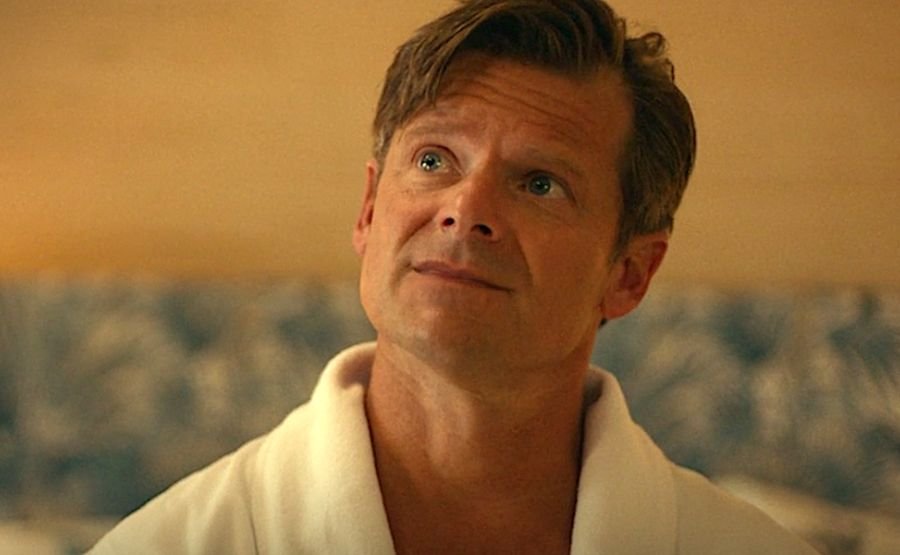
Mark Mossbacher: The Man Who Needed a Vacation From Himself
Quick Bio
| Detail | Information |
| Character Name | Mark Mossbacher |
| Portrayed By | Steve Zahn |
| Series | The White Lotus, Season 1 (HBO, 2021) |
| Creator | Mike White |
| Family Unit | Wife Nicole; daughter Olivia; son Quinn |
| Setting | White Lotus resort, Maui, Hawaii |
| Core Conflict | Masculinity crisis, health scare, family estrangement, identity revelation |
| Character Type | Wealthy but diminished patriarch navigating irrelevance |
| Episode Count | All 6 episodes of Season 1 |
| Actor’s Emmy | Steve Zahn nominated for Outstanding Supporting Actor in a Limited Series |
Why Mark Mossbacher Still Matters
Four years after The White Lotus first aired, people are still talking about the Mossbachers. Not because they’re likeable — they mostly aren’t — but because they’re recognizable in the way that good satirical fiction always makes the uncomfortable feel familiar.
Mark is the one who sticks with you longest, though. Not Nicole, whose corporate efficiency is its own kind of shield. Not Olivia, whose performed wokeness is a joke Mike White is telling on a very specific generation. Mark is the one who arrives at the resort already broken and spends six episodes trying to figure out why — loudly, badly, and in ways that keep making everything worse.
He’s a study in a very particular kind of masculine failure. Not the dramatic kind that generates tragedy. The slow, grinding, almost-invisible kind that accumulates across a decade of marriage until you look up one day and realize you’ve become the least important person in your own family’s story.
Understanding why that lands so precisely requires unpacking who Mark is, what the show is doing with him, and why Steve Zahn’s performance makes it all work.
See also “Kelley Kuhr: The Artist Who Built a Life Beside One of Hollywood’s Most Iconic Faces“
Who Mark Is When We Meet Him
The official character description from HBO is startlingly economical: Mark is Nicole’s husband, dealing with an embarrassing health crisis and a terminal inferiority complex. Both halves of that sentence are doing real work.
The health crisis — a lump he’s discovered before the trip and believes might be testicular cancer — establishes immediately that Mark is operating at the edge of his emotional capacity. He’s frightened. He’s trying not to show he’s frightened. And he’s in a marriage where his wife’s first instinct, when he brings it up, is to minimize his anxiety rather than sit with it. Whether that’s Nicole’s particular limitation or a symptom of a marriage where emotional vulnerability has been functionally trained out of him is something the show leaves deliberately ambiguous.
The inferiority complex is the more interesting detail. The word “terminal” is doing satirical work there — the suggestion that this isn’t something Mark developed recently but something chronic, structural, baked into who he is. He has been married to a more successful woman for a long time. His children respect his wife and tolerate him. His son’s idea of quality father-son time is watching nature documentaries alone in a hotel room. Mark arrives in Maui having already lost the internal argument about his own significance.
What he’s looking for at the resort — though he couldn’t articulate this — is some version of recovery. Of being seen. Of mattering in a context where his earnings and career title don’t define him as the lesser partner.
The resort, predictably, offers none of that.

The Health Scare: A Structural Device With Emotional Weight
Mike White uses Mark’s potential cancer diagnosis as the engine that drives his opening emotional state. The scare is real — Steve Zahn plays the fear as genuine, not performed — and it gives the character permission to be vulnerable in ways that his everyday life apparently doesn’t allow.
But it’s also structural. The uncertainty of the diagnosis creates a ticking-clock anxiety underneath the entire first half of the season. We watch Mark process the possibility of dying while simultaneously being unable to discuss it meaningfully with his wife, being mocked by his daughter, and being cheerfully oblivious to by his son.
When the call finally comes — he doesn’t have cancer — the relief is enormous and immediately complicated. Because the relief doesn’t fix anything. The marriage is still what it is. The family dynamics are still what they are. His sense of diminishment doesn’t evaporate because a benign diagnosis arrived. What the cancer scare actually does is strip away the specific excuse Mark had been using to explain his unhappiness. Without a terminal illness to blame, he has to look at his life directly.
That’s when things get genuinely interesting — and genuinely worse.
The Father Revelation: The Episode That Reframes Everything
The turn that makes Mark’s arc more than a study in everyday male grievance comes midway through the season, when his uncle reveals the truth about his father’s death. Mark had grown up believing his father died of a liver disease related to hard living — a story that allowed him to construct a mythology of masculine suffering, of a father who burned bright and burned out.
The truth is different. His father was secretly gay and died of AIDS. The entire foundational story Mark built his understanding of masculinity around was a protective fiction.
This revelation hits with the force of the entire season shifting on its axis. Because we suddenly understand something about Mark that even Mark hasn’t articulated: his sense of masculine inadequacy was never just about Nicole’s success or his children’s contempt. It was built on top of a father whose love and identity were hidden, whose life required concealment, and whose death was reframed to protect the family from truth.
Mike White is doing something specific here. Mark’s grief isn’t straightforward — it’s layered with anger, confusion, shame, and a strange tenderness. The man he thought was his model for difficult masculinity turns out to have been navigating something Mark can barely conceive of. His father wasn’t the rough-edged, hard-living man of family legend. He was someone who spent his entire life hiding a fundamental truth about himself in a world that gave him no safe alternative.
The irony — and the show is full of ironies — is that this revelation should generate empathy in Mark. And it does, eventually. But first it generates a spectacular meltdown at a resort bar, followed by a drunken evening of increasingly mortifying behavior, followed by a confession to Quinn that lands with none of the intended gravity.
Mark processes things badly. That’s consistent with his character. But he does process them, and that’s what separates him from some of the season’s other characters.
The Marriage: Nicole and Mark as a System
One of the smarter things Mike White does with the Mossbacher marriage is refuse to make it simply Nicole’s fault or simply Mark’s. Both are implicated in what the marriage has become.
Nicole is a CFO. She’s efficient, decisive, and has spent so many years optimizing professional outcomes that she applies the same approach to her family. Her love is real but it’s expressed through management rather than presence. She fixes problems. She doesn’t sit inside them.
Mark, for his part, has allowed himself to become defined by his role as Nicole’s husband. He doesn’t seem to have a clear professional identity of his own; we know he works, but the program is noticeably ambiguous about what he actually does, which is itself a character choice by White. His identity is relational and subordinate. He’s Nicole’s husband. Olivia and Quinn’s dad. The resort guest with the room reserved under someone else’s professional identity.
What the vacation in Maui reveals is how thin the connective tissue between them has become. They don’t fight dramatically. They do something more corrosive: they talk past each other constantly, with Nicole defaulting to competent management and Mark defaulting to wounded performance. Neither of them is quite speaking to the actual person in front of them.
The season’s final episode offers something cautious and ambiguous — not a reconciliation exactly, but a moment of genuine connection after Mark’s impulsive intervention during the robbery attempt. He did something foolish and brave and real. Nicole responds to it. Whether that moment has any lasting weight or simply patches the surface without addressing the structure underneath is something the show deliberately doesn’t resolve.
The Robbery Intervention: What It Means
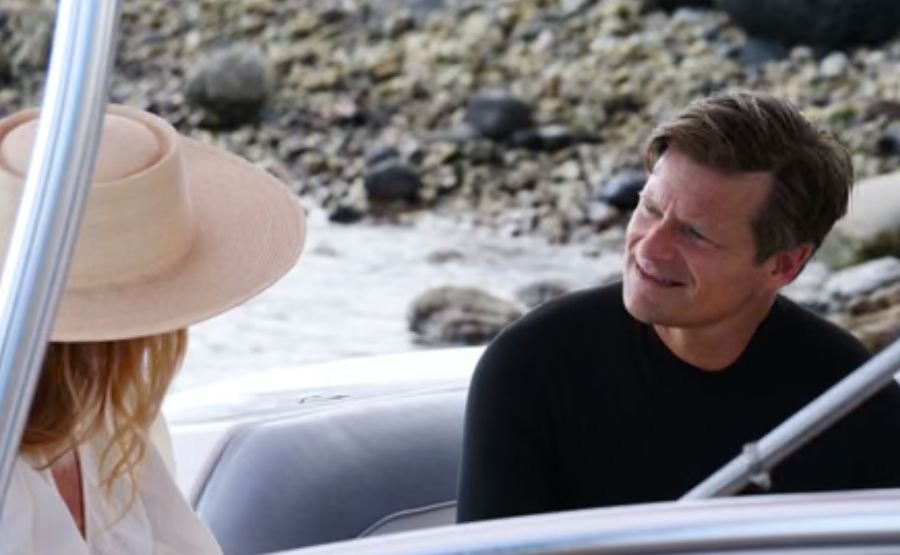
When Kai attempts the robbery and Nicole finds herself in genuine danger, Mark charges in without thinking. He gets beaten up. He doesn’t succeed in stopping Kai. He ends up on the floor with a black eye.
And yet — this is the moment that finally earns him something. Nicole looks at him differently afterward. The children, briefly, regard him with something other than exasperated tolerance.
White is threading a needle carefully here. He’s not endorsing the idea that a man earns his family’s respect by protecting them physically from danger — that would be too simple and too conservative a resolution for a show that has spent six episodes interrogating exactly that kind of masculine mythology. But he is acknowledging something: that Mark did an authentic thing. Not a calculated thing. Not a performance of manhood. He just reacted, instinctively, from genuine care for his wife.
The gesture is imperfect and the outcome is undignified and the victory is partial. Which makes it feel true in a way that a cleaner heroic moment wouldn’t.
What Mark Represents Thematically
The Mossbacher family, and Mark in particular, serves as the show’s primary vehicle for examining upper-class liberal American self-delusion. They have the right politics — or at least, Olivia believes she does — and the wealth that allows them to insulate themselves from the consequences of those politics in practice.
Mark is the family’s most exposed nerve. He doesn’t have Nicole’s professional authority to hide behind. He doesn’t have Olivia’s ideological scaffolding to construct an identity from. He doesn’t have Quinn’s blessed obliviousness. He just has himself, and himself, it turns out, isn’t quite enough to carry the weight of who he thought he was.
Mike White uses him to ask a question the show never fully answers: what does a man do when the story he told himself about his own identity turns out to have been built on something false? His father’s secret doesn’t just reframe his father. It reframes the template Mark has been — inadequately — trying to live up to his entire adult life.
The answer Mark arrives at isn’t transcendent. He doesn’t achieve wisdom. He gets a black eye and a temporary reprieve from his family’s contempt. But he does something harder than wisdom, in a way: he keeps going. He sits with the information about his father and doesn’t flee from it. He makes the disastrous bar confession and weathers the fallout. He stays present in the discomfort rather than retreating entirely.
For a character defined by inadequacy, that turns out to be enough.
Steve Zahn’s Performance: Why It Works
You cannot write about Mark Mossbacher without spending time on Steve Zahn, because the performance is what elevates the character from satire to something more resonant.
Zahn is one of American cinema’s great specialists in a very specific kind of character: the good-natured, slightly-overwhelmed man who is funnier than he means to be and more sincere than anyone gives him credit for. He’s done versions of this across his career in comedies and dramas alike. In The White Lotus he’s given the most complex version of that character type and meets it with complete commitment.
What Zahn does that’s particularly impressive is keep Mark’s neediness from curdling into simple self-pity. Mark is pathetic in some moments, yes. But Zahn always plays the underneath — the genuine love for his family, the genuine fear about the diagnosis, the genuine grief about his father — which means we never completely lose sympathy even when we’re cringing at his behavior.
The bar scene, in particular, is a masterclass in escalating comedy that never loses its emotional tether. Zahn plays the drunkenness with precision — not broadly, not for easy laughs, but as a man careening toward saying true things in catastrophically wrong ways. The comedy and the pain are simultaneous.
He was nominated for the Emmy for Outstanding Supporting Actor in a Limited Series, and the nomination was entirely deserved.
Mark Among the Season’s Other Characters
Placed against the season’s other guests and staff, Mark occupies a specific position in The White Lotus’s ecosystem. He’s neither the oblivious villain nor the hidden victim. He’s something messier: a man who causes low-level damage while simultaneously suffering his own low-level damage, with enough self-awareness to be embarrassed but not quite enough to change.
Shane Patton, across the season, offers an instructive contrast: another man struggling with a masculinity crisis, but one who expresses it through aggressive entitlement rather than anxious inadequacy. Where Shane externalizes everything — his frustrations are always someone else’s fault, his demands are always reasonable — Mark internalizes compulsively. The show employs both to illustrate various manifestations of the same basic issue: males whose sense of self necessitates a specific form of acknowledgment that their surroundings aren’t offering.
Armond watches Mark with a professional detachment that occasionally shades into something closer to contempt. Their interactions highlight the class dynamics the show is constantly examining: Mark’s obliviousness to how he’s perceived by the staff around him, and his assumption that money buys a certain kind of regard.
Final Words
Mark Mossbacher is a minor character in the sense that The White Lotus isn’t really his story — it belongs to everyone simultaneously, and to no one quite completely. But he’s a major character in the sense that matters more: he carries the emotional and thematic weight of the show’s most sustained examination of a particular kind of masculine crisis.
What Mike White achieves through him, and what Steve Zahn brings to life, is a portrait of a man who is wrong about himself in the specific, consequential ways that people are wrong about themselves when they’ve been told a story long enough to believe it. Mark’s father wasn’t who Mark thought he was. Mark’s marriage isn’t what Mark thought it was. Mark himself isn’t quite who Mark thinks he is.
And yet he’s still there at the end, nursing his black eye, tentatively reconnected to a wife who looked at him differently for one unguarded moment. It’s not redemption. It’s something smaller and more durable — the continuing presence of a person who didn’t quite manage to fall apart even when falling apart would have been easier.
That’s what good television does with characters like this. It doesn’t fix them. It just keeps watching them, honestly, until something true comes through.
FAQs
1. Who plays Mark Mossbacher in The White Lotus?
In Season 1, Steve Zahn portrays Mark Mossbacher. Zahn is an American actor known for Reality Bites, Happy, Texas, Treme, War for the Planet of the Apes, and many other credits. He received an Emmy nomination for Outstanding Supporting Actor in a Limited Series for the role.
2. What is Mark Mossbacher’s central conflict in the show?
Mark arrives in Maui dealing with two simultaneous crises: a suspected cancer diagnosis and a long-building sense of masculine inadequacy within his marriage. When the cancer scare resolves positively, a different revelation — the truth about his father’s identity and death — reshapes his understanding of himself and his family history.
3. What does Mark find out about his father?
His uncle reveals that Mark’s father did not die of liver disease as the family claimed, but died of AIDS after living a secret life as a gay man. This dispels the myth that Mark had created about his father as an exemplar of tough masculinity.
4. How does Mark’s relationship with Nicole work in the show?
Their marriage is characterized by a power imbalance that has accumulated over years — Nicole is a high-powered corporate executive, while Mark’s professional identity is considerably less defined. Nicole’s approach to problems is managerial efficiency; Mark’s is emotional seeking. They consistently talk past each other rather than to each other.
5. What happens with Mark’s children during the vacation?
His daughter Olivia regards him with the particular contempt that college-age children reserve for parents whose failures they can now see clearly but not yet contextualize charitably. His son Quinn is mostly absorbed in his own world — screens, then boats — and their scenes together are some of the season’s most tenderly funny, capturing a father trying to connect with a son through gestures that land slightly wrong.
6. What is the robbery scene and why does it matter?
Near the season’s end, a staff member named Kai attempts a robbery at the hotel. Mark impulsively intervenes when Nicole is threatened, gets physically beaten by Kai, and ends up on the floor with a black eye. The gesture is futile as physical heroism but genuine as emotional expression — and Nicole’s response to it represents the season’s most significant shift in their dynamic.
7. Why is Mark described as having a “terminal inferiority complex”?
The HBO character description uses “terminal” satirically — not meaning fatal, but meaning chronic and apparently incurable. The suggestion is that Mark’s sense of inadequacy is structural, built into who he is rather than caused by any single circumstance. The show explores how that complex developed and what sustains it.
8. How does Mark’s character arc differ from Shane Patton’s?
Both are men struggling with masculinity crises during the same vacation. Shane expresses his through entitlement and external aggression — everything is always someone else’s fault. Mark expresses his through anxious inadequacy and internal collapse. The show uses both to examine different faces of the same problem.
9. Was Steve Zahn nominated for awards for this role?
Yes. He received an Emmy nomination for Outstanding Supporting Actor in a Limited Series for his portrayal of Mark Mossbacher. The nomination was widely considered deserved by critics who praised the performance’s ability to hold comedy and genuine pathos simultaneously.
10. What does the Mossbacher family represent thematically in the show?
They function as Mike White’s primary vehicle for examining upper-class liberal American self-delusion — people with the right politics and the wealth to insulate themselves from the consequences of those politics in practice. Mark is the family’s most vulnerable member precisely because he lacks the professional authority, ideological armor, or cheerful obliviousness that protect the others.
11. Does Mark appear in any other season of The White Lotus?
No. The White Lotus operates as an anthology series with a different cast of characters in each season. Mark Mossbacher, Nicole, Olivia, and Quinn are specific to Season 1 set in Maui. Subsequent seasons moved to Sicily and then Thailand with entirely new characters.
12. What is the lasting significance of Mark Mossbacher as a character?
He represents something specific and recognizable: a man whose sense of self was built on stories — about his father, about marriage, about what a man is supposed to be — that turned out to be either false or insufficient. His arc doesn’t resolve into wisdom or redemption but into something smaller and more honest: continued presence, modest connection, and the beginning of a more accurate understanding of who he actually is.
Explore stories that inspire curiosity with The Imperial Magazine.

One Comment