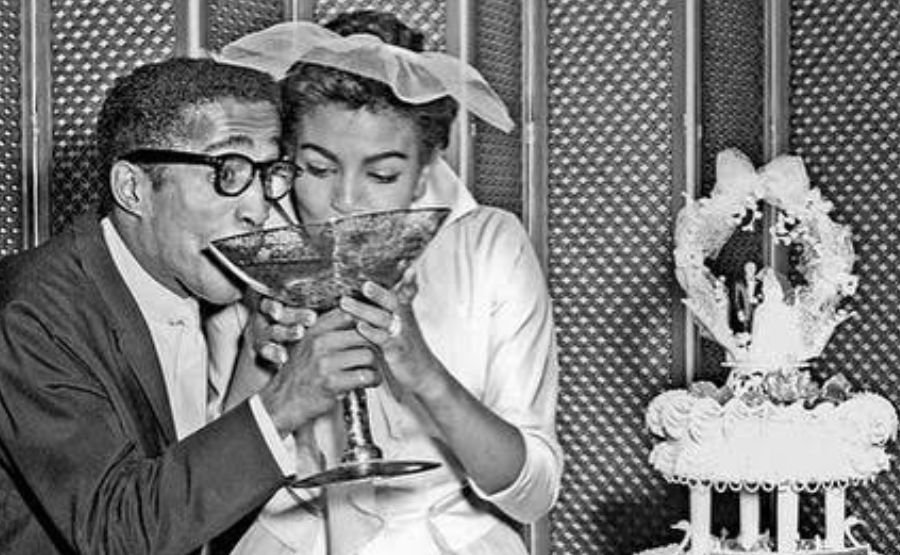
Loray White: The Woman History Reduced to a Footnote
Quick Bio
| Detail | Info |
| Full Name | Loray Betty White |
| Born | November 27, 1934 — Houston, Texas, USA |
| Nationality | American |
| Occupation | Singer, Dancer, Performer |
| Known For | First wife of Rat Pack entertainer Sammy Davis Jr.; performed at the Silver Slipper casino, Las Vegas |
| Marriage | Sammy Davis Jr. From January 10, 1958, until April 23, 1959 |
| Historical Context | Marriage occurred against the backdrop of the Sammy Davis Jr.–Kim Novak interracial romance scandal and alleged mob pressure |
| Era | Active performer in Las Vegas during the late 1950s |
| Legacy | A Black woman whose professional identity and personal dignity were subordinated to the political needs of a more famous man — and whose story deserves fuller examination |
The Woman in the Story Nobody Tells
There is a version of the story of Loray White that has been told many times, but she is never really in it. She appears as a prop. She is “the Black singer Sammy married to get the mob off his back.” She exists in parentheses, a transactional figure inserted between two more cinematically compelling names. The story rushes past her — usually in about two sentences — and gets back to the drama it actually wants to discuss.
That is both historically incomplete and fundamentally unfair.
Loray Betty White was a real person. She was a working entertainer — a singer and dancer — doing her job on the Las Vegas Strip at one of the most extraordinary and legally segregated moments in American entertainment history. She was a young Black woman navigating a career in an industry that simultaneously exploited and excluded people who looked like her. And then she found herself at the center of one of the most explosive celebrity scandals of the late 1950s, not because she sought it out, but because powerful men decided her existence could be useful.
Her story deserves to be told on its own terms.
Houston, Texas: Where It Started
November 27, 1934, saw the birth of Loray White in Houston, Texas. Houston in the mid-1930s was a rapidly growing Southern city, deeply segregated in the way that most Southern cities were by law and by practice. Black Houstonians lived in specific neighborhoods, attended specific schools, worshipped in specific churches, and navigated a civic landscape built to remind them of their designated place at every turn.
Growing up in that environment in the late 1930s and through the 1940s was not a gentle experience. But Houston also had a vibrant Black cultural life — jazz clubs, gospel choirs, theatrical troupes, and the particular creative energy that tends to develop in communities that cannot access the mainstream and so build something richer underground.
The specific details of Loray’s childhood — her parents’ names and occupations, her siblings if any, the particular neighborhood that shaped her — are not part of the documented historical record. This absence is itself meaningful: the lives of working-class Black performers from mid-century America were not considered worth archiving in the way that their white counterparts’ lives were. What we know is largely reconstructed from the edges of other people’s stories.
What is clear is that she developed performing skills — singing and dancing — at a level that eventually got her professional work. That requires years of practice, natural ability, and a willingness to pursue a career path that offered Black women limited financial security and enormous personal exposure.
See also “Mark Mossbacher: The Man Who Needed a Vacation From Himself“
Arriving in Las Vegas: The Silver Slipper Years
By the late 1950s, Loray White had made her way to Las Vegas, Nevada, where she was working as a performer at the Silver Slipper casino. The Silver Slipper sat on the Las Vegas Strip, across from the Frontier Hotel — and not far from the bigger, splashier venues where Sammy Davis Jr. himself was making history as one of the first Black performers to headline Las Vegas shows.
Las Vegas in the 1950s was an extraordinary paradox for Black entertainers. It was simultaneously one of the best-paying markets in the country for performing talent and one of the most viciously segregated cities in America. Black performers could headline the Sands or the Frontier — could draw massive crowds, earn significant money, receive standing ovations from white audiences who had paid premium prices to see them — and then be turned away from the same hotels’ restaurants, barred from using the swimming pools, and required to sleep in rooming houses in a part of town called the Westside because no Strip hotel would book them as guests.
Sammy Davis Jr. himself lived this contradiction. He was a star. He was also required to enter some of the casinos where he performed through the kitchen.
Loray worked within this world too. As a singer and dancer at the Silver Slipper, she was a professional entertainer building her craft in one of the most competitive and colorful entertainment markets in America. The Silver Slipper was not the biggest room in town, but it was a real venue, and working there required real talent and real stamina.
She was good at her job. Then everything around her blew up.
The Kim Novak Affair and the Crisis That Changed Everything
In 1957, Sammy Davis Jr. had begun a romantic relationship with Kim Novak — the platinum-blonde, Kansas City-born actress who had been groomed by Columbia Pictures into one of Hollywood’s most bankable stars. Novak was about to appear in Alfred Hitchcock’s Vertigo. She was white. Davis was Black. In seventeen states at the time, their relationship would have been illegal. In the rest of the country, it was considered socially catastrophic by the Hollywood establishment.
The relationship became an open secret that the industry desperately wanted closed. The pressure that descended on both Davis and Novak was enormous. Those who supported Novak allegedly warned that her career would be ruined. Davis had to deal with dangers that were new and more aggressive.
The most chilling account — documented in multiple credible sources including the Smithsonian and Vanity Fair — involves mob-connected interests tied to Columbia Pictures. According to these accounts, Davis received a direct threat: end the relationship with Novak, marry a Black woman immediately, or face consequences that would include severe physical harm. The specific threat, reportedly delivered through Davis’s father, involved broken legs, blinding the eye he had already lost in a 1954 car accident, and burial.
Whether every detail of this account is literally true is something historians debate. What is not debated is the outcome: Sammy Davis Jr. moved with remarkable speed to marry a Black woman, and the woman he chose was Loray White.
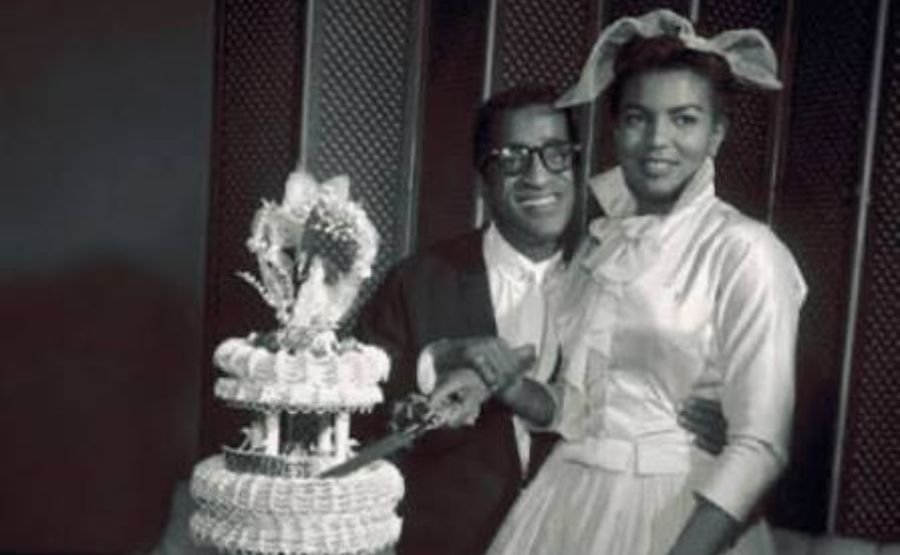
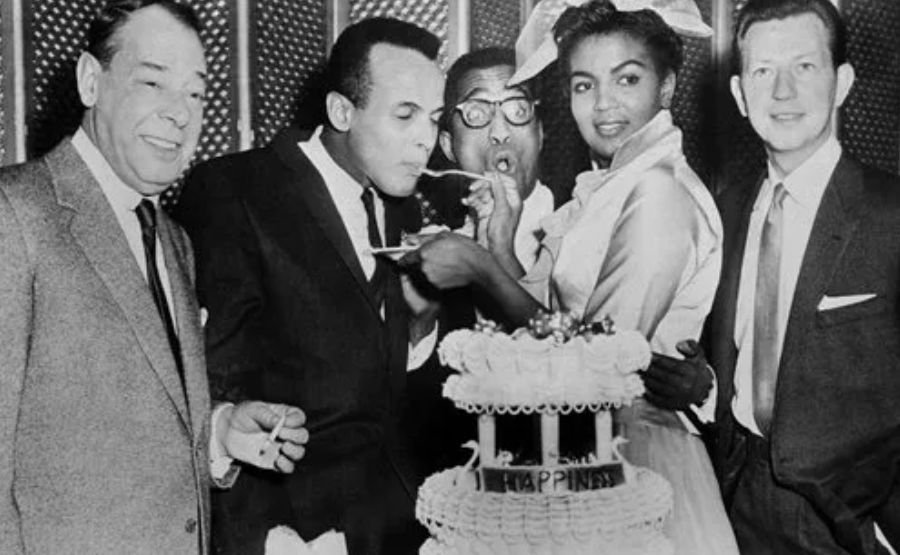
The Marriage: January 10, 1958
On January 10, 1958, Loray White and Sammy Davis Jr. were married. She was twenty-three years old. He was thirty-two.
The circumstances surrounding the marriage have been described by various sources in terms that range from “marriage of convenience” to more direct language about coercion. The Smithsonian Magazine account describes Davis choosing Loray specifically because she worked nearby — across the street at the Silver Slipper — which suggests the timeline was compressed to the point where geographic proximity was a decisive factor.
What did Loray White know and understand about why she was being married? This is a question the historical record does not answer cleanly. Some sources suggest she genuinely cared for Davis. Others describe the marriage as essentially transactional from the beginning. What is consistent across all serious accounts is that Davis did not perform the role of devoted husband — he continued his career at full pace, was rarely home, and the marriage functioned less as a partnership than as a public statement.
The emotional cost of that arrangement to Loray White — a young woman who had agreed to marry one of the most famous Black entertainers in America, only to find The historical record has not stopped to examine herself in a relationship that existed mainly to counteract a public relations disaster she had nothing to do with. consider.
It should.
A Marriage That Did Not Last
By September 1958, newspapers were already reporting that the marriage was in trouble. Within a year of the wedding, divorce proceedings were underway. The divorce was finalized on April 23, 1959 — fourteen months and thirteen days after the wedding.
The official grounds, the specific terms of the negotiations, and whatever private understanding existed between Loray and Sammy when they ended their marriage are not part of the public record. What has been reported is that Loray received a financial settlement as part of the divorce — a payment that acknowledged, in material terms, that she had been asked to play a role and that her playing of it had come at a cost.
Davis moved on with his characteristic speed. By 1960, he was publicly courting Mai Britt — a Swedish actress — in a relationship that generated its own enormous social controversy. Loray White was not mentioned in the coverage of that courtship.
She had served her purpose, in the world’s accounting. The world moved on.
The Life the Record Doesn’t Show
Here is what the history books don’t give us: a picture of Loray White’s life before January 1958, and a picture of her life after April 1959. Both of those periods almost certainly lasted much longer than the fourteen months she spent as Sammy Davis Jr.’s wife, and both almost certainly contained the actual texture of who she was as a person and a performer.
She had a career before the marriage. She was a working singer and dancer on the Las Vegas Strip, which means she had training, experience, ambition, and professional relationships that predated her encounter with Davis entirely. She had presumably spent years developing her craft before a powerful man’s personal crisis made her briefly famous.
After the divorce, she would have been a twenty-four-year-old woman with a modest financial settlement, a former-Mrs.-Sammy-Davis-Jr. identity attached to her name whether she wanted it or not, and a career to somehow continue building in an industry that had just watched her play a very public and not particularly flattering supporting role in someone else’s drama.
What she made of the years after 1959 is not documented in any source that has come down to us. Her IMDB page carries her name — Loray Betty White, Houston, Texas, November 27, 1934 — and her marriage to Davis, and almost nothing else. Whether she continued performing, whether she left Las Vegas, whether she built a private life entirely removed from the entertainment world, whether she married again, had children, pursued something completely different — none of this is known.
Silence is a form of injustice in and of itself.
What History Owes Her
The way Loray White has been treated in the historical record is a small but precise example of how the stories of Black women in mid-century America have been systematically minimized. She is relevant to the Sammy Davis Jr. narrative only insofar as she performed a function within it. Outside of that function, she is invisible.
The renewed attention to the Davis-Novak relationship — which has become a topic of active cultural discussion in 2025 and 2026 as a film project has moved forward — creates an opportunity to do better. The story of what happened between Davis and Novak is genuinely significant, historically and socially. It illuminates the specific brutality of Hollywood’s racial politics in the late 1950s, the reach of mob influence into the entertainment industry, and the way that romantic relationships between Black men and white women were policed through genuine violence.
But Loray White was not a supporting character in that story. She was a person. She was a performer who worked hard to build a professional life in conditions that were stacked against her. She was a young woman who was asked, under circumstances that were not of her choosing, to become publicly married to a man whose primary commitment was elsewhere. And she went through that marriage and that divorce and emerged on the other side of it, and then she lived the rest of her life, and we do not know how.
Net Worth and Financial Reality
Loray White received a financial settlement in her 1959 divorce from Sammy Davis Jr. The specific amount has never been confirmed in any publicly available record.
What can be said with reasonable confidence is that the settlement was not large by the standards of later celebrity divorces, and that Sammy Davis Jr. himself — while enormously famous and earning significant income — was also a famously imprudent financial manager who would eventually die owing more than five million dollars to the IRS. His generosity to friends and his spending habits throughout his life regularly outpaced his income.
Loray’s professional earnings as a performer at the Silver Slipper and other Las Vegas venues would have been modest — significant by the standards of mid-century working-class Black America, but not the kind of accumulation that generates intergenerational wealth.
Her net worth at any stage of her life is simply not something the historical record speaks to.
What We Know of Her Later Years
The honest answer about Loray White’s later years is that we know almost nothing. She exits the documented record in April 1959, and what follows is silence.
There are no confirmed reports of subsequent marriages, children, major career moves, or public appearances. She did not write a memoir. She did not give interviews setting the record straight about the Davis marriage. She did not become a public figure in any subsequent chapter of her life.
Whether that silence reflects contentment, deliberate privacy, a life built entirely outside public view, or simply the historical indifference that has always met Black women who were not useful to a more famous person’s narrative — we cannot say.
What we can say is that she was born in Houston in 1934, that she became a Las Vegas entertainer at a time when that was a genuinely difficult path for a Black woman, that she married one of the most famous entertainers in America under circumstances that were shaped far more by mob pressure and racial politics than by her own choices, and that she navigated all of it and continued living her life.
Final Words
Loray White deserves a biography that is actually about her — and writing it honestly means acknowledging how incomplete that biography must be, because the world did not think her story was worth recording.
What is recorded is enough to know that she was a person of genuine substance who existed at the intersection of some of the most significant cultural forces of twentieth-century America: the extraordinary talent and equally extraordinary exploitation of Black performers in Las Vegas, the violent enforcement of racial boundaries in celebrity culture, and the specific vulnerability of Black women whose personhood could be pressed into service for other people’s emergencies without their meaningful consent.
The marriage to Sammy Davis Jr. lasted fourteen months. Her life lasted much longer than that. The question of what she made of the rest of it — how she understood what had happened to her, whether she found peace or bitterness or both, what she built in the years the record doesn’t show — is a question that deserves to be asked even if it cannot yet be answered.
She was not a footnote. She was a person. That ought to have been clear right away.
See also “Mark Mossbacher: The Man Who Needed a Vacation From Himself“
FAQs
1. Who was Loray White?
Loray White was an American singer and dancer born on November 27, 1934, in Houston, Texas. She worked as a performer in Las Vegas during the late 1950s, most notably at the Silver Slipper casino on the Strip. She is primarily known in the historical record as the first wife of entertainer Sammy Davis Jr., whom she married in January 1958 and divorced in April 1959.
2. What was the Silver Slipper?
The Silver Slipper was a casino and entertainment venue on the Las Vegas Strip, located directly across from the Frontier Hotel. In the 1950s, it was one of numerous Las Vegas establishments where Black performers could work but faced segregation in all other aspects of their Strip experience — unable to stay in the hotels, eat in the restaurants, or use the facilities as guests.
3. Why did Loray White and Sammy Davis Jr. get married?
The most documented explanation, supported by multiple credible sources including Smithsonian Magazine and Vanity Fair, is that the marriage was arranged hastily in response to threats Davis received from mob-connected individuals upset about his publicized romantic relationship with white actress Kim Novak. According to these accounts, Davis was warned — through threats including physical violence — to end the Novak relationship and immediately marry a Black woman. Loray White, working nearby at the Silver Slipper, became that woman. The extent to which the marriage also reflected genuine personal feelings between the two is something the historical record does not clarify.
4. When exactly did they marry and divorce?
The wedding took place on January 10, 1958. The divorce was finalized on April 23, 1959. The marriage lasted approximately fourteen months.
5. Who was Kim Novak and why did her relationship with Sammy Davis Jr. matter?
Kim Novak was a white actress under contract to Columbia Pictures who became one of Hollywood’s most prominent stars in the late 1950s, known for Alfred Hitchcock’s Vertigo and other films. Her relationship with Davis — a Black man, at a time when interracial marriage was illegal in seventeen states — represented a direct challenge to the racial codes that governed both Hollywood and American society. The relationship provoked powerful industry figures to apply severe pressure on both parties.
6. What happened to the Novak-Davis relationship after the marriage?
Davis married Loray White in January 1958, and the Novak relationship ended. By late 1958, it was being reported that the Davis-White marriage was failing. Novak went on to other film work. Davis would later marry Swedish actress Mai Britt in 1960, generating another major interracial marriage controversy, then Altovise Davis in 1970.
7. Did Loray White receive any settlement from the divorce?
According to various historical accounts, Loray White received a financial settlement when the marriage ended. The specific amount has never been publicly confirmed, and the terms of the divorce proceedings were not part of the public record.
8. Did Loray White continue performing after the divorce?
The historical record does not confirm whether she continued her entertainment career after 1959. Her IMDB biography is sparse, and no verified accounts of subsequent performances, recordings, or professional activities have entered the documented record that researchers have been able to access and confirm.
9. What does Loray White’s story reveal about Las Vegas in the 1950s?
Her story reflects the specific contradiction of Black entertainment in 1950s Las Vegas: a city where Black performers could headline major venues and earn significant money while simultaneously being segregated from the same establishments in all other respects — barred from staying in hotels where they performed, excluded from restaurants, and required to live in the Westside area designated for Black residents.
10. How has Loray White been treated by historians and biographers?
Almost universally, she has appeared only as a minor character in the story of Sammy Davis Jr. or the Sammy Davis Jr.–Kim Novak affair. She typically receives one or two sentences of acknowledgment before the narrative moves on to other figures. Her own life, career, experiences, and perspective have never been the subject of sustained biographical attention.
11. Is Loray White still alive?
Born in 1934, she would be approximately 91 or 92 years old as of 2026. The public record contains no confirmed information about her death, but equally contains no confirmed information about her current life. She has maintained complete privacy throughout the decades following her divorce from Davis.
12. How does Loray White’s story connect to the 2025-2026 film project about Sammy Davis Jr. and Kim Novak?
A film called Scandalous! has been announced featuring the Davis-Novak relationship, with Sydney Sweeney cast to play Kim Novak. This has renewed public attention to the events of 1957–1958 — including the circumstances of Davis’s marriage to Loray White — and has generated cultural commentary about whose story gets told, how it is framed, and what the relationship reveals about the racial politics of mid-century Hollywood. Loray White’s role in those events, however peripheral she has been made to seem, remains a morally significant dimension of the whole story.
Explore stories that inspire curiosity with The Imperial Magazine.



One Comment