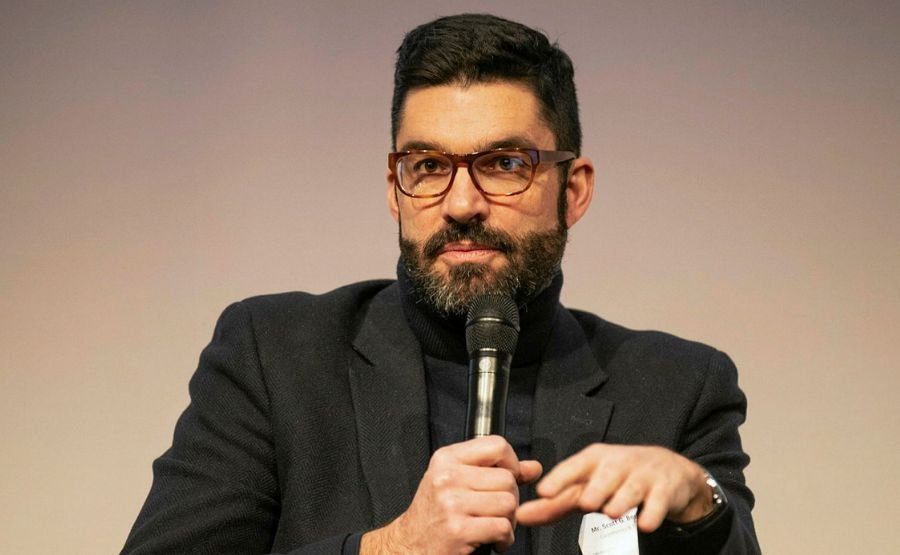
Scott Gerald Borgerson: The Maritime Mind Who Got Caught Between Two Worlds
Quick Bio
| Detail | Information |
| Full Name | Scott Gerald Borgerson |
| Born | 1976, Festus, Missouri, USA |
| Nationality | American |
| Occupation | Entrepreneur, maritime strategist, clean energy executive, former Coast Guard officer |
| Known For | Co-founding CargoMetrics Technologies; knowledge of Arctic policy; connection to Ghislaine Maxwell |
| Education | U.S. Coast Guard Academy (B.S.); Tufts University (M.A.); Columbia University (Ph.D., International Relations, 2006) |
| Companies Founded | CargoMetrics Technologies (2010); H2X (clean maritime energy) |
| CFR Role | Visiting Fellow, Council on Foreign Relations, 2007 |
| Property | Oceanfront home in Manchester-by-the-Sea, Massachusetts (~$3 million) |
| Estimated Net Worth | ~$10–22 million (joint financial disclosures, 2020) |
| Children | Two (from first marriage to Rebecca) |
| Status | Divorced from Maxwell; running H2X |
A Man of Two Biographies
Scott Borgerson has, in a sense, two public biographies running in parallel — and they rarely get told together properly.
The first is genuinely impressive. A kid from small-town Missouri who worked his way up through one of America’s most demanding military academies, built a Coast Guard career, earned a doctorate from Columbia, became a published authority on Arctic geopolitics, and then founded a maritime data company that attracted some of the world’s most sophisticated investors. That story, told on its own, reads like a textbook American success narrative — discipline, intellect, vision, execution.
The second biography runs alongside it and eventually collides with it. Somewhere in his rise, Scott Borgerson met Ghislaine Maxwell — British socialite, close associate of Jeffrey Epstein, and eventually one of the most infamous defendants in a federal sex trafficking trial. Their relationship, kept almost entirely secret for years, surfaced in court documents and turned his carefully constructed professional identity into a footnote in one of the most disturbing criminal cases of the twenty-first century.
Understanding Scott Borgerson means holding both biographies at once. Neither erases the other. Together they make a story that’s considerably more complicated and more human than either version tells alone.
See also “Gina Capitani: The Woman Who Raised One of America’s Funniest Men“
Festus, Missouri: The Midwest Foundation
Scott Borgerson grew up in the area around Festus, Missouri — a small community in Jefferson County, southeast of St. Louis, situated between the towns of Festus and Hematite along the Mississippi River. It’s working-class America in the truest sense: not wealthy, not cosmopolitan, not the kind of place that typically produces people who end up publishing in Foreign Affairs or testifying before congressional committees on Arctic policy.
What it does produce is people with a certain groundedness — a midwestern directness, a capacity for hard work, and an understanding that nothing particularly good arrives without effort. Those qualities show up unmistakably in how Scott built his early career: methodically, institutionally, through legitimate channels rather than shortcuts.
His specific upbringing and family background have not been widely documented. It seems evident that he reached the United States. Coast Guard Academy — an intensely competitive and academically rigorous institution — with the preparation to succeed there. That doesn’t happen accidentally. Someone in that household cared about education and instilled the discipline to pursue it.
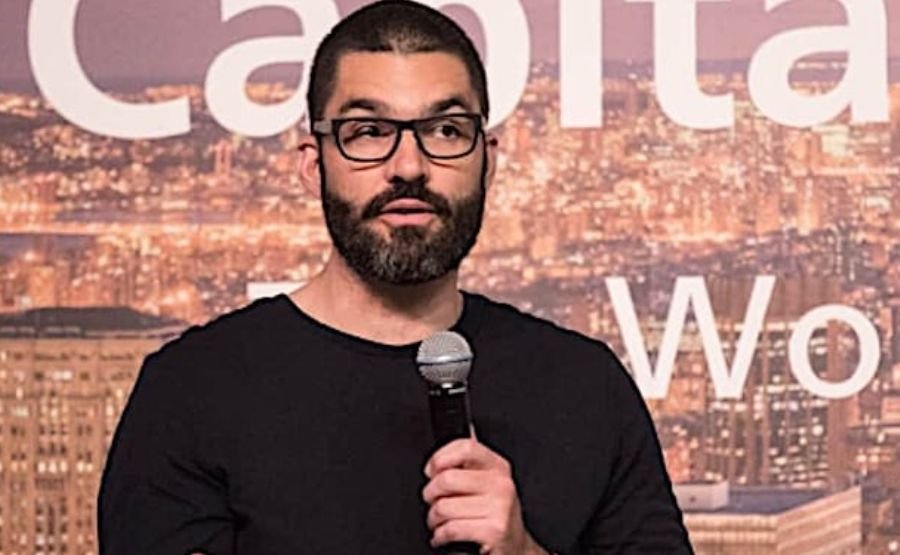
The Coast Guard Academy and a Life Shaped by Water
The United States Coast Guard Academy in New London, Connecticut, is the smallest of the five federal service academies and arguably the most selective by acceptance rate. Getting in requires strong academics, physical fitness, and genuine competitive drive. Graduating requires all of that plus four years of military discipline, seamanship training, and leadership development.
Scott graduated from the Academy and entered the Coast Guard as an officer, spending approximately a decade in service. During those years, he developed the expertise in maritime law, ocean governance, and international security that would define his later academic and professional work. The Coast Guard exposed him to the full complexity of what happens on the world’s oceans — search and rescue, drug interdiction, environmental enforcement, port security — and gave him a framework for thinking about maritime affairs that was operational rather than purely theoretical.
He also began developing his particular intellectual passion during this period: the Arctic. As climate science increasingly documented the retreat of polar sea ice, the strategic implications for shipping, resource extraction, and international law were enormous and almost entirely unexplored in mainstream policy discussions. Scott recognized early that whoever thought most clearly about what a warming Arctic meant for global trade and geopolitics would have something genuinely important to say. He decided to be that person.
Columbia, the Council on Foreign Relations, and “Arctic Meltdown”
After his Coast Guard service, Scott pursued graduate education with serious ambition. The Fletcher School of Law and Diplomacy at Tufts University, one of the nation’s most prestigious graduate programs in international affairs, awarded him a Master’s degree. and then completed a Ph.D. in International Relations at Columbia University in 2006, with a dissertation focused on ocean governance and Arctic policy.
The academic credentials were real and the intellectual substance behind them was real. Scott wasn’t collecting degrees for their own sake — he was systematically building expertise in a domain he planned to influence.
In 2007, he became a Visiting Fellow at the Council on Foreign Relations, the prestigious New York-based think tank that shapes much of America’s foreign policy discourse. The CFR posting gave him access to senior policymakers, a platform to publish, and a network that extended deep into Washington’s national security establishment.
The work that made his reputation came in 2008, when Foreign Affairs — the CFR’s flagship journal and one of the most influential publications in international relations — published his “Arctic Meltdown” article. The article made the clear and well-supported claim that the melting of Arctic sea ice was a geopolitical issue as well as an environmental one. first order. New shipping routes were becoming viable. Enormous undersea energy reserves were becoming accessible. And the existing framework of international law was completely unprepared for the competition that would follow.
The article was genuinely prescient. It was widely read, widely cited, and placed Scott Borgerson on the short list of people in America who understood the Arctic as a strategic domain rather than simply a conservation concern. Congressional committees invited him to testify. Policy conferences featured him. His voice on Arctic affairs carried real weight.
He was, in his early thirties, exactly where he’d planned to be.
Building CargoMetrics: Where Policy Thinking Met Market Opportunity
In 2010, Scott co-founded CargoMetrics Technologies in Boston alongside maritime expert Rockford Weitz. The company’s core idea was elegant and powerful: apply satellite tracking, big data analytics, and machine learning to the global shipping industry to generate real-time intelligence about where goods were moving around the world.
This sounds straightforward in retrospect, in an era when data analytics has become commonplace across industries. In 2010 it was genuinely innovative. The shipping industry was historically opaque — vast amounts of cargo moving across oceans with limited real-time visibility available to anyone outside the direct parties to each transaction. CargoMetrics proposed to make that opacity legible, and the implications for hedge funds, trading firms, and policymakers who needed to understand global trade flows were enormous.
The investor list that assembled around CargoMetrics reflected how seriously serious money took the concept. Eric Schmidt, former CEO and Executive Chairman of Google, became one of the company’s investors — a signal that the technology merited attention from people who understood data infrastructure at scale. Israeli billionaire Idan Ofer also invested. The company raised nearly $23 million in documented funding over its operational life, positioning itself as a genuine player in quantitative maritime intelligence.
CargoMetrics sold data and analytics to hedge funds seeking an edge in commodity trading, to shipping companies managing their own route planning, and to policymakers trying to understand sanctions compliance and global trade flows. It operated in a niche that was simultaneously technical, financial, and geopolitically significant — exactly the intersection that Scott’s unusual background had prepared him to occupy.
He was the CEO who had actually served on the water, actually understood the policy framework governing global shipping, and had the academic credentials to explain it all in both board rooms and congressional hearings. That combination was rare.
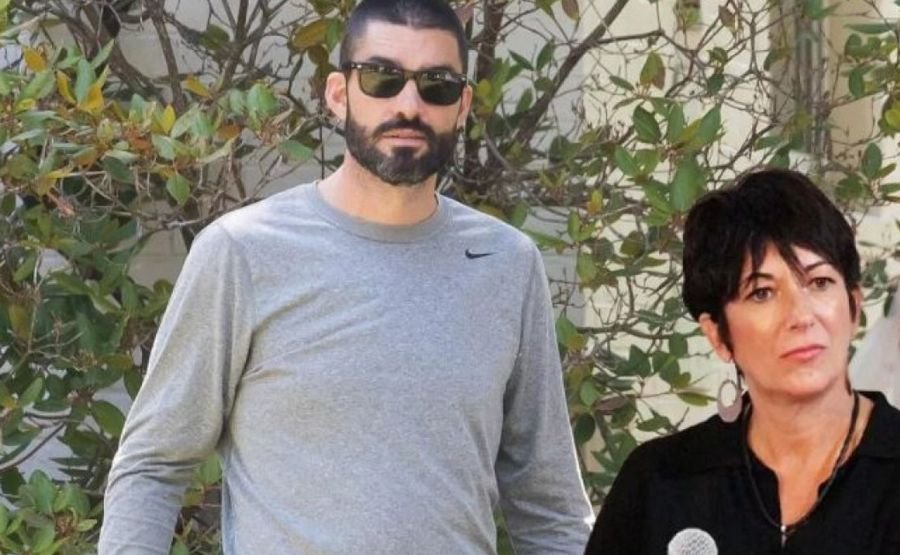
Meeting Ghislaine Maxwell: When Two Worlds Intersected
The Arctic Circle Assembly is an annual conference held in Reykjavik, Iceland, drawing together politicians, scientists, business leaders, and policy thinkers to discuss issues related to the Arctic region. Scott co-founded this organization in 2010 and was a prominent figure in its events. Ghislaine Maxwell attended the 2013 Assembly.
By most accounts, that is where they met.
At the time, Scott was still married to his first wife, Rebecca, with whom he had two children. The exact timeline of how his relationship with Maxwell developed is not fully documented, but what is established is that by 2014 he filed for divorce from Rebecca, citing irreconcilable differences. Rebecca subsequently made allegations of domestic abuse, which Scott denied publicly, characterizing her behavior as erratic. The divorce proceedings were acrimonious.
Maxwell, meanwhile, had been living largely out of public view in the years following Jeffrey Epstein’s first prosecution in 2008. She had severed most of her public associations with Epstein and was, to outward appearances, rebuilding a quieter life focused on ocean conservation work through her TerraMar Project. Scott reportedly served on the board of TerraMar in a nominal capacity, though accounts suggest he performed no actual organizational work there. The arrangement gave Maxwell’s project legitimacy while CargoMetrics benefited from access to Maxwell’s extensive network of high-profile contacts.
The relationship deepened and eventually — reportedly in 2016 — became a marriage, kept entirely private. When Maxwell appeared in court for bail hearings in 2020, she listed herself as married but refused to name her spouse. Legal observers and journalists eventually identified Borgerson as the likely husband, though no official marriage certificate was ever made publicly available, and Borgerson himself had denied dating Maxwell to reporters as recently as 2019.
The Arrest, the Resignation, and the Unraveling
Jeffrey Epstein was arrested in July 2019. The following month, Ghislaine Maxwell was reported by the Daily Mail to be living at Scott’s Manchester-by-the-Sea property — a secluded oceanfront home reportedly worth around $3 million. Scott told a reporter who called him that Maxwell was not at his house and denied they were in a relationship.
Maxwell was arrested by the FBI in July 2020 at a property in New Hampshire — a house purchased under an anonymous LLC that prosecutors later identified as connected to her. The arrest sent shockwaves through everyone associated with her.
Scott resigned from CargoMetrics almost immediately after Maxwell’s arrest. His departure from the company he had built and led for a decade was framed publicly as voluntary, but the circumstances made the true nature of the transition self-evident. One former colleague told journalists that he didn’t believe Borgerson wanted to leave — that it was essentially forced by the impossibility of running a data company for hedge fund clients while being publicly identified as the husband of a defendant in a federal sex trafficking case.
Financial disclosures that Maxwell’s lawyers filed in the bail proceedings revealed that she and her husband had combined assets of approximately $22.5 million — the first concrete public acknowledgment of both the marriage and the scale of their shared finances. Scott supported Maxwell’s bail application, vouching for her character in documents submitted to the court.
He did not attend her trial.
Maxwell was convicted in December 2021 on five counts including sex trafficking of a minor and conspiracy. She received a twenty-year federal prison sentence. During the proceedings, Maxwell’s legal team filed documents indicating that she and Borgerson had discussed divorce prior to her arrest — framed as an attempt to protect him from association with her legal situation. The marriage appeared to have effectively ended, though the formal legal status remained unclear publicly for some time.
The Personal Fallout: Two Divorces and a Battered Reputation
The personal wreckage of the Maxwell years was considerable. His first marriage to Rebecca had already ended in painful and publicly contested circumstances. His second marriage — to a woman who turned out to be among the most consequential defendants in modern American criminal law — ended under conditions that he had no real control over but couldn’t fully escape either.
His professional reputation, carefully constructed across two decades of military service, academic work, and entrepreneurial effort, became inseparably entangled in the public mind with Maxwell’s crimes — even though Scott himself was never accused of any wrongdoing. That distinction — present in the legal record but absent from the search-engine association — is genuinely significant and genuinely unfair, and also genuinely unavoidable given the circumstances.
He reportedly considered writing a book about his experiences — a proposal that apparently attracted publisher interest — but ultimately decided he didn’t want his professional legacy permanently anchored to Maxwell’s story. Whether that decision reflected wisdom or missed opportunity depends entirely on how you assess the appetite of both publishers and the public for his perspective on events he largely refuses to discuss.
H2X and the Attempt at a Third Act
After leaving CargoMetrics, Scott moved into clean maritime energy through a company called H2X — focused on hydrogen and other clean energy technologies for maritime applications. The shipping industry is one of the world’s largest emitters of greenhouse gases, and the transition toward cleaner propulsion systems represents both an enormous engineering challenge and a significant commercial opportunity.
H2X fits neatly within Scott’s existing expertise: maritime operations, international trade policy, and technology-driven innovation in ocean industries. It’s the kind of venture that his biography before 2019 would have made him an ideal leader for.
Whether H2X achieves the commercial significance that CargoMetrics reached before its founder’s personal life overtook its public narrative remains an open question. Scott maintains a low public profile — minimal social media, no press interviews, no conference appearances that generate coverage. His LinkedIn presence confirms H2X as his current focus.
Money: What the Numbers Actually Showed
The most concrete public financial data on Scott Borgerson comes from the court filings associated with Maxwell’s bail proceedings, which revealed combined marital assets of approximately $22.5 million as of 2020. That figure — joint rather than individual — gives a floor for his personal wealth rather than a precise accounting.
CargoMetrics raised nearly $23 million in investor funding over its life. As co-founder and CEO, Scott’s equity stake would have had meaningful value, though the precise terms of his departure and what he retained from that equity are not documented publicly. The Manchester-by-the-Sea oceanfront property, valued at approximately $3 million, was a significant personal asset.
Independent estimates of his personal net worth prior to the Maxwell situation generally placed it somewhere between $10 million and $22 million — the former being a conservative individual estimate, the latter the combined marital figure from court documents. The true current number, after divorce proceedings and the winding down of his CargoMetrics role, is genuinely unknown.
Final Words
Scott Borgerson built something genuinely impressive, lost significant parts of it to circumstances that mixed his own choices with events partially beyond his control, and appears to be attempting to build again in a quieter register.
What makes his story distinctive is the specific collision it represents: the genuine intellectual substance of his maritime work — the Arctic scholarship, the CargoMetrics innovation, the Coast Guard service — against the extraordinary weight of his personal associations. There is no mutual cancelation between those two entities. They coexist in a way that makes his biography considerably more interesting than either version told in isolation.
He was not accused of crimes. He was not charged with anything. He was, by available evidence, a capable officer, a serious thinker, and a successful entrepreneur who also made choices in his personal life that connected him to one of the most damaging criminal networks of the modern era. How much responsibility he bears for that connection, and what he knew about the world he was entering when he began it, are questions the public record doesn’t fully answer.
What remains is a man now in his late forties, working in clean energy, keeping his head down, and carrying the weight of a biography that got considerably more complicated than he likely planned.
See also “Gina Capitani: The Woman Who Raised One of America’s Funniest Men“
FAQs
1. Who is Scott Borgerson?
Scott Gerald Borgerson is an American entrepreneur, former U.S. Coast Guard officer, and maritime policy expert born in 1976 in Festus, Missouri. He is best known professionally for co-founding CargoMetrics Technologies in 2010 — a Boston-based maritime data analytics company that used satellite tracking and big data to map global shipping movements — and for his expertise in Arctic geopolitics. He became widely known to the general public through his relationship with Ghislaine Maxwell.
2. Where did Scott Borgerson grow up and go to school?
He grew up in the Festus-Hematite area of southeast Missouri, near St. Louis. He attended the U.S. Coast Guard Academy, then earned a Master’s degree from Tufts University’s Fletcher School of Law and Diplomacy, and completed his Ph.D. in International Relations at Columbia University in 2006, with his research focused on ocean governance and Arctic policy.
3. What is CargoMetrics?
CargoMetrics Technologies was a Boston-based maritime data analytics company that Scott co-founded in 2010 with Rockford Weitz. The company used satellite tracking, big data, and machine learning to provide real-time intelligence about global shipping movements — information primarily sold to hedge funds, commodity traders, and policymakers. It raised nearly $23 million from investors including former Google CEO Eric Schmidt and Israeli billionaire Idan Ofer. Scott resigned as CEO shortly after Ghislaine Maxwell’s arrest in 2020.
4. What is the “Arctic Meltdown” article?
Published in Foreign Affairs in 2008 during Scott’s fellowship at the Council on Foreign Relations, “Arctic Meltdown” was a widely read and influential piece arguing that the retreat of Arctic sea ice represented not just an environmental event but a major geopolitical development. It made the case that new shipping routes, undersea resource access, and inadequate international legal frameworks would make the Arctic a zone of intensifying great-power competition. The article established Scott as one of America’s leading voices on Arctic strategy.
5. How did Scott Borgerson meet Ghislaine Maxwell?
They are believed to have met at the Arctic Circle Assembly in Reykjavik, Iceland, in 2013 — a conference focused on Arctic issues that Scott had co-founded in 2010. Maxwell was in attendance. At the time of their meeting, Scott was still married to his first wife, Rebecca. He filed for divorce from Rebecca in 2014.
6. Were Scott Borgerson and Ghislaine Maxwell married?
Based on court filings during Maxwell’s 2020 bail proceedings, in which she listed herself as married without naming her spouse, and subsequent reporting by multiple outlets, it is widely believed that they married in 2016. No official marriage certificate has been made publicly available. Scott denied dating Maxwell to reporters in 2019. Maxwell’s legal team filed documents indicating she and Borgerson had discussed divorce prior to her arrest, reportedly to protect him from association with her case.
7. Was Scott Borgerson accused of any crimes?
No. Scott Borgerson has never been accused of, charged with, or implicated in any criminal wrongdoing in connection with either Jeffrey Epstein or Ghislaine Maxwell. His connection to the case is limited to his personal relationship with Maxwell, his having vouched for her character in bail proceedings, and his voluntary departure from CargoMetrics in the wake of her arrest.
8. Why did Scott Borgerson leave CargoMetrics?
He resigned shortly after Maxwell’s arrest in July 2020. The circumstances made the decision functionally inevitable — maintaining the CEO role at a company serving institutional investors while being publicly identified as the husband of a federal sex trafficking defendant was untenable regardless of his own legal status. Former colleagues indicated he did not want to leave but had little practical choice.
9. What happened with his first marriage?
Scott was married to a woman named Rebecca, with whom he had two children. He filed for divorce in 2014, citing irreconcilable differences. Rebecca subsequently made allegations of domestic abuse, which Scott publicly denied, characterizing her behavior as erratic. The divorce preceded his relationship with Maxwell becoming known publicly.
10. What is H2X?
H2X is a clean maritime energy company that Scott founded after leaving CargoMetrics. It focuses on hydrogen and other clean propulsion technologies for the shipping industry — an area that sits squarely within his established expertise in maritime operations and ocean policy. It represents his attempt to build a professional third act following the damage to his public reputation from the Maxwell association.
11. What is Scott Borgerson’s net worth?
Court documents filed in Maxwell’s 2020 bail proceedings revealed combined marital assets of approximately $22.5 million. Independent estimates of his personal net worth before those proceedings generally ranged from around $10 million to that combined figure. His equity position in CargoMetrics would have been significant, though the terms of his departure are not publicly documented. His current net worth, following divorce and the loss of his CEO role, is unknown.
12. What is Scott Borgerson doing in 2026?
He is running H2X, his clean maritime energy venture, and maintains an extremely low public profile. He does not give interviews, appears at no public conferences that generate coverage, and has minimal social media presence. His LinkedIn profile confirms H2X as his current focus. He appears to be living quietly, attempting to rebuild a professional identity that is defined by his work rather than by his association with Ghislaine Maxwell.
Explore stories that inspire curiosity with The Imperial Magazine.




One Comment