Nakyung Park: The Artist Behind a Famous Name
Quick Bio
| Detail | Information |
| Full Name | Nakyung “Nikki” Park |
| Born | September 1, 1977, Seoul, South Korea |
| Nationality | South Korean-American |
| Occupation | Painter, graphic designer, makeup artist, occasional actress |
| Known For | Wife of actor Wesley Snipes; painter; daughter of Korean broadcasting executive Park Cheol |
| Father | Park Cheol — former director, Munhwa Broadcasting Corporation (MBC) |
| Education | Vancouver Island University (graphic design) |
| Husband | Wesley Snipes (married March 17, 2003 — present) |
| Children | Four: Iset Jua-T, Akhenaten Kihwa-T, Alaafia Jehu-T, and Alimayu Moa-T Snipes |
| Film Credit | Beautiful Miss Jin (South Korea, 2011) |
| Estimated Net Worth | 500,000–1 million |
| Current Residence | United States (Florida area) |
A Life Defined by More Than One Relationship
Here’s the honest challenge with writing about Nakyung Park. The internet — and most of the people who search her name — arrives at her story through someone else’s door. That someone is Wesley Snipes, the Orlando-born actor who turned himself into one of Hollywood’s most recognizable action stars through films like Blade, Passenger 57, and White Men Can’t Jump, and who spent a bruising few years in federal prison for tax-related offenses that became one of the more dramatic public falls from grace in modern entertainment history.
Nakyung was there for all of it. The early romance. The marriage. The children. The charges. The imprisonment. The release. The slow rebuilding.
But her story doesn’t begin with Wesley Snipes. It begins in Seoul, South Korea, in a household shaped by the Korean entertainment industry, and it runs through a move to Canada, an education in visual arts, a career as a painter that she built on her own terms, and a life that has required both resilience and patience in measures that most people don’t get tested on.
She deserves to be seen whole.
See also “Nadia Farmiga: The Farmiga You Don’t See on Screen and Why Her Story Matters“
Seoul: Where the Story Starts
Nakyung Park was born on September 1, 1977, in Seoul, South Korea — a city that, by the late 1970s, was in the middle of a dramatic transformation from the ruins of postwar Korea into one of Asia’s most dynamic economic centers. It was a city of enormous energy and ambition, and Nakyung grew up in it during some of its most formative decades.
Her father, Park Cheol, was a significant figure in South Korean media. He served as a director at Munhwa Broadcasting Corporation — better known as MBC — one of the country’s three major terrestrial television networks. MBC was, and remains, a central institution in Korean cultural life, producing the drama series, news programming, and entertainment shows that shaped how Koreans understood themselves and their country. Park Cheol played a meaningful role in developing programming during the late 1980s and 1990s, a period when Korean television began cultivating the quality and cultural specificity that would eventually evolve into the global phenomenon of Korean drama content.
Growing up as the daughter of someone that embedded in the creative and administrative machinery of Korean television meant Nakyung absorbed an understanding of storytelling, production, and visual culture from an early age — not as abstract concepts, but as the practical context of daily family life. The dinner table conversation, the household’s rhythms, the things her father brought home from work — all of it was saturated with media and cultural production.
Whether that direct exposure is what drew her toward the visual arts is something only she could confirm. But the connection seems more than coincidental.
Vancouver and a New Kind of Education
At some point during her adolescence, Nakyung’s family relocated to Vancouver, Canada. This was not an unusual move for affluent Korean families in the late 1980s and 1990s — Vancouver in particular became a major destination for Korean immigrants and international students during that period, developing one of the largest Korean diaspora communities outside the peninsula itself.
Vancouver gave Nakyung something Seoul hadn’t fully provided: access to a Western educational environment that treated visual art and design as genuine professional paths. She enrolled at Vancouver Island University — located in Nanaimo, British Columbia — and pursued a degree in graphic design. That program would have covered typography, visual communication, color theory, layout, and digital tools, giving her a technical vocabulary and formal foundation that distinguished her approach to visual work from pure instinct.
The Canadian chapter of her life also placed her in a multicultural environment at a formative age — no longer the daughter of a Korean broadcasting executive navigating Seoul’s hierarchical social landscape, but a Korean woman in a city where identity was more fluid, where being an artist was a legitimate self-definition, and where the West Coast’s cultural openness provided room to develop.
It’s during this period, or shortly after it, that her life would intersect with Wesley Snipes.
Meeting Wesley: A Connection Built on Art
The story of how Nakyung Park and Wesley Snipes came together begins, by multiple accounts, through a mutual interest in art. Wesley Snipes is not, in the public imagination, primarily associated with the visual arts — he is an actor, a martial artist, a producer. But he earned a Bachelor of Fine Arts from the State University of New York at Purchase, which gives him genuine creative credentials beyond his film career. He and Nakyung were drawn together through that shared artistic sensibility, which is a more interesting foundation for a relationship than simple celebrity attraction.
They began dating around 2000, living together at Snipes’ home in Alpine, New Jersey — one of the more affluent towns in Bergen County, across the Hudson River from Manhattan. The relationship developed over several years of cohabitation before Nakyung, by some accounts, pushed for formalization. She gave Wesley an ultimatum about marriage, and on March 17, 2003, the two wed in a civil ceremony at the county courthouse in Hackensack, New Jersey. Not a lavish Hollywood event. A courthouse. A commitment made plainly, between two people who had been building a life together for years.
By the time of the wedding, they already had at least one child. Their son Akhenaten Kihwa-T Snipes had been born around 2000, before the marriage was formalized. On July 31, 2001, Iset Jua-T Snipes, their daughter, was born. Alaafia Jehu-T Snipes arrived around 2004, and their youngest, Alimayu Moa-T Snipes, was born on March 26, 2007. The naming tradition the couple chose — combining Egyptian and African linguistic roots with the Snipes surname — reflects a deliberate engagement with Pan-African cultural identity that has been part of Wesley Snipes’ personal philosophy and artistic worldview.
Building Her Own Creative Life
While Wesley’s career consumed enormous public attention, Nakyung was doing the quieter and more consistent work of building her own artistic practice. Her primary creative medium is painting — and while the specific works, exhibitions, and sales from her career haven’t been extensively documented in the public record (another consequence of the privacy she maintains), the consistency with which multiple independent sources identify her as a serious painter rather than simply an enthusiast suggests a genuine professional commitment.
She has also applied her graphic design training practically, working in that discipline alongside her painting career. And she has developed skill as a makeup artist — another form of visual transformation that sits in a natural continuum with her other creative work.
In 2011, she appeared as an actress in Beautiful Miss Jin, a South Korean film. The credit is a small one, and acting appears to be an occasional dimension of her artistic life rather than a primary focus. But it connects her back to the South Korean entertainment world her father helped build — and suggests that her relationship to that world is ongoing rather than simply biographical.
Wesley has spoken publicly about South Korea feeling like a second home to him, which implies that Nakyung has maintained active ties to her country of origin throughout the years of their American-based family life. Those ties — family connections, cultural roots, the language and landscape she grew up in — are part of who she is in ways that her public profile rarely captures.

The Years Wesley Was Away: 2010 to 2013
The most publicly dramatic chapter of Nakyung Park’s life unfolded between 2008 and 2013, and it was one she didn’t choose and didn’t control.
In 2006, federal authorities charged Wesley Snipes with tax evasion — specifically, failing to file federal income tax returns for several years in the early 2000s, and broader allegations of conspiracy to defraud the government. He was found guilty of three misdemeanor counts of neglecting to file tax returns in April 2008 and given a three-year sentence in federal prison. The felony counts — which would have been far more serious — he was acquitted on.
He appealed and lost. In December 2010, Wesley Snipes reported to the Federal Correctional Institution McKean in Pennsylvania to begin serving his sentence. He served almost 2.5 years until being released on April 2, 2013. A period of house arrest followed through July of that year.
Nakyung was at home in Florida with their four children — who ranged in age from about three to around ten years old — through all of it. She managed the household, kept the family together, and provided the continuity that children need when a parent is suddenly, dramatically, and involuntarily absent. She didn’t discuss the event in interviews. She did not seek the public sympathetic narrative that was available to her. She simply held things together.
Wesley later told The Guardian that his prison years had made him appreciate his family in a way that hadn’t been fully available to him before. That appreciation had someone on the other side of it who had earned it quietly, across two and a half years of an experience that required everything from her and returned very little.
Hardships: What the Charges Cost
It is worth being direct about what the Snipes tax case cost the family beyond Wesley’s freedom.
The government determined that he owed approximately $7 million in unpaid taxes, interest, and penalties. That financial exposure, combined with the legal fees associated with years of federal prosecution, appeals, and ultimately incarceration, represented an enormous drain on a household that had been built around the income of a major Hollywood star. Wesley’s capacity to work was severely limited during the years of the legal processes, which ran from 2006 until the completion of his sentence in 2013. He couldn’t travel internationally, which eliminated certain projects. His public profile was dominated by the legal story rather than his artistic work.
For Nakyung, the practical consequences included managing a large family on a financial footing that was considerably less certain than it had been during the peak years of Wesley’s earning power. She did so without public complaint and without making her own experience a subject of media attention.
That restraint is consistent with how she has approached her public profile throughout her marriage: carefully, deliberately, and on her own terms.
Money: What We Know and What We Don’t
Nakyung Park’s estimated net worth sits in the range of $500,000 to $1 million, based on independent estimates from sources that track public figures’ finances. Her earnings from art, graphic design, her brief film appearance, and any independent financial arrangements she has kept throughout her marriage are all reflected in that amount.
Wesley Snipes’ net worth is separately estimated at approximately $10 million — a figure that reflects both the substantial income generated during his peak Hollywood years and the significant financial impact of the tax case and its consequences. The household they share is comfortable but operates in a very different financial register than the peak-earning years of the Blade trilogy era.
The honest observation is that Nakyung’s financial identity is genuinely independent. She built her artistic career without leveraging celebrity wife status into media opportunities, brand deals, or the kinds of public-facing ventures that could easily have generated far higher estimated net worth figures if she had pursued them. She didn’t. Whatever she is worth, she earned it through her work.
Who She Is Now
As of 2026, Nakyung Park is 48 years old. She and Wesley continue to be married — over twenty-three years together in total, more than twenty-two of them as husband and wife. Their four children are now ranging from their late teens into their mid-twenties, and the years of intensive parenting that defined her life through the 2010s have given way to a different domestic texture.
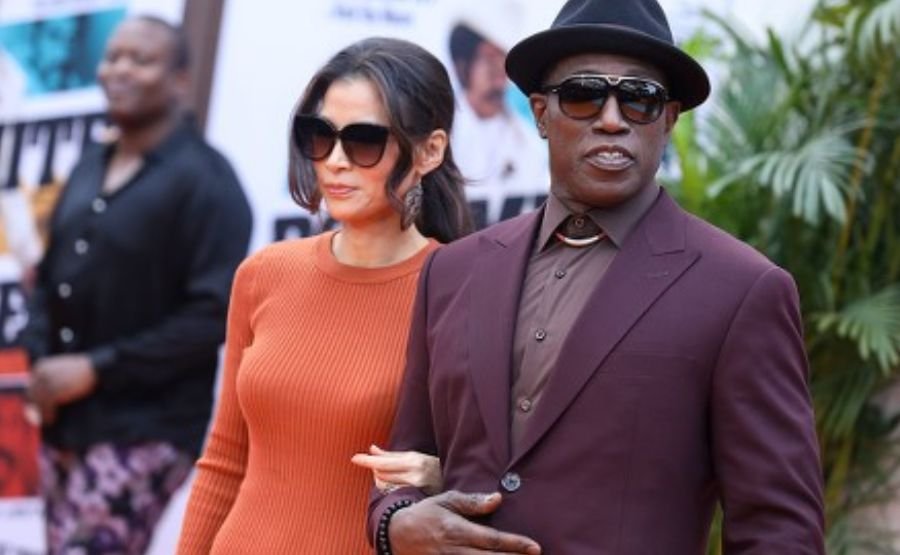
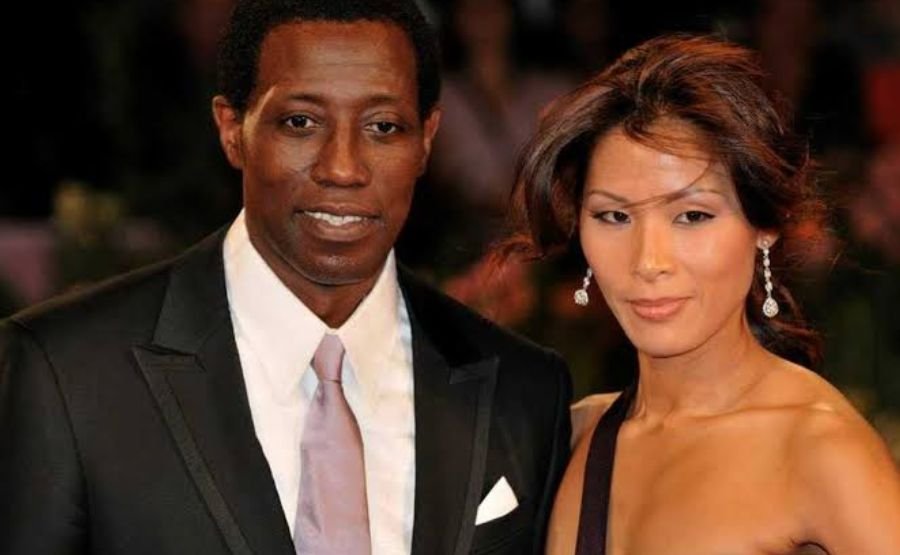
She continues to paint. She maintains her artistic practice with the same quietness that has characterized it throughout her public life. She and Wesley continue to be photographed together occasionally at events — they appeared at the Los Angeles premiere of Netflix’s Dolemite Is My Name in 2019, a rare public appearance that placed both of them in the social world of an industry that Wesley remains connected to.
She has no confirmed active public social media presence. She does not give interviews. She has not written a memoir or pursued any of the public visibility that being married to a major Hollywood figure for over two decades could theoretically enable.
Final Words
Nakyung Park’s life is one that resists the templates most people reach for when describing the spouse of a celebrity. She is not a failed starlet who found stability through marriage. She is not a trophy wife whose reputation is solely based on her closeness to celebrities. She is not a victim defined by the legal crisis that swept through her family in the 2010s.
She is a woman who grew up in a South Korean household shaped by the media industry, moved to Canada as a teenager, built a technical education in graphic design, developed a parallel practice in painting and visual art, moved to the United States, raised four children through deeply difficult circumstances, kept her family intact across a husband’s federal imprisonment, and maintained a creative practice with quiet consistency across all of it.
The fact that so little about her has been formally documented is itself a statement — one she has made deliberately, over many years, by simply not participating in the machinery of celebrity self-presentation. She is more than the searches that find her. She just doesn’t particularly care whether the searches know that.
That’s a form of independence, quietly maintained, that is arguably more interesting than the fame it refuses.
FAQs
1. Who is Nakyung Park?
Nakyung Park, also known as Nikki Park, is a South Korean-American painter, graphic designer, and artist born on September 1, 1977, in Seoul, South Korea. She is best known publicly as the wife of American actor Wesley Snipes, whom she married in 2003. She is also the daughter of Park Cheol, a prominent South Korean broadcasting executive who directed programming at the Munhwa Broadcasting Corporation (MBC) during the 1980s and 1990s.
2. Where was Nakyung Park born and raised?
She was born in Seoul, South Korea, and spent her early childhood there. During her adolescence, her family relocated to Vancouver, Canada, where she attended school and eventually enrolled at Vancouver Island University. She later moved to the United States after her relationship with Wesley Snipes developed.
3. What does Nakyung Park do professionally?
Her primary professional identity is as a painter. She has worked throughout her adult life as a visual artist, with painting as her central practice. She has also applied her graphic design training from Vancouver Island University professionally, and has worked as a makeup artist. In 2011, she appeared in a South Korean film called Beautiful Miss Jin, indicating that acting is an occasional dimension of her creative life as well.
4. Who is Nakyung Park’s father?
Her father is Park Cheol, a South Korean entertainment executive who served as a director at Munhwa Broadcasting Corporation (MBC), one of South Korea’s major television networks. He was involved in producing hit Korean television shows during the late 1980s through the 1990s, a period when Korean television was developing the creative infrastructure that would eventually produce globally recognized content. Park Cheol is described in sources as having passed away, making him Nakyung’s late father.
5. How did Nakyung Park meet Wesley Snipes?
They met around 2000 through a shared interest in the arts. In addition to his acting profession, Wesley Snipes possesses a Bachelor of Fine Arts from the State University of New York at Purchase. The two connected through that common creative orientation, began dating around 2000, and lived together before marrying in 2003.
6. When did Nakyung Park and Wesley Snipes get married?
They married on March 17, 2003, in a civil ceremony at the county courthouse in Hackensack, New Jersey. The wedding was a quiet, private affair rather than a celebrity event, consistent with how Nakyung has approached her public profile throughout their marriage.
7. How many children does Nakyung Park have?
She and Wesley Snipes have four children together: Iset Jua-T Snipes (born July 31, 2001), Akhenaten Kihwa-T Snipes (born around 2000), Alaafia Jehu-T Snipes (born around 2004), and Alimayu Moa-T Snipes (born March 26, 2007). Wesley also has a son named Jelani Asar Snipes from his first marriage. The naming pattern for their children draws on Egyptian and African linguistic traditions, reflecting a Pan-African cultural identity that has been part of Wesley Snipes’ personal philosophy.
8. What happened during Wesley Snipes’ imprisonment, and how did Nakyung cope?
Wesley Snipes was convicted in 2008 on misdemeanor tax charges and sentenced to three years in prison. He began serving his sentence in December 2010 at the Federal Correctional Institution McKean in Pennsylvania and was released on April 2, 2013. Nakyung managed the family household with four young children throughout that period, maintaining stability for the family without seeking public attention or sympathy for her own experience. Wesley has said publicly that the prison years deepened his appreciation for his family.
9. What is Nakyung Park’s net worth?
Her net worth is estimated at between $500,000 and $1 million, based on multiple independent sources. This reflects her earnings from painting, graphic design, and related creative work over the course of her career. Wesley Snipes’ net worth is separately estimated at approximately $10 million. Nakyung has built her financial identity through her own professional work rather than through media appearances or other celebrity-adjacent income streams.
10. Has Nakyung Park appeared in any films?
Yes. She appeared as an actress in Beautiful Miss Jin (미스 진의 행방), a South Korean film released in 2011. This appears to be her most documented film credit. Acting represents an occasional rather than consistent dimension of her work — her primary creative identity remains that of a visual artist.
11. Does Nakyung Park have social media?
No confirmed active public social media accounts are known to exist for Nakyung Park. She maintains a very private presence consistent with how she has conducted her public life throughout her marriage to Wesley Snipes. Information about her circulates primarily through coverage of her husband and family rather than through any platform she has constructed for herself.
12. Where do Nakyung Park and Wesley Snipes live now?
Since Wesley Snipes has been linked to a home in the Orlando region, it is thought that they are based in Florida. Wesley has frequently described South Korea as his “second home” due to his wife’s cultural roots and their family’s ongoing connection to the country. As of 2026, they remain married and continue to maintain the same private lifestyle that has characterized their life together since the early 2000s.