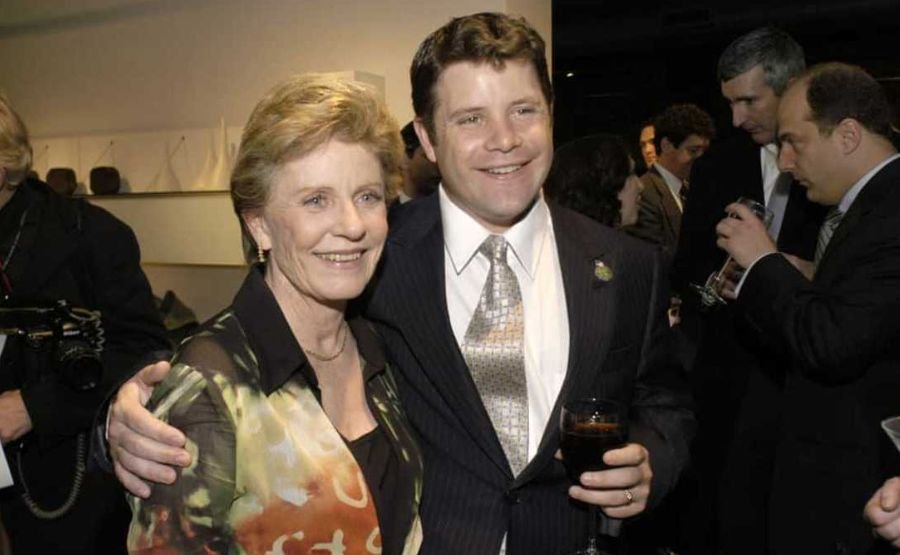
Patty Duke and Michael Tell: Thirteen Days That Changed Everything
Quick Bio
| Patty Duke | Michael Tell | |
| Full Name | Anna Marie Duke | Michael Tell |
| Born | December 14, 1946, Elmhurst, Queens, New York | c. 1944 (exact date not public) |
| Died | March 29, 2016, Coeur d’Alene, Idaho | c. 2024 (reported; unconfirmed exact date) |
| Nationality | American | American |
| Occupation | Actress, author, mental health advocate | Rock music promoter |
| Known For | Oscar for The Miracle Worker (1962); The Patty Duke Show; mental health advocacy | 13-day union with Sean Astin’s biological father, Patty Duke |
| Marriage to Each Other | June 26 – July 9, 1970 (annulled; 13 days) | Same |
| Children | Sean Astin (b. 1971); Mackenzie Astin; Kevin (adopted) | Sean Astin (biological; confirmed via DNA) |
| Patty’s Other Marriages | Michael Pearce (1986–2016), John Astin (1972–85), and Harry Falk (1965–69) | Nelcy Tell (later marriage) |
| Patty’s Key Awards | Oscar (1963); 3 Emmy Awards; Screen Actors Guild Award | — |
Two People, One Impossible Summer
You have to picture Hollywood in the summer of 1970 to understand what brought Patty Duke and Michael Tell together. The old studio system had collapsed. The counterculture was everywhere. A young woman with an Oscar on her shelf and a childhood full of scars was navigating her mid-twenties with no psychological diagnosis, no real support, and no one around her who fully understood what was happening inside her mind.
Michael Tell was, in almost every way, the wrong man at the wrong moment. He was a rock music promoter — someone who moved through Los Angeles’s entertainment periphery rather than its center, someone whose name meant very little in the world Patty inhabited. They knew each other for barely weeks. They were married for thirteen days.
And yet that fortnight in June and July of 1970 produced consequences that neither of them could have predicted: a son who would become one of Hollywood’s most beloved actors, a DNA mystery that took decades to resolve, and a biographical footnote that permanently attached Michael Tell’s name to one of the most extraordinary careers in American entertainment history.
This is the story of both of them. It requires understanding who Patty Duke was before that summer — and who she was still becoming.
Anna Marie: A Childhood That Wasn’t Hers
The girl who would become Patty Duke was born Anna Marie Duke on December 14, 1946, in Elmhurst, Queens — a working-class neighborhood in a borough full of them. Her father, John Patrick Duke, drove cabs and did odd jobs as a handyman. Her mother, Frances Margaret McMahon Duke, worked as a cashier. Neither parent was equipped for what the family required. Her father drank. Her mother suffered from clinical depression that tipped periodically into violence. When Anna Marie was six years old, Frances put her husband out of the house for good.
By the time Anna Marie was eight, her mother had made another decision: she turned her daughter over to talent managers John and Ethel Ross, who had already been managing her brother Raymond. The Rosses were looking for a girl to add to their stable. Anna Marie fit what they needed.
What happened next is one of the more quietly disturbing stories in the history of Hollywood child performers. The Rosses didn’t simply manage Anna Marie — they consumed her. They renamed her. “Anna Marie is dead,” they told the child. “You’re Patty from now on.” In part, they wanted her to be as successful as actress Patty McCormack, which is why they gave her the name Patty. They moved her into their home. They controlled her diet, her schedule, her relationships, her access to her own family. She was fed alcohol. She was subjected to abuse. She was, in every meaningful sense, a child without the adult protection that children require.
The professional results were impressive. The personal cost was incalculable.
See also “Eli Kay Oliphant: The Lawyer Who Let His Work Do the Talking“
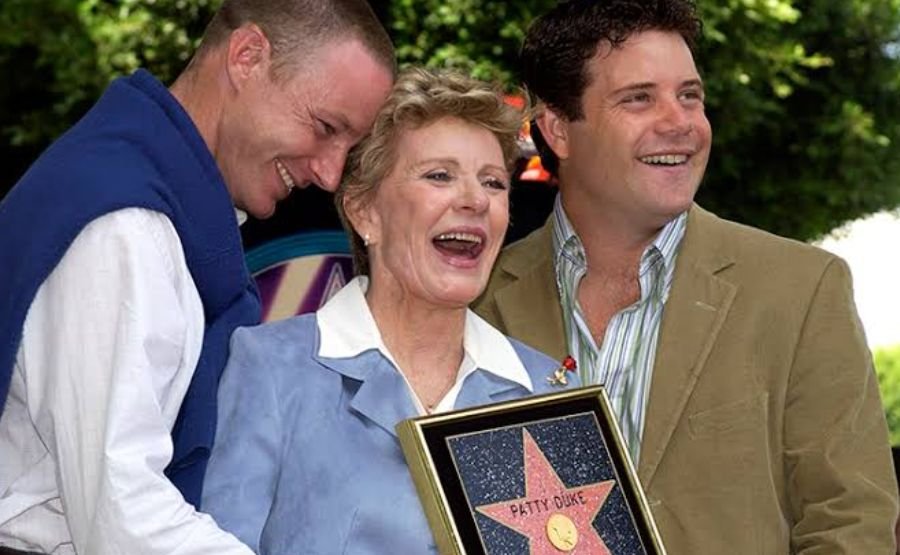
The Miracle Worker: When Everything Changed
Patty Duke was fourteen years old when she first stepped into the role that would define a generation’s understanding of her talent: Helen Keller in The Miracle Worker, the Broadway drama about the blind and deaf girl from Alabama and the teacher who broke through to her. The drama was performed between 1959 and 1961. Anne Bancroft played Annie Sullivan, the teacher. Patty played the young Keller with an intensity that stopped audiences cold.
When the film version was made in 1962, both Bancroft and Patty reprised their roles. The film director was Arthur Penn. The result was cinema history. Patty’s performance as Helen Keller won her the Academy Award for Best Supporting Actress in 1963. She was sixteen years old. It was the youngest anyone had ever won an Oscar — a record that would stand for a decade until Tatum O’Neal broke it in 1974.
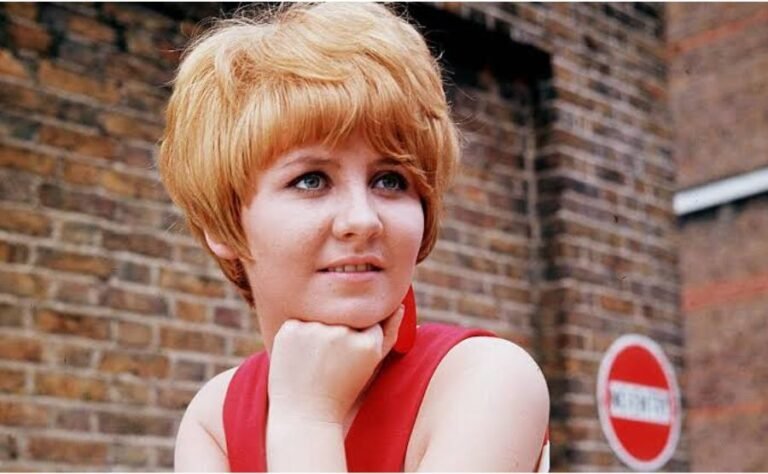
The photograph of Patty Duke at the Academy Awards ceremony — young, radiant, holding the Oscar like she wasn’t quite sure what to do with it — captured a moment On the exterior, everything appeared victorious, but on the inside, it was much more complex. She was still living under the Rosses’ control. She was still a child in almost every real sense. The Oscar was hers; the life surrounding it wasn’t.
The Patty Duke Show launched on ABC in September 1963 and ran for three seasons. It was a teen sitcom built around a clever conceit: Patty played dual roles — American teenager Patty Lane and her British cousin Cathy, identical in appearance but opposite in personality. It was upbeat, hugely popular, and won her nominations for an Emmy. It was also, for someone carrying the psychological weight she was carrying, an extraordinary amount of professional performance to sustain.
She was finally free of the Rosses by the mid-1960s, when she reached adulthood and their management arrangement ended. In 1965, she wed director Harry Falk. That marriage lasted until 1969. And then came the year that changed everything — 1970.
The Year Everything Spun Out: Enter Michael Tell
By June 1970, Patty Duke was twenty-three years old and in a state that she would later describe, after her eventual diagnosis, as a severe manic episode. She was simultaneously involved with three men: Desi Arnaz Jr., the seventeen-year-old son of Lucille Ball, who was then appearing in Here’s Lucy; actor John Astin, a married man sixteen years her senior; and Michael Tell, a rock promoter whose exact background was murky even to people close to Patty at the time.
Tell was of Austrian and Polish descent, someone who moved through the fringes of the music industry, promoting concerts and managing the logistics of live entertainment. He was not famous. He was not wealthy. By most accounts, including Patty’s own in her memoir, he was more a passing acquaintance than a significant relationship when June arrived.
According to Call Me Anna, Patty’s 1987 autobiography, she encountered Tell in the lobby of the Sierra Towers apartment building in Los Angeles, where she was living. He was inquiring about subletting an apartment. They talked. Something clicked — or something that felt like clicking, which is not always the same thing during a manic episode.
Within weeks, Patty discovered she was pregnant. The pregnancy was the moment of crisis. She was unaware of the father’s identity. She did know — in the particular way that social anxiety about her child’s legitimacy crystallized into an urgent, irrational imperative — that she wanted her baby to have a father’s name on the birth certificate.
She chose Michael Tell.
Thirteen Days: June 26 to July 9, 1970
The wedding took place at the Little Church of the West in Las Vegas — the kind of wedding chapel that specializes in the spontaneous, the impulsive, and the romantic without necessarily distinguishing between the three. The date was June 26, 1970. They used a borrowed ring.
What followed was not a marriage in any conventional sense of the word. Patty later described the union as never having been consummated. Both parties understood, on some level, that the institution they’d just entered bore no resemblance to what the word “marriage” typically implied. The arguments started quickly. According to one account, after a particularly bitter fight, Patty simply told Tell to leave her apartment — told him the marriage was insane, that they both needed to acknowledge what had happened and undo it.
The annulment was filed in early July. On July 9, 1970 — thirteen days after the wedding — it was done. Michael Tell was no longer Patty Duke’s husband. In legal terms, the marriage was treated as though it had never fully existed.
Michael Tell walked away. He did not give interviews. He did not try to profit from the connection. He did not pursue a relationship with Patty or with the child she was carrying. He returned to the life he’d been living before June and made no attempt to capitalize on a brief brush with celebrity adjacency. For a brief and chaotic moment, he had been at the center of a very famous woman’s crisis. He chose to step back to the edge of it.
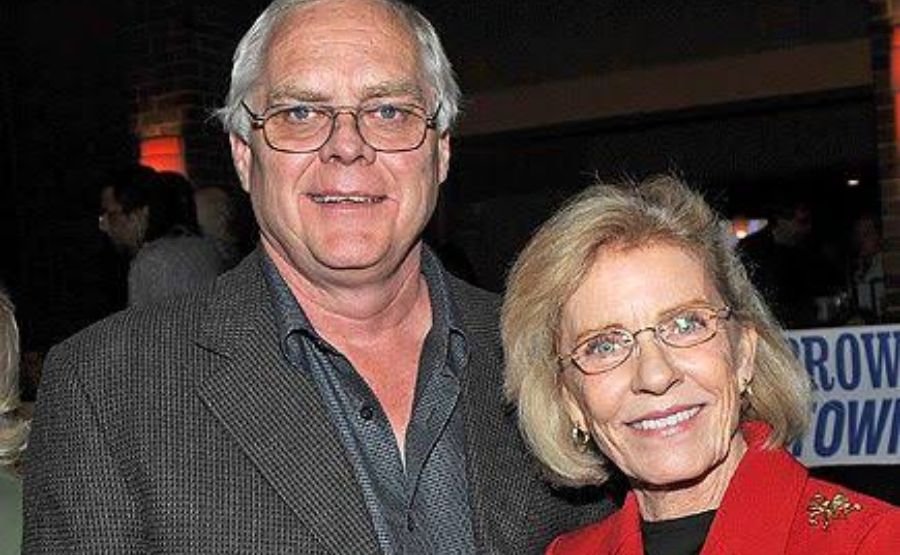
Sean Astin: The Question That Lasted Decades
Patty’s son Sean was born on February 25, 1971. At the time, the prevailing belief — in Patty’s own mind, in her social circle, and eventually in her 1987 memoir — was that Desi Arnaz Jr. was the biological father. Arnaz and Patty had been romantically involved before and during the turbulent summer of 1970. Patty stated in Call Me Anna that she believed Arnaz to be the father, and that the marriage to Tell had been about giving the baby a name rather than acknowledging any biological certainty.
John Astin, who married Patty in 1972, legally adopted Sean. The boy grew up as Sean Astin. He became an actor. He played Samwise Gamgee in Peter Jackson’s Lord of the Rings trilogy — one of the most beloved performances in blockbuster cinema history.
And then, in the 1990s, Sean pursued a DNA test.
The result overturned everything. The biological father was not Desi Arnaz Jr. It was Michael Tell.
The man who had been married to Patty Duke for thirteen days in the summer of 1970 — who had walked away without giving interviews, without seeking attention, without appearing to have left any mark at all — turned out to have left the most permanent possible mark. One of the most well-known actors in Hollywood was his biological son.
Sean Astin has spoken publicly about the discovery and about his relationship with his biological father. The DNA confirmation settled the scientific question without necessarily resolving the emotional one. John Astin — who had raised Sean, whose name he carried — remained the father who had actually been there.
Patty Duke’s Larger Life: From Crisis to Champion
The thirteen-day marriage to Michael Tell was one episode — a consequential one, but one — in a life of extraordinary range and complexity. The years that followed 1970 brought both the most crushing difficulties of Patty’s life and its most meaningful work.
She married John Astin in 1972. They had a son together, Mackenzie, who also became an actor. The marriage lasted until 1985 — thirteen years that coincided with the period of her most severe untreated mental illness. In 1982, she was finally diagnosed with bipolar disorder, and that diagnosis changed everything.
With a name for what she’d been experiencing, with medication that actually worked, with a framework for understanding the manic episodes and the depression and the chaotic decision-making that had characterized her adult life, Patty Duke became a different kind of public figure. In 1987, she penned Call Me Anna, an incredibly honest memoir that detailed her exploitation as a kid, her untreated mental illness, and the personal tragedies that followed. She followed it with A Brilliant Madness: Living with Manic Depressive Illness in 1992.
She became, in the last three decades of her life, one of the most prominent public advocates for mental health awareness in the United States. She lobbied Congress. She spoke publicly about bipolar disorder in terms that were specific, honest, and compassionate. She used her particular combination of fame, credibility, and personal experience to reach audiences that clinical literature couldn’t touch.
She married Michael Pearce, a drill sergeant, in 1986, and they remained together until her death. She also served as President of the Screen Actors Guild from 1985 to 1988, bringing the same directness she brought to everything else.
Patty Duke died on March 29, 2016, in Coeur d’Alene, Idaho, from sepsis caused by a ruptured intestine. She was sixty-nine years old. Her son Sean Astin announced her death with a statement that described her as a “matriarch and exquisite artist, humanitarian and champion in the fight for mental health.”
She had lived, by any measure, an enormous life.
Michael Tell: What Happened Afterward
Michael Tell never sought the spotlight that his connection to Patty Duke might have offered. He appears, in every available account, to have been someone who preferred anonymity — not because he had something to hide, but because anonymity was simply what he wanted.
He later wed Nelcy Tell, and in the decades that followed the well-known thirteen-day marriage, he seems to have led a tranquil life. He did not write a book. He did not give a tell-all interview. He did not appear on talk shows to discuss his brief encounter with Hollywood royalty. He did not acknowledge paternity of Sean Astin until the DNA testing of the 1990s made the biological question answerable in a way that Patty’s 1987 memoir had not.
Reports from 2024 suggested that Michael Tell had died, though the exact date and circumstances were not confirmed in mainstream sources as of early 2026. He lived, by one account, to approximately eighty years of age — a quiet life, long outlasting the thirteen-day marriage that most people would consider its most notable feature.
Money: An Honest Assessment of Both
Patty Duke’s net worth at the time of her death was estimated at approximately $10 million — built across a career that included Broadway, film, television, three Emmy Awards, book royalties, and decades of paid speaking and advocacy work. Her estate passed to her husband Michael Pearce and her sons.
Michael Tell’s financial profile is essentially undocumented. Rock music promotion in the early 1970s was not a path to significant wealth, and nothing in the subsequent public record suggests that Tell accumulated notable assets. He received no financial benefit from the Astin connection. He appears to have lived a working-class or modest middle-class life — the kind that generates no financial coverage because there is nothing to cover.
Final Words
The story of Patty Duke and Michael Tell is, at its core, a story about thirteen days that nobody could have predicted would matter so much.
For Michael Tell, those thirteen days became the organizing fact of his public biography — a brief intersection with a famous life that he didn’t seek and didn’t profit from, but that permanently attached his name to hers. He handled that connection with a quiet dignity that, frankly, deserves more recognition than it typically receives. He didn’t exploit it. He simply went back to his own life.
For Patty Duke, those thirteen days were one chapter in a life that spanned extraordinary highs and devastating lows — an Oscar at sixteen, a childhood of exploitation, a decade of undiagnosed mental illness, four marriages, and eventually a diagnosis and a transformation into one of America’s most effective mental health advocates. The marriage to Tell was a symptom of the illness that hadn’t yet been named. What she built afterward — the clarity, the advocacy, the honesty about what she’d experienced — was something else entirely.
The thirteen days don’t define either of them. But they’re woven permanently into both stories. And that thread lives on in the name and face of the kid they had together, Sean Astin, who is adored by millions of people who will never learn this history. and his career, every time someone watches The Lord of the Rings and sees Samwise Gamgee refuse to abandon his friend.
See also “Eli Kay Oliphant: The Lawyer Who Let His Work Do the Talking“
FAQs
1. Who was Patty Duke?
Patty Duke was an American actress, author, and mental health advocate born Anna Marie Duke on December 14, 1946, in Elmhurst, Queens, New York. She won the Academy Award for Best Supporting Actress in 1963 for playing Helen Keller in The Miracle Worker — at sixteen, she was the youngest Oscar winner in history at that time. She won three Emmy Awards, appeared in The Patty Duke Show, and eventually rose to prominence as a public advocate for bipolar disorder awareness. She died on March 29, 2016.
2. Who was Michael Tell?
Michael Tell was an American rock music promoter of Austrian and Polish descent, best known for his thirteen-day marriage to Patty Duke in 1970. He later became biologically significant as the confirmed father of actor Sean Astin, a fact established through DNA testing in the 1990s. He lived a private life before and after his brief connection to Patty Duke and avoided public attention throughout. He died in approximately 2024.
3. How did Patty Duke and Michael Tell meet?
According to Patty Duke’s 1987 memoir Call Me Anna, they met in June 1970 at the Sierra Towers apartment building in Los Angeles, where Tell was inquiring about subletting an apartment. She overheard him speaking with building staff, and a brief encounter developed into a fast-moving connection during an extremely turbulent period in her personal life.
4. Why did they marry so quickly?
Patty had recently discovered she was pregnant and wanted her child to have a father’s name. She later described the decision as taking place during a severe manic episode — she had been diagnosed with bipolar disorder in 1982, and her 1970 behavior reflected the untreated illness. The marriage was impulsive rather than romantic, driven by crisis rather than genuine emotional attachment.
5. How long did the marriage last?
Exactly thirteen days. They married on June 26, 1970, at the Little Church of the West in Las Vegas, and the marriage was annulled on July 9, 1970. Patty later described it as a marriage that was never consummated and that both parties recognized almost immediately was a mistake.
6. Who is Sean Astin and how is he connected to both of them?
Sean Astin — famous for playing Samwise Gamgee in Peter Jackson’s Lord of the Rings trilogy — was born to Patty Duke on February 25, 1971. For decades, it was believed that Desi Arnaz Jr. was his biological father. DNA testing in the 1990s established that Michael Tell was in fact his biological father. Sean was raised by John Astin, who married Patty in 1972 and legally adopted him, which is why Sean bears the Astin surname.
7. What was Patty Duke’s childhood like?
It was genuinely difficult. Her father was an alcoholic and her mother suffered from clinical depression and periods of violence. When Patty was six, her father was forced out of the home. At eight, she was transferred to the care of talent managers John and Ethel Ross, who renamed her, exploited her professionally, moved her into their home, and subjected her to various forms of abuse including being given alcohol. She was essentially separated from her own identity as a child.
8. What was Patty Duke’s most famous role?
Her most celebrated role was Helen Keller in The Miracle Worker — first on Broadway from 1959 to 1961, then in the 1962 film adaptation directed by Arthur Penn. The film role won her the Academy Award for Best Supporting Actress when she was sixteen, making her the youngest Oscar winner to that point.
9. Was Patty Duke diagnosed with a mental illness?
Yes. In 1982, she was diagnosed with bipolar disorder — a diagnosis that reframed her understanding of her entire adult life, explaining the manic episodes, the chaotic decision-making including the Tell marriage, and the depressions that had characterized her years. She wrote about her experience in Call Me Anna (1987) and A Brilliant Madness: Living with Manic Depressive Illness (1992), and became one of the most prominent mental health advocates in America.
10. Who else did Patty Duke marry?
She married four times in total. Her first marriage was to film director Harry Falk, which lasted from 1965 to 1969. Michael Tell was the second, lasting thirteen days in 1970. John Astin — father of Mackenzie Astin and adoptive father of Sean — was her third husband, married from 1972 to 1985. Her fourth and final marriage was to drill sergeant Michael Pearce in 1986, who remained her husband until her death in 2016.
11. What did Michael Tell do after the marriage?
He returned to private life almost immediately. He gave no interviews, sought no attention, and made no attempt to profit from his connection to Patty Duke. He later married a woman named Nelcy Tell. He surfaced briefly in public consciousness when Sean Astin’s DNA testing confirmed his paternity in the 1990s, but even then he did not seek a public profile. By most accounts he lived quietly until approximately 2024.
12. How did Patty Duke die?
Patty Duke died on March 29, 2016, in Coeur d’Alene, Idaho, from sepsis caused by a ruptured intestine. She was sixty-nine years old. Her son Sean Astin announced her death and described her as a beloved mother, grandmother, matriarch, and champion in the fight for mental health awareness.
Explore stories that inspire curiosity with The Imperial Magazine.