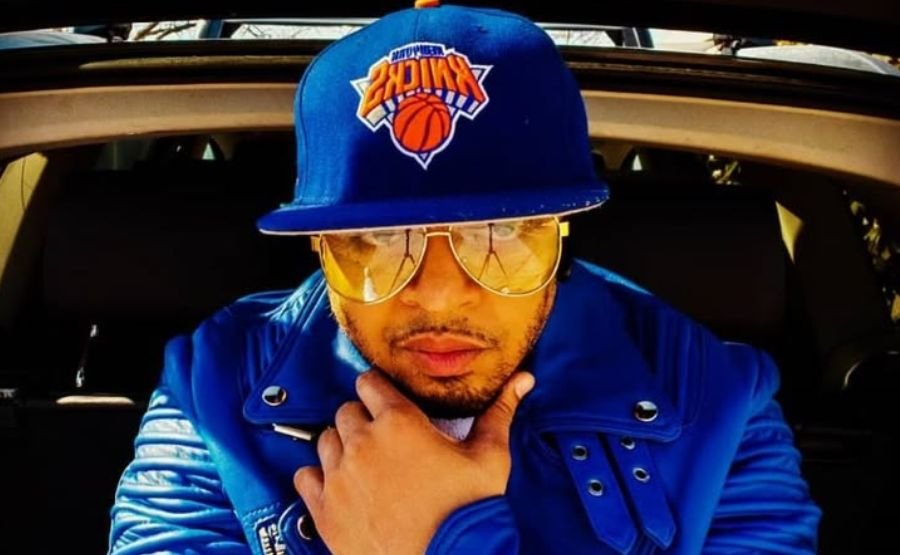
Hassan Campbell: Speaking the Unspeakable From the Bronx to the Internet
Quick Bio
| Detail | Information |
| Full Name | Hassan “Poppy” Campbell |
| Born | August 3, 1976, United States |
| Nationality | American |
| Ethnicity | Mixed (Mexican and other heritage) |
| Occupation | YouTuber, content creator, author, community advocate |
| Known For | Abuse allegations against Afrika Bambaataa; raw street-life commentary on YouTube |
| YouTube Channel | HASSAN CAMPBELL (launched January 8, 2013; ~373,000–500,000 subscribers) |
| Height | 5 feet 4 inches (1.63 m) |
| Nickname | “Poppy” |
| Estimated Net Worth | Approximately 400,000–1 million |
| Former Marriage | LeeLee (approx. 25 years; dissolved around 2021) |
| Upcoming Project | Trapped in a Culture (documentary; post-production) |
A Voice That Refuses to Be Quiet
There’s a certain kind of person who the internet was probably built for, even if nobody planned it that way. Someone who has seen too much and held it in too long and finally finds a camera pointed at their face and just starts talking. Unfiltered. Unpolished. And unmistakably real.
Hassan Campbell is that kind of person.
He grew up in the Bronx River Houses — one of New York City’s tougher public housing complexes — surrounded by poverty, addiction, absence, and violence. He got pulled into street life young. He carried the kind of secrets that eat people alive. And for a long time, the world had no idea who he was.
Then he started talking.
What he said — about his own childhood, about crimes he committed, about things that were done to him by people who were celebrated and protected — made people uncomfortable. It still does. But uncomfortable is sometimes the only honest option available. And Hassan Campbell has built his entire public identity on the idea that honesty, however ugly, matters more than comfort.
The Bronx River Houses: Where It All Started
The Bronx River Houses sit in the Soundview neighborhood of the South Bronx, along the Bronx River Parkway. They were, for decades, a central gathering point for hip-hop’s early culture. They were also, for many of the families who lived there, a daily struggle against poverty, drugs, and institutional neglect.
Hassan was born into that world on August 3, 1976. His household was defined by instability. His father was absent — a fact that left a wound that Hassan has spoken about openly many times over the years, because that wound shaped almost every decision he made as a young person. When there is no father in the house, other men fill the gap. Sometimes those men are good. Sometimes they are predators who understand exactly which children are vulnerable.
His mother battled mental illness throughout his childhood, another layer of difficulty on top of everything else. Hassan has mentioned having five siblings, suggesting a large and complicated household trying to survive on very limited resources. Substance abuse was part of the picture too — alcohol and drugs wove through the fabric of his early home life in ways that children shouldn’t have to navigate.
This wasn’t a childhood of opportunities. It was a childhood of exposure — to the worst that people can do to each other and to themselves.
See also “Scott Gerald Borgerson: The Maritime Mind Who Got Caught Between Two Worlds“
Education: What the Streets Taught Him
Hassan has deliberately kept the specifics of his formal education private, and given everything else about his early life, that makes a certain kind of sense. Schooling in environments like the Bronx River Houses in the late 1970s and 1980s was often an afterthought — something that happened between more urgent demands.
What Hassan actually learned during those years was a different curriculum entirely: the social codes of street life, the geography of danger and loyalty, how to read people quickly, and how to survive in conditions that most people never encounter. That education, brutal as it was, became the raw material for everything he would later do.
He was drawn into gang activity as a teenager. He has been candid on his YouTube channel and in podcast appearances about his involvement in serious criminal behavior, including violence that resulted in deaths. On DJ Akademiks’ Off the Record podcast in 2022, he addressed this directly — and publicly apologized to the families of the people who were killed during those years. That apology is unusual. Most people in his position either deny or minimize. Hassan did neither.
He eventually served prison time, an experience that, combined with everything that preceded it, would become central to how he later understood and spoke about the system that shaped him.
Becoming “Poppy”: Street Life and Its Consequences
Hassan’s street name was “Poppy” — a nickname that stuck through his years in the Bronx and eventually became part of how he presents himself publicly. It’s the kind of name that has history attached to it, and Hassan has never tried to erase that history.
During his years in the streets, he was embedded in the world of the Bronx River Houses, which meant proximity to one of hip-hop’s founding figures: Afrika Bambaataa, the DJ and community organizer who created the Universal Zulu Nation and is widely credited as one of the architects of hip-hop culture. Bambaataa was a towering presence in that neighborhood. He ran block parties, organized youth, and cultivated a reputation as someone who channeled street energy into something creative and community-oriented.
He also, according to Hassan and multiple other men who eventually came forward, sexually abused young boys from the neighborhood over the course of many years.
Hassan has stated that the abuse began when he was around twelve or thirteen years old. Bambaataa had positioned himself as a father figure — exactly the role Hassan was most desperate to find, given his father’s absence. He provided food, money, a place to stay. He built trust. And then he used that trust in ways that constituted criminal predation.
The abuse, Hassan has said, was not a secret among those close to Bambaataa. It was an open secret, sustained by the fact that many people in Zulu Nation depended on Bambaataa financially and couldn’t afford to challenge him. Hassan eventually confronted Bambaataa directly through senior Zulu Nation members, received what he describes as an admission of guilt and a promise to seek help, and initially kept quiet on the basis of that promise. When Bambaataa failed to follow through, that silence became impossible to maintain.
Going Public: The Accusations That Changed Everything
In 2016, Hassan Campbell became the public face of a wave of allegations against Afrika Bambaataa that shook the hip-hop world. He spoke to The New York Daily News, to VICE, to various media outlets, describing what Bambaataa had done to him and asserting that the abuse was far wider in scope — affecting, by his estimate, dozens of young men from the Bronx River Houses.
“He likes little boys,” Hassan said plainly, in a statement that became widely quoted. There was no careful PR-speak in it. No softening. Just the unvarnished accusation of a man who had decided he was done staying quiet.
Other accusers came forward alongside Hassan and separately. The cumulative weight of the allegations forced Bambaataa to step down from his leadership position within the Universal Zulu Nation in May 2016. The organization that had been central to his legacy was rocked. Hip-hop, which had long treated Bambaataa as an untouchable foundational figure, was forced into an uncomfortable reckoning.
Hassan received both support and intense backlash. Some people praised his courage. Others — particularly those with loyalties to Bambaataa or to the Zulu Nation — attacked his credibility, accused him of chasing attention, and attempted to discredit his account. The accusation of being a “clout chaser” has followed him throughout his public career, and he has addressed it repeatedly, pointing to the years he spent keeping the abuse private before finally speaking out.
Afrika Bambaataa died in April 2026. When the news broke, Hassan posted a video on Facebook delivering what he described as a final statement — one that made clear his feelings about Bambaataa had not softened with time or with death.
The YouTube Chapter: Building an Audience from Scratch
Hassan launched his YouTube channel on January 8, 2013, years before the Bambaataa accusations broke publicly. His first video was apparently about a dog — low-stakes, unremarkable, the beginning of most content creators’ journeys before they find their voice.
What he found his voice talking about was everything he had lived through. Street culture. Gang life. The prison system. Absent fathers. Child predation in communities that protect reputations over victims. Hip-hop’s relationship with violence. The specific economics of poverty in public housing. These are not light topics, and Hassan has never treated them as such.
His style is confrontational and intimate simultaneously. He speaks directly to the camera the way he might speak to someone he’s known for years. He interrupts himself. He circles back. He gets emotional. He’s funny in a dark way that comes from having processed terrible things and found the only exit through humor. None of it feels manufactured, which is precisely why it works.
The Bambaataa news in 2016 brought a surge of attention to his channel. After his 2022 appearance on DJ Akademiks’ Off the Record podcast — one of the most widely consumed hip-hop media platforms in existence — his profile expanded further, reaching audiences who hadn’t previously encountered him.
As of 2025, his subscriber count sits somewhere in the range of 373,000 to just under 500,000, with individual videos regularly pulling six-figure view counts. He has also published a book, Pain of the Orphan (2020), which extends his storytelling into long-form written territory, drawing on his survival experiences to offer something useful to young people facing similar circumstances.
Marriage, Family, and Personal Turbulence
Hassan was married to a woman known publicly as LeeLee for approximately twenty-five years — a remarkably long commitment given everything else going on in his life during that period. The marriage ended around 2021, and Hassan addressed the dissolution publicly in a video that received significant attention.
The circumstances surrounding the end of the marriage were complicated. There were allegations — which Hassan denied — related to child welfare, and Child Protective Services became involved at some point during or after the breakdown of the relationship. Hassan made videos addressing these accusations directly, asserting that he had not mistreated his children and condemning what he characterized as false claims.
The details of exactly what happened, and how the family situation resolved, remain partially obscured — partly because Hassan himself has been selective about what he shares publicly regarding his children, and partly because domestic situations of this kind rarely have neat public records.
He appears to have children from his marriage, though he has maintained protective boundaries around their identities and circumstances, which is one of the few areas where he exercises the kind of restraint that is otherwise absent from his content.
In November 2023, Hassan was shot during a livestream. He had been on camera discussing the surge of lawsuits involving rapper Sean “Diddy” Combs when the incident occurred. He survived. A message posted on his behalf confirmed that he had gone into surgery and that there were no fatal wounds. The fact that the shooting happened during a livestream meant that it was captured, clipped, and circulated almost immediately — a surreal convergence of the violent world he came from and the digital world he now inhabits.
Money: What’s Real and What’s Estimated
Hassan Campbell’s finances are estimated rather than publicly confirmed. The figures that circulate — ranging from around $400,000 to as high as $1 million — reflect a combination of YouTube advertising revenue, proceeds from Pain of the Orphan, branded merchandise, Patreon-style supporter income, and whatever additional streams he has developed.
YouTube revenue, by platform estimates, would put his monthly earnings somewhere between a few hundred dollars at the low end and several thousand at the higher end, depending on traffic, advertiser rates, and the specific content of individual videos. Content that addresses sensitive or controversial topics can be demonetized, which affects creators whose subject matter sits on the edge of what platforms will monetize — and much of Hassan’s content sits exactly there.
He is not wealthy by any conventional celebrity measure. He lives in, or near, the Bronx River Houses — the same neighborhood where he grew up. That’s either a statement about loyalty to where he came from or simply a reflection of financial reality, and probably both.
What he does have is an audience that is genuinely invested in him — not as entertainment, exactly, but as someone who is saying things they believe need to be said, about communities that rarely receive this kind of unfiltered attention.
What He’s Doing Now
As of 2026, Hassan Campbell is still very much active. He continues to upload to YouTube regularly, maintaining his pattern of commentary on hip-hop news, community issues, and personal narrative. His documentary project Trapped in a Culture has been in post-production and remains anticipated by his audience as a more fully produced extension of everything he has discussed across years of videos.
He was reportedly involved in an encounter with police in 2024, connected to controversy around leaked audio involving podcaster Math Hoffa and subsequent legal threats. He has continued to engage publicly with whatever story in hip-hop or urban politics demands his attention.
The death of Afrika Bambaataa in April 2026 returned Hassan briefly to the center of a much larger conversation — reminding newer audiences of the allegations he made a decade ago and reigniting debate about how hip-hop culture handles accusations against foundational figures.
He lives the same life he has always lived, more or less: in the Bronx, on camera, saying what he thinks, without the buffer of a publicist or a legal team standing between his thoughts and the public record.
Final Words
Hassan Campbell is not an easy subject. He’s contradictory in ways that are genuinely uncomfortable — a man who has done serious harm and carries real guilt about it, who was also seriously harmed and carried that for decades before speaking. He is simultaneously a survivor, a perpetrator by his own admission, a community voice, a provocateur, and an accuser who was dismissed, attacked, and eventually — at least partially — vindicated.
What makes his story matter isn’t that it resolves neatly. It doesn’t. It’s that it represents the kind of life that most cultural commentary treats as a statistic rather than a story. The Bronx River Houses in 1976, 1986, 1996 — that’s a world with real people in it, making decisions under conditions most people never face, experiencing things that most people never acknowledge exist.
Hassan Campbell decided to put that world on camera. Unedited. has his own name on it.
That takes something. Call it courage, or compulsion, or the specific stubbornness of someone who has run out of reasons to stay quiet. Whatever it is, it has produced a decade-plus of content that, whatever its flaws, contains more raw truth about a specific corner of American life than most polished journalism ever manages.
He is, in the end, a man who refused to disappear into the silence that was expected of him. And that refusal, whatever else it has cost him, has made him impossible to ignore.
See also “Scott Gerald Borgerson: The Maritime Mind Who Got Caught Between Two Worlds“
FAQs
1. Who is Hassan Campbell?
Hassan Campbell, also known by his street name “Poppy,” is an American YouTuber, author, and community advocate born on August 3, 1976. He grew up in the Bronx River Houses in New York City and is best known for publicly accusing hip-hop pioneer Afrika Bambaataa of sexually abusing him as a child, and for his YouTube channel where he offers raw commentary on street culture, hip-hop, and urban community issues.
2. Where did Hassan Campbell grow up?
He was raised in the Bronx River Houses, a public housing complex in the Soundview neighborhood of the South Bronx in New York City. The area was historically significant in the development of hip-hop culture and was closely associated with Afrika Bambaataa and the Universal Zulu Nation.
3. What are Hassan Campbell’s allegations against Afrika Bambaataa?
Hassan has stated publicly that Afrika Bambaataa sexually abused him multiple times when he was approximately twelve or thirteen years old. He describes Bambaataa as having positioned himself as a father figure to boys from the neighborhood who lacked paternal stability, and then exploiting that relationship. He also claims the abuse was widespread and that it was known and covered up within Zulu Nation. He was one of several men who came forward publicly in 2016.
4. What happened to Afrika Bambaataa after the allegations?
Bambaataa stepped down from his leadership role in the Universal Zulu Nation in May 2016 following the wave of allegations. He died in April 2026. Hassan publicly commented on his death in a Facebook video, and the event reignited broader public discussion about Bambaataa’s legacy and the abuse allegations.
5. When did Hassan Campbell start his YouTube channel?
He launched his YouTube channel on January 8, 2013. His early content covered personal experiences and street life. His profile expanded significantly after the 2016 Bambaataa allegations drew wider attention, and again after his 2022 appearance on DJ Akademiks’ Off the Record podcast.
6. How many subscribers does Hassan Campbell have on YouTube?
His subscriber count is estimated at between 373,000 and just under 500,000, based on figures from 2024–2025 sources. His videos regularly accumulate significant views, particularly on topics connected to hip-hop controversies and personal storytelling.
7. Did Hassan Campbell write a book?
Yes. He published Pain of the Orphan in 2020. The book draws on his personal experiences growing up in the Bronx, including the trauma, street life, and survival strategies he developed. It was written partly as a resource for young people facing similar circumstances.
8. Was Hassan Campbell shot?
Yes. In November 2023, while conducting a livestream discussing lawsuits involving Sean “Diddy” Combs, Hassan was shot. He survived the incident and was taken into surgery. A message posted on his behalf confirmed he sustained non-fatal wounds. The shooting happened on camera and circulated rapidly across social media.
9. Is Hassan Campbell married?
He was married to a woman known publicly as LeeLee for approximately twenty-five years. The marriage ended around 2021. The breakup was accompanied by controversy, including allegations related to child welfare that Hassan publicly denied. As of available sources, he is not in a confirmed relationship.
10. What is Hassan Campbell’s net worth?
Estimates of his net worth range from approximately $400,000 to $1 million, depending on the source. His income comes from YouTube advertising revenue, book sales, merchandise, and supporter-based platforms. He is not considered wealthy by celebrity standards — he continues to live in or near the Bronx neighborhood where he grew up.
11. What is Trapped in a Culture?
Trapped in a Culture is a documentary project Hassan has been developing. As of late 2025, it was described as being in post-production. Based on his public references to it, the project is expected to explore the cultural dynamics and systemic issues of urban communities, building on the themes he has addressed throughout his YouTube career.
12. Why is Hassan Campbell controversial?
He is controversial for several overlapping reasons. He has admitted to involvement in serious crimes, including violence, during his years in street life. His style of commentary is aggressive and unfiltered, which earns him dedicated supporters and fierce critics simultaneously. Some people, including supporters of Afrika Bambaataa, have disputed his allegations or questioned his motives. Others have criticized specific things he has said or done on camera. He himself has acknowledged the complexity of his public identity and has not shied away from discussing his own past wrongdoing alongside the wrongs done to him.

2 Comments