Luther Gales: The Man Who Taught Harlem to Swim
Quick Bio
| Detail | Info |
| Full Name | Luther Gales |
| Born | Approximately 1940 — Harlem, New York City, USA |
| Died | Approximately 2025 (exact date not publicly confirmed) |
| Nationality | American |
| Occupation | Retired NYC Housing Police Officer; U.S. Marine Corps veteran; Synchronized swimming coach; Community youth swim instructor |
| Known For | Team president and assistant coach of the Harlem Honeys and Bears; featured in the 2023 documentary Unsyncable; lifelong mission to break the stereotype that Black people cannot swim |
| Military Service | United States Marine Corps (veteran) |
| Law Enforcement | NYC Housing Police Department (retired) |
| Awards | Police Olympics medals (1979–1987), multiple sports: cycling, triathlons, running, swimming; Senior Olympics ribbons (national level) |
| Legacy | Decades of free youth swimming instruction in Harlem; champion of water safety in Black communities |
A Life That Kept Moving
Here is something worth thinking about. A man grows up in Harlem during an era when most public pools in America are segregated, when the message given to Black children — quietly or loudly depending on where you stood — was that water was not for them. And that boy goes on to spend his entire adult life in the water.
He swims at nine. He serves his country. He spends decades as a police officer. He competes in triathlons, cycling events, marathons, and swimming races. He becomes the president of a synchronized swimming team. He teaches children to swim for free, every week, for more than a decade. He does all of this until his mid-eighties, when a documentary crew follows him to an artistic swimming championship and the world finally gets a proper look at who he has always been.
Luther Gales was not famous in the way that word usually gets used. He had no record deal, no film role, no startup. He had something harder to build and easier to underestimate: a life of consistent, purposeful service — to his country, to his city, to his community, and to the children who might drown without the thing he was willing to give them for nothing.
This is his story.
Born in Harlem: The Place That Shaped Him
Luther Gales was born and raised in Harlem, New York City, the neighbourhood in Upper Manhattan that has long been one of the most culturally significant Black communities in America. He arrived around 1940, which means his earliest childhood years overlapped with the final years of the Harlem Renaissance‘s cultural afterglow and the immediate postwar boom that followed.
Growing up in Harlem in the 1940s and 1950s meant growing up inside a community that was simultaneously rich in culture and constrained by structural inequality. Housing was often overcrowded. Opportunity was rationed. And across the United States, public swimming pools were among the most sharply segregated spaces in civic life. Municipal pools in many American cities were legally or informally closed to Black children. The idea that swimming was a “white sport” — or simply not something Black families did — was not an accident. It was a product of decades of exclusion deliberately engineered into public infrastructure.
Luther absorbed the world he grew up in and decided, somewhere along the way, to push against the parts of it that didn’t make sense.
He learned to swim when he was nine years old. That single fact matters more than it might appear. At a time when the statistical and cultural odds were stacked against young Black boys ever entering a pool, Luther Gales not only got in the water — he fell in love with it.
Details about his parents and early family life are not part of the public record. What the record shows is the man the childhood produced: disciplined, athletic, community-minded, quietly stubborn about the things he believed in.
See also “Jessica Matten: The Woman Who Changed What Indigenous Looks Like on Screen“
Service: The Marine Corps and the Housing Police
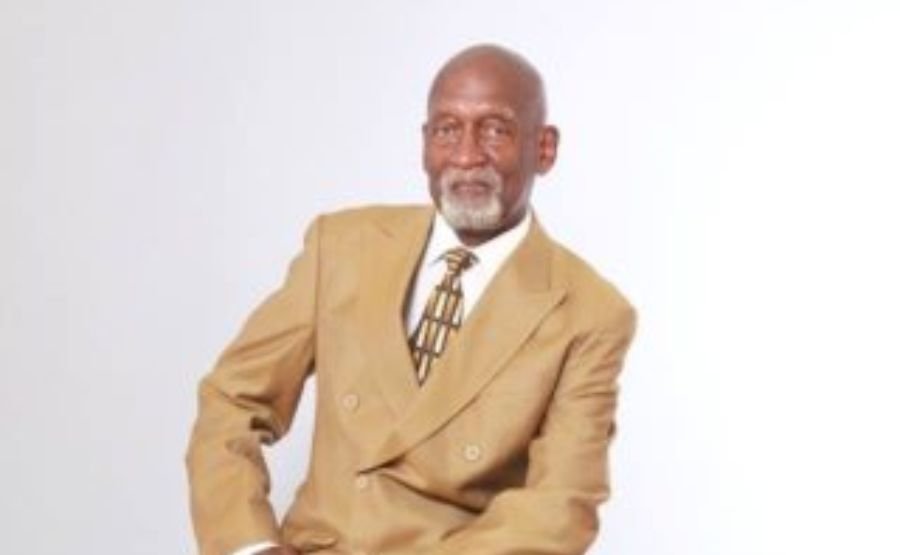
After finishing his schooling, Luther Gales joined the United States Marine Corps. The specific years and details of his military service are not part of the documented public record, but the experience left a clear stamp on him. People who knew him or described him across multiple published sources consistently reached for the same word: discipline. The Marine Corps gives you that, if it gives you nothing else.
When he returned to civilian life, Luther joined the New York City Housing Police Department — a separate law enforcement agency that operated specifically within New York City’s public housing developments before it was eventually merged into the NYPD in 1995. The Housing Police worked in some of the most challenging environments in the city, serving communities in the sprawling public housing complexes that housed hundreds of thousands of New Yorkers. It was neither glamorous nor easy. It was exactly the kind of service-oriented work that fit the kind of man Luther Gales was becoming.
He stayed for a full career, retiring as a housing police officer after years of service. The badge and the uniform put away, he did not slow down. If anything, he accelerated.
The Athlete Nobody Knew About
Here is where Luther Gales’s story gets genuinely surprising, even for people who think they have a handle on what a retired police officer’s life looks like.
Throughout his career — before retirement, during it, and continuing long after — Luther Gales was a serious competitive athlete. Not a casual jogger or a weekend cyclist. A competitor. His home in Harlem contained what multiple sources described as a collection of trophies and medals accumulated across decades, the kind of display that takes up walls and fills shelves. The awards ran from the Police Olympics years of 1979 through 1987 and covered swimming, cycling, running, and triathlons.
Let that register for a moment. A triathlon requires competence in three completely different physical disciplines — swimming, cycling, and running — completed in sequence without meaningful rest. Luther Gales was competitive across all of them, winning medals through the Police Olympics while presumably also working full shifts as a law enforcement officer.
When he retired from the police and discovered the Harlem Honeys and Bears practicing at the Hansborough Recreation Center on West 134th Street, his athletic life did not pause. It simply found a new form. He joined the team. He continued competing in senior-level swimming meets. At the national Senior Olympics, he came home with three ribbons.
The Hansborough pool, attached to a recreation center tucked into a cul-de-sac in Upper Manhattan, became the center of gravity for his post-retirement life.
The Harlem Honeys and Bears: A Team Worth Knowing
To understand Luther Gales’s greatest contribution to his community, you have to understand the organization he poured himself into for decades.
The Harlem Honeys and Bears synchronized swim team was founded in 1979 — the same year Luther’s Police Olympics record began. The name came from the street slang of the era: women were “honeys,” and bears love honey. It was playful and precise all at once. The team was composed mostly of Black men and women, ranging in age across the decades from their fifties into their nineties, who came together at the Hansborough pool on Mondays and Wednesdays to practice artistic swimming — the choreographed, musical, physically demanding water sport that combines dance, athletics, and theatre.
North America’s only all-Black artistic swimming team, the Honeys and Bears were not competing for Olympic selection. They were competing at senior games — state level, national level — and winning. They were doing ballet kicks and forming synchronized floating pyramids in a pool in Harlem, in their seventies and eighties, often against the backdrop of whatever music happened to be playing that week. They accumulated medals and trophies in quantities that Luther himself, with characteristic pride, described as a “mountain.”
Luther became one of the team’s most central figures. He served as its president. He worked as an assistant coach. He helped shape the team’s practices, mentor newer members, and represent the Honeys and Bears in competition and public life.
He brought to all of it the same qualities his Marine Corps training and decades of police work had sharpened: punctuality, physical commitment, and the kind of leadership that leads by doing rather than directing.
The Mission That Mattered Most: Teaching Children to Swim
If you ask what Luther Gales considered the most important thing he did, the answer he gave consistently was not the trophies or the synchronized swimming performances or the triathlons. It was the children.
The numbers behind his concern are stark. Research from the USA Swimming Foundation documented that approximately 70 percent of African Americans do not know how to swim. The Centers for Disease Control has found that Black children drown at dramatically higher rates than other children — a disparity rooted directly in the historical exclusion of Black Americans from public swimming infrastructure and swim instruction.
Luther Gales knew this from the inside. He grew up in a world where that exclusion was real. He had been one of the rare exceptions — a Black boy who got in the water at nine years old and never got out. And he spent more than a decade making sure that fewer children grew up without that access.
At the Hansborough pool, alongside other Honeys and Bears members, he taught young swimmers for free. Week after week, year after year. He started by teaching his own kids first — he would later reflect with a laugh that they were the hardest students he ever had — and then extended that same patience and insistence to children across the Harlem community who came through the center’s doors.
His framing of the mission was both practical and profound. “We’re teaching kids how to swim so they can save their own selves,” he said, “and possibly save someone else.” Not for sport. Not for medals. For survival.
Unsyncable: When the World Paid Attention
In 2022, Nova Scotia-based filmmaker Megan Wennberg was deep into production on a documentary about senior artistic swimmers preparing for the U.S. Masters Artistic Swimming Championships. She had been filming since the early days of the pandemic, conducting online interviews before eventually following her subjects into the pool itself.
One of those subjects was Luther Gales, then 82 years old.
Unsyncable premiered at the Hot Docs festival in Toronto in the spring of 2023, to two sold-out screenings and warm critical reception. It then made its broadcast debut on VisionTV in Canada in October of that year. The documentary followed six senior athletes — ranging from 63 to 82 years old — who were preparing to compete at the national championships in Maine. Luther was the oldest.
Film reviewers who described him reached for the same combination of words that people who knew him personally had always used: stylish, athletic, disciplined, committed. One Canadian review called him “the stylish former marine and lifelong athlete.” The Unsyncable website’s character profile described him as “a retired Marine, a former member of the NYC Housing Police and now an assistant synchronized swimming coach… his goal is to help them stay safe in the water and break the ‘blacks don’t swim’ stereotype he grew up with.”
The documentary gave a national — and international — audience the first real extended look at who Luther Gales was and what the Harlem Honeys and Bears actually meant.
Personal Life
Luther Gales was a private person in the specific way that people who do their most important work quietly tend to be. He did not seek media attention for its own sake. He was not a self-promoter.
What the public record shows is this: he was a father, having started teaching his children to swim at a young age before extending that instruction to the wider community. He owned a townhouse in Harlem — a detail that emerged from a published photo feature showing him descending its stairs on his way to the pool — which speaks to a life that, for all its public service, was grounded in stable, rooted domesticity.
He was described as a “dancer and a dandy” in Nike’s profile of the Honeys and Bears team — a phrase that captures something true about how he carried himself. He dressed well. He moved with care. He had the bearing of someone who had spent decades cultivating physical discipline and had allowed that discipline to shape the way he occupied space.
His faith and his community connections were central to his sense of identity. He was Harlem-born and Harlem-rooted, and he stayed rooted there through every chapter of his life.
Hardships and the Weight of History
Luther Gales never spoke publicly about his personal struggles in a confessional way. What he did speak about — clearly and directly — was the struggle he had been fighting on behalf of an entire community for decades.
The drowning statistics for Black children in America are not an abstraction. They represent real children, real families, real losses that trace directly to a century of deliberate exclusion from swimming instruction and pool access. Luther grew up surrounded by the consequences of that exclusion and chose to spend the second half of his life pushing back against it with his own hands and his own time.
There is also the challenge that comes with aging as a serious competitive athlete — managing the physical limits that accumulate with time, the injuries, the illnesses. The Unsyncable documentary touched on this honestly. Luther was 82 during filming. The body has opinions at 82 that it doesn’t have at 40. Continuing to compete, to coach, to teach children to swim five days a week — at that age, that is not casual. That is chosen difficulty, maintained with intention.
Net Worth and Financial Life
Luther Gales was not wealthy by conventional measures, and he never sought to be. His income across his adult life came from his years in the Marine Corps, his salary as a New York City Housing Police officer, and whatever retirement benefits those years of service provided.
He lived in Harlem in his own home. He gave his coaching and swim instruction time away for free. He was supported in later years partly through small grants — the Harlem Honeys and Bears received funding from the Columbia Community Service grant program, from the Senior Olympics program, and from other community organizations — that helped cover competition fees and pool time.
The real accounting of his life’s wealth is not financial. It is in the mountain of trophies in his townhouse. In the children who learned to swim and didn’t drown. In the teammates who competed alongside him into their eighties and nineties. In the documentary that captured his story for people who would never set foot in Harlem’s Hansborough pool.
What He Left Behind
Sometime in 2025, Luther Gales passed away. The Harlem Honeys and Bears continued their practices at the Hansborough pool, now under a new president, mourning what the Amsterdam News described as the loss of “their long-time beloved assistant coach.”
The word beloved is doing real work in that sentence. It is not automatic. You earn it over decades of showing up, of giving your time and your knowledge and your patience to people who need it, of competing with dignity well past the age when most people have hung up their swim caps and called it a life.
His death left the team grieving in the way that close communities grieve — continuing to practice, continuing to compete, honoring what he built by refusing to let it stop.
Final Words
Luther Gales did not fit neatly into any single category. He was a Marine, a cop, an athlete, a coach, a teacher, a community elder, and — in the last years of his life, thanks to Unsyncable — a minor documentary film subject who finally got the wider audience his story had always deserved.
What made him distinctive was the persistence of the mission over time. Anyone can be inspired once. Not everyone can show up five days a week, for more than a decade, to teach children something for free, in service of reversing a historical injustice that most people don’t think about.
Luther thought about it. He had been living with its consequences since he was a nine-year-old boy in Harlem who somehow found his way into a pool when the odds said he shouldn’t.
He spent the rest of his life making sure those odds tilted a little more toward the children who came after him. That is not a small thing. In the arithmetic of a life, it may be the only thing that truly counts.
See also “Jessica Matten: The Woman Who Changed What Indigenous Looks Like on Screen“
FAQs
1. Who was Luther Gales?
Luther Gales was a Harlem-born United States Marine Corps veteran, retired New York City Housing Police officer, competitive senior athlete, and longtime president and assistant coach of the Harlem Honeys and Bears synchronized swimming team. He was also a free youth swim instructor who spent over a decade teaching children in his Harlem community to swim, driven by a mission to combat drowning disparities affecting Black youth in America.
2. Where was Luther Gales born?
He was born and raised in Harlem, New York City, and remained connected to that community throughout his entire life.
3. When did Luther Gales learn to swim?
He learned to swim at the age of nine — a notable achievement given that during his childhood, many public pools across America were segregated and effectively inaccessible to Black children and families.
4. What was Luther Gales’s military background?
He served in the United States Marine Corps, though the specific years and details of his service are not part of the confirmed public record. The discipline and bearing that military service instilled remained visible throughout his life and was frequently noted by people who knew him.
5. What was the Harlem Honeys and Bears?
The Hansborough Recreation Center is home to the Harlem Honeys and Bears, a synchronized swimming team that was established in 1979 and subsequently dubbed an artistic swimming team. Center on West 134th Street in Harlem. Composed primarily of Black men and women aged 55 and older, it is described as North America’s only all-Black artistic swimming team. The team competes at local, state, and national senior games and also runs a youth learn-to-swim program.
6. What role did Luther Gales play on the Harlem Honeys and Bears?
He served as both the team’s president and its assistant coach. In his coaching capacity, he helped oversee practices, mentor members, and train competitors for senior-level artistic swimming championships.
7. Why was teaching children to swim so important to Luther Gales?
He was driven by a specific, concrete concern: the dramatically elevated drowning rates among Black children in America, rooted in generations of exclusion from public swim instruction and pool access. Research has shown that approximately 70 percent of African Americans do not know how to swim, and that Black children drown at substantially higher rates than other children. Luther saw closing that gap as a moral obligation and gave his time freely to the effort for more than a decade.
8. What athletic achievements did Luther Gales accumulate?
His trophies and medals covered an impressive range: Police Olympics medals from 1979 to 1987 in cycling, triathlons, running, and swimming; ribbons from national Senior Olympics competitions; and synchronized swimming competition awards from state and national senior games. He trained and competed at the Hansborough pool approximately five days per week well into his eighties.
9. What was the documentary Unsyncable?
Unsyncable is a 2023 documentary directed by Nova Scotia-based filmmaker Megan Wennberg that followed six senior artistic swimmers — aged 63 to 82 — preparing for the U.S. Masters Artistic Swimming Championships. Along with Harlem Honeys and Bears colleagues Monica Hale and Joyce Clarke, Luther Gales, at eighty-two, was one of the six featured subjects. The film premiered at the Hot Docs festival in Toronto in 2023 and broadcast on VisionTV in Canada.
10. What stereotype was Luther Gales fighting against?
He was working to dismantle the persistent false claim that Black people “can’t swim” — a stereotype that is itself a product of historical segregation and exclusion rather than any genuine cultural or physical characteristic. By teaching children to swim and by competing publicly as an older Black male athlete in a water sport, he challenged that narrative both practically and symbolically.
11. When did Luther Gales pass away?
Luther Gales passed away in 2025. The Amsterdam News, reporting in October 2025 on the ongoing activities of the Harlem Honeys and Bears, noted that the team was continuing its work “while it grieves over the loss of Luther Gales, their long-time beloved assistant coach, who recently passed.” A precise date of death has not been confirmed in available public records.
12. What is Luther Gales’s legacy?
His legacy rests on three pillars: the children whose lives may have been saved because he taught them to swim; the Harlem Honeys and Bears organization he helped lead for decades; and the broader mission of making water safety a genuine priority in the Black community. He did all of this not from a position of wealth or institutional power but from a single swimming pool in Harlem, showing up five days a week, armed with patience, discipline, and an unshakable belief that the work mattered.
Explore stories that inspire curiosity with The Imperial Magazine.



One Comment