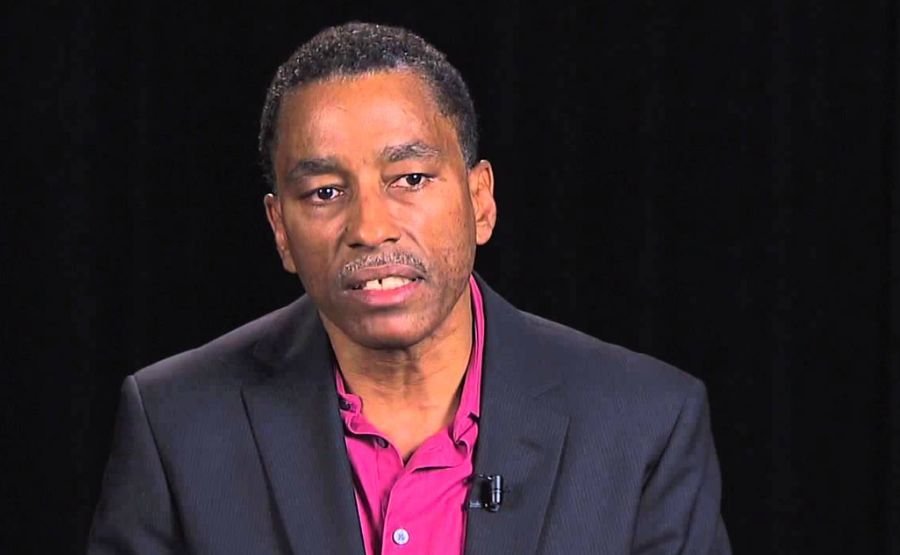
Roderick Jeffrey Watts: The Psychologist Who Made Justice His Life’s Work
Quick Bio
| Detail | Information |
| Full Name | Roderick Jeffrey Watts |
| Nationality | American |
| Occupation | Psychologist, Professor, Community Advocate |
| Known For | Sociopolitical Development (SPD) theory; liberation psychology; African American youth empowerment |
| Education | B.A., Oberlin College; Ph.D. in Clinical-Community Psychology, University of Maryland, College Park |
| Academic Positions | Professor Emeritus, CUNY Graduate Center; formerly DePaul University, Yale University School of Medicine, Georgia State University; visiting professor, Stellenbosch University (South Africa) |
| Key Publication | Co-editor, Human Diversity: Perspectives on People in Context (1994) |
| Research Focus | Youth sociopolitical development, liberation psychology, African American identity and masculinity, critical consciousness |
| Personal | Son of Robert K. Watts (New York State health planner) and Eva Lacy Watts; formerly married to Pulitzer Prize-winning author Isabel Wilkerson (1989) |
| Professional Honours | Fellow, American Psychological Association; Fellow, Society for Community Research and Action; Senior Associate Editor, American Journal of Community Psychology |
Why Roderick Watts Deserves a Closer Look
Here’s a thought experiment. Imagine a psychologist who looks at everything mainstream psychology is doing — the diagnoses, the treatment models, the research designs — and says: “But what about the world outside the individual? What about the systems that oppress people and make them sick in the first place?” That is essentially what Roderick Jeffrey Watts has been doing for four decades, and it is work that has changed the way researchers, educators, and activists think about human development.
He is not a celebrity. He has never hosted a talk show or written a memoir that sat on airport bookstore shelves. He is primarily known outside academic circles as the husband of Isabel Wilkerson, the Pulitzer Prize-winning author of The Warmth of Other Suns and Caste. And that association, while meaningful, has obscured something important: Roderick Watts built his own intellectual legacy, one that has touched thousands of young people and helped reshape an entire corner of American psychology.
This is the story of how a man shaped by a socially conscious family turned his personal convictions into a body of scholarship that people are still building on today.
The Home That Made Him
Roderick Jeffrey Watts grew up in an environment where caring about your community was simply what you did. His father, Robert K. Watts, worked as a health planner for the state of New York — a public service role that put him squarely in the business of thinking about how systems affect people’s wellbeing at a population level. His mother, Eva Lacy Watts, worked at an organization called Black Dimensions, a group oriented around supporting and strengthening African American communities.
Think about what that combination of parents means for a child growing up in it. On one side, a man who spent his professional life asking how health resources should be designed and distributed to serve people well. On the other, a woman embedded in community-level work that was explicitly about the dignity and advancement of Black life. The dinner table conversations in the Watts household were probably not about pop culture or sports scores. They were almost certainly about how society worked, who it was failing, and what might be done about it.
That kind of upbringing does something specific to a young mind. It makes the personal inseparable from the political. It makes abstract concepts like oppression and equity feel concrete and urgent because you’ve watched your parents treat them that way their whole lives. By the time Roderick Watts arrived at college, he wasn’t encountering social justice as an idea for the first time. He was finding language for things he had always known.
From Oberlin to Maryland: Becoming a Psychologist
Watts chose Oberlin College for his undergraduate education, a choice that speaks to his sensibility. Oberlin, in northern Ohio, has been one of the most politically progressive institutions in American higher education since the nineteenth century. It was the first college in the United States to admit both Black students and women as a matter of institutional policy. The campus culture there has always been one that takes seriously the relationship between intellectual life and social responsibility. For a young man from Roderick Watts’s background, it was a natural fit.
His undergraduate work there laid the foundation for what came next. Watts went on to the University of Maryland at College Park for his graduate training, earning both his master’s degree and his Ph.D. in clinical-community psychology. That hyphen in the degree name matters enormously. Clinical psychology is the branch that deals with individuals — their inner lives, their suffering, their healing. Community psychology is the branch that looks outward — at neighbourhoods, institutions, social systems, and the ways those environments shape human behaviour and wellbeing. Joining the two is not easy, because the theoretical frameworks and the practical methods involved can pull in quite different directions. But it is precisely that tension that Watts made his intellectual home.
His doctoral training sharpened his ability to think rigorously about both individuals and systems, and it gave him the methodological toolkit — quantitative research, qualitative approaches, action-oriented methods — to pursue questions that mainstream psychology often ignored. He emerged from Maryland as a licensed clinical psychologist, trained in the full range of assessment and therapeutic skills, but his eyes were already fixed on something bigger than the consulting room.
The Early Career: DePaul, Yale, and Finding a Voice
Watts began his faculty career at DePaul University in Chicago, a Vincentian Catholic institution with a strong tradition of social justice commitment and a campus community that cared deeply about urban issues. Chicago was the right city for the work he wanted to do. With its long history of racial segregation, its entrenched political structures, and its extraordinarily rich tradition of Black cultural and intellectual life, Chicago offered Watts both a laboratory and a community.
At DePaul he taught, he researched, and he got his hands into community-based work. His teaching at this stage already reflected his core preoccupations — African American psychology, program evaluation, qualitative research methods, the dynamics of race and identity. He was building a pedagogical approach that didn’t just transmit information but asked students to interrogate the social systems that produced the knowledge they were being taught.
From DePaul he made a notable move to Yale University’s School of Medicine. Yale Medicine is one of the most prestigious medical institutions in the country, and bringing a community psychologist focused on liberation and oppression into that context required both intellectual confidence and institutional flexibility on both sides. Watts brought his community-centred perspective into a world more accustomed to biomedical models, and the encounter likely enriched his thinking about the intersections between physical health, mental health, and social conditions.
He also spent time at Georgia State University in Atlanta, where he coordinated the joint clinical-community psychology program — a complex administrative and intellectual responsibility that required him to hold together two different professional cultures under a single roof. Atlanta, like Chicago, gave him proximity to African American community life and to the organisational infrastructure of Black civic engagement. Georgia’s particular history meant that the questions Watts was asking — about oppression, about identity, about the conditions that shape who people become — were never merely theoretical. They were written into the landscape.
The Theory That Changed a Field: Sociopolitical Development
If you had to point to one contribution that cements Roderick Watts’s place in the history of his discipline, it would be his development of Sociopolitical Development theory, usually referred to simply as SPD.
The central question behind SPD is deceptively simple: how do people — and particularly young people from marginalised communities — come to understand the systems that oppress them, and what moves them from understanding toward action? Most developmental psychology at the time Watts started working on this focused on individual cognitive and emotional growth. His insight was that for people whose lives are shaped by systemic inequality, there is another crucial dimension of development that had been almost entirely ignored: the development of political consciousness and the capacity to resist and transform unjust conditions.
Watts drew on the work of Brazilian educator Paulo Freire, whose concept of conscientização — usually translated as “critical consciousness” — had already influenced liberation theology and radical pedagogy around the world. Freire argued that genuine education isn’t about transferring information from teacher to student, but about helping people develop the analytical tools to understand and change the conditions of their own lives. Watts took this fundamentally Latin American theoretical tradition and adapted it for the specific context of African American experience in the United States.
He also grounded SPD in the long tradition of Black intellectual and activist thought — drawing explicitly on thinkers from Frederick Douglass through the Black Power movement to contemporary community organisers. SPD wasn’t simply borrowed theory dressed in new clothes. It was a synthesis that took seriously the particular history and wisdom of African American resistance traditions.
The theory describes a developmental process with distinct stages. At one end are people who are essentially unaware of systemic inequity — or who accept the conditions of their lives as simply how things are. Moving along the trajectory, people begin to develop critical awareness, starting to see that what looked like personal failures or individual bad luck is actually the product of structures designed to exclude and diminish. Further along come individuals who are actively engaged — analysing, questioning, building solidarity, taking action. Watts was clear that this wasn’t a simple linear staircase everyone climbs at the same pace. It was a map of possibilities, shaped by experience, by community, by mentorship, and by opportunity.
His 2003 paper laying out SPD theory, co-authored in the American Journal of Community Psychology, became one of the most cited articles in community psychology. Over eight thousand citations have accumulated on his work across his career. That number is not decorative. It means that researchers, practitioners, educators, and activists across two decades have found his framework genuinely useful for their own work.
Human Diversity and the Book That Shaped a Generation of Scholars
In 1994, Watts co-edited a volume called Human Diversity: Perspectives on People in Context. The book arrived at a moment when mainstream psychology was only just beginning to grapple seriously with the fact that most of its foundational research had been conducted on samples that didn’t represent humanity very well — largely white, largely Western, largely middle-class.
Human Diversity made a case not just for including different kinds of people in psychological research, but for fundamentally rethinking how psychology approached the concepts of identity, culture, and social context. It offered practical guidance for researchers on how to conduct work that was genuinely attentive to diversity — not as an add-on consideration, but as something structurally built into the research design itself. The book was adopted widely in graduate psychology training programmes and influenced how a generation of researchers were taught to think about their field.
The fact that Watts was publishing significant work on human diversity, liberation psychology, and sociopolitical development all through the 1990s and 2000s means he was ahead of conversations that mainstream psychology only started having at scale much later. By the time terms like “systemic racism,” “critical consciousness,” and “community-based participatory research” became more widely discussed, Watts had been working within those frameworks for twenty years.
CUNY and the Long Professorship
The appointment that defined the mature phase of Watts’s academic career was his move to the City University of New York Graduate Center, where he eventually became Professor Emeritus. CUNY is itself an institution with a mission that aligned well with his values — a public university system committed to access, to serving New York City’s diverse population, and to the idea that higher education should not be a luxury available only to the already privileged.
At CUNY, Watts also held a joint appointment at Hunter College’s Silberman School of Social Work, extending his reach into the training of social workers — professionals who work daily with the communities and structural conditions he had spent his career studying. The social work school context expanded his influence beyond psychology departments into a field with a long tradition of direct community engagement.
He served as senior associate editor of the American Journal of Community Psychology for an extended period, which positioned him as a gatekeeper and shaper of the scholarly conversation in his field — deciding which ideas deserved amplification, which research met the standards of rigour and relevance that community psychology should demand.
He also had the unusual experience of working internationally, spending time as a visiting professor at Stellenbosch University in South Africa. This brought him into direct contact with a society navigating the aftermath of apartheid — a context that gave his ideas about liberation, systemic oppression, and sociopolitical development an entirely different resonance and tested whether his frameworks translated across very different social histories. That global engagement enriched his thinking and connected him to a broader network of scholars working on critical psychology outside the American context.
The Young Warriors and Community-Based Work
The academic record is impressive, but what kept Watts grounded throughout his career was the applied dimension. He worked with community-based organisations on a consistent basis, and one of the programmes most closely associated with his work was something called the Young Warriors programme — an intervention for young African American men that used mass cultural materials like rap music and film as entry points for developing critical consciousness.
The idea was elegant in its practicality. Young men in underserved communities weren’t going to be easily reached by academic texts or traditional therapeutic models. But the music they were already listening to — the films they already watched — was full of material that touched directly on the conditions of their lives. Watts and his collaborators used those materials as discussion starters, building group sessions around them that gradually helped participants develop the analytical vocabulary to understand their own situation in systemic rather than purely personal terms. The programme had an empirical component too: Watts studied its effects, tracking changes in participants’ political awareness and sense of agency, building an evidence base that could inform future work.
This is what separates a scholar-advocate from a purely academic theorist. Watts wasn’t content to develop SPD as a conceptual framework and let other people figure out what to do with it. He built programmes, evaluated them, revised them, and kept connecting the intellectual work back to real communities.
Personal Life and the Connection to Isabel Wilkerson
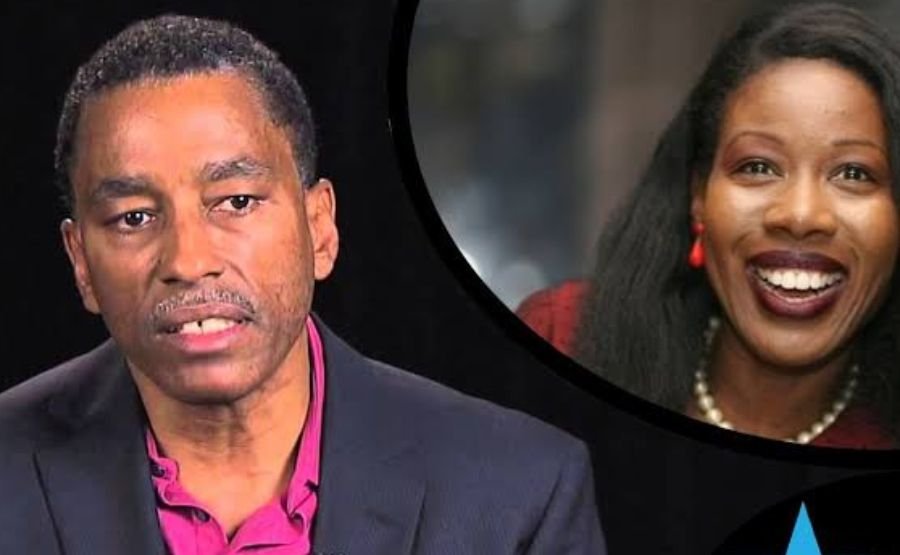
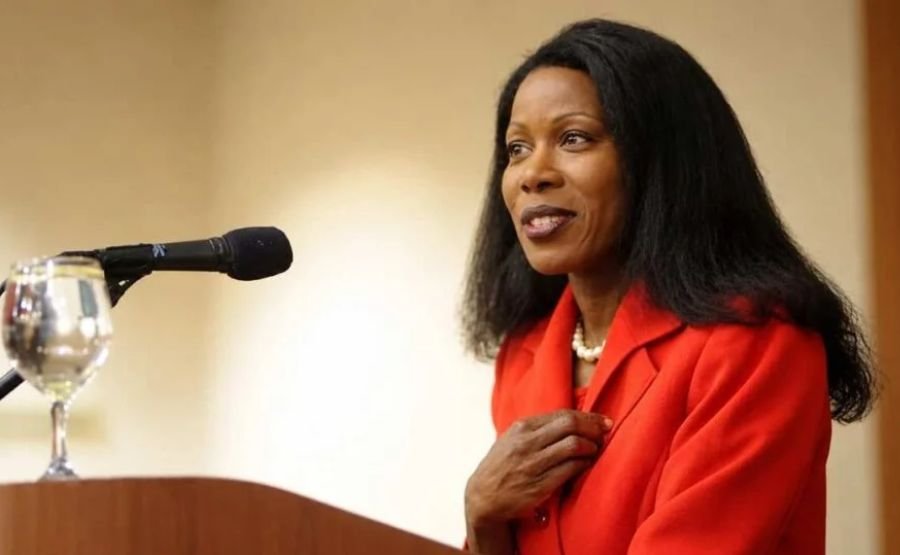
In 1989, Roderick Watts married Isabel Wilkerson in Fort Washington, Maryland. At the time, both were emerging figures in their respective fields — Watts building his academic career, Wilkerson doing the reporting and writing that would eventually win her a Pulitzer Prize as the first African American woman to receive that honour in journalism. Their shared preoccupations — with race, with history, with the ways social structures shape human lives — ran like a common thread through two very different professional vocabularies.
Wilkerson’s The Warmth of Other Suns, published in 2010, was a masterpiece of narrative nonfiction that told the story of the Great Migration through three individuals’ lives. Her follow-up, Caste, published in 2020, argued that America’s racial hierarchy functions as a caste system in the sociological sense — structurally similar to India’s or to Nazi Germany’s, however different in its particulars. The intellectual conversation between a man who has spent decades studying systemic oppression through a psychological lens and a woman who examines those same systems through history and narrative journalism is easy to imagine as genuinely rich.
Some later sources indicate the marriage eventually ended, though the details of this have not been publicly disclosed. What remains unambiguous is that Watts and Wilkerson worked in deeply related intellectual territory throughout the years of their relationship, and their parallel careers represent two different but complementary ways of understanding and communicating about the same fundamental injustices.
No information about children has been made public, consistent with Watts’s general preference for privacy around his personal life.
The Question of Hardships and Professional Challenges
It’s worth being honest here: the public record doesn’t give us a detailed account of the personal or professional setbacks in Watts’s life. He is a private person, and the sources available speak primarily to his contributions and positions rather than to any struggles.
What can be said is that the kind of work he has chosen — arguing within mainstream psychology for frameworks rooted in liberation theory, insisting on the centrality of race and power to any serious account of human development, building community programmes in settings that don’t always value or fund applied work — is not the path of least resistance. Psychology as a discipline has not always been welcoming to scholars whose work challenges the field’s foundational assumptions about what psychology is and what it is for.
Watts spent a career working within institutions that sometimes understood what he was doing, and sometimes didn’t. The fact that he built a sustained body of work, trained students who themselves became scholars and practitioners, and eventually reached the rank of Professor Emeritus at one of the country’s major public universities suggests that he navigated those tensions successfully. But navigating them took something — probably a great deal of persistence and a clarity of purpose that didn’t waver when the institutional winds weren’t blowing in his favour.
Net Worth and Financial Picture
Roderick Watts has never been the kind of public figure whose finances attract media scrutiny, and no reliable estimate of his net worth has ever been published. What can be said with reasonable confidence is this: he spent his career as a tenured professor at research universities, supplemented by consulting work for schools, foundations, and public policy organisations on questions of human diversity and sociopolitical development. That combination — steady academic salary plus consulting income from a body of expertise that was genuinely in demand — would have provided a comfortable middle-class professional life.
He has never given any indication that financial accumulation was a priority. His entire career has been oriented around work that his own value system defines as intrinsically worthwhile regardless of its economic return. The quiet life he is said to enjoy — reading, music, intellectual engagement — doesn’t require significant wealth. It requires time and the right habits of mind, both of which he has cultivated carefully.
Where Things Stand Now
Roderick Watts holds the title of Professor Emeritus at the CUNY Graduate Center, which signals that his formal full-time teaching career has wound down, though it does not mean he has disappeared from the field. Emeritus faculty continue to attend conferences, supervise doctoral students, collaborate on research, and maintain the intellectual relationships they have built over careers.
His Google Scholar profile shows a citation count exceeding eight thousand — a genuinely substantial number for a scholar in the social sciences, and one that continues to grow as researchers keep building on SPD theory, critical consciousness frameworks, and his work on African American youth development. He has connected with international networks working on youth civic development and community organising, reflecting the global reach that his ideas have achieved.
By all available accounts, he lives quietly, keeps a relatively low public profile, and engages primarily through the channels he has always favoured — teaching, workshops, lectures, and the slow steady work of mentoring the next generation of scholars who will carry these ideas forward.
Final Words
Roderick Jeffrey Watts has lived a life organised around a single sustained conviction: that psychology, in order to be genuinely useful, has to understand the systems that shape people’s lives, not just the individuals within those systems. He came to that conviction honestly, raised in a family that treated social responsibility as ordinary, trained in a discipline he decided to push from the inside, and committed to both the theoretical work and the practical community engagement needed to make ideas real.
What distinguishes him is not celebrity, not controversy, not the kind of public visibility that makes someone easy to Google. What distinguishes him is coherence. His family background, his education, his choice of research questions, his community work, his mentorship of students, his reading habits, even his temperamental preference for a quiet private life over public performance — all of it points in the same direction. He is someone who decided early what he thought mattered and then spent four decades actually doing it.
The sociopolitical development framework he built will outlast him. It is already in the hands of researchers on multiple continents, educators designing curricula, community organisers building programmes, and doctoral students writing dissertations. That is a particular kind of immortality — not the kind that comes with fame, but the kind that comes with having built something durable enough that other people keep finding uses for it.
In a world that generates a lot of noise about justice and very little sustained, rigorous thinking about how it actually works and how people learn to pursue it, Roderick Watts has been one of the people doing the harder, quieter, more important thing.
FAQs
1. Who is Roderick Jeffrey Watts?
Roderick Jeffrey Watts is an American psychologist, professor, and community advocate known for his foundational contributions to the fields of community psychology and liberation psychology. He is best known for developing Sociopolitical Development theory and for his long career at the City University of New York Graduate Center, where he holds the title of Professor Emeritus.
2. What is Sociopolitical Development theory?
SPD theory, developed by Watts and his collaborators, describes the process through which people — particularly young people from marginalised communities — develop the awareness, analytical skills, and motivation needed to understand and challenge systemic oppression. It draws on Paulo Freire’s concept of critical consciousness and on African American intellectual and activist traditions, mapping a developmental pathway from political unawareness through growing awareness to active engagement.
3. Where did Roderick Watts study?
He completed his undergraduate degree at Oberlin College in Ohio and earned his Ph.D. from the University of Maryland, College Park, in clinical-community psychology. His doctoral training combined clinical skills with community-level analysis of how social systems affect human wellbeing.
4. What universities has Roderick Watts worked at?
Over his career Watts has been affiliated with DePaul University in Chicago, Yale University’s School of Medicine, Georgia State University in Atlanta, and the City University of New York Graduate Center, where he holds his primary long-term appointment. He has also served as a joint appointment professor at Hunter College’s Silberman School of Social Work, and he spent time as a visiting professor at Stellenbosch University in South Africa.
5. What is his most important book?
His most influential single publication is probably the 2003 journal article laying out Sociopolitical Development theory, which has been cited more than eight thousand times. As a book, the co-edited volume Human Diversity: Perspectives on People in Context (1994) is his most significant, offering a framework for diversity-conscious research and practice that shaped a generation of psychology graduate students.
6. What is liberation psychology?
Liberation psychology is a field that applies psychological theory and practice explicitly to the project of challenging and dismantling oppressive social conditions. Rooted in the work of Latin American scholars like Ignacio Martín-Baró, it argues that psychology has a responsibility not just to understand human suffering but to actively contribute to the social conditions under which human beings can flourish. Watts is one of the key figures who helped bring liberation psychology into the US academic mainstream.
7. Who is Isabel Wilkerson and how is she connected to Watts?
Isabel Wilkerson is a Pulitzer Prize-winning American journalist and author, best known for The Warmth of Other Suns (2010) and Caste: The Origins of Our Discontents (2020). She was the first African American woman to win a Pulitzer Prize in journalism. She and Roderick Watts married in 1989 in Fort Washington, Maryland. The couple shared a deep intellectual engagement with questions of race, history, and systemic inequality, though they approached those questions through different disciplines — he through psychology, she through journalism and narrative nonfiction.
8. What was the Young Warriors programme?
The Young Warriors was a community intervention developed with Watts’s involvement that used popular cultural materials — particularly rap music and film — as discussion tools for building critical consciousness among young African American men. The programme aimed to help participants understand their situation in systemic terms and develop the analytical language and sense of agency needed to engage with social and political realities. It was also studied empirically, contributing to the evidence base for sociopolitical development interventions.
9. Who were Roderick Watts’s parents?
His father, Robert K. Watts, worked as a health planner for the state of New York. His mother, Eva Lacy Watts, worked at an organisation called Black Dimensions that focused on supporting African American communities. Both parents modelled a life oriented around public service and community wellbeing, a formative influence on Watts’s career.
10. What is his connection to the American Psychological Association?
Roderick Watts is a Fellow of the American Psychological Association, the highest membership distinction the APA confers, awarded in recognition of exceptional contributions to the field. He is also a Fellow of the Society for Community Research and Action, the primary professional body for community psychology in the United States.
11. What is his net worth?
No public estimate of Watts’s net worth exists and none has been reliably reported. His career as a tenured university professor supplemented by consulting income would have provided a comfortable professional living, but financial accumulation has never been a visible priority in his public life or professional identity.
12. What is Roderick Watts doing now?
Watts holds emeritus status at the CUNY Graduate Center, meaning his primary full-time teaching duties have concluded, though he remains connected to the field through research collaborations, conference participation, mentorship of doctoral students, and connections to international networks working on youth civic development and critical consciousness. His scholarly work continues to generate citations and influence researchers across multiple countries.
Explore stories that inspire curiosity with The Imperial Magazine.





One Comment