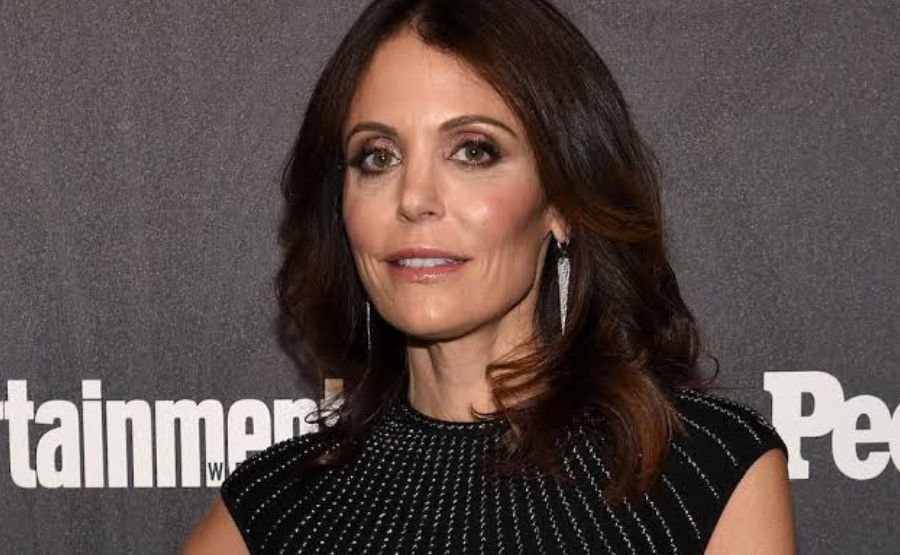
Bethenny Frankel’s Net Worth: How She Built Her Fortune Through Business, Television, and Smart Investments
Quick Bio
| Detail | Information |
| Full Name | Bethenny Robyn Frankel |
| Born | November 4, 1970, USA, New York City |
| Nationality | American |
| Occupation | Entrepreneur, television personality, author, philanthropist, podcaster |
| Known For | Founding Skinnygirl brand; Real Housewives of New York City; $120M Skinnygirl sale |
| Education | Boston University; New York University (BA, Psychology and Communications); Natural Gourmet Institute |
| Marriages | Peter Sussman (1996–1997); Jason Hoppy (2010–2021) |
| Daughter | Bryn Casey Hoppy (born May 8, 2010) |
| Philanthropy | BStrong disaster relief organization |
| Estimated Net Worth | $80 million (2026) |
| Father | Robert J. Frankel — Hall of Fame thoroughbred horse trainer |
| Social Media | Highly active across TikTok, Instagram, and YouTube |
Why Bethenny Frankel Is Worth Knowing About
There’s a particular kind of American success story that gets told over and over — the rags-to-riches arc, the overnight discovery, the right person in the right room at the right time. Bethenny Frankel’s story is not that one.
Hers is messier, more grinding, and ultimately more instructive. She spent her twenties scraping by in New York, her thirties building something out of almost nothing, and her early forties defending what she’d built against everyone who tried to take it. She came from a family that was fractured by divorce, alcoholism, and instability. She failed on television before she succeeded on it. She launched a cocktail brand at a moment when nobody thought low-calorie cocktails had a future, then sold it for a price that made the whole industry rethink its assumptions.
By the time she walked away from the Skinnygirl sale, she had proven something that the entertainment-industry playbook doesn’t usually allow for: that a reality television personality could also be a serious businessperson. Not because someone handed her a company or a platform, but because she built one, carefully and cleverly, from scratch.
From the outset, that tale is worth sharing.
See also “Victoria Granucci Net Worth: California Blonde, Rock Wife, and the Woman Who Chose Quiet“
A Childhood Shaped by Instability
Bethenny was born in Queens, New York City, on November 4, 1970. Her father, Robert J. Frankel, was no ordinary horse trainer. He was one of the most accomplished thoroughbred trainers in the country — eventually inducted into the National Museum of Racing and Hall of Fame. When a Hall of Fame career gets built on the backs of horses, it also tends to get built on a lot of time away from home, a lot of gambling culture, and a lot of instability. That was Robert Frankel’s world.
At the age of four, Bethenny’s parents separated. Her mother, Bernadette Birk, remarried a man named John Parisella, also a figure in horse racing. Bethenny has spoken and written openly about a childhood she describes as chaotic. The household she grew up in involved alcoholism, parental volatility, and the kind of emotional unpredictability that leaves marks on a child’s understanding of what home and security mean. Her father’s Hall of Fame induction was a formal recognition of his professional greatness; it said nothing about his availability as a parent.
What that upbringing produced, interestingly, was not someone beaten down by instability but someone powered by it. She learned early that she could only rely on herself. That lesson would define everything that followed.
Finding Direction in New York’s Education System
Bethenny began at Boston University before transferring to New York University, where she completed a Bachelor of Arts in Psychology and Communications. After NYU, she added training at the Natural Gourmet Institute in New York City — a culinary school with a specific focus on health-supportive cooking, plant-forward cuisine, and nutrition.
That combination — psychology, communications, and culinary training — sounds almost designed in retrospect for the career she would eventually build. Building a lifestyle brand requires understanding people, persuading them, and giving them something they actually want to put in their bodies. She was assembling the toolkit before she knew what she was going to build with it.
Her early professional life after school was the kind of resume that looks desperate from the outside and determined from the inside: personal assistant work for Bob Dylan’s son Jacob Dylan and his family, various odd jobs in and around New York, eventually running a natural food company she called Bethenny Bakes, selling wheat-free, egg-free, dairy-free cookies.
The cookies didn’t make her rich. But they taught her something about brand building, about selling directly to consumers, and about the particular challenges of trying to establish a lifestyle food product in a market that wasn’t yet paying attention to those things.
The Television Before the Television That Changed Everything
Before Real Housewives, Bethenny Frankel had already been on television — and not particularly successfully.
In 2005, she competed on The Apprentice: Martha Stewart, Donald Trump’s business-themed reality competition with a domestic twist. She didn’t win. The experience gave her exposure without breakthrough, which is both common in reality television and genuinely difficult to manage when you’re trying to build a career on the back of it.
She kept working. She was operating as a natural-food chef and private chef in New York, building the kind of specialized expertise that positions someone as an authority in a niche. She was also developing the ideas that would eventually become Naturally Thin — a book that argued against traditional dieting and toward a more intuitive, mindful relationship with food.
Then came the call from Bravo.
Real Housewives and the Platform That Built Everything
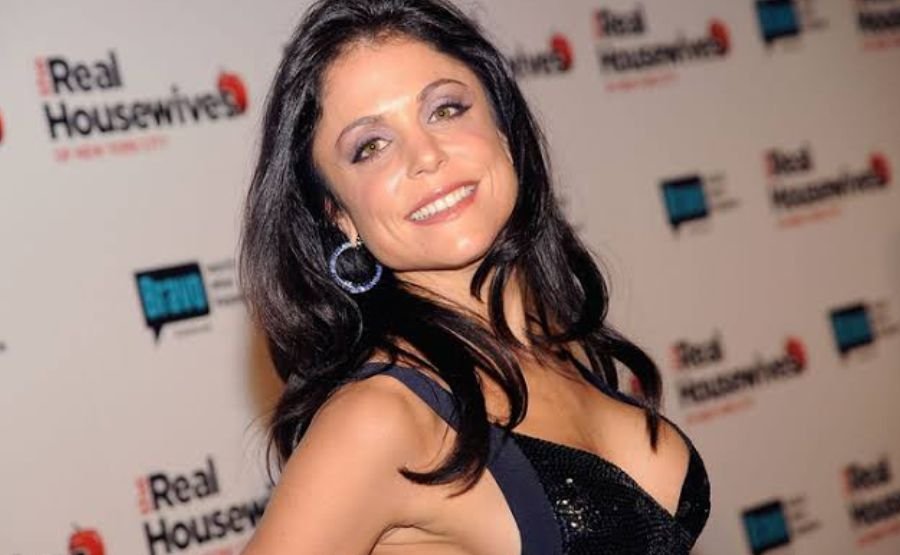
When The Real Housewives of New York City launched in 2008, the franchise was still relatively new as a Bravo format. The concept had proven itself with the first Orange County installment, and New York was an obvious next setting — a city built for the kind of conspicuous social ambition that reality television is designed to document.
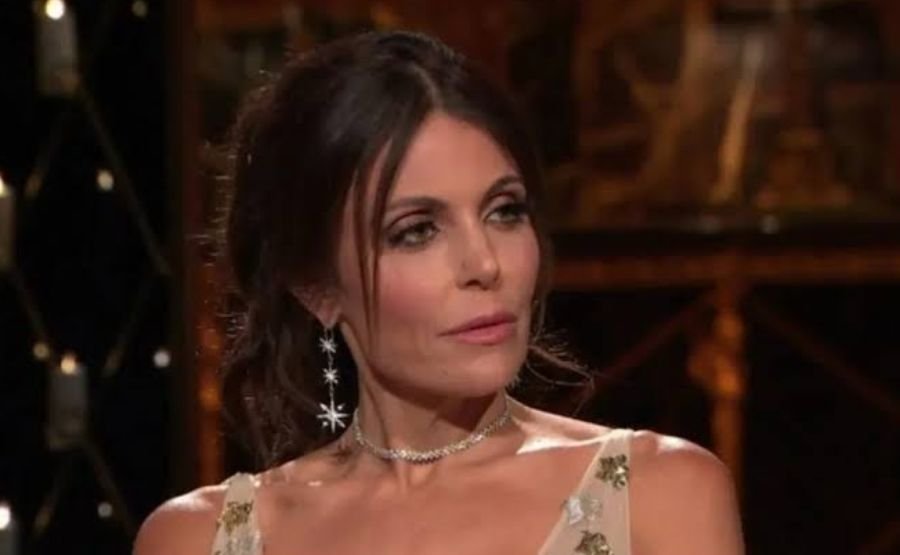
Bethenny Frankel joined the cast in its first season. She was different from the other women, and not just stylistically. She was sharp in a specific way — quick with a cutting observation, unafraid to say the uncomfortable thing, genuinely funny in a way that played well on camera without feeling performed. She also didn’t have the wealth of some of her castmates, which created a different kind of tension and watchability.
The show gave her something more valuable than money: a platform. Millions of people saw her every week. They heard her talk about food and health and the idea that you could enjoy life without punishing yourself nutritionally. They got the beginning of the pitch before she ever made the pitch.
Her first book, Naturally Thin: Unleash Your SkinnyGirl and Free Yourself from a Lifetime of Dieting, published in March 2009, hit the New York Times bestseller list and stayed there for eighteen weeks. That wasn’t a television promotional appearance converting into a book sale. That was a genuine reading audience investing in a point of view she had earned.
Skinnygirl: The Cocktail That Changed Her Life
Sometime around this period, Bethenny Frankel started serving a simple drink at social gatherings — a skinny margarita made with fresh lime juice, agave nectar, and clear tequila, specifically designed to avoid the caloric load of standard bar margarita mixes. It wasn’t a secret formula. It wasn’t particularly complicated. But it had a name and a concept: a cocktail for women who wanted to drink without the guilt that standard drinks were delivering by the gallon.
She trademarked the Skinnygirl name. She bottled the margarita. She began selling it.
The initial sales were modest. The distribution was limited. This was a startup operating on exactly the kind of shoestring financing that most food and beverage startups operate on before they get picked up or shut down.
But she had the television platform promoting it without it being an advertisement. Every time someone saw Bethenny on Real Housewives talking about drinking smart, the brand was present in their minds even if the bottle wasn’t in their hands. That’s not an accident — it’s brand strategy executed through the medium of personality.
In 2011, Beam Global — the spirits conglomerate behind Jim Beam bourbon, among dozens of other properties — acquired Skinnygirl Cocktails. The sale price was reported at approximately $120 million. Some accounts suggest the actual cash-to-Bethenny figure was lower due to the structure of the deal, but by any measure, she had turned a low-calorie margarita recipe into a nine-figure transaction.
She was forty years old.
The Personal Life Behind the Business Headlines
The same year the Skinnygirl brand was surging, Bethenny was documenting her personal life on a Bravo spinoff called Bethenny Getting Married? The show followed her engagement to pharmaceutical sales executive Jason Hoppy, their March 2010 wedding, and the birth of their daughter Bryn Casey Hoppy on May 8, 2010.
The show was enormously popular. It turned a business personality into a full lifestyle figure — someone audiences could follow through marriage, pregnancy, and parenthood in real time.
The marriage, documented so publicly at its beginning, ended in private crisis. Bethenny and Jason separated in December 2012. She filed for divorce in January 2013. What followed was one of the most protracted and legally complicated celebrity divorces of the decade — a custody dispute over Bryn that stretched through years of litigation, a financial settlement in 2016, and a divorce that wasn’t legally finalized until January 2021. Nine years from marriage to legal conclusion.
Her personal history before Jason had included a brief first marriage to Hollywood executive Peter Sussman in 1996, which lasted only about eight months. And after the Jason saga concluded, she dated banker Dennis Shields from 2016 until his death in August 2018, a loss she described publicly as devastating. She subsequently became engaged to film producer Paul Bernon, but that relationship ended in 2024.
Throughout all of it, her daughter Bryn remained the central constant and stated priority of her life.
Hardships: The Costs of Visibility
The Hoppy divorce was a genuine and sustained ordeal. Court filings became tabloid content. Custody disputes that most people navigate privately were navigated against the backdrop of a public persona that made privacy essentially impossible. Bethenny was candid in interviews about how draining the process was — financially, emotionally, and in terms of the time and mental energy it demanded.
She also talked publicly about her childhood trauma, the lasting effects of growing up in a household shaped by alcoholism and instability, and the ways those early experiences had made close relationships and trust more complicated for her. That candor — about therapy, about vulnerability, about the specific kinds of damage that difficult childhoods produce — was unusual for someone operating in the entertainment space and contributed to her credibility with an audience that recognized its own experiences in her descriptions.
There were also professional difficulties. A daytime talk show she launched in 2013, Bethenny, was cancelled after one season. Not everything worked. But she moved quickly from failures and held onto what she had built.
The Money, Explained Honestly
Bethenny Frankel’s net worth is estimated at approximately $80 million as of 2026. The Celebrity Net Worth figure of $80 million has been consistent across multiple years and multiple data points, making it the most reliable working estimate.
The foundation is the Skinnygirl sale. Even accounting for deal structure and taxes, the Beam Global transaction in 2011 delivered a life-changing sum. After that transaction, the Skinnygirl brand continued under Beam’s ownership and Bethenny’s licensing arrangement, generating ongoing royalty income.
Her real estate activity has been an independent wealth generator. She has purchased, renovated, and sold properties across New York City and surrounding areas with considerable success — including a Connecticut estate she bought for $4.25 million and sold for $7.825 million, nearly doubling her investment. She also held a Tribeca apartment and various Hamptons properties, buying and selling with consistent discipline.
Her television earnings from Real Housewives were reported at approximately $40,000 per episode in some periods, with higher earnings after her departure from and return to the show. Her books generated six figures in advances and substantial royalty streams. She earns from brand partnerships, sponsorships, and her social media presence across platforms.
Her early real estate transaction on a Mercer Street condo was less successful — she bought for $4.2 million, renovated, tried to sell for $5.25 million, and eventually accepted $3.65 million — a reminder that not every flip goes as planned. But the overall record is one of shrewd capital deployment.
She also launched a Cameo investment and maintains active income through podcasting, YouTube content creation, and social media partnerships.
What She’s Doing Now
As of 2026, Bethenny Frankel remains one of the most active social media personalities in her demographic, maintaining a large following across TikTok, Instagram, and YouTube. She has used those platforms to generate substantial advertising revenue while also occasionally stirring controversy — she publicly organized content creator opposition to what she described as exploitative practices by social media platforms, positioning herself as an advocate for fair compensation within the creator economy.
She founded and continues to operate BStrong, a philanthropic organization focused on disaster relief that she launched following Hurricane Maria’s devastation of Puerto Rico in 2017. BStrong has since responded to multiple additional disasters, working in partnership with distribution networks to deliver supplies to affected areas.
Her personal engagement ended in 2024, and she maintains a low profile regarding any new relationships. Her daughter Bryn is in her mid-teens and, by all accounts, remains the central priority.
She lives primarily in New York and continues to invest in real estate with the active attention she has applied to that market for years.
See also “Victoria Granucci Net Worth: California Blonde, Rock Wife, and the Woman Who Chose Quiet“
Final Words
Bethenny Frankel is not an easy figure to categorize. She is simultaneously a reality television star, a self-made business mogul, a trauma survivor turned candid public voice, a philanthropist, and a social media content creator who would fit none of those descriptions if you only knew one of them.
What runs through all of it is the same quality: an absolute refusal to let anyone else define the terms of her story. She grew up in a household that gave her every reason to become passive, dependent, or self-destructive. She became none of those things. She went to school, learned to cook, got on television, got laughed at, went back to television, launched a margarita company, sold it for nine figures, got married on camera, divorced in court for years, and kept building.
The specific lesson her career offers isn’t that selling a cocktail company is the path to wealth. It’s that building something real — a brand, an audience, a reputation for a particular kind of honest directness — creates value that the right moment can unlock, and that the person who built it most carefully tends to capture the most when that moment arrives.
Bethenny Frankel built carefully, for years, before anything important happened. That’s the part the headlines usually skip.
FAQs
1. What is Bethenny Frankel’s net worth?
As of 2026, Bethenny Frankel’s net worth is estimated at approximately $80 million. Celebrity Net Worth, which is widely regarded as the most consistent tracker of celebrity finances, places the figure at $80 million. This estimate reflects the Skinnygirl sale proceeds, television earnings, real estate profits, book royalties, and ongoing brand and social media income.
2. How did Bethenny Frankel make her money?
The single largest contributor to her wealth was the 2011 sale of Skinnygirl Cocktails to Beam Global, reported at approximately $120 million. Additional wealth came from her Real Housewives salary, her six published books, real estate transactions across New York City and Connecticut, brand partnerships, speaking engagements, and ongoing social media content income across platforms including TikTok, Instagram, and YouTube.
3. What is the Skinnygirl brand?
Skinnygirl began as a low-calorie cocktail line — specifically a skinny margarita made with fresh lime juice, agave nectar, and clear tequila — that Bethenny developed and began selling around 2009. After the Beam Global acquisition in 2011, the brand expanded into additional beverage varieties, food products, apparel, and kitchen accessories. It remains a recognized lifestyle brand under Beam’s ownership.
4. When and where was Bethenny Frankel born?
She was born Bethenny Robyn Frankel on November 4, 1970, in New York City. Sources give her birthplace variously as Queens or Manhattan; Wikipedia places her birth in New York City generally. She attended Boston University before transferring to and graduating from New York University with a BA in Psychology and Communications.
5. Who is Bethenny Frankel’s daughter?
Her daughter is Bryn Casey Hoppy, born on May 8, 2010. Bryn is her only child, with her second husband Jason Hoppy. Bethenny has consistently described Bryn as her primary focus across all of her public statements about her personal life.
6. How many times has Bethenny Frankel been married?
Twice. Her first marriage was to entertainment executive Peter Sussman in 1996; that marriage lasted approximately eight months and ended in divorce in 1997. Her second marriage was to pharmaceutical sales executive Jason Hoppy in March 2010; they separated in December 2012, and despite a financial settlement in 2016, the divorce was not legally finalized until January 2021 due to protracted custody litigation.
7. What happened with Bethenny’s relationship with Dennis Shields?
She dated Dennis Shields, a banker and childhood acquaintance, from approximately 2016 until his death in August 2018. His death was sudden, and Bethenny spoke about it publicly as a significant loss. She subsequently became engaged to film producer Paul Bernon in 2021, but that engagement ended in 2024.
8. What is BStrong?
Bethenny Frankel started and runs BStrong, a disaster assistance organization. She launched it in response to Hurricane Maria’s devastation of Puerto Rico in 2017, working to deliver emergency supplies to affected communities. The organization has since responded to additional natural disasters and humanitarian crises globally.
9. Did Bethenny Frankel write any books?
Yes, she has published six books. Her first and most commercially successful was Naturally Thin: Unleash Your SkinnyGirl and Free Yourself from a Lifetime of Dieting (2009), which remained on the New York Times bestseller list for eighteen weeks. She also published The SkinnyGirl Dish, A Place of Yes, Skinnydipping, and additional titles in both the cookbook and self-help categories.
10. When did Bethenny leave and return to Real Housewives?
She was a cast member from the show’s first season in 2008 and appeared through several seasons before departing in 2010 for her spinoff show Bethenny Getting Married? She returned to RHONY in 2015 for the seventh season before departing again in 2019. She appeared at a 2024 Real Housewives event alongside returning cast members, suggesting ongoing connection to the franchise.
11. What is Bethenny Frankel’s connection to social media advocacy?
She has been a vocal critic of what she describes as exploitative practices by social media platforms toward content creators, arguing that influencers and creators deserve more transparent compensation structures and greater control over their content rights. She organized campaigns to draw attention to the issue and positioned herself as an advocate for the creator community at a time when those discussions were becoming prominent in the industry.
12. What was Bethenny Frankel’s father known for?
Her father, Robert J. Frankel, was one of the most accomplished thoroughbred racehorse trainers in American history. He trained multiple champions and Eclipse Award winners over a career spanning decades, and was inducted into the National Museum of Racing and Hall of Fame. He and Bethenny had a complicated relationship, and she has spoken about his absence during her childhood as one of the defining difficulties of her early life. He died in 2009.