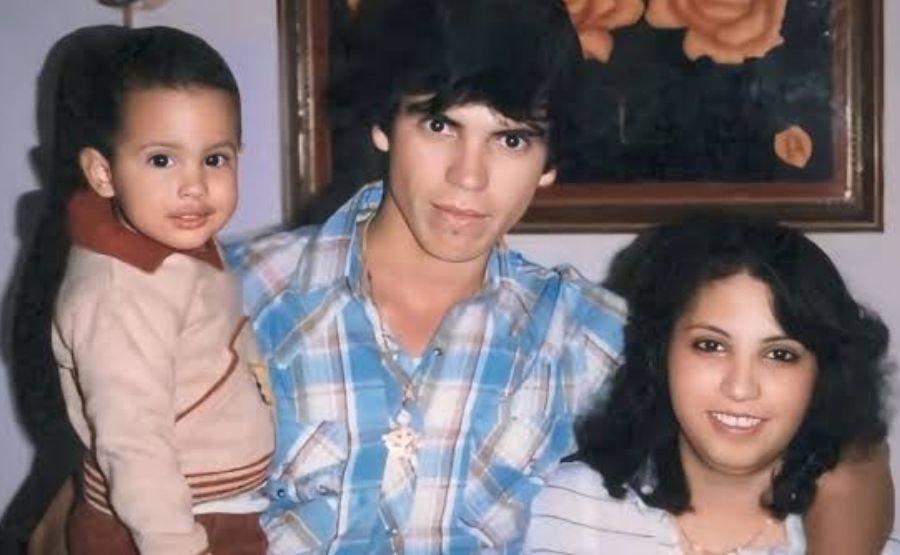
Marisela Vallejos Félix: The Individual Who Survived Two Losses
Quick Bio
| Detail | Info |
| Full Name | Marisela Vallejos Félix |
| Born | Date not publicly confirmed; raised in Mexicali, Baja California, Mexico |
| Nationality | Mexican-American |
| Known For | Wife of Chalino Sánchez — the late corrido legend who transformed regional Mexican music |
| Met Chalino | May 1983, introduced through his sister/cousin in Los Angeles, California |
| Married | 1984, Los Angeles, California |
| Children | Adán Chalino Sánchez Vallejos (1984–2004); Cynthia Sánchez Vallejos |
| Widowed | May 16, 1992 — Chalino murdered in Culiacán, Sinaloa, after a concert |
| Second Loss | March 2004 — son Adán died in a car accident in Sinaloa at age 19 |
| Current Status | Private; receives royalties from Chalino’s catalogue; no confirmed remarriage |
A Life Defined by Love and Loss
There are people who enter history sideways, through the story of someone they loved. Marisela Vallejos Félix is one of those people. She did not write corridos. She did not perform on stage. She did not seek the particular brand of dangerous fame that surrounded her husband for the eight years they shared together.
But she knew exactly who she was marrying. She understood what the world Chalino inhabited looked like from the inside, because she was there from the beginning — before the cassette tapes circulated through California’s Mexican immigrant community, before the shows drew thousands of people who loved the raw honesty of his voice, before the mythology formed around the man who sang about killers and drug runners with the matter-of-fact tone of someone who had lived close to exactly that world.
And then she spent the next three decades carrying two griefs that most people will never have to imagine: first her husband, then her son.
Marisela Vallejos Félix’s story deserves to be told on its own terms.
See also “Meredith Schwarz: The Private First Chapter of a Very Public Man’s Story“
From Mexicali: A Border City Beginning
Marisela was born and raised in Mexicali, Baja California — the border city that sits at the very edge of Mexico’s northwestern corner, directly across the international boundary from Calexico, California. It is a city shaped by the border in every direction: economically dependent on the maquiladora industry, culturally influenced by the constant movement of people and ideas between two countries, and socially formed by communities who exist in both worlds simultaneously without fully belonging to either.
Mexicali in the 1970s and early 1980s was a city of crossing and transition, and the people who grew up there developed a particular fluency in navigating between Mexican and American life. For a young woman from that world, the path to California was natural. Many of Mexicali’s residents had family on both sides of the line. Many worked in the fields and factories of the Imperial Valley on the American side. Many made their lives in both countries without ever choosing between them.
The specific details of Marisela’s family background — her parents, her siblings, her schooling — are not documented in the public record. She has never given the kind of extended biographical interview that would bring those details to light. What is known is the bare shape: a young woman from Mexicali, in Los Angeles at a specific moment, introduced to a man from Sinaloa by a family connection.
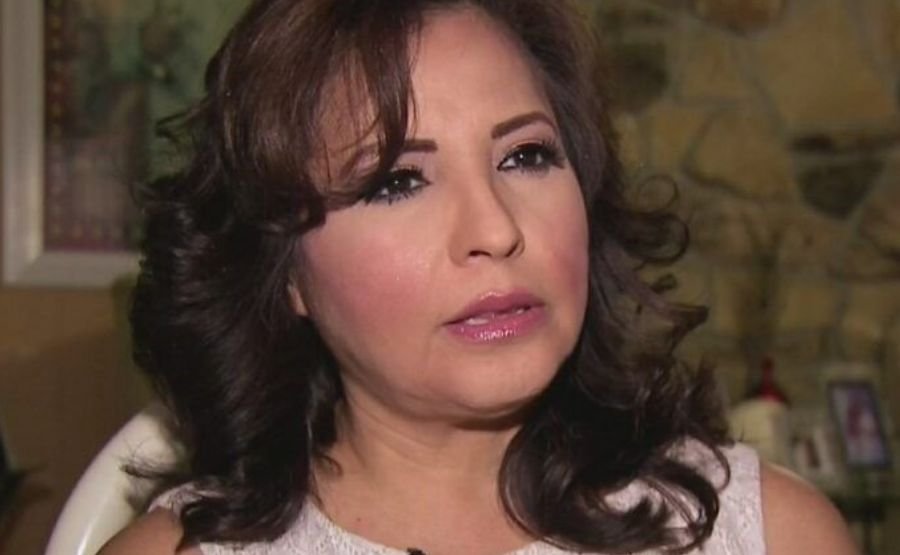
The Meeting That Divided Her Life in Two
In May 1983, Marisela Vallejos met Rosalino Sánchez Félix — the man everyone called Chalino.
He was not yet famous. He was twenty-two years old, from Las Flechas, a rural hamlet in the Sinaloa hills, working in the underground economy of Los Angeles while recording corridos for anyone who would pay him to sing about their deeds or their enemies. He was also a man who had killed someone. At fifteen, when his sister was assaulted by a local man with power and impunity, Chalino had taken a gun and ended that man’s life. He had fled Sinaloa as a consequence, made his way to Tijuana, eventually landed in California, and served time in an American prison. His music career had begun in jail. His songs were not about fictional heroes. They were about the world he actually knew.
When his cousin or sister — sources differ on the exact family connection — introduced him to Marisela that May, something clicked between them with the speed that sometimes happens between people who are ready for each other.
By 1984, she was pregnant with their first child.
They married in Los Angeles in 1984. The wedding was small and informal in the way that ceremonies among working-class Mexican immigrants in 1980s California often were. No cathedral, no society coverage, no large guest list. Just the two of them, a commitment, and a life beginning.
Their son Adán arrived on April 14, 1984. Their daughter Cynthia followed not long after, completing the family that Marisela would eventually be left to carry forward alone.
Life Alongside a Legend in the Making
The years between 1984 and 1992 were the years in which Chalino Sánchez transformed from an underground figure in the California Mexican immigrant community to a genuine phenomenon on both sides of the border. Marisela was beside him for the entirety of that journey.
The story of Chalino’s rise is inseparable from the particular world the Sánchez family inhabited. Los Angeles in the mid-to-late 1980s had one of the largest Mexican immigrant populations in the United States, and within that population was a subculture that genuinely craved the music Chalino was making — raw, authentic corridos that did not clean up the violence or romanticize the poverty, that named real people and real events, that sounded like someone who had actually been there because he had.
Cassette recordings of his performances circulated from hand to hand, car to car, party to party. He performed at quinceañeras and ranch events and informal gatherings. He was the kind of performer whose reputation spread through word of mouth rather than radio, through community rather than industry.
Marisela managed this life from the domestic side. She raised Adán and Cynthia through the years when Chalino’s schedule was irregular, when the income was uncertain, when the social world around them included people connected to exactly the kinds of criminal enterprises her husband sang about. She was a working mother in a difficult environment, maintaining a household and keeping her children stable while her husband built a career that operated at the margins of the legitimate entertainment world.
The pivotal moment that pushed Chalino’s name into genuine notoriety came in January 1992, when a gunman opened fire on him during a performance at a club in Coachella, California. Chalino drew his own weapon and shot back. People died. The incident became part of his legend. If there was any remaining distance between Chalino Sánchez and the world he sang about, that night collapsed it entirely.
After January 1992, his career accelerated dramatically. He was booked everywhere. He was on tour constantly. And he was also, though neither he nor Marisela knew it yet, living the last months of his life.
The Last Concert and the Irrigation Ditch
On the night of May 15, 1992, Chalino Sánchez performed at the Salon Bugambilias in Culiacán, Sinaloa. It was a homecoming of sorts — this was the state where he was born, the world whose stories had made him famous, the place his music had always come from even when he was singing from a stage in California.
During the concert, someone passed him a note. Those who have reconstructed the events agree that it was a threat — a warning that death was coming. Chalino read it and finished the performance anyway, which is either the act of a man who did not believe the threat or the act of a man who was not going to give anyone the satisfaction of watching him run.
After the show, he was taken in a vehicle through Culiacán. The convoy was intercepted — accounts vary on whether it was an unmarked police car or armed men, and the two possibilities are not mutually exclusive in the Mexico of 1992. He was pulled out of the vehicle.
His body was found the next morning in an irrigation ditch near an area called Los Laureles, on the outskirts of Culiacán. He had been shot multiple times. He was thirty-one years old.
The newspapers of Sinaloa ran the headline simply: Chalino Sánchez, Ejecutado. Chalino Sánchez, Executed.
Marisela learned she was a widow. Adán was seven years old. Cynthia was younger. The family that had been building itself across eight years was now permanently incomplete.
No one was ever charged with the murder. No cartel has ever been definitively linked to the killing. The mystery around Chalino’s death became part of his legend — another layer of the mythology that surrounded a man who had always existed at the border between corrido storytelling and the actual world those stories described.

Raising the Children of a Legend
When Chalino died, he left behind a growing catalogue of recordings, a devoted and expanding audience, and two small children who bore his name in a world where that name had just become something much larger than a family identity.
Marisela did what she had always done: she focused on her children. She raised Adán and Cynthia in the years that followed with the specific challenge of helping them navigate an identity that was both a gift and a weight. Their father was dead before Adán was old enough to have meaningful memories of him. Their father was also, simultaneously, becoming increasingly mythologized with each passing year as his music spread wider and deeper into the consciousness of Mexican and Mexican-American communities.
Adán, growing up in that shadow, developed his own genuine musical talent. He began performing corridos in his mid-teens. He was not trying to be Chalino — he made deliberate choices to sing about different subjects than his father had — but the comparisons were inevitable because the voice carried something that listeners recognized, and because his last name opened every door in the industry of regional Mexican music.
By his late teens, Adán Sánchez was developing a real career. He was performing in the United States and in Mexico. He was beginning to find his own lane in the genre his father had helped reshape.
Then, in March 2004, Adán died in a car accident in Sinaloa. He was nineteen years old. He had gone back to his father’s home state and did not come home.
Marisela lost her son twelve years after losing her husband. In the same state. Both violently and without warning. Whatever words exist for that kind of accumulation of grief, they are inadequate.
The Private Years and a Public Objection
After Adán’s death in 2004, Marisela withdrew further into private life. She has received royalties from Chalino’s extensive catalogue of recordings, which have continued to sell and to reach new generations of listeners as corridos and regional Mexican music have grown into one of the world’s most commercially successful genres. That passive income has presumably provided a degree of financial stability in the decades since Chalino’s death.
She made an uncommon public comment in 2018. The television biographical series Mariposa de Barrio, which dramatized the life of singer Jenni Rivera, included depictions of Chalino Sánchez and Marisela. She objected publicly to how she and Chalino had been portrayed, making clear that the dramatization did not reflect the reality of their relationship or their personalities as she understood them.
That objection is significant precisely because of how rare it was. It was one of the very few times in more than two decades of public life that Marisela Vallejos Félix asserted herself into a narrative that was being constructed around her family’s story.
She made her point. And then she went back to being private.
Her daughter Cynthia Sánchez Vallejos has maintained a largely private life as well. She is Chalino’s surviving child, the continuation of the family line he left behind. What Cynthia does or where she lives are not documented publicly in any significant way.
Hardships: The Arithmetic of Loss
Marisela Vallejos Félix’s hardships are not abstract or metaphorical. They are specific and verifiable.
She was widowed at an age — approximately her late twenties — when most women are building, not rebuilding. She was left to raise two young children in a social environment where their father’s name carried enormous meaning and enormous complication. She navigated the specific experience of watching a dead man become a legend while simultaneously trying to protect her living children from the weight of that legend.
And then she lost her son.
Twelve years after the murder of her husband, in the same state where he was killed, Adán died. He was nineteen. He was just becoming who he was going to be. He was the first child, the one who was already present when she and Chalino married, the one who had grown up with the specific task of being Chalino Sánchez’s son.
The Mexican entertainment press covered Adán’s death extensively. The grief was public. Marisela’s grief, as always, was not.
Net Worth and Financial Reality
Marisela Vallejos Félix’s financial situation rests primarily on the royalties from Chalino Sánchez’s musical catalogue. In the years since his death in 1992, his recordings have not declined in commercial relevance — if anything, they have grown in significance as corridos have exploded in popularity globally. Streaming platforms have reached new generations of listeners who discovered Chalino through social media and viral content.
The management of those royalties and the estate’s intellectual property is the primary known financial dimension of her life. The specific figures involved are not documented publicly. She hasn’t discussed money in any interviews. What can be said is that Chalino’s catalogue represents real and continuing value — not a fixed asset but a living one, generating income across decades.
She has not married again, as far as the public record reflects. Whatever financial decisions she has made are entirely private.
A Life Lived Quietly
As of 2026, Marisela Vallejos Félix is somewhere in her mid-sixties — her exact birth year is not documented — living a life that she has kept consistently private for over three decades. She has one surviving child, Cynthia Sánchez Vallejos. She has grandchildren, presumably. She has the recordings of a husband who is now, thirty-plus years after his death, regarded as one of the foundational figures of modern corrido music.
The cultural weight attached to the name Sánchez in the regional Mexican music world continues to grow. The narcocorrido genre that Chalino helped define has influenced multiple generations of artists. His face appears on murals. His songs are covered and sampled. Documentaries reference him. Young artists name-check him. He has become, in the fullest possible sense, an icon — which means he belongs to everyone now, in a way that must seem odd to the lady who knew him as her spouse and child’s father.
Marisela has never participated in that transformation of her husband into symbol. She has simply kept living. That choice, sustained for over thirty years against the constant pull of other people’s interest in her story, is its own form of quiet strength.
Final Words
Marisela Vallejos Félix entered history because of who she loved. That is not a diminishment — it is an acknowledgment of the specific way that the people beside extraordinary lives carry their own extraordinary weight.
She married a man at the beginning of his legend and was widowed before the legend was half-formed. She raised two children who bore the complications of a famous, murdered father’s name. She buried her son twelve years later in the same violent geography that had taken her husband. And she did all of this in public only insofar as the public forced its way in. When she had the choice, she chose privacy.
What makes her story distinctive is not the tragedy, though the tragedy is real and substantial. It is the consistency of her response to circumstances she did not choose. She did not convert her grief into visibility. She did not build a public brand from her association with Chalino’s name. She raised her children, protected what was hers to protect, and lived in the manner she judged most honest.
That Chalino Sánchez’s music continues to reach people — that teenagers in Los Angeles and Culiacán and Mexico City still play his cassettes and streams and feel something real in the voice that came from a man who lived the way he died — is a legacy she carries without carrying it forward. It simply persists, the way genuine things do.
Marisela Vallejos Félix, silent and unharmed, continues to stand next to it.
FAQs
1. Who is Marisela Vallejos Félix?
Marisela Vallejos Félix is a Mexican woman best known as the wife of the late Chalino Sánchez, one of the most influential figures in the history of regional Mexican corrido music. She was born and raised in Mexicali, Baja California, Mexico, met Chalino in Los Angeles in 1983, married him in 1984, and was widowed when he was murdered in Culiacán, Sinaloa, on May 16, 1992. In the years after his passing, she reared Adán Chalino Sánchez Vallejos and Cynthia Sánchez Vallejos, their two children.
2. How did Marisela Vallejos and Chalino Sánchez meet?
They were introduced in Los Angeles, California, in May 1983, through a cousin or sister of Chalino’s — sources differ on the specific family connection. Chalino was working in California at the time, building the underground career in corrido music that would eventually make him famous. Marisela was from Mexicali, Baja California. They married in Los Angeles in 1984.
3. Did Marisela Vallejos know about Chalino’s violent past when they married?
This is not something Marisela has ever addressed publicly. What is documented is that Chalino’s history — including his killing of a man in Sinaloa at age fifteen in response to the assault of his sister, his flight from Mexico, his imprisonment in California — was part of who he was and was not hidden from the people around him. She was well aware of the world they both lived in when she married him.
4. What happened to Chalino Sánchez?
On the night of May 15, 1992, Chalino performed at the Salon Bugambilias in Culiacán, Sinaloa. During the concert, he received a note that is widely believed to have been a death threat. After the show, the vehicle he was traveling in was intercepted on the streets of Culiacán. His body was found the following morning in an irrigation ditch near Los Laureles, shot multiple times. He was thirty-one years old. No one was ever charged with the murder.
5. Who were Marisela and Chalino’s children?
Their son was Adán Chalino Sánchez Vallejos, born April 14, 1984. He grew up to become a corrido singer himself, building a legitimate career in regional Mexican music in both the United States and Mexico before his death in a car accident in Sinaloa in March 2004 at age nineteen. Their daughter is Cynthia Sánchez Vallejos, who has maintained a private life.
6. How did Adán Sánchez die?
Adán Sánchez died in a car accident in Sinaloa, Mexico, in March 2004. He was nineteen years old and had been visiting his father’s home state. The accident claimed his life immediately. His death was a devastating second loss for Marisela, coming twelve years after Chalino’s murder.
7. Has Marisela Vallejos Félix ever spoken publicly about Chalino?
She has largely maintained public silence about her husband and her personal history. In 2018, she broke that silence briefly to publicly object to how she and Chalino were depicted in the Jenni Rivera biographical television series Mariposa de Barrio, stating that the portrayal did not accurately reflect them. Outside of that, she has not given extended interviews or media appearances discussing her marriage or her grief.
8. Does Marisela Vallejos Félix receive income from Chalino’s music?
Yes. Multiple sources confirm that she receives royalties from Chalino Sánchez’s recordings, which have continued to sell and stream across the decades since his death. Chalino’s catalogue has grown in commercial significance as corridos have expanded into a global genre, meaning his estate generates ongoing income.
9. Has Marisela Vallejos Félix remarried?
There is no confirmed public record of Marisela having remarried after Chalino’s death in 1992. She has maintained a private life that does not include any publicly documented romantic relationships.
10. Where is Marisela Vallejos Félix now?
Her current location is not part of the public record. She is believed to be living somewhere in the United States or Mexico, maintaining the private life she has upheld for more than three decades since Chalino’s murder. She is in her mid-sixties as of 2026.
11. Why is Chalino Sánchez so culturally important?
Chalino Sánchez is widely credited with transforming the corrido genre — traditional Mexican narrative song — by stripping away its romantic and heroic conventions and replacing them with raw, first-person realism about violence, crime, loyalty, and death in the border region. He recorded and performed corridos about real people, including drug traffickers, at a time when such work was genuinely dangerous. His assassination in 1992 cemented his status as a martyr figure. Subsequent generations of artists have cited him as foundational to the contemporary corrido and narcocorrido movements.
12. How does the Mariposa de Barrio controversy relate to Marisela?
Mariposa de Barrio was a biographical television series about singer Jenni Rivera that aired in 2017. Chalino Sánchez and Marisela Vallejos were depicted in the series as part of the Rivera family’s broader story. In 2018, Marisela publicly objected to the portrayal, asserting that the show did not accurately represent her or her late husband. Her objection was one of the rare moments in which she asserted herself into a public narrative about her own life.
Explore stories that inspire curiosity with The Imperial Magazine.


2 Comments