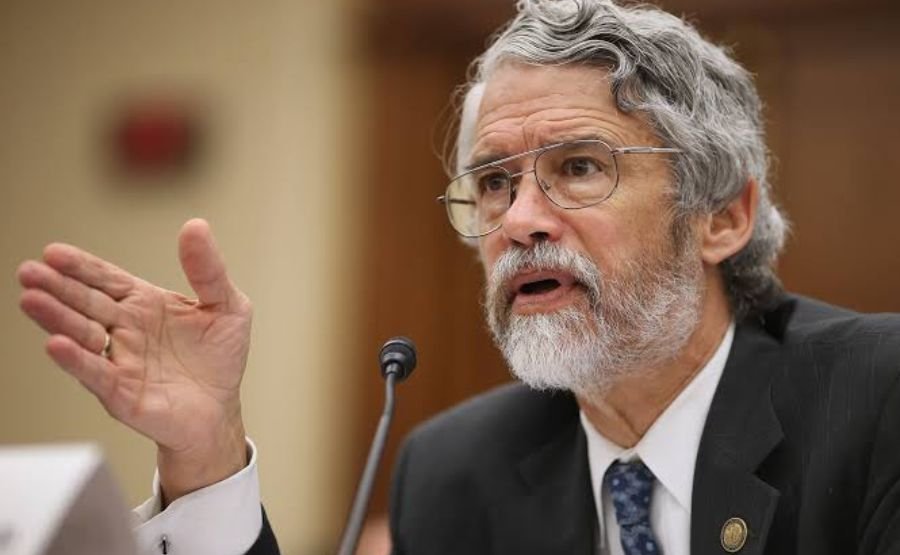
John Holdren: The Scientist Who Talked to Presidents
Quick Bio
| Detail | Info |
| Full Name | John Paul Holdren |
| Born | March 1, 1944, Sewickley, Pennsylvania |
| Nationality | American |
| Occupation | Physicist, environmental scientist, public policy scholar |
| Known For | Longest-serving White House Science Advisor in U.S. history (Obama administration, 2009–2017) |
| Education | B.S. and M.S., MIT; Ph.D., Stanford University (plasma physics, 1970) |
| Spouse | Dr. Cheryl E. Holdren (married 1966) |
| Children | One son, one daughter; five grandchildren |
| Current Base | Cape Cod, Massachusetts |
| Notable Awards | MacArthur Fellowship (1981), Tyler Prize (2000), NAS Public Welfare Medal (2022), AIP Karl Compton Medal (2026) |
Who He Is and Why He Matters
There’s a particular kind of thinker the world doesn’t produce in great numbers — someone who can do hard physics in the morning, argue nuclear policy with a senator in the afternoon, and spend the evening writing about the long-term consequences of burning coal. John Holdren is that person.
For most of his career, he has occupied an unusual position: too much of a scientist to be purely a politician, and too deeply engaged in politics to be purely an academic. He is the rare figure who has genuinely done both, moving between lecture halls and the corridors of power with equal fluency. When President Barack Obama named him science advisor in late 2008, Holdren became the custodian of a role that is easy to underestimate — the person standing between the American president and a world of rapidly accelerating science, interpreting what it all means and what should be done about it.
He would go on to hold that post for eight years, longer than anyone before him since the Office of Science and Technology Policy was formally created by Congress in 1976. He would be a noteworthy historical figure just for that. But his story is richer and more complicated than that milestone suggests.
See also “Matthew Trebek: Building a Life Beyond the Spotlight“
Growing Up Between Two Coasts
John Holdren was born in the early spring of 1944, in Sewickley, Pennsylvania — a small town near Pittsburgh with a quiet, established feel to it. His family didn’t stay long. The Holdrens relocated to California during his early years, and it was in San Mateo, on the San Francisco Peninsula, that the future scientist spent his formative years attending public schools.
San Mateo in the 1950s was a comfortable, middle-class suburb caught between two worlds. The Bay Area was transforming rapidly around it, with technology and aerospace research expanding up and down the peninsula. The Cold War hung over everything. Americans were watching the skies — partly in fear of Soviet missiles, partly in wonder at the new age of space exploration that was dawning right before their eyes.
For a curious, intellectually gifted kid like young John, that atmosphere was electric. He read voraciously. He was particularly drawn to books that explored the ways science intersected with real-world decisions — not just the formulas and discoveries, but what they meant for societies and governments and the future of civilization. By the time he finished high school, the direction of his life was already quietly forming: he didn’t just want to understand science. He wanted to understand what science meant.
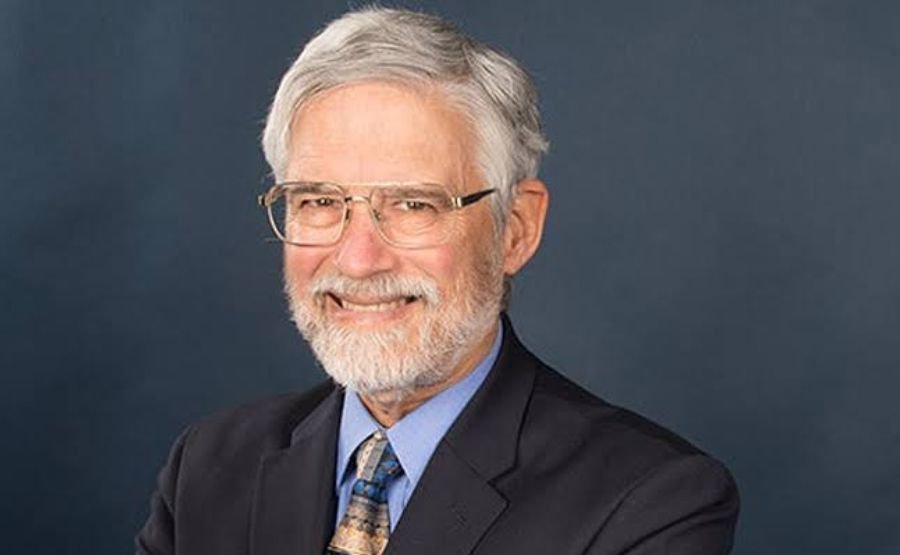
The Making of a Physicist — and Something More
Holdren went east for college, enrolling at the Massachusetts Institute of Technology. MIT in the early 1960s was one of the most intense intellectual environments in the world. Holdren studied aeronautics and space science, picking up minors in physics, and then stayed on long enough to earn a master’s degree there as well. He was clearly exceptional — but even at MIT, with its legions of brilliant students, he stood out as someone who thought about science differently, not just as a puzzle to be solved but as a force with moral weight.
He then moved to Stanford to pursue his doctorate, working under the supervision of plasma physicist Oscar Buneman. His dissertation tackled a deeply technical problem in plasma physics — the stability of inhomogeneous, confined plasmas — and earned him his Ph.D. in 1970. By the standards of his field, it was rigorous, demanding work. Plasma physics at that time was closely tied to fusion energy research, the dream of replicating the process that powers the sun and harnessing it as a clean, virtually limitless energy source.
What made Holdren unusual even then was that he was simultaneously developing an interest in what scientists sometimes call the “meta-questions” — not just how nuclear energy works, but what its existence means for human civilization, for warfare, for the environment. That combination of technical depth and moral seriousness would define his entire career.
First Steps: From Livermore to Berkeley
Fresh out of Stanford, Holdren took a position at Lawrence Livermore National Laboratory, the storied federal research facility in California associated with nuclear weapons development. His work there was in the fusion energy division — theoretical plasma physics — but the nature of the lab meant he also had a security clearance that gave him a window into the weapons side of the house. That experience left a deep impression.
It sharpened something that had been stirring since his high school reading days: a conviction that scientists who understood these technologies had an obligation to engage with the political and ethical questions they raised. Nuclear weapons weren’t just a physics problem. They were humanity’s most dangerous invention, and people who understood them had a responsibility to speak.
After a brief stint at Caltech as a senior research fellow, Holdren joined the faculty at the University of California, Berkeley in 1973. This turned out to be one of the most consequential decisions of his life. Berkeley was intellectually alive in every direction, and Holdren found his footing in an ambitious new venture: he co-founded the Energy and Resources Group, an interdisciplinary graduate program that brought together scientists, economists, social scientists, and engineers to grapple collectively with questions of energy, environment, and sustainability.
This was genuinely radical in academic terms. Universities in the 1970s were not accustomed to tearing down the walls between departments. Holdren believed — and spent two decades proving — that the problems facing the planet couldn’t be understood, let alone solved, by any single discipline. He ran that program until 1996, shaping a generation of thinkers who went on to careers in academia, government, and environmental policy.
The Ehrlich Connection and a Famous Bet
During his Berkeley years, Holdren developed a close intellectual partnership with biologist Paul Ehrlich, one of the most provocative environmental thinkers of the era. Together — and sometimes with Ehrlich’s wife Anne — they produced a substantial body of work on population growth, resource depletion, and environmental degradation. This partnership would prove both defining and, at times, problematic for Holdren’s public reputation.
Their 1977 textbook, Ecoscience: Population, Resources, Environment, written with both Ehrlichs, was a vast, ambitious attempt to survey the state of humanity’s relationship with its planet. It covered almost everything — energy systems, food production, pollution, and yes, population policy, including a frank discussion of a wide range of measures that governments around the world had considered or implemented. That discussion would return to haunt Holdren three decades later.
Holdren was also a supporting player in one of the most famous wagers in the history of environmental science — the Simon-Ehrlich bet. In 1980, Paul Ehrlich, in consultation with Holdren and colleague John Harte, accepted a challenge from economist Julian Simon to bet on whether the prices of five key metals would rise over the following decade. Ehrlich and company believed resource scarcity was accelerating; Simon thought human ingenuity would prevail. By 1990, all five metal prices had fallen. Simon won. It was an uncomfortable data point for those in Holdren’s orbit, though Holdren himself would argue that commodity prices capture only a slice of the picture when measuring environmental stress.
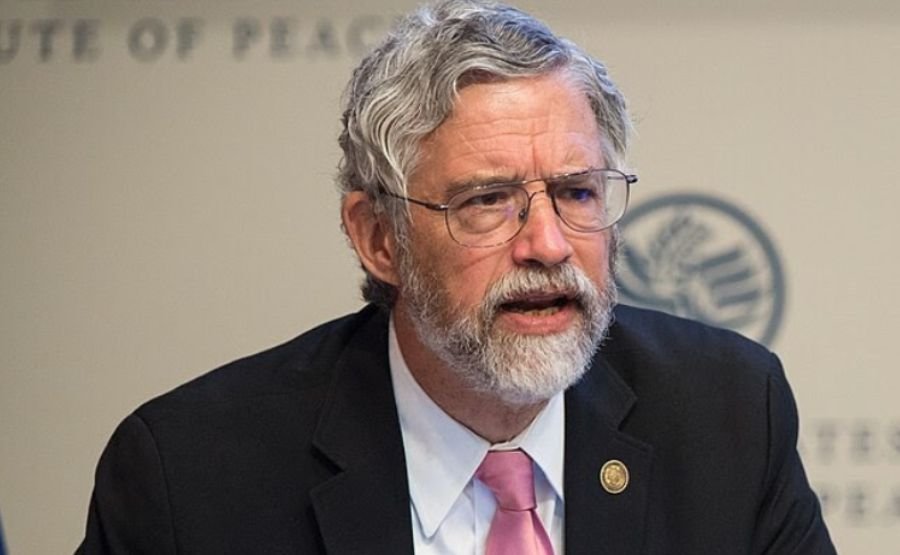
Harvard, the Pugwash Conferences, and a Nobel Moment
In 1996, after more than two decades at Berkeley, Holdren made the move to Harvard. He joined the Kennedy School of Government as the Teresa and John Heinz Professor of Environmental Policy — a position named after the late Senator from Pennsylvania and his philanthropist wife. He also took on the directorship of the Science, Technology, and Public Policy Program at the Belfer Center for Science and International Affairs.
Harvard was in some ways a natural evolution. Holdren had always been interested in the policy dimensions of science, and the Kennedy School sits right at that intersection. It’s a place where future senators, cabinet secretaries, and ambassadors study alongside scientists and economists, and where the line between academic work and real-world impact is deliberately blurred.
But before he’d even arrived at Harvard, Holdren had already been building an international presence through his involvement with the Pugwash Conferences on Science and World Affairs. This is an organization with a fascinating history — founded in 1957 in a small Nova Scotia fishing village at the urging of philosopher Bertrand Russell and physicist Albert Einstein, Pugwash brought together scientists from across the Iron Curtain to discuss nuclear dangers with a candor that governments couldn’t officially permit.
Holdren had first participated in Pugwash back in 1973. By 1987, he was chairing the organization’s executive committee. And in December 1995, he stood in Oslo to accept the Nobel Peace Prize on behalf of Pugwash — one of the more extraordinary moments in a career full of them. It was a recognition that the patient, often invisible work of scientists talking to each other across political divides genuinely mattered.
Biggest Achievements and the Weight of Recognition
The honors have accumulated steadily across Holdren’s career, and they span an unusually wide range of fields and institutions — a signal of just how broadly his work has touched different communities.
One of the first and most meaningful came in 1981, when he received one of the inaugural MacArthur Foundation Prize Fellowships, the awards now universally known as “genius grants.” Being among the very first class of recipients was a sign of what the MacArthur Foundation saw as transformative potential in Holdren’s way of thinking.
He later received the Volvo International Environment Prize in 1993 — sharing it, fittingly, with Paul Ehrlich — followed by the Tyler Prize for Environmental Achievement in 2000, widely regarded as the environmental equivalent of the Nobel Prize. The Heinz Prize in Public Policy came in 2001. He has been recognized by governments from South Korea to Japan, receiving medals and honors for his contributions to international science diplomacy.
In 2022, the National Academy of Sciences — the most prestigious scientific body in the United States — awarded him its Public Welfare Medal, described as the Academy’s highest honor, reserved for those who have made extraordinary contributions to science in service of the broader public good. Previous recipients have included Carl Sagan, Norman Borlaug, and Anthony Fauci — company that says something about the level at which Holdren is regarded.
Most recently, in December 2025, the American Institute of Physics announced that Holdren would receive the 2026 Karl Taylor Compton Medal for Leadership in Physics — recognition “for his scientific leadership in supporting important international accords, sensible governmental policies, and public engagement.”
He belongs to the American Academy of Arts and Sciences, the National Academy of Engineering, and the National Academy of Sciences. He is a foreign fellow of Britain’s Royal Society. He served as president of the American Association for the Advancement of Science from 2006 to 2007. Seven universities have given him honorary doctorates.
Eight Years at the President’s Side
The phone call that changed everything came in December 2008. President-elect Barack Obama had already signaled that he intended to treat science seriously — and he made that unmistakably clear when he nominated Holdren to serve as Director of the White House Office of Science and Technology Policy and as his personal Science Advisor.
The Senate confirmed Holdren unanimously on March 19, 2009 — a detail worth noting, given how polarized confirmation battles had become by that point. He would serve for the full eight years of Obama’s presidency, logging the longest tenure anyone has held the role since Congress formally created the OSTP position in 1976.
What does a White House science advisor actually do? It’s a question Holdren spent years trying to explain to people who weren’t sure why science needed its own representative in the West Wing. The short answer is almost everything: advising on climate policy, clean energy, public health, cybersecurity, the national space program, Arctic policy, and the funding strategies for federal research and development programs across dozens of agencies. Coordinating the interagency science apparatus. Representing American science to the world’s scientific community.
Holdren threw himself into the job with the accumulated energy of a lifetime of preparation. He was a tireless advocate for climate action, helping to frame both the scientific case and the policy case for what would eventually become the Paris Agreement. He pushed hard for sustained investment in clean energy research and was a voice for elevating scientific integrity inside a federal government that had seen it eroded during previous administrations. He co-chaired the President’s Council of Advisors on Science and Technology and helped develop STEM education initiatives.
He also appeared on late-night television, gave countless speeches, and made himself available to journalists, students, and civic groups in ways that signaled his belief that communicating science publicly was itself part of the job.
Personal Life: A Partnership of Scientists
John Holdren has been married to Dr. Cheryl E. Holdren since 1966 — a union that has now passed its sixtieth year. Cheryl is a biologist, and by all accounts their long marriage has been not just a personal partnership but an intellectual one. They have a son and a daughter together, and five grandchildren.
The couple has lived in various places across Holdren’s career — Cambridge during the Harvard years, Washington during the White House years — and have settled on Cape Cod in Massachusetts, not far from the Woodwell Climate Research Center, where Holdren has remained active as a senior advisor.
He has spoken in various venues about what drives him — and it’s clear that the concern is not abstract. He has grandchildren now. He can look at a climate projection for 2070 or 2080 and feel its weight in a personal way that is different from a young researcher who sees those numbers only as data. That combination of grandfather’s urgency and scientist’s rigor runs through everything he does now.
Hardships and the Storms of Public Life
For all the honors and achievements, Holdren’s life in public has not been without turbulence. The sharpest and most sustained came in 2009, when his nomination to the OSTP post triggered a fierce campaign from conservative critics who combed through his decades of published work looking for ammunition.
They found it — or thought they did — in Ecoscience, the 1977 textbook. The book included an extended, academic discussion of population policy options, including coercive measures that had been implemented or proposed in various countries around the world. Critics, particularly on the political right, quoted passages from that discussion and framed them as evidence that Holdren personally advocated forced sterilization, coercive abortions, and other extreme population-control measures.
Holdren denied these characterizations forcefully and specifically. He stated plainly, both at his confirmation hearings and in public statements, that he had never supported and did not support coercive approaches to population control — that the book was an academic survey of what existed, not an endorsement. The Ehrlichs issued similar statements. And ultimately, the Senate confirmed him without a single dissenting vote.
But the controversy didn’t entirely disappear. For critics ideologically opposed to climate action or environmental regulation, the Ecoscience passages remained a convenient stick. And the episode illustrated something real about public life: a sentence written in a different era, in a different context, doesn’t disappear. It waits for its moment.
The Simon-Ehrlich bet outcome also represented a kind of intellectual discomfort for Holdren and his allies — a concrete, empirical instance in which predictions associated with their worldview had been wrong. Holdren has generally responded to such criticisms by arguing that resource prices are an incomplete measure of environmental health, that the bet’s terms excluded too many relevant variables, and that the broader trajectory of planetary stress validates concern. But the debate has continued for decades.
Money and Net Worth: A Life in Academia and Public Service
It’s worth being straightforward here: John Holdren is not a wealthy man by the standards of someone with his prominence and influence. His entire career has unfolded in academia, national labs, nonprofit organizations, and government — none of which make people rich.
Harvard professorships at his level carry substantial salaries by academic standards — typically in the range of $300,000 to $500,000 annually for senior full professors at elite institutions — though these figures vary and are not publicly disclosed for individual faculty. During his White House years, his salary would have been in the range of senior executive branch officials, somewhere around $175,000 to $200,000 per year.
His net worth is not publicly reported and he does not appear on any wealth rankings. He has no known business interests or investment portfolios of significance. He has lived, throughout his career, the life of a serious scholar who made choices based on what he found important — not on financial reward. For Holdren, that has clearly been a considered and deliberate trade.
What He’s Doing Now
Holdren formally retired from his named professorship at Harvard in June 2021, but “retired” is a word that fits awkwardly in his case. He continues as a Research Professor at Harvard’s Kennedy School and remains Co-Director of the Science, Technology, and Public Policy Program at the Belfer Center. He is also President Emeritus and a Senior Advisor to the President of the Woodwell Climate Research Center on Cape Cod.
He keeps publishing, keeps speaking, keeps showing up in the policy conversations that matter most to him — climate change, nuclear security, clean energy transition, and the institutional structures that allow science to inform governance. The Belfer Center’s page for Holdren shows contributions stretching into 2026, which suggests a man whose intellectual pace has not slowed much.
Receiving the AIP Karl Compton Medal in 2026 means his peers in the physics community continue to see his career as an active example of what science leadership can look like. At 82, John Holdren appears to be a man who has not yet finished the work he started.
Final Words
What makes John Holdren distinctive is not any single achievement — though the list is long — but the stubborn, decades-long insistence on a particular kind of engagement. He made a choice, somewhere in his youth in San Mateo, reading those books about science and public affairs, that he would not choose between understanding the world and trying to change it. He would do both.
That sounds simple. It isn’t. Most scientists who engage seriously with policy end up diluted by it, their technical credibility worn down by the compromises political life demands. Most policymakers who try to engage seriously with science end up overwhelmed by its complexity, retreating into simplified talking points. Holdren managed, for most of his career, to hold both together — the plasma physicist who could read a density matrix and the policy advocate who could brief a senator. The rare person who can function equally well in a seminar room and a situation room.
His legacy is also complicated in ways worth acknowledging honestly. The Ecoscience controversy will continue to follow his name. Some of his predictions and associations from the 1970s and 1980s have aged poorly. Science is a process of revision, and his views on resource scarcity have been contested by smart people with good arguments.
But on the core question of his career — whether planetary environmental challenges are real, whether they demand sustained political will, whether scientists have an obligation to engage publicly rather than hiding in their labs — Holdren has been consistently and clearly right. And he has lived that conviction across more than five decades, through changes in administration, changes in scientific understanding, and changes in the political climate that have often made that engagement unwelcome.
He’s the kind of figure whose full importance may only become clear in retrospect, when we’re looking back at the period when humanity first truly reckoned with what it had done to the planet’s climate. John Holdren was one of the people who spent his entire adult life insisting we take that reckoning seriously. That matters. It will matter more with time.
See also “Matthew Trebek: Building a Life Beyond the Spotlight“
FAQs
1. Where was John Holdren born and where did he grow up?
He was born on March 1, 1944, in Sewickley, Pennsylvania, a small town near Pittsburgh. His family relocated to California when he was young, and he spent his formative years in San Mateo, in the San Francisco Bay Area, attending public schools there.
2. What did John Holdren study at university?
He earned both a bachelor’s degree and a master’s degree from MIT, where he majored in aeronautics and space science with minors in physics. He then went to Stanford, where he earned his Ph.D. in 1970 in theoretical plasma physics, supervised by physicist Oscar Buneman.
3. What was Holdren’s very first job after graduating?
He joined Lawrence Livermore National Laboratory in California as a theoretical physicist in the fusion energy division. The position came with a security clearance that also exposed him to the lab’s nuclear weapons research — an experience that deepened his lifelong engagement with nuclear policy.
4. What is the Office of Science and Technology Policy, and what did Holdren do there?
OSTP is the White House office that advises the President on matters of science and technology. As its director under President Obama from 2009 to 2017, Holdren advised on everything from climate change and energy policy to cybersecurity, space exploration, and federal research funding. He became the longest-serving person to hold the role since OSTP was formally established by Congress in 1976.
5. What is the Pugwash Conferences controversy or significance?
Pugwash is an international organization founded in 1957 to foster dialogue between scientists — initially across the Cold War divide — on nuclear dangers and global security. Holdren joined in 1973, eventually chaired its executive committee, and in 1995 gave the Nobel Peace Prize acceptance speech on its behalf when the organization won the prize alongside its founder, Joseph Rotblat.
6. What was the Ecoscience controversy about?
When Holdren was nominated by Obama, critics pointed to a 1977 textbook he co-authored with Paul and Anne Ehrlich that discussed various population-control policies, including coercive ones. The critics claimed Holdren personally endorsed forced sterilization and compulsory abortion. Holdren denied these characterizations, stating he had never supported coercive approaches, and the Senate confirmed him unanimously. The controversy has remained a point of contention in conservative media.
7. Who is John Holdren married to?
He has been married since 1966 to Dr. Cheryl E. Holdren, who is a biologist. They have two children — a son and a daughter — and five grandchildren, and they live on Cape Cod, Massachusetts.
8. What are Holdren’s most significant awards?
The list is extensive, but the highlights include a MacArthur Foundation Fellowship (1981), the Tyler Prize for Environmental Achievement (2000), the Heinz Prize in Public Policy (2001), the National Academy of Sciences Public Welfare Medal (2022), and the AIP Karl Taylor Compton Medal for Leadership in Physics (2026). He has also received honors from the governments of South Korea, Japan, and Britain’s Royal Society, among others.
9. What was the Simon-Ehrlich wager, and was Holdren involved?
The bet was a 1980 wager between biologist Paul Ehrlich and economist Julian Simon over whether the prices of five key metals would rise over the next decade. Holdren was one of the advisors who helped Ehrlich set the terms of the bet. By 1990, all five metals had dropped in price, and Ehrlich’s side lost. The wager has since become a touchstone in debates about resource scarcity and environmental pessimism.
10. How long did Holdren teach at Berkeley?
He was on the Berkeley faculty from 1973 to 1996 — over two decades — during which he cofounded and codirected the Energy and Resources Group, a pioneering interdisciplinary graduate program that brought together natural and social scientists to study energy and environmental challenges.
11. Is John Holdren still active today?
Yes. Though he formally retired from his named Harvard professorship in June 2021, he continues as a Research Professor and co-director of a policy program at Harvard’s Belfer Center. He also serves as President Emeritus and Senior Advisor at the Woodwell Climate Research Center on Cape Cod. He continues to write, speak, and contribute to policy discussions in 2026.
12. What is John Holdren’s approximate net worth?
No reliable public figure exists for his net worth, and it is likely modest by the standards of someone of his influence and prominence. His entire career has been in academia, government service, and nonprofits — sectors that compensate well professionally but do not generate substantial wealth. He has no known business interests or equity holdings of note, and his life choices suggest financial gain was never a primary motivation.




One Comment