Mariella von Reininghaus: The Baroness Who Stood Beside Formula One’s Most Fearless Driver
Quick Bio
| Detail | Info |
| Full Name | Mariella Baroness von Reininghaus |
| Born | Approximately 1950, Graz/Styria, Austria |
| Nationality | Austrian |
| Occupation | Socialite; member of Austrian brewing aristocracy |
| Known For | Long-term fiancée of three-time Formula One World Champion Niki Lauda; descendent of the Reininghaus brewing dynasty |
| Family Dynasty | Reininghaus family — founders of Brüder Reininghaus AG, the first steam-powered brewery in Styria, established 1853 in Graz |
| Relationship with Lauda | Approximately 1967–1975 (approximately eight years) |
| Relationship End | Lauda ended the engagement in 1975 to begin relationship with Marlene Knaus |
| Post-Lauda Life | Entirely private; no confirmed subsequent marriages or public appearances documented |
| Film Portrayal | Referenced in the 2013 Ron Howard film Rush |
| Net Worth Context | Born into one of Austria’s wealthiest brewing aristocratic families |
A Woman at the Edge of History
There are figures in the stories of famous people who get remembered mostly in relation to someone else. They appear in photographs at famous events, they stand in the background of pivotal moments, and history files them away as a footnote when they deserve something more thoughtful.
Among them is Mariella von Reininghaus.
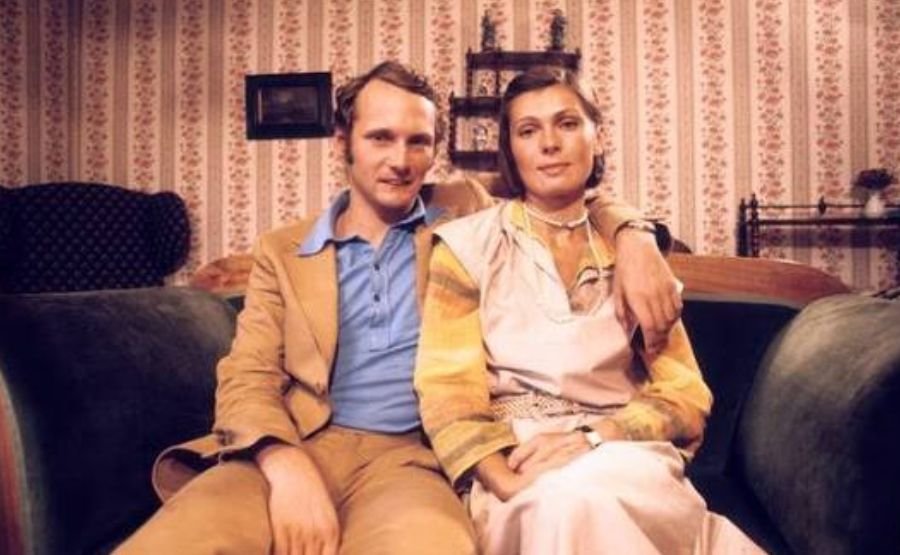
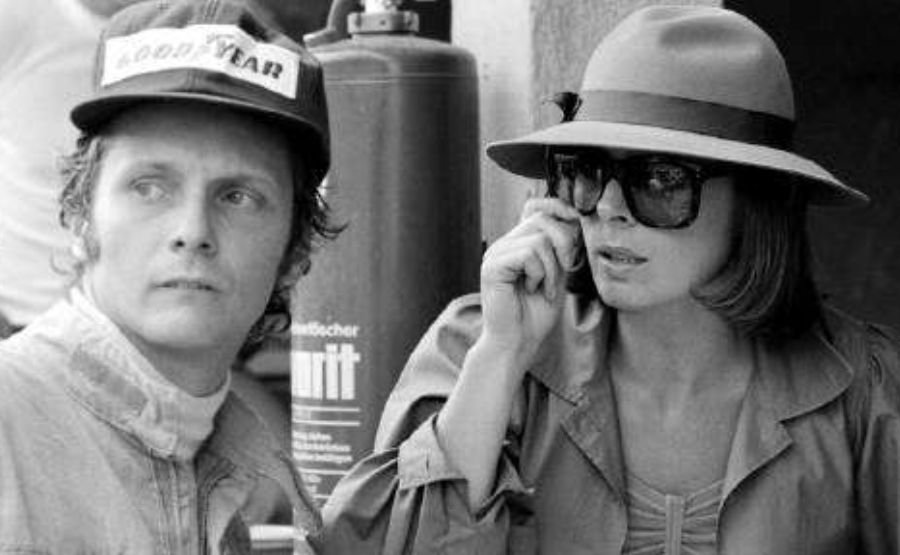
She spent approximately eight years as the companion, girlfriend, and eventually fiancée of Andreas Nikolaus Lauda — the man the world would come to know simply as Niki, perhaps the most psychologically complex and fearlessly determined racing driver Formula One has ever produced. She stood beside him at circuits across Europe during the years when he was transforming from a promising newcomer into a genuine champion. She was photographed beside him at Silverstone in 1973. She was there during the white-knuckle years when Lauda was building his reputation at Ferrari and chasing his first world title.
And then, quietly, she wasn’t there anymore.
What makes Mariella’s story compelling isn’t the drama of the relationship’s end — though that has its own strange texture. It’s the world she came from, the woman she clearly was in her own right, and the remarkable self-possession she has demonstrated in the decades since, living entirely outside the reach of the press that still occasionally invokes her name.
See also “Eli Kay Oliphant: The Lawyer Who Let His Work Do the Talking“
The Reininghaus Brewing Empire: Born Into Austrian Industrial Royalty
To understand who Mariella von Reininghaus is, you have to understand what the name means in Austrian history. And the response is: a good deal.
The Reininghaus brewing dynasty traces its origins to two brothers — Johann Peter and Julius Reininghaus — who came from the Isenburg farm in Westphalia in the middle of the nineteenth century and arrived in Graz with ambition, practical knowledge of fermentation, and a determination to build something lasting. In 1853, they acquired a modest facility on the Steinfeld just outside Graz and founded what would become Brüder Reininghaus — the Brothers Reininghaus — the first steam-powered brewery in all of Styria.
What followed was one of the more impressive stories of Austrian industrial development. The brothers were not merely brewers in the craft sense — they were industrial innovators. They brought steam power to brewing in a region where no such thing had existed. They built Austria’s first compressed yeast factory in Styria. What had started out as a little acquisition eventually employed hundreds of people and produced hundreds of thousands of hectoliters of beer every year. By the turn of the twentieth century, the Reininghaus operation had expanded to twenty-five times its original footprint and ranked among the largest brewing enterprises in the entire Habsburg empire.
The family received noble status — the von prefix that precedes Reininghaus in Mariella’s name carries genuine historical weight, awarded to the founders in recognition of their industrial contribution to the Austrian state. By the time Mariella was born, probably around 1950 in or near Graz, she was arriving into one of Styria’s most established aristocratic-industrial families — people with century-old roots in the region, properties that stretched across the countryside, and a name that carried real social authority in Austrian circles.
Growing up with that surname meant growing up with a particular understanding of how Austrian society worked — its old estates and new industries intertwined, its aristocratic titles sitting comfortably alongside serious commercial ambition. Additionally, it meant experiencing the stable, self-assured affluence of a multigenerational establishment rather than nouveau riche ostentation.
Graz and the Making of an Austrian Socialite
Graz is Austria’s second city — elegant, self-contained, proud of its own identity in a way that quietly resists Vienna’s gravitational pull. It sits in the bowl of the Mur valley in Styria, surrounded by green hills, with a medieval old town that earned UNESCO heritage recognition and a cultural life that has always been substantial without being showy.
In the postwar decades, Graz provided a certain type of upbringing for the offspring of well-established Styrian families. Good schools, cultural institutions, the rhythms of Austrian Catholic bourgeois life, and the social world of families who had known each other for generations. The von Reininghaus family was embedded in that world at a high level — not merely participants but genuine members of its inner circle.
Mariella would have been educated in the tradition appropriate to her background — languages, deportment, the arts, the social graces that made a young woman from a prominent family a compelling presence in any room she entered. What specific schools she attended and what she formally studied are not part of the public record. What the photographs from the early 1970s make unmistakably clear is that she grew up into a genuinely striking woman — tall, composed, with a kind of natural elegance that carried itself without effort at the most scrutinized sporting events in the world.
Niki Lauda: The Unlikely Match and the Eight-Year Journey
Sometime around 1967, Mariella von Reininghaus began a relationship with a young man who was — at that moment — rather less impressive by any conventional Austrian aristocratic standard than her own family background would suggest was appropriate.
Niki Lauda was from a wealthy Viennese paper manufacturing family, true. But he had done something that his own family considered embarrassing and possibly ruinous: he had decided to become a racing driver, against the explicit wishes of his parents and grandparents. Worse, he had borrowed money to fund the attempt — mortgaging his future on the belief that he was good enough to make it. He was effectively cut off by the family. He was a young man with a pedigree, enormous talent, and absolutely no financial safety net.
What Mariella perceived in him, what he perceived in her, or what they recognized in one another in the unique way that young people identify something fundamental can’t be reduced to any simple calculation. But the relationship took hold. And it held, through the grinding early years when Lauda was racing for second-tier teams, through the gradual evidence that the talent was real, through the loan that bought him into March in 1972, through the 1973 season with BRM where he began to show the world what he was actually capable of.
She was at Silverstone in July 1973 for the British Grand Prix, photographs confirming her presence — the polished, composed young woman from Styrian brewing aristocracy standing in the world of oil and rubber and roaring engines, as natural in that environment as she might have been at a gallery opening in Vienna. The relationship was serious enough that Austrian media referred to her as his Verlobte — his fiancée — and by the time Lauda arrived at Ferrari for the 1974 season, Mariella was understood to be his intended.
The Ferrari Years and Life on the Circuit
The years between 1974 and Lauda’s first world championship in 1975 were transformative in every dimension. At Ferrari, working with engineer Mauro Forghieri, Lauda developed into the most technically precise racing driver in the world — a man who could feel a car’s handling nuances with extraordinary sensitivity and communicate what he found to engineers in terms they could actually use. His relationship with Ferrari was productive in a way that few driver-constructor partnerships have ever been.
During all of this, Mariella was part of the picture. Formula One in the early and mid-1970s was a world in which drivers’ companions were simply present at races — there was no sponsorship-driven need to project particular lifestyle images, no social media architecture demanding curated appearances. You attended because you were with someone, because you were concerned about their survival during the weekend, and because your life just so happened to be on the circuit.
Mariella navigated this world — the paddock environment of the early 1970s was rough-edged, masculine, and genuinely dangerous — with the composed elegance that her background had instilled in her. She was, by all accounts, an intelligent and self-possessed woman who was not merely decorative in Lauda’s life. Sources from that era note her as a genuine presence rather than a background figure.
She was also living, week after week, with the knowledge that the person she was with could die. Formula One in 1973 killed Roger Williamson at Zandvoort. In 1974 it killed Peter Revson at Kyalami. The Nürburgring, where Lauda would later suffer his catastrophic accident in 1976, was a circuit of twenty-two kilometres of unguarded road through a forest where nobody could reach you if something went wrong. The emotional weight of that sustained proximity to mortal risk is something that racing drivers’ companions carried in this era in ways that are genuinely hard to convey.
The Break: 1975 and the End of Eight Years
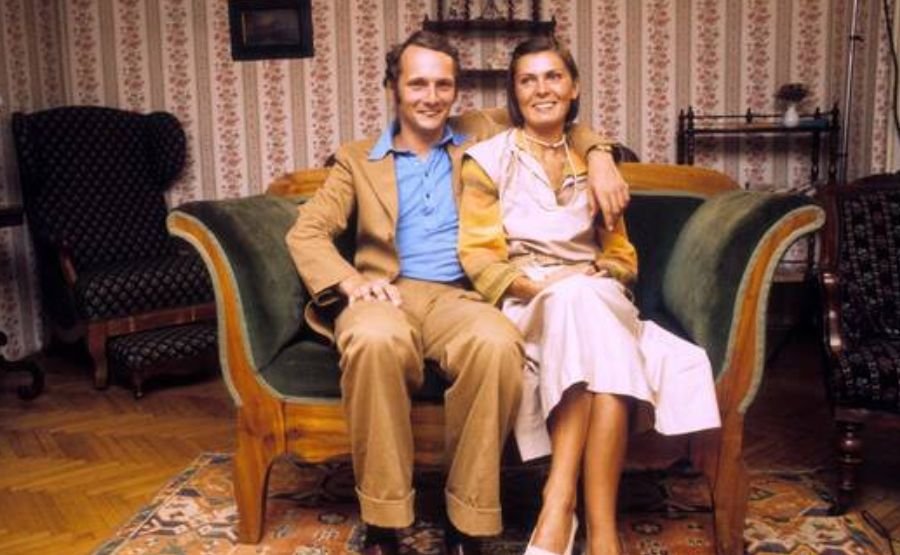
The relationship that had lasted through the lean years, through Lauda’s family estrangement, through the rise through the ranks and the arrival at Ferrari, ended in 1975 — the year Lauda took home his first World Drivers’ Championship in Formula One.
Multiple sources confirm that Lauda met Marlene Knaus at a dinner party hosted by actor Curt Jürgens, where both Lauda and Knaus were with other people — Lauda with Mariella, Knaus with Jürgens. Something happened at that dinner that redirected the course of multiple lives. Lauda and Marlene Knaus began a relationship. Within months, by early 1976, they were married.
For Mariella, who had been with Lauda for approximately eight years through the most difficult and formative period of his career — who had been present when he had nothing and stayed through the years when he was building everything — the ending was abrupt. She had been his fiancée. She had been the woman beside him when the world championship was still a dream. And then, essentially at the moment of his greatest triumph, she was no longer part of the story.
She has never spoken publicly about this. Not a single recorded interview, not a quote in an Austrian newspaper, not a comment through any intermediary. Whatever she felt about those eight years and their conclusion belongs entirely to her.
After Lauda: A Life Deliberately Hidden
In the decades since 1975, Mariella von Reininghaus has been essentially invisible to the press and public. There is no verified record of a subsequent marriage. There is no confirmed public relationship. There are no interviews, no appearances at public events connected to her name, no social media presence, no professional profile.
She belongs to one of Austria’s oldest and wealthiest brewing dynasties. The material circumstances of her life, whatever choices she made in terms of career, family, or location, were never going to be straightforwardly difficult — the Reininghaus family background represents exactly the kind of established Austrian wealth that doesn’t depend on individual career decisions for its maintenance.
Simply put, there is no public record of what she did with her life following Lauda. Whether she married, whether she had children, where she has lived, what has occupied her — none of it has been offered to the world, and none of it has been taken without her permission. This is itself a remarkable achievement in an era when the ex-partners of famous people routinely find themselves pursued by journalists and content creators for whatever memory they’re willing to share.
The Rush Connection and Cultural Afterlife
In 2013, Ron Howard’s film Rush brought the Lauda story to a global audience who had not experienced the 1970s Formula One world firsthand. The film focuses on the 1976 season — specifically the rivalry between Lauda and the British driver James Hunt — and centres on Lauda’s catastrophic accident at the Nürburgring and his extraordinary return to racing forty-two days later.
Mariella is not a significant presence in the film. The story Howard told is the Lauda-Hunt rivalry, and by 1976 Mariella was already no longer with Lauda — he had married Marlene Knaus by then, and it is Marlene whom the film portrays as his wife through the accident and recovery. Alexandra Maria Lara plays Marlene; Mariella appears only as a referenced past relationship, a historical fact acknowledged rather than dramatised.
This is, in its way, accurate to Mariella’s actual position in Lauda’s biography — she was present through the years that made him, and then absent from the moment that made him legendary. This is a common feature of history: witnesses to the most challenging, formative periods differ from those to the victorious ones.
Net Worth and the Reininghaus Legacy
Mariella von Reininghaus’s personal financial circumstances are not public information. But the framework within which she grew up is a matter of Austrian industrial and social history.
The Brüder Reininghaus brewery, founded in 1853, grew to become one of the most significant industrial enterprises in the Habsburg empire and subsequently the Austrian republic. The family received noble status as acknowledgement of their contribution. The brewery land in Graz — substantial acreage that the family retained even through the disruptions of the twentieth century, including wartime emigration and postwar reconstruction — has remained a significant asset whose value in the context of Graz’s development has been considerable.
Peter von Reininghaus, the last significant patriarch before the generation that produced Mariella, was a doctorate-holding chemist and industrialist who served in the Styrian parliament and built the infrastructure for Styrian brewery coordination. This is not a family that arrived at its position recently or maintained it carelessly.
Mariella’s personal net worth is unknown. But her family context represents generations of accumulated industrial wealth in one of Austria’s most prosperous provinces — a background that has clearly enabled the complete privacy she has maintained, free from any professional necessity to seek public attention.
Final Words
Mariella von Reininghaus’s biography is, in the truest sense, mostly a private document. The chapters that exist in the public record — the Reininghaus family history, the eight years beside Niki Lauda, the photographs at Silverstone and other circuits, the quiet ending of the engagement — are surrounded by decades of silence that she has chosen and maintained.
What can be said with confidence is that she came from something genuine and substantial: a family that built real things, that contributed to Austrian industrial history, that earned its position through effort across multiple generations rather than through connection or inheritance alone. The noble title in her name reflects exactly that — not an accident of birth into a long-established aristocracy, but recognition of entrepreneurial achievement that occurred within living memory of the nineteenth century.
What she gave to Niki Lauda — eight years of her life, of her attention, of her presence at genuinely dangerous places — is something that his biographers tend to mention and then move past. But it sits at the foundation of the story. The Lauda who won his first championship in 1975 was a man who had been building toward that moment for eight years. Mariella was beside him for every one of those years.
She watched him become who he was. And then she chose, or was forced, to step aside and allow the story to continue without her. The self-control with which she has committed to that decision—never speaking, never pursuing the attention that would have been hers, and never letting herself be recruited into someone else’s narrative — says something about character that is genuinely impressive.
She is, in the end, a woman who kept her own counsel about the most scrutinised years of her life, and who appears to have continued doing exactly that for fifty years since.
FAQs
1. Who is Mariella von Reininghaus?
Mariella von Reininghaus is an Austrian woman born into the Reininghaus brewing dynasty — one of Austria’s most significant industrial aristocratic families, whose ancestors founded the first steam-powered brewery in Styria in 1853. She is best known internationally as the long-term fiancée of Formula One World Champion Niki Lauda, with whom she was in a relationship for approximately eight years from around 1967 to 1975.
2. What is the Reininghaus family’s historical significance?
The Reininghaus family founded Brüder Reininghaus AG in Graz in 1853 — the first steam-powered brewery in Styria and one of the most significant industrial enterprises in the Habsburg Austrian state. By 1900 the operation had grown to twenty-five times its original size. The family received Austrian noble status — the von prefix in their name — in recognition of their industrial contribution. The Reininghaus name remains associated with major property holdings in Graz.
3. How long was Mariella von Reininghaus with Niki Lauda?
Approximately eight years, from around 1967 until 1975. She was with him through the difficult early years of his career when he borrowed money to fund his racing, through his rise to Formula One, his seasons with March and BRM, and his arrival at Ferrari where he won his first world championship.
4. How did the relationship end?
In 1975, Lauda met model Marlene Knaus at a dinner party hosted by German-Austrian actor Curt Jürgens. Both Lauda and Knaus were in relationships at the time — Lauda with Mariella, Knaus with Jürgens. Lauda and Knaus began a relationship almost immediately and were married in March 1976. Lauda ended his marriage to Mariella so he could be with Marlene.
5. Was Mariella von Reininghaus present at Formula One races?
Yes. She was a regular presence at circuits during the early 1970s. A famous photograph confirms her presence at the 1973 British Grand Prix at Silverstone. According to German-language sources, she was with Lauda during his time at Ferrari, when she was known as his fiancée, or Verlobte.
6. Does Mariella appear in the 2013 film Rush?
Only peripherally. Ron Howard’s Rush focuses on the 1976 season, by which time Lauda had married Marlene Knaus. The film’s central female character is Marlene, played by Romanian-German actress Alexandra Maria Lara. Mariella’s relationship with Lauda is referenced as background — a past that ended before the story the film chooses to tell.
7. Has Mariella von Reininghaus ever spoken publicly about Lauda?
Not in any documented, verifiable way. She has maintained complete silence about their relationship across the fifty-plus years since it ended. There are no quotes, interviews, or public remarks of any type on file.
8. What is known about her life after Lauda?
Almost nothing. No subsequent marriage has been confirmed. No children have been publicly identified. No professional or social media presence exists under her name. She has maintained an extraordinary degree of privacy for a woman whose most notable public chapter placed her at the centre of Formula One society during one of the sport’s most glamorous eras.
9. Is there any connection between Mariella von Reininghaus and the Reininghaus district of Graz?
The Reininghaus district of Graz takes its name from the family and the brewery they founded there in 1853 on the Steinfeld. The land that was once the Reininghaus brewery site has been the subject of major urban redevelopment in recent decades. The toponym is a direct legacy of the family’s industrial presence in the city.
10. What does the noble title “von” in her name signify?
The von prefix in Austrian noble names — officially Edle von or similar — was awarded to the Reininghaus family in the nineteenth century in recognition of their industrial achievement. Johann Peter von Reininghaus received the title in 1883. The title has no formal legal standing in the Austrian republic, which abolished aristocratic privileges after World War One, but continues as a social and historical marker within Austrian society.
11. What is Mariella von Reininghaus’s estimated net worth?
No personal financial figures are available or verifiable. Her family background — the Reininghaus brewing dynasty and its associated land holdings in Graz and Styria — represents substantial multigenerational wealth. Her personal situation is completely confidential and has never been disclosed in public.
12. Where is Mariella von Reininghaus now?
Unknown. Her location, circumstances, and daily life as of 2026 are not part of the public record. She has successfully maintained the privacy that the rest of her post-Lauda life has been conducted in — a remarkable achievement for someone whose youth was conducted in public at some of the most photographed sporting events of the 1970s.