Alizeh Keshvar Davis Jarrahy: Growing Up Between Two Worlds
Quick Bio
| Detail | Info |
| Full Name | Alizeh Keshvar Davis Jarrahy |
| Born | April 10, 2002, Los Angeles, California, USA |
| Nationality | American |
| Ethnicity | Mixed — American/English (maternal); Iranian-American (paternal) |
| Occupation | Emerging creative professional; USC graduate |
| Known For | Daughter of Academy Award-winning actress Geena Davis and surgeon Dr. Reza Jarrahy; unwitting catalyst for the founding of the Geena Davis Institute on Gender in Media |
| Mother | Geena Davis — actress, activist, Oscar winner (The Accidental Tourist, 1988) |
| Father | Dr. Reza Jarrahy — Iranian-American craniofacial plastic and reconstructive surgeon |
| Siblings | Twin brothers Kaiis Steven Jarrahy and Kian William Jarrahy (born May 6, 2004) |
| Education | University of Southern California (USC) — Music Industry and Cinematic Arts |
| Grandparents (maternal) | Lucille Davis and William Davis |
| Current Status | Private; working in entertainment production behind the scenes |
The Girl Who Changed Her Mother’s Life Without Saying a Word
Before Alizeh Keshvar Davis Jarrahy could talk — before she could do much of anything except sit on her mother’s lap and stare at a television screen — she quietly changed the course of Hollywood history.
That’s not an exaggeration. It’s simply what happened.
Geena Davis, one of the most recognizable actresses of her generation, sat beside her infant daughter one afternoon watching a children’s programme she thought would be perfectly wholesome. And then something nagged at her. She started counting. Male characters. Female characters. Leads. Background figures. Speaking roles. The numbers were so lopsided she assumed she’d picked a bad episode and tried another show. Then another film. Then another preschool programme. The pattern didn’t change. It deepened.
By 2004, when Alizeh was barely two years old, Geena had co-founded what would become the Geena Davis Institute on Gender in Media — a research and advocacy organisation that has spent two decades pushing the entertainment industry toward more equitable representation of women and girls on screen. The motto it eventually adopted — “If she can see it, she can be it” — was inspired, at its most literal level, by the little girl sitting on the couch with her Oscar-winning mother, looking at a screen full of characters who didn’t look like her.
Alizeh didn’t ask for that legacy. But she carries it, whether she thinks about it every day or not.
Her actual life — the one she has built quietly and deliberately away from cameras and tabloid interest — is the more interesting story.
Los Angeles, 2002: Born Into Complicated Glamour
Alizeh arrived in the world on April 10, 2002, in Los Angeles, the first child of a genuinely unusual pairing.
Her mother needs no introduction in Hollywood terms. Geena, whose real name is Virginia Elizabeth Davis, had already been married three times, won an Oscar for The Accidental Tourist, and starred in Thelma & Louise. and A League of Their Own, earned a Golden Globe, and was approaching fifty when she had Alizeh. She had spoken publicly about finding motherhood later in life and feeling genuinely grateful for the timing — older, she said, meant wiser, and wiser meant being a better parent.
Her father is a different kind of remarkable. Dr. Reza Jarrahy is an Iranian-American physician specialising in craniofacial plastic and reconstructive surgery — the kind of highly specialised medicine that rebuilds faces after accidents, congenital conditions, or tumour removal. He came to the United States as part of a generation of Iranian professionals who built distinguished careers in American academia and medicine after emigrating following the 1979 revolution. Geena met him at a party in the late 1990s when he was around fifteen years her junior, and there was enough chemistry there to survive initial caution on both sides before they married on September 1, 2001 — one day before the world changed.
Alizeh, then, entered a household shaped by two very different kinds of achievement. Her mother occupied the glittering, visible, deeply scrutinised world of Hollywood stardom. Her father occupied the exacting, intensely private world of specialised surgery and academic medicine. She absorbed something from both.
Her name was its own statement about where she came from. “Alizeh” is a Persian name meaning “wind” — delicate, elemental, impossible to hold onto. “Keshvar” means “country” or “land” in Persian, a word carrying weight and rootedness. Together they gesture toward the Iranian heritage her father brought to the family, woven deliberately into her identity from the moment she was named. Davis and Jarrahy: the double surname that appears on her birth certificate maps the whole shape of who her parents were and what they wanted her to know about herself.
Childhood in the Spotlight’s Edge
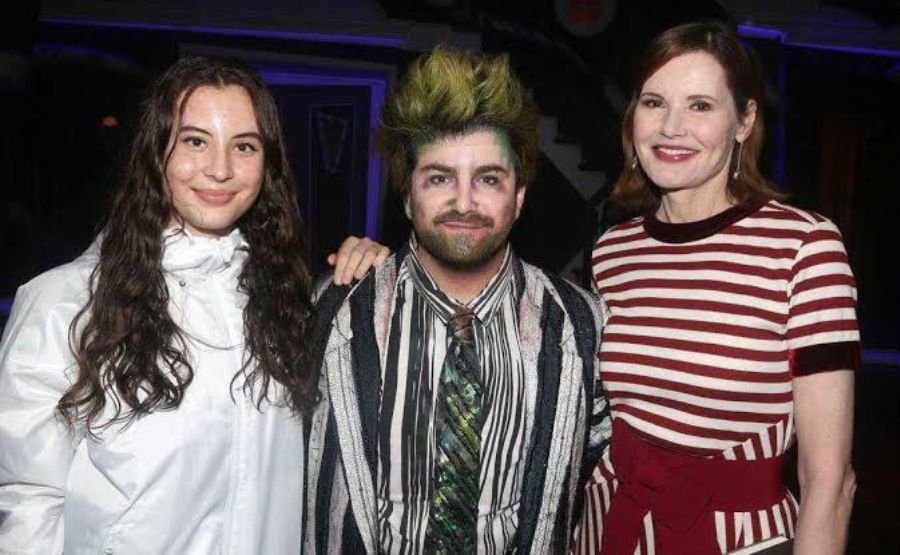
Growing up the eldest child of Geena Davis in Pacific Palisades — one of Los Angeles’ more affluent coastal neighbourhoods — meant something specific. It meant occasional press photographs at events, the odd mention in a celebrity profile when a journalist asked Geena about her family, and the more abstract reality of knowing that your mother was a public figure who generated opinions in strangers.
What it didn’t mean, apparently, was a childhood built around celebrity culture. Geena has spoken directly about this. She has said plainly that if none of her children become actors, she’ll consider that a job well done — a comment that reflects genuine conviction about what she wants for them rather than false modesty. She has said she’s glad she had children in her forties because by then she’d developed enough self-knowledge to put them first in a way she might not have managed younger.
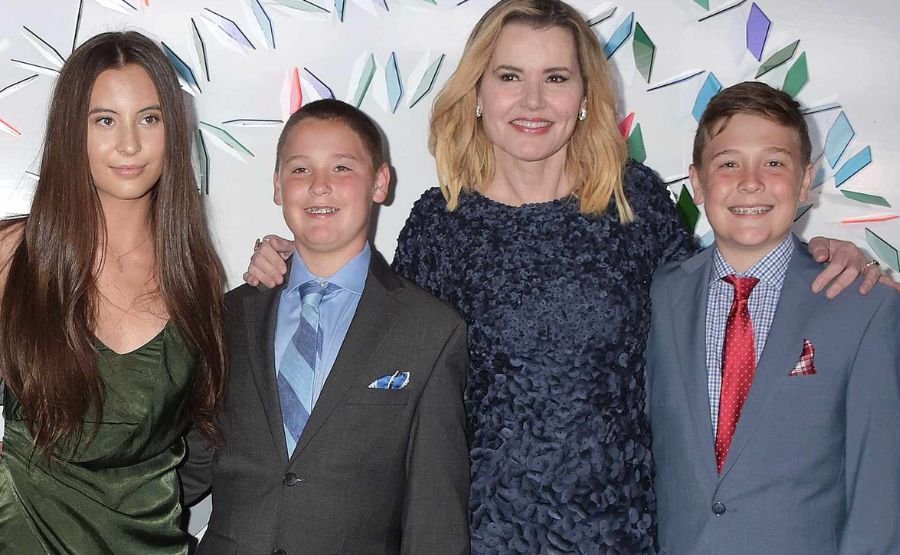
Two years after Alizeh was born, her twin brothers arrived: Kaiis Steven Jarrahy and Kian William Jarrahy, born on May 6, 2004. Suddenly the household contained three children under three, and Geena — by then deep into the founding work of her institute — was navigating the particular chaos of early parenthood with the same energy she brought to everything else.
Alizeh grew up as the eldest, which carries its own specific texture. Older siblings of twins often describe a strange duality: intimately bonded to siblings who have an equally intimate bond with each other. She was part of the trio but also slightly apart from it, the one who got there first, who had her parents to herself for two years before the boys arrived and the household became a different, louder, more complicated thing.
Her maternal grandparents, William and Lucille Davis, were also part of her early life — Geena came from a Massachusetts family without particular wealth or celebrity, which grounded the household in something more ordinary than Los Angeles might otherwise suggest.
The Institute That Started With Her
It’s worth pausing here to understand what Alizeh’s early existence actually set in motion, because the scale of it tends to get underplayed.
When Geena Davis started counting male and female characters in the children’s media she was watching with her daughter, she didn’t find a gap — she found a chasm. Studies the institute would later commission confirmed what she had noticed intuitively: female characters were dramatically outnumbered in children’s content, were far less likely to have speaking roles, were more likely to be shown in domestic or decorative contexts, and were largely absent from action, adventure, or STEM-related roles.
The Geena Davis Institute on Gender in Media, launched in 2004, became the primary research body examining gender representation in the entertainment industry. It produced peer-reviewed studies, hosted global symposia, partnered with studios and streaming platforms, and eventually broadened its scope to examine race, disability, and LGBTQ+ representation alongside gender. Geena received the Jean Hersholt Humanitarian Award from the Academy of Motion Picture Arts and Sciences in 2019 — the Oscar’s equivalent of a lifetime achievement award for humanitarian work — largely in recognition of what this organisation had accomplished.
All of it traces back to an afternoon on a couch in Pacific Palisades, with a toddler named Alizeh.
USC: Finding Her Own Direction
When it came time to figure out what she wanted to do with her life, Alizeh did not pick acting. She enrolled at the University of Southern California — one of the most prestigious film and music universities in the country — and pursued studies in both Music Industry and Cinematic Arts.
The choice of USC is interesting in itself. It’s a school that has produced a remarkable proportion of working Hollywood professionals — filmmakers, composers, producers, studio executives — through programs that are explicitly vocational in their orientation. You don’t go to USC’s School of Cinematic Arts to theorise about movies. You go to learn how to make them, finance them, score them, distribute them, and survive in the industry that produces them.
Alizeh’s dual focus on Music Industry and Cinematic Arts suggests someone interested in the full ecosystem of entertainment production — not just the content itself but the business mechanics and sonic architecture that surround it. Film scoring, music supervision, production — these are the invisible layers of a finished film or television series that audiences experience without registering the craft behind them.
She graduated from USC around 2024, stepping out into an industry that she has been connected to by family and by education since she was an infant.
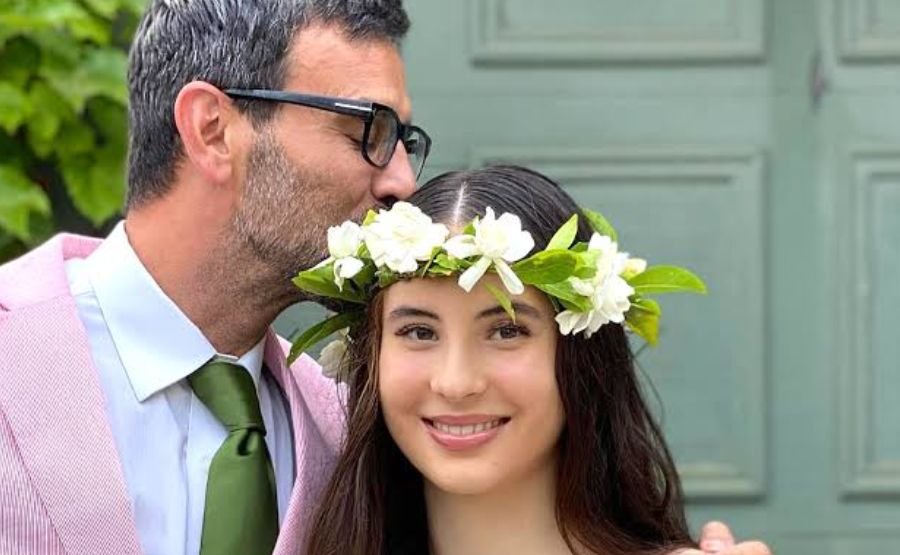
Life After Graduation: Building Something Behind the Camera
The most reliable sources describe Alizeh as having deliberately chosen a path behind the scenes in entertainment rather than in front of any camera. She has not pursued acting. She has not sought a public profile of her own through social media or press engagement. She has moved into production-adjacent work in the entertainment industry, in keeping with what her USC degree was designed to enable.
What exactly that looks like day to day — which projects, which collaborators, which specific roles — isn’t something she has discussed publicly. That reticence is entirely consistent with how she has conducted herself since adolescence: quietly, with purpose, and without inviting scrutiny.
She has reportedly maintained a connection to the values her mother’s institute represents. Sources describe her as involved with advocacy around gender equality in media, which would make her a genuine participant in the work the institute stands for rather than simply an accidental origin story attached to it.
The Divorce and What It Meant for a Teenager
Alizeh was fifteen years old when her parents separated in November 2017. Reza Jarrahy filed for divorce in May 2018, listing irreconcilable differences — the legal shorthand that covers everything and nothing — and the proceedings that followed were unusually drawn out and occasionally strange.
Geena made headlines when she filed a counter-document arguing that the couple had never been legally married, because when they wed in New York in September 2001, they had apparently failed to properly file the marriage licence with the appropriate clerk. If they weren’t legally married, her argument went, there was no legal divorce to be had and no basis for the spousal support Reza was seeking.
The courts did not agree. The case continued until December 2021, when a confidential settlement was reached. The terms established joint custody of the children. One detail from the settlement became briefly public: the twin boys’ surnames were formally changed from Davis-Jarrahy to simply Jarrahy, with Davis retained as a middle name for both.
Alizeh’s name, already established, didn’t change. She kept both halves of it — the Davis and the Jarrahy — intact.
What the divorce meant for her emotionally is something she has kept entirely private. She was a teenager navigating one of the more turbulent family situations a teenager can face, inside a household that the press was watching with considerable interest. She appears to have managed it by drawing a firm line between what belonged to her and what belonged to the cameras.
Her parents, for their part, have spoken about maintaining a workable co-parenting relationship throughout the proceedings. Photographs from 2020 show the extended family together at the twins’ sixteenth birthday celebration, suggesting that the machinery of the legal dispute and the reality of the family’s daily life were being kept reasonably separate.
Personal Life: A Principled Privacy
As of 2026, Alizeh Keshvar Davis Jarrahy appears to be living in Los Angeles, working in the entertainment industry in a behind-the-scenes capacity, and maintaining the same commitment to privacy that has characterised her entire public-adjacent existence.
She has no confirmed social media presence under her own name. She has no public relationship on record. She does not give interviews. She does not appear at events in ways that generate press coverage under her own identity.
This is a choice that takes real consistency to sustain in 2026, when the default setting for any person with a famous parent is to leverage that connection into personal brand-building. The algorithmic pressures are enormous. The financial incentives for celebrity children to become content creators or influencers are well established. Alizeh has, apparently, decided against all of it.
Net Worth: Honesty Over Numbers
Alizeh Keshvar Davis Jarrahy does not have a documented independent income or established career wealth. She is twenty-four years old, recently graduated, and in the early stages of whatever professional life she is building.
Her mother, Geena Davis, has an estimated net worth of approximately thirty million dollars, accumulated across four decades of film and television work, producing credits, and speaking engagements. That wealth exists and Alizeh has grown up within its practical effects — private schooling, a comfortable home in a wealthy neighbourhood, financial security as a baseline.
Her father, Dr. Reza Jarrahy, operates at a level of specialised surgical practice that generates substantial professional income, though his personal finances are entirely private.
Alizeh herself has no documented personal net worth. Any figure circulating online for her specifically is speculative and should be treated with appropriate scepticism. She is not a business owner. She has not published, performed, or otherwise created a publicly visible body of work that would generate traceable earnings. She is, at this stage of her life, a young professional building something that the world hasn’t seen yet.
Final Words
There is something genuinely unusual about a biography whose most significant subject is a person who has spent their entire life actively resisting being a subject.
Alizeh Keshvar Davis Jarrahy has every ingredient for the kind of celebrity-adjacent public life that generates constant coverage: a famous mother, a distinguished father, a dual cultural heritage that makes her name itself carry stories, a degree from one of America’s most prestigious film schools, and the kind of looks and poise that tend to attract cameras when they appear. She has declined to use any of it.
What makes her distinctive isn’t what she has done publicly. It’s the texture of what she seems to value privately. She chose a school that teaches making things over theorising about them. She chose a side of the entertainment industry where the work gets seen but the person doing it typically doesn’t. She kept her full name — all four parts of it, Davis and Jarrahy and everything they each represent — even when the legal paperwork around her parents’ divorce was rearranging her brothers’ identities. She held onto her own.
She also, in the most indirect way imaginable, helped create an institution that has genuinely shifted how Hollywood thinks about who gets to be a character, a lead, a hero, a scientist, a president. She was two years old. She just had to sit on a couch. But that’s how legacies sometimes begin — not with a grand gesture, but with a toddler watching cartoons while a mother starts counting.
The wind, which is what her name means, doesn’t always make a visible impact on the landscape. But it shapes everything it moves through.
FAQs
1. Who is Alizeh Keshvar Davis Jarrahy?
She is the eldest child and only daughter of Academy Award-winning actress Geena Davis and Iranian-American craniofacial plastic and reconstructive surgeon Dr. Reza Jarrahy. Born on April 10, 2002 in Los Angeles, she is an American of mixed heritage — White American and English on her mother’s side, Iranian-American on her father’s — who recently graduated from USC’s programs in Music Industry and Cinematic Arts.
2. What does her name mean?
“Alizeh” is a Persian name meaning “wind.” “Keshvar” is a Persian word meaning “country” or “land.” Together, the first two names reflect her father’s Iranian heritage, chosen deliberately to root her identity in both halves of her cultural background. “Davis” and “Jarrahy” are her parents’ respective surnames, both retained throughout her life.
3. How does the Geena Davis Institute on Gender in Media relate to Alizeh?
She is the unwitting catalyst for its founding. When Geena Davis began watching children’s television with Alizeh as a toddler around 2003 and 2004, she noticed a severe imbalance in male versus female character representation. That observation led directly to her founding the Geena Davis Institute on Gender in Media in 2004 — a nonprofit that has spent twenty years researching and advocating for more equitable gender representation across the entertainment industry.
4. Who are Alizeh’s parents?
Her mother is Geena Davis — born Virginia Elizabeth Davis in 1956 in Wareham, Massachusetts — who won the Academy Award for Best Supporting Actress for The Accidental Tourist in 1989, and is renowned for her activism via the institution, Thelma & Louise, and A League of Their Own. Her father is Dr. Reza Jarrahy, an Iranian-American physician specialising in craniofacial plastic and reconstructive surgery, approximately fifteen years younger than Geena Davis.
5. Does Alizeh have siblings?
Yes. She has two younger brothers — fraternal twins Kaiis Steven Jarrahy and Kian William Jarrahy, born on May 6, 2004. Their surnames were changed from Davis-Jarrahy to Jarrahy (with Davis retained as a second middle name) as part of the final divorce settlement between their parents in 2021. Alizeh’s own name was not changed.
6. What did Alizeh study at university?
She attended the University of Southern California, where she studied in the Music Industry and Cinematic Arts programs — one of the most respected film and entertainment education pathways in the United States. She graduated approximately in 2024.
7. Is Alizeh an actress like her mother?
No. By all available accounts, she has deliberately chosen a behind-the-scenes path in the entertainment industry rather than a performing one. Geena Davis herself has said publicly that if none of her children become actors she will consider that a success as a parent — and Alizeh appears to have taken that spirit to heart.
8. What happened with her parents’ divorce?
Her father Reza Jarrahy filed for divorce in May 2018, citing irreconcilable differences, listing the separation date as November 15, 2017. The proceedings became unusually complicated when Geena Davis filed a counter-document arguing they had never been legally married because the marriage licence wasn’t properly filed after their 2001 New York wedding. The case was ultimately resolved through a confidential settlement reached in December 2021, establishing joint custody arrangements.
9. What is Alizeh Keshvar Davis Jarrahy’s net worth?
No documented personal net worth exists for Alizeh. She is twenty-four years old and in the early stages of her career. Her mother’s estimated net worth is approximately thirty million dollars, and her father is a senior surgeon with a successful private practice, meaning she has grown up with significant financial security — but Alizeh’s own independent finances are unknown and any specific figure cited for her personally is speculative.
10. Does Alizeh have a public social media presence?
She doesn’t have any confirmed public social media accounts. She maintains what appears to be a deliberate, sustained absence from public digital platforms — notable for someone of her generation and background, and clearly a principled personal choice rather than an oversight.
11. Is Alizeh Keshvar Davis Jarrahy in a relationship?
There is no public information about her romantic life. She has shared no details with the press and has not been photographed publicly in a way that would confirm or indicate a partner. This aligns with her more comprehensive approach to privacy.
12. What is she doing professionally in 2026?
She is believed to be working in Los Angeles in an entertainment industry capacity — likely in production or music supervision, in keeping with her USC training in Cinematic Arts and the Music Industry. She hasn’t discussed any particular projects or employment in public. What is clear is that she is building a professional life behind the camera, in an industry her mother helped shape, on her own terms and timeline.
Explore stories that inspire curiosity with The Imperial Magazine.