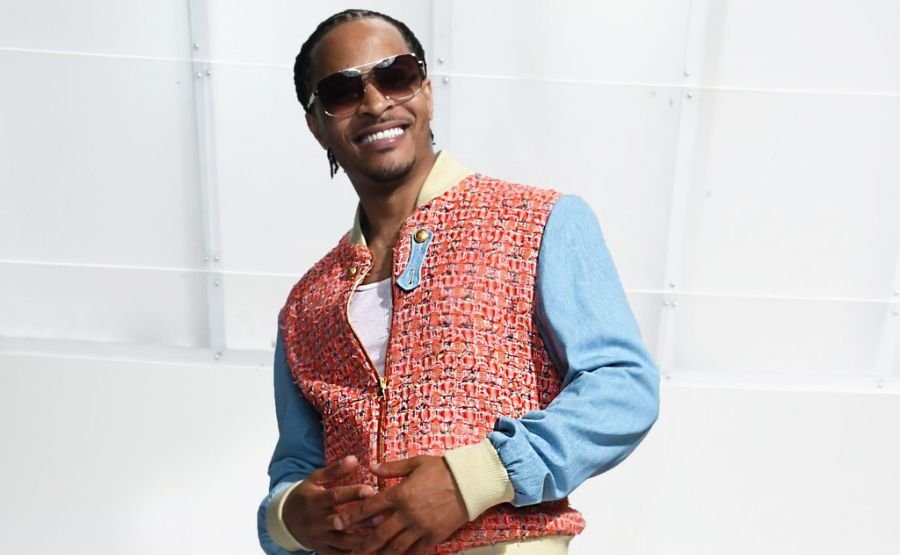
T.I.P. Harris: The King of the South and the Blueprint He Left Behind
Quick Bio
| Detail | Information |
| Full Name | Clifford Joseph Harris Jr. |
| Stage Names | T.I., T.I.P., Tip, Rubberband Man, The King of the South |
| Born | September 25, 1980, Atlanta, Georgia, USA |
| Nationality | American |
| Occupations | Rapper, songwriter, record executive, actor, entrepreneur, author |
| Known For | Pioneering trap music; Paper Trail; “Whatever You Like”; “Live Your Life” ft. Rihanna; founding Grand Hustle Records |
| Spouse | Tameka “Tiny” Cottle Harris (married 2010) |
| Children | Six — including King Harris, Major Harris, Heiress Diana Harris, Deyjah Harris, Domani Harris, Messiah Harris |
| Grammy Awards | Three |
| Labels | Arista / LaFace (early); Atlantic Records (peak years) |
| Estimated Net Worth | Approximately 10–50 million (widely varying estimates; combined with Tiny in some sources) |
The Man Behind the Moniker
When people argue about who invented trap music, the name Clifford Joseph Harris Jr. comes up before almost anyone else. He didn’t build that reputation by accident. He built it by surviving a childhood that didn’t promise much, by developing a voice that captured the specific texture of life on Atlanta’s west side, and by making commercial music without sanding off the rough edges that made it real.
T.I. — and he is equally known by his alter ego T.I.P., the handle he uses when the music gets more unfiltered and confrontational — is one of those artists whose legacy sits on multiple levels at once. There’s the chart success, the movies, the business, the philanthropy. But underneath all of it is the story of a kid from Bankhead who found a way out and then spent decades trying to figure out what to do with the door he’d pushed open.
His story is worth telling not because it’s a clean arc from poverty to success. It isn’t. It’s much messier than that — interrupted by prison sentences, parole violations, personal tragedy, and public controversy. But the messiness is part of why it resonates. T.I. has always been more honest than comfortable, more complicated than a headline.
See also “Josh Hart Knicks: Inside His Role, Career, and New York Journey“
Center Hill to Bankhead: Where It Started
Clifford Harris Jr. was born on September 25, 1980, in Atlanta, Georgia. His parents were Clifford “Buddy” Harris Sr. and Violeta Morgan, but they weren’t the ones who did most of his raising. That fell to his grandparents, who brought him up in Atlanta’s Center Hill neighborhood, a working-class community just off Bankhead Highway on the city’s west side.
The Bankhead area — Zone 1 in Atlanta police parlance — was the kind of place that hardened you young. It had its own identity, its own rhythms, its own codes about how people survived and what they owed each other. It wasn’t a place that produced a lot of industry executives or university professors by design. It produced people who were street-smart before they were book-smart, and who learned very quickly that the rules of the outside world didn’t necessarily apply on their block.
His father, Buddy Harris, lived in New York City. T.I. would visit, which gave him an early exposure to a different kind of urban energy — but Atlanta was always home. Eventually, Buddy Harris would develop Alzheimer’s disease and pass away, a loss that added weight to T.I.’s already complicated relationship with the idea of fatherhood and family.
His mother, Violeta, raised siblings alongside him. He has three siblings — sisters Precious and LaTeisha, and a brother named Brice. Of these, Precious Harris would become one of the most painful losses of his adult life, but that part of the story comes later.
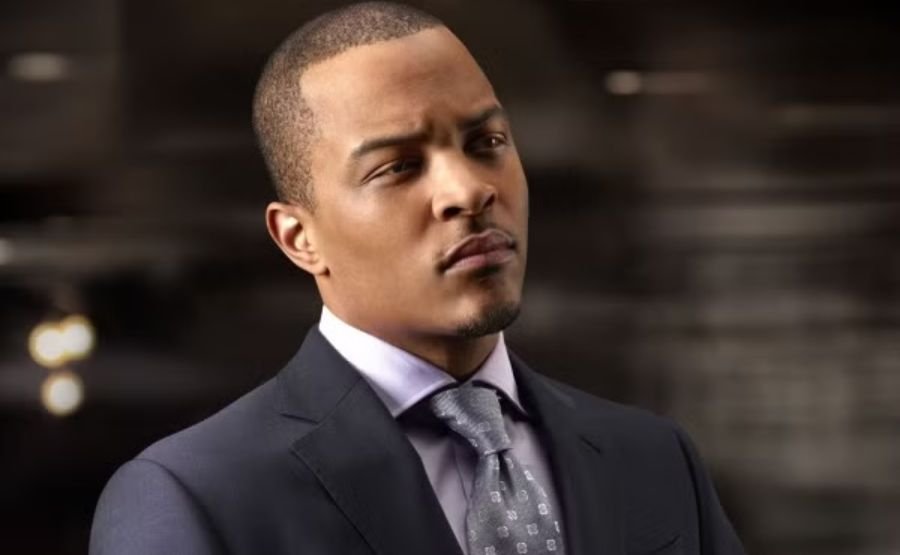
School, the Streets, and a Stage Name That Needed Changing
Clifford Harris started rapping at around eight years old. That’s not unusual for kids who grow up in hip-hop culture — the music is everywhere, and if you have any natural rhythm or verbal agility, you start trying to use it young. What was unusual was how quickly he developed genuine skill.
He attended Douglass High School in Atlanta but didn’t finish. The pull of the streets and the pull of music were both stronger than any classroom could compete with by that point. He was already connected to the local hip-hop scene, had befriended a rapper who would later go by Big Kuntry King, and the two of them were selling mixtapes out of a car trunk — the most grassroots form of distribution imaginable, but it worked.
His early stage name was T.I.P. — short for Tip, the nickname his grandfather had given him as a child. The problem was that a well-established rapper named Q-Tip already owned that sonic territory. Out of basic respect for a fellow artist who had that name first, Clifford shortened his own handle to T.I. He’s used both throughout his career, treating T.I.P. as a kind of alter ego for music that comes from a darker, more unfiltered place.
By the late 1990s he had connected with a local music executive named Kawan “KP” Prather and gotten himself signed. He was barely out of his teens when he inked his first major label deal in 1999 with LaFace Records, the prestigious Atlanta-based imprint under Arista that had launched Outkast and TLC.
The Long Road to “Trap Muzik”
His debut album, I’m Serious, dropped in 2001. It had genuine moments and showed real promise, but it didn’t catch fire commercially. LaFace and Arista weren’t sure what to do with him, and before long he was dropped from the label. That’s the kind of setback that ends a lot of careers before they properly start — the first big shot that doesn’t quite land, and then silence.
T.I. didn’t disappear. He went back to Atlanta, founded his own label called Grand Hustle Entertainment, and started releasing mixtapes. He partnered with DJ Drama, who was one of the most respected mixtape DJs in Southern hip-hop at the time, and those projects started circulating through Atlanta’s streets. The hustle was real — literally releasing music from the underground to rebuild buzz.
Then in 2003, everything shifted. He appeared on “Never Scared,” a single by fellow Atlanta rapper Bone Crusher. The track hit the Billboard Hot 100, marking T.I.’s first nationally charted moment, and his verse on it reminded people why they’d paid attention in the first place. That appearance got him back in front of major label decision-makers, and he signed with Atlantic Records.
The same year, he released Trap Muzik. That album matters not just as a commercial event but as a cultural one. The term “trap” — which refers to the place where drugs are sold and which had been part of Atlanta street slang for years — became a music genre label because of that album. The production sound: high-pitched 808 drum patterns, hi-hats that rattled like anxiety, bass that sat heavy in the mix. The lyrical content: the texture of running product, the paranoia of the streets, the calculating mindset of someone trying to survive a world that wasn’t set up for them. Songs like “Rubber Band Man” and “Let’s Get Away” drove the album deep into public consciousness.
He followed it with Urban Legend in 2004, which went platinum and contained “Bring Em Out,” one of the decade’s defining hip-hop anthems. He featured on Destiny’s Child’s “Soldier” that year alongside Lil Wayne — crossover appeal confirmed. The momentum continued with 2006’s King, a coronation of everything he’d built.
Paper Trail and the Pinnacle
2008 was the year everything peaked commercially, and it happened against genuinely difficult circumstances.
Paper Trail arrived in September of that year. T.I. was awaiting sentencing on federal weapons charges at the time — the legal situation will be addressed shortly — which meant he was releasing the biggest album of his career while staring down prison time. The album sold over 568,000 copies in its first week in the US alone. It reached number one on the charts, making it his third consecutive chart-topping album.
Two singles from Paper Trail went all the way to the top of the Billboard Hot 100. “Whatever You Like” hit number one. Then “Live Your Life,” his collaboration with Rihanna built around a sample of the Romanian folk song “Dragostea Din Tei,” knocked it down from the top spot — which meant T.I. was simultaneously holding the top two positions on the Hot 100. He was the first rapper to occupy both spots at once with back-to-back number one singles, one replacing the other. That’s not a stat that means much in the abstract, but in 2008, at the height of pop chart culture, it was a remarkable thing to pull off.
Pharrell Williams had once described him as “the Jay-Z of the South,” and Paper Trail was the album that made that framing feel accurate rather than hyperbolic.
He had by this point won three Grammy Awards and amassed nine top ten singles on the Hot 100, with three reaching number one.

Tiny, Family, and Building Something Bigger Than Music
T.I. and Tameka “Tiny” Cottle had history long before they were household names together. They started dating around 2001 — when he was a young rapper with an unsuccessful debut album and she was already a celebrated artist, a member of Xscape whose group had produced three platinum records in the 1990s.
Tiny had more industry credibility when they met. From a past relationship, she had a daughter named Zonnique. T.I. came in with his own children from prior relationships — Deyjah Imani Harris, born in 2001 from a relationship with an R&B singer known as Ms. Niko; and two sons, Domani and Messiah, from a relationship with Lashon Dixon.
Together, T.I. and Tiny added three children of their own: King (born August 25, 2004), Major (born May 16, 2008), and eventually Heiress Diana Harris (born March 26, 2016). There was also a deeply painful loss — a daughter, Llayah Amour, who was stillborn after six months of pregnancy, a grief that T.I. has rarely discussed in detail but that clearly marked him.
They married in 2010, between his two prison stints, in what was initially described publicly as a family trip. The ceremony was quiet by design — only close family and a handful of people from the Grand Hustle inner circle present.
Their relationship became the subject of a long-running reality series, T.I. & Tiny: The Family Hustle on VH1, which allowed viewers to see the warmth and craziness of their enormous, well-known home. That show ran for years and built its own loyal audience, separate from his music career.
Their marriage has endured significant strain — Tiny filed for divorce in December 2016 amid cheating allegations, and the two went through public turmoil. They ultimately reconciled. In a candid Red Table Talk conversation with Jada Pinkett Smith, Tiny spoke about the particular damage caused by T.I.’s time in prison, suggesting he emerged from incarceration feeling diminished by how independent she’d become, and that the infidelity was tied to that feeling of lost control.
The Legal Chapters That Keep Coming Back
You cannot tell T.I.’s story honestly without sitting with the legal troubles, because they’re not a footnote — they’ve interrupted his career twice and shadowed it in other ways.
The first major crisis came in October 2007. His best friend and close associate Philant Johnson had been shot and killed in a drive-by shooting — an ambush outside a concert. Harris believed the attack had been meant for him. In the aftermath of that grief, he tried to arm himself. He arranged to purchase illegal machine guns and silencers through his bodyguard, who turned out to be cooperating with federal agents. The transaction was a sting.
He was arrested. He pleaded not guilty initially, posted a $3 million bond, and was placed under house arrest. Eventually he reached a deal with prosecutors: he would plead guilty to federal weapons charges, perform approximately 1,000 hours of community service — specifically talking to young people in Atlanta about the consequences of guns, drugs, and violence — and the sentence would reflect his cooperation and rehabilitation.
In March 2009, Judge Charles Pannell Jr. sentenced him to one year and one day, along with a $100,300 fine. At the sentencing, former United Nations Ambassador Andrew Young testified on his behalf. T.I. told the judge something honest and striking: that everything he’d learned had come through trial and error. He reported to the federal prison in Forrest City, Arkansas in May 2009 and was transferred to a halfway house in December of that year after serving roughly seven months.
He married Tiny in 2010. Then, in September of that year, he and Tiny were both arrested on drug charges — allegedly in possession of controlled substances. Although Tiny’s charges were ultimately dropped, T.I. faced a parole violation for the drug arrest. He was sent back to prison for eleven months.
Two incarcerations in three years. The damage to momentum was substantial, though the music never fully stopped.
Later controversies arrived in a different form. T.I. and Tiny faced a wave of serious sexual misconduct allegations from multiple accusers starting around 2020. Both denied everything emphatically. In September 2024, after the matter reached a third trial, a jury returned a verdict in his favor. The allegations nonetheless consumed years of his public profile.
The Death of Precious Harris
Of everything that has happened to Clifford Harris in his life, the death of his sister Precious stands as the most visibly devastating.
On February 22, 2019, Precious Harris was involved in a serious car accident. She was placed on life support and died one week later. She and T.I. had a very close relationship — she appeared alongside him and their mother in various public contexts, and her death hit him in a way that filtered through his public statements and interviews for months afterward. It was grief without any of the complicated moral scaffolding that surrounded his legal troubles. Just a sister, gone.
Money: What He’s Actually Worth
Depending on where you look, T.I.’s net worth is listed as anywhere from $10 million to $70 million. That wide range reflects both the difficulty of measuring private wealth and the inconsistency of celebrity financial reporting, which often conflates gross earnings with actual accumulated wealth.
The most conservative credible figure — from Celebrity Net Worth — currently sits around $10 million, though that figure appears to reflect combined household value with Tiny and doesn’t account for the civil verdict in his favor from 2024, which reportedly involved a substantial sum.
His income streams are genuinely diverse: music sales and streaming royalties from a catalog that includes ten studio albums; acting fees (he has appeared in the Ant-Man franchise, American Gangster, ATL, and numerous other films); real estate investment in Atlanta; his Grand Hustle label operations; his Harris Community Works nonprofit; and the VH1 reality franchise.
Legal fees across multiple cases — the federal weapons charges, the parole violation, the lengthy sexual misconduct litigation — have undoubtedly consumed significant portions of his earnings. The honest picture is probably somewhere between $20 and $50 million in real terms, built across a quarter century of genuinely hard work and substantially complicated by legal costs.
What He’s Doing Now
As of 2026, T.I. remains active. He continues to perform, release music, and show up in cultural conversations. He has leaned further into his community work in Atlanta — his Turkey Drive, which he has held annually for sixteen-plus years at Jackson Memorial Baptist Church, distributes food to families around Thanksgiving and has become one of his most consistent and beloved civic commitments.
His son King Harris has become a public figure in his own right, appearing on social media and generating conversation. Heiress, his daughter with Tiny, grows up in the public eye as a child with genuine personality and charm, often featured in family content.
T.I. and Tiny appear to still be together — their relationship has the quality of something that has been tested to destruction and survived anyway, which is its own kind of durability.
Final Words
What makes Clifford Harris worth taking seriously — even for people who find parts of his story uncomfortable — is that he didn’t manufacture a persona and polish it until it was palatable. He brought the specific reality of Bankhead into a major label context without softening it into something inoffensive, and in doing so, he helped create an entire genre that now dominates global pop music. Trap music, in 2026, is everywhere. The 808 patterns, the hi-hat rolls, the lyrical negotiation with street economics — all of it is now default vocabulary for mainstream hip-hop, and T.I. was in the room where the template was set.
He is also a man who has made serious mistakes, served real prison time, faced down grief and public humiliation, and kept going. His legacy is genuinely complicated. The King of the South title sits next to a prison record. The Grammy Awards sit next to a federal plea agreement. The philanthropy sits next to the allegations.
That complexity is what makes him a real figure rather than a myth. Real figures contain contradictions. Clifford Harris contains more than most, and he has never pretended otherwise. That might be the most distinctly human thing about him.
FAQs
1. What does T.I.P. stand for?
T.I.P. is the alter ego Clifford Harris uses when his music takes a darker, more confrontational turn. Both T.I. and T.I.P. come from the childhood nickname “Tip,” which his grandfather gave him. He originally performed as T.I.P. but shortened it to T.I. out of respect for the established rapper Q-Tip, to avoid confusion between the two names.
2. Why is T.I. called the King of the South?
The title emerged organically from Atlanta’s hip-hop community and was cemented through his commercial dominance in the mid-2000s. His string of platinum albums, chart-topping singles, and his role in defining the sound of Southern hip-hop earned him that designation. It’s now one of the most widely recognized monikers in the genre.
3. Did T.I. really invent trap music?
He is widely credited as one of its primary architects, alongside Jeezy and Gucci Mane. His 2003 album Trap Muzik gave the genre its name and codified its aesthetic — the sonic elements (heavy 808 drums, rapid hi-hats) and the lyrical content (street economics, survival, the trap house as setting and subject). He didn’t invent Southern hip-hop, but he gave trap music a name, a sound, and a blueprint.
4. What happened with T.I.’s federal weapons charges?
In 2007, following the shooting death of his close friend, T.I. attempted to purchase illegal machine guns and silencers for personal protection. The deal was a federal sting operation conducted through his bodyguard. He pleaded guilty, performed around 1,000 hours of community service speaking to youth about violence, and was sentenced in March 2009 to one year and one day in federal prison. He served roughly seven months before being moved to a halfway house.
5. Why did T.I. return to prison once more?
After his release from the weapons sentence, he and Tiny were arrested in September 2010 on drug charges following a traffic stop. The arrest constituted a violation of the probationary terms of his earlier release. T.I. served an additional eleven months in prison as a result.
6. Who is Tiny Harris, and when did they marry?
Singer and composer Tameka “Tiny” Cottle is most known for being a part of the R&B group Xscape, which released several platinum records in the 1990s. She and T.I. began dating around 2001 and married in 2010 in a private ceremony. They have appeared together on multiple VH1 reality series, including T.I. & Tiny: The Family Hustle.
7. How many children does T.I. have?
He has six children in total. Tiny: Heiress Diana (born 2016), King (born 2004), and Major (born 2008). With former girlfriend Lashon Dixon: Domani and Messiah. With a previous partner known as Ms. Niko: Deyjah Imani (born 2001). He and Tiny also suffered the loss of a daughter, Llayah Amour, who was stillborn.
8. What is T.I.’s most successful album?
Commercially, Paper Trail (2008) is his peak — it sold over 568,000 copies in its first week in the US and became his third consecutive number-one album. It produced two back-to-back number-one singles on the Billboard Hot 100 (“Whatever You Like” and “Live Your Life” featuring Rihanna), making him the first rapper to simultaneously hold the top two chart positions with consecutive singles.
9. What movies has T.I. appeared in?
His most notable film roles include ATL (2006), in which he played the lead character Rashad; American Gangster (2007) alongside Denzel Washington; and the Ant-Man films in the Marvel Cinematic Universe, in which he plays the character Dave across multiple installments.
10. What happened to T.I.’s sister Precious Harris?
Precious Harris was involved in a car accident on February 22, 2019. She was placed on life support and died one week later. The loss was deeply public and visibly affected T.I., who had spoken about her frequently and maintained a close relationship with her throughout his adult life.
11. What is T.I.’s net worth?
Estimates vary widely depending on the source. Celebrity Net Worth has published figures as low as $10 million, while other sources estimate anywhere up to $50 or $70 million. The real figure likely sits in the $20 to $50 million range, taking into account earnings from music, film, real estate, and Grand Hustle Records, offset by substantial legal costs across multiple cases over many years.
12. What is T.I. doing now?
As of 2026, T.I. continues to perform and release music. He remains active in Atlanta’s community through his Harris Community Works nonprofit and his annual Turkey Drive food distribution event at Jackson Memorial Baptist Church. He is involved in his children’s lives publicly, continues to appear in media in various capacities, and remains one of the most recognized names in hip-hop even as the genre’s center of gravity has shifted toward the generation of artists whose sound he helped shape.
Explore stories that inspire curiosity with The Imperial Magazine.


One Comment