Is Dolphia Parker Still Alive? The Truth About Her Life Today
Quick Bio
| Detail | Information |
| Full Name | Dolphia Lee Parker (later Blocker) |
| Born | July 29, 1932 — Shattuck, Oklahoma, USA |
| Died | April 19, 2026 — Santa Barbara, California, USA |
| Age at Death | 93 |
| Nationality | American |
| Known For | Wife of Bonanza star Dan “Hoss” Blocker |
| Education | Sul Ross State University, Alpine, Texas |
| Spouse | Dan Blocker (married August 25, 1952; his death May 13, 1972) |
| Children | Four: Dirk Blocker, twin daughters Debra Lee and Danna Lynn, and David Blocker |
| Is She Still Alive? | No — she passed away April 19, 2026 |
| Buried/Survived by | Sisters Shirley Robinson and Janice Smith; numerous grandchildren |
To Answer the Question Immediately
People search for Dolphia Parker with one question burning in their minds: is she still alive?
As of April 2026, the answer is no. Dolphia Lee Parker Blocker passed away on April 19, 2026, at a hospital near her home in Santa Barbara, California. She was ninety-three years old. The cause was a stroke. Her family reported that she died peacefully, with her children and grandchildren gathered around her.
She outlived her famous husband by fifty-four years. That’s a long life by any measure — long enough to watch four children grow up, to see grandchildren arrive, to witness the world change almost beyond recognition from the Texas she was born into. But because she lived so privately for so long, many people simply didn’t know what had become of her. What is the current status of Dolphia Parker?”became a question that Bonanza fans continued to ponder for decades because the answer was so elusive.
Now you know. It’s worth telling the whole story.
Born Just Over the Oklahoma Line
Dolphia Lee Parker came into the world on July 29, 1932, in Shattuck, Oklahoma — a small agricultural town sitting right on the border with the Texas Panhandle. The Depression was three years old. The Dust Bowl was beginning to devastate the surrounding plains. It was not an easy time or place to be born into.
Gladys Violet Akers and Verner Vilas Parker were her parents. The family was not wealthy, but they were rooted — in their land, in their work, in each other. Dolphia grew up as one of six children, and by all accounts the household was full of the kind of warmth that large families in tight circumstances can generate when the adults in charge are decent people. Her siblings would remain close to her throughout her entire life. Three of them — sisters Elaine and Marilyn, and her brother Deryl — predeceased her. Two sisters, Shirley and Janice, survived her.
The family eventually found their footing in Texas ranch country, and Dolphia spent her childhood in that world. Open land, physical work, animals, and a community where everyone knew everyone. She would later describe this upbringing as something close to idyllic — not because life was easy, but because it was real, and because the people around her were genuinely good.
When her older siblings reached high school age, Dolphia’s mother Gladys made a practical and significant decision: to move the children to Alpine, Texas, during the school year. Alpine was a more substantial town with better educational opportunities, and Gladys was determined to give her children access to those opportunities even if it meant the family had to split their time. It was a sacrifice that shaped everything that came after.
See also “Amy Havel Patel: Building a Life on Her Own Terms“
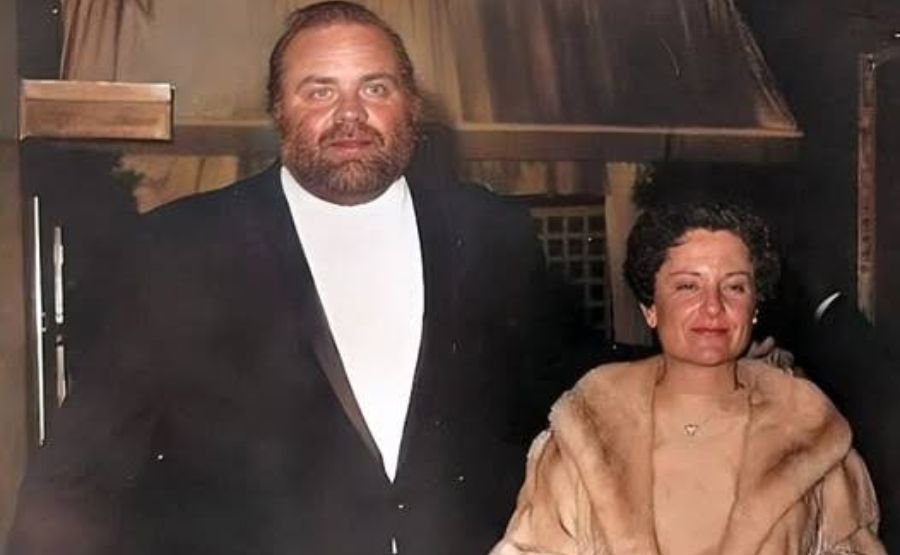
Sul Ross, and the Man Who Changed Her Life
Dolphia graduated high school in Alpine and then enrolled at Sul Ross State University, the local college right there in town. Sul Ross was a small institution — surrounded by the wide Chihuahuan Desert landscape, with a close-knit student body and a strong sense of community. It was the kind of place where you got to know almost everyone on campus.
She met Dan Blocker there.
Dan at this point was already a physically remarkable figure — enormous by any standard, over three hundred pounds and well over six feet tall, with an expansive personality to match his frame. He was also, beneath all that size, genuinely thoughtful. He had studied speech and drama, turned down offers to go professional in football and boxing, served as an infantry sergeant in Korea, and come back to Sul Ross to complete a master’s degree. He was more than just a big man. He was a serious one.
Dolphia and Dan’s connection grew into something lasting. On August 25, 1952, they married. She was twenty years old. He was twenty-three. Neither of them could have predicted what the next two decades would bring, though they were about to find out.
Schoolteachers in Texas and New Mexico
Their marriage’s early years were peaceful in the best sense. Dan taught high school English and drama in Sonora, Texas, and then later in Carlsbad, New Mexico. Dolphia was building a home and, before long, a family. The twin daughters — Danna Lynn and Debra Lee — arrived in 1953. David followed in 1955.
This was ordinary American life in the mid-1950s: modest, purposeful, grounded. Dan was a respected teacher. Dolphia was managing a household with multiple small children. There was nothing to suggest that within a few years, Dan Blocker would become one of the most recognized faces on American television.
In late 1956 or early 1957, Dan decided to try for something bigger. He moved the family — Dolphia, the twin girls, and young David — to Los Angeles, where he began pursuing acting roles while also working toward a doctorate at UCLA. The fourth child, Dirk, was born in 1957 in Los Angeles.
Acting work came slowly at first, then with increasing momentum. Dan appeared in a scattering of television roles through the late 1950s. And then, in 1959, he auditioned for a new NBC Western series called Bonanza.
When Hoss Arrived and Everything Changed
The role of Eric “Hoss” Cartwright changed their lives permanently. Bonanza became one of the defining programs of American television — a Sunday night institution that ran for fourteen seasons and drew enormous audiences. Dan Blocker’s Hoss was its emotional center: the big, gentle, warm-hearted middle son of the Cartwright family, beloved precisely because of the tenderness that lived inside all that physical power.
Dan Blocker was famous. Genuinely, inescapably, unavoidably famous.
And Dolphia had four children to raise.
She handled the celebrity with the same steady practicality she’d handled everything else. Her job, as she saw it, was not to become part of the spectacle but to protect her family from being consumed by it. She was at home in Los Angeles while Dan was on set. She managed the children’s schooling, their schedules, their social lives. She kept the household functional through the demanding production schedule that Bonanza‘s thirteen active seasons required.
By accounts from family and those close to the Blockers, Dolphia was not a passive background figure. She was the center of gravity at home. Dan was fully aware of what he owed her. He was, by all reports, a family man at heart — the character of Hoss, that gentle giant who prioritized people over ambition, was not far from who Dan genuinely tried to be. And he’d learned a great deal of that from the household he and Dolphia had built together.
The family also held serious values beyond the professional. Civil rights, peace, and social justice were not merely abstract ideas in the Blocker home. They were part of the household culture, something Dan and Dolphia both believed in and passed on to their children. Dan Blocker was outspoken on these matters in his public life. The foundation for that was built partly at home.
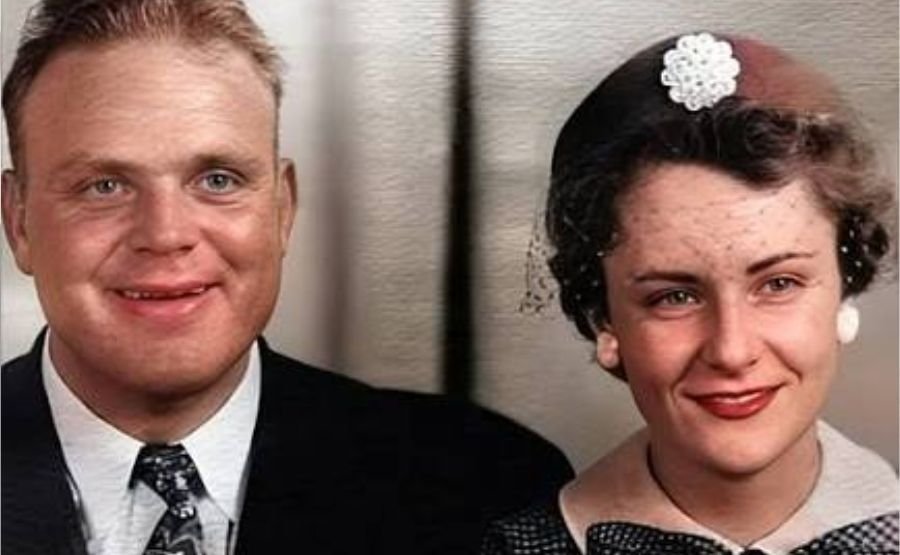
The Day Bonanza Ended
On May 13, 1972, Dan Blocker went into surgery at Daniel Freeman Hospital in Los Angeles to address a gallbladder problem. During the procedure or shortly after, he suffered a pulmonary embolism — a blood clot that reached his lungs. He died. He was forty-three years old.
Dolphia was around the same age. She had four kids and was now a widow.
The grief was enormous and public. Millions of Americans had spent Sunday evenings with Hoss Cartwright for thirteen years. The Bonanza cast was devastated. The producers were left with an impossible situation — they tried to continue the show for one final season without Dan, but it never recovered, and Bonanza was cancelled not long after.
For Dolphia, the grief was something entirely different. She wasn’t mourning a television character. She was mourning the man she’d married at twenty, the father of her children, the person she’d spent two full decades building a life with. She was left with a teenage son, twin daughters in their early twenties, and young David.
What she did next was consistent with everything she’d done before: she got on with it. Quietly, without drama, without seeking comfort from the public attention that would certainly have been available to her as the widow of one of America’s most beloved television stars. She held the family together. She kept things stable. She did not sell her story. Talk shows did not feature her. She simply moved forward and raised her children.
Five Decades of Privacy
For the next fifty-plus years, Dolphia Parker essentially disappeared from public view — and she did it on purpose.
She eventually settled in Santa Barbara, California, a coastal city about ninety miles north of Los Angeles. It was a comfortable, relatively private place to live — not the kind of town where celebrity widows get photographed at every grocery run. She built a quiet life there among family and friends.
Her kids grew up and pursued their own interests. David Blocker became a successful Hollywood producer who won an Emmy Award in 1998 for producing Don King: Only in America. Dirk Blocker became an actor — he would later become widely known for playing Detective Hitchcock on the NBC comedy Brooklyn Nine-Nine. The twin daughters pursued their own lives; Debra Lee became an artist. All four maintained relationships with their mother.
Dolphia, for her part, was remembered by her family not for what she withheld from the world but for what she gave within her own circle. The obituary her family published in the Los Angeles Times described her as someone who exemplified tolerance, patience, and genuine love for others. One statement caught my attention: “Dolphia was my image of an ideal mother.”
She was predeceased by three of her six siblings, but was survived by two sisters and by all four of her children.
What She Was Worth — In Every Sense
Dolphia Parker’s financial situation after Dan’s death was never made public in any meaningful detail. What we do know is that Bonanza was not just a creative endeavor for Dan Blocker — he was also a co-owner of the Bonanza Steakhouse restaurant chain, which at one point was a nationwide operation. He was a businessman as well as an actor. The estate he left behind would have provided some foundation for his family.
Dolphia’s own net worth was never publicly documented — she was a private individual who never monetized her association with her husband’s fame. She did not write memoirs. She did not license his image or her story. Whatever she had was the product of sensible management of what the family had accumulated during Dan’s peak years, and whatever inheritance or provision he had arranged.
In financial terms, she was comfortable but not conspicuous. That seems to have suited her precisely.
Final Words
Dolphia Lee Parker lived ninety-three years, and for fifty-four of them she did it alone — or rather, without the person who had been at the center of her adult life since she was twenty years old.
It’s worth sitting with that for a moment. Dan Blocker became famous young and died even younger. Dolphia was the same age he was when he died, and she still had more than half her life ahead of her. She spent those decades quietly, without seeking the spotlight that his name could easily have given her access to. She raised her children. She built a life in Santa Barbara. She held her family together across decades of ordinary time.
People kept searching for her because she was one of those figures whose absence itself became intriguing. Where did she go? What happened to her? Is she still alive? The internet produced theories and guesses for years. The answer, it turned out, was simple: she was in Santa Barbara, living the private life she had always chosen, until a stroke took her at ninety-three with her family around her.
What makes Dolphia Parker’s story worth telling is precisely what makes it hard to tell: she gave so little of herself to public consumption. The biography of someone who chose not to be written about is, by nature, thinner than most. But what fills in the gaps is character — and the character that emerges from every account of her is consistent and clear. She was warm, steady, serious about family, uninterested in fame, and genuinely loved by the people who actually knew her.
Hoss Cartwright will be remembered as long as people watch Bonanza. The woman who made it possible for the man behind Hoss to do his job for thirteen seasons — who held the family together while he was on set and then held it together again after he was gone — deserves to be remembered too.
FAQs
1. Is Dolphia Parker still alive?
No. Dolphia Lee Parker Blocker passed away on April 19, 2026, at a hospital near her home in Santa Barbara, California. At 93, she passed away from a stroke.
2. Who was Dolphia Parker?
She was the wife of Dan Blocker, the American actor famous for playing Hoss Cartwright on NBC’s Bonanza. They met in college at Sul Ross State University in Alpine, Texas, and were married from 1952 until his death in 1972.
3. When and where was Dolphia Parker born?
She was born on July 29, 1932, in Shattuck, Oklahoma — a small town just across the state line from the Texas Panhandle. She grew up in Texas ranch country and spent the school years in Alpine, Texas.
4. Who were her parents?
Her father was Verner Vilas Parker and her mother was Gladys Violet Akers. She grew up as one of six children in a close, rural family.
5. How did she meet Dan Blocker?
Both were students at Sul Ross State University in Alpine, Texas. Dan was completing his master’s degree after returning from military service in Korea. They married on August 25, 1952.
6. How many children did they have?
Four: twin daughters Danna Lynn and Debra Lee (born 1953), son David Blocker (born 1955), and son Dirk Blocker (born 1957). All four were born before Bonanza changed the family’s life.
7. What happened when Dan Blocker died?
Dan died on May 13, 1972, at age 43, from a pulmonary embolism following gallbladder surgery in Los Angeles. Dolphia was widowed at around 40 years old. She raised the children and chose a life of complete privacy thereafter.
8. Did Dolphia Parker remarry after Dan’s death?
No public record suggests she ever remarried. She remained Dolphia Blocker for the rest of her life.
9. What did her children do?
David Blocker became a Hollywood producer who won a 1998 Emmy Award. Dirk Blocker became a television actor best known for Brooklyn Nine-Nine. Debra Lee became an artist. The family have collectively maintained a degree of the same discretion their mother modeled.
10. Where did Dolphia Parker live in her later years?
She settled in Santa Barbara, California, where she lived quietly for many decades. It was in a hospital near there that she died in April 2026.
11. Why is it so hard to find information about her?
Because she wanted it that way. Dolphia Parker made a deliberate, sustained choice to stay out of the public eye — during Dan’s fame, after his death, and for every decade that followed. She did not give interviews, write a memoir, or capitalize in any way on being the widow of a beloved television star.
12. What is Dolphia Parker’s legacy?
Her family described her as the heart and soul of the Blocker household. She provided the stable, loving foundation that allowed Dan Blocker to pursue his career, raised four children who went on to their own professional and creative lives, held the family together through the loss of their father when they were young, and modeled a kind of integrity and privacy that ran counter to everything Hollywood typically rewards. She was, by every account from those who actually knew her, a genuinely good person who happened to be married to someone very famous.
Explore stories that inspire curiosity with The Imperial Magazine.