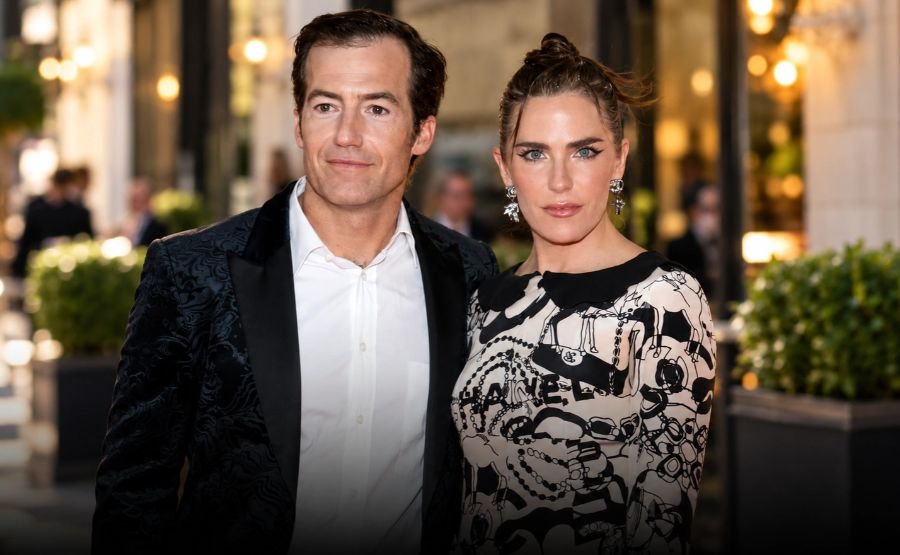
Marshall Trenkmann: The Quiet Man Behind a Famous Name
Quick Bio
| Full Name | Marshall J. Trenkmann |
| Date of Birth | July 19, 1981 |
| Place of Birth | Texas, United States |
| Nationality | American |
| Occupation | Former International Banker; Finance Executive |
| Employer (Former) | JPMorgan Chase Bank |
| Known For | 18+ year banking career; husband of actress Karla Souza |
| Education | Texas A&M University (B.S. and M.S.) |
| Spouse | Karla Souza (married May 2014) |
| Children | Gianna (born April 2018), Luka (born June 2020), Giulia (born March 2024) |
| Religion | Christianity |
| Residence | Los Angeles, California |
| Net Worth (Est.) | $3–5 million (unverified) |
Who He Is and Why His Story Matters
Marshall Trenkmann is not famous in the conventional sense. He never appeared in a television series, never gave a TED talk, and never built a personal brand around his name. What he did was spend nearly two decades learning the architecture of global money — credit risk, oil and gas finance, Latin American markets — before quietly stepping away to focus on something most high-earning professionals find harder to prioritize than a career: home.
His name circulates mostly because his wife, the Mexican-American actress Karla Souza, became internationally known through her role in How to Get Away with Murder. But reducing him to a footnote in someone else’s biography misses the point. His own path is worth following on its own terms. He is a Texas kid who left the state without a passport at twenty-one and eventually ran banking portfolios across thirty countries. That gap — between the life he started with and the career he built — is the actual story.
A Texas Childhood and the World He Grew Up In
Marshall Trenkmann was born on July 19, 1981, in Texas. The specific details of his childhood town, his parents’ names, and the texture of his early home life have never been part of his public record. That absence is not unusual — it is a deliberate reflection of how he has handled public attention generally. He keeps the domestic details of his life out of view, both before and after fame brushed against him through marriage.
What he has shared about his early years is suggestive rather than complete. He has mentioned not having a passport until he was twenty-one, a small detail that carries weight. It places him in a world that was local, settled, and not especially international — a Texas upbringing where crossing state lines was more common than crossing borders. For a man who would later manage credit portfolios spanning Latin America and multiple continents, that origin point makes the arc of his life more interesting, not less.
His faith appears to have been part of the fabric of his Texas years. Christianity would later shape major decisions in his adult life, but its roots seem to reach back to his upbringing rather than to any sudden conversion. He has described himself as a person for whom faith is not performance but orientation — a way of making sense of direction rather than a label worn for public effect.
Education at Texas A&M: Building the Foundation
After completing high school, Trenkmann enrolled at Texas A&M University, one of Texas’s largest and most recognizable public universities. He earned both a bachelor’s degree and a master’s degree there. His areas of study included accounting and finance, the natural toolkit for someone who would eventually work in corporate credit — but also, notably, Spanish and Latin American studies.
That second interest turned out to be consequential. In a finance career that moves through spreadsheets and risk models, the ability to understand regional culture, language, and economic context is not decoration. It is a competitive asset. For someone eventually leading the Corporate and Investment Bank’s Latin America credit team in Mexico City, Spanish fluency and familiarity with regional history and politics mattered as much as knowing how to structure a loan.
Texas A&M itself carries a certain professional identity — disciplined, networked, and oriented toward sectors like energy, government, and military service. Trenkmann’s later work in oil and gas credit in Houston fits cleanly into that university’s orbit. The energy sector and Texas A&M have long overlapped, and many graduates move naturally from campus into the finance and infrastructure industries feeding the state’s economy.
First Steps in Banking: Houston and the Oil and Gas World
After completing his degrees, Trenkmann moved into banking through the energy finance world in Houston. A public institutional profile from 2016 described him spending eight years on JPMorgan’s Corporate and Investment Bank oil and gas credit team in that city. Those years shaped his instincts. Oil and gas credit is not a desk job for the philosophically cautious. It requires evaluating companies operating in volatile commodity markets, understanding reserve valuations, and making judgment calls on creditworthiness when the price of a barrel of oil can swing a company’s fortunes by hundreds of millions of dollars in a single quarter.
Houston in the 2000s was an especially intense environment for that work. The global energy boom, the rise of fracking, the volatility surrounding commodity prices — all of it ran through the credit desks of banks operating in Texas. Trenkmann spent eight years there developing the kind of experience that takes years to build and cannot be shortcut. It was demanding, detail-oriented work, and it prepared him for a bigger responsibility.
By 2012, JPMorgan moved him to Mexico City to lead the CIB Latin America credit team. It was a promotion in scope and complexity, and also a personal gamble — arriving in a massive, unfamiliar city without an established social circle, tasked with managing cross-border credit in one of the world’s most complicated and fast-moving emerging markets.
Mexico City: The Move That Changed Everything
Mexico City has a way of overwhelming first-time arrivals. It is one of the largest cities in the Western Hemisphere, noisy and fast, layered with history, economic inequality, culinary richness, and professional intensity. For a Texas banker in his early thirties arriving without deep personal roots in the city, finding community became as important as navigating the job.
Trenkmann has spoken publicly about looking for a church after arriving. It was not an unusual decision for someone with strong faith, but the consequences of that decision were unusually significant. He found a Bible study group, started attending regularly, and there — in that setting, not at a banker’s dinner or an industry event — he met Karla Souza.
He worked in Mexico City for approximately two and a half years, leading the LATAM credit team. During that time, he managed relationships and risk across a region where credit decisions depend heavily on understanding political context, currency dynamics, and business culture across multiple countries. The technical finance work was substantial. But Mexico City also gave him something he hadn’t been searching for professionally: a partner.
Meeting Karla Souza and Falling in Love
Karla Souza was already a rising name in Mexican entertainment when their paths crossed. She had been building a television career in Mexico, and her film Nosotros los Nobles — which became a massive domestic box-office hit in 2013 — was just about to cement her status as one of Mexican cinema’s most watchable performers. She was not yet internationally famous, but she was clearly on her way.
Their meeting in a faith community rather than through industry channels matters for understanding how their relationship developed. It stripped away the usual social armor. They were both in a space that invited honesty and vulnerability, not professional positioning. Trenkmann has said the relationship moved from meeting to engagement within roughly a year, with marriage following about six months after that. By late 2013, Souza had announced their engagement. They married in May 2014.
The wedding reflected their shared preference for privacy. The ceremony took place in California, followed by a three-day celebration in Tequesquitengo, a lake town in the Mexican state of Morelos. The first photograph from their wedding was not shared publicly until 2018 — years after the ceremony, when Souza posted it on Instagram alongside a message about watching Trenkmann become a father. That gap between the event and its public disclosure says something real about how they have always approached attention.
The LA Years: Senior Banking and Life in a New City
After marrying, Trenkmann relocated to Los Angeles. The move was driven by Souza’s growing career prospects in the United States, and it required him to find a new professional footing. He joined JPMorgan’s Los Angeles operation, eventually serving as a Credit Risk Director overseeing the CCB West Diversified Portfolio. A public regulatory filing from 2018 listed a Marshall Trenkmann as an Executive Director at JPMorgan Chase Bank, confirming the seniority of his role at that point.
The Los Angeles banking world is different from Houston. The local economy is more diverse — entertainment, technology, real estate, healthcare — and the professional culture is shaped by proximity to the creative industries. For someone whose personal life had become intertwined with Hollywood through his wife’s career, the city offered a kind of double life that he seemed to navigate deliberately. He was senior enough at JPMorgan to carry real institutional weight, but private enough that almost no one outside banking circles would have recognized his name.
His role at JPMorgan by this period touched international portfolios across more than thirty countries. He has described the scope of his final years at the bank in those terms — a broad international mandate that combined geographic scale with the technical demands of credit risk management. It was the pinnacle of his corporate career, and it was quietly consuming.
Stepping Back: Leaving Banking After 18 Years
Around 2022, Trenkmann stepped away from full-time corporate banking. In a public conversation tied to faith-based work in 2024, he described leaving after more than eighteen years working across investment banking, corporate banking, commercial banking, and risk management. He talked about the decision in reflective terms — not as a failure or a retreat, but as a reorientation.
Leaving a senior role at a major global bank is not simple. Those positions offer income, identity, structure, and a kind of professional certainty that is hard to replicate outside institutional finance. His departure suggests something shifted — in his sense of priorities, in the demands of raising three children, in the practical reality that Souza’s career required a family structure that one spouse at full throttle could not easily maintain.
He has described doing some side work while focusing more heavily on family life. The specifics of that work are not publicly detailed. It is entirely possible that he is involved in advisory roles, nonprofit work, or private finance activities that simply are not part of his public record. But the direction is clear: he stepped back from the pace of full-time senior banking and moved toward something with more domestic gravity.
Family Life: Three Children and a Marriage Built on More Than Love
Marshall and Karla Souza have three children together. Their first daughter, Gianna Trenkmann, was born on April 19, 2018. The birth caught the public off guard — Souza had been filming How to Get Away with Murder while genuinely pregnant, using a prosthetic belly for her character’s storyline and hiding her actual pregnancy in plain sight. When she announced Gianna’s arrival, the reveal was immediate and total: bump photo followed instantly by newborn photo.
Their son, Luka Olivares Trenkmann, was born on June 12, 2020. Souza shared that Gianna, as a toddler, took to her new brother warmly, singing him songs from the animated film Coco. Their third child, daughter Giulia, was born in March 2024. Souza’s account of that delivery was candid: a thirty-three-hour labor, a doctor who did not arrive in time, and Trenkmann present throughout — holding her leg, coaching her through it. She thanked him publicly afterward, calling him her rock once again.
That phrase — her rock — appears in Souza’s descriptions of her husband with enough regularity that it seems accurate rather than obligatory. She has described his habit of leaving small notes in her work bag before she leaves the house — simple messages of encouragement and affection. She appeared on Red Table Talk: The Estefans in 2020 and spoke openly about why she married him. One thing she mentioned was that he was the first partner she felt she could talk to about her mother’s mental health challenges. He listened because he had his own experience with family and mental illness — his brother has schizophrenia. That shared familiarity with caring for someone you love through difficulty created a bond that went deeper than attraction.
Personal Values: Faith, Privacy, and the Nonprofit World
Trenkmann’s faith is central to how he narrates his own life. He found the community that introduced him to Souza through a church search. He speaks about faith in terms of personal direction rather than public declaration. His connection to One Collective, a faith-based nonprofit focused on community development and service, reflects a desire to put that orientation to practical use.
He joined the board of Center Theatre Group, one of Los Angeles’s most significant nonprofit theater organizations, in 2016. The Center operates across three venues — the Ahmanson Theatre, the Mark Taper Forum, and the Kirk Douglas Theatre — and programs some of the most ambitious work staged in Southern California. For a finance professional with no background in the performing arts, the board role made sense as a civic contribution rather than a personal passion project. It also connected him, in a structured way, to the cultural ecosystem where his wife works.
He has no public social media presence at all — no Instagram, no LinkedIn, no Twitter. In 2026, that absence is unusual enough to be meaningful. He has made a clear choice to exist outside the machinery of personal branding, and nothing about his public behavior suggests that choice is under reconsideration.
Setbacks and Difficult Stretches
There is no recorded scandal or dramatic public crisis in Trenkmann’s biography. But a quieter kind of difficulty runs through the story. Relocating to Mexico City in your early thirties without a social foundation is genuinely hard. Building one through a church community rather than a professional network is an admission that career connections are not the same as friendships. That kind of honest reckoning with what a person actually needs is worth noting.
Souza has also spoken publicly about the mental health challenges she navigated during her career, including conversations she had with Trenkmann before they married about the anxiety she carried around her mother’s situation. Those conversations were not easy, and his willingness to stay present in them — drawing on his own experience with his brother — required emotional capacity that is not automatically built into a high-pressure banking career.
The decision to leave banking after eighteen years also carries its own weight. Senior finance professionals often build an identity inseparable from their professional title. Stepping back means giving up not just income but status, structure, and the specific kind of daily purpose that demanding work provides. What replaces it — family, faith, side projects — is real, but it is not the same. That transition is its own kind of difficulty, even when it is freely chosen.
Net Worth: What We Know and What We Don’t
Trenkmann’s net worth is not publicly confirmed by any financial document or credible disclosure. Various celebrity biography websites publish estimates ranging from three to five million dollars. Those figures should be treated as informed guesses, not facts.
What is known is this: he spent roughly eighteen years in senior positions at a major global bank, with titles that included Credit Risk Director and Executive Director. Those roles carry competitive compensation in the financial services industry. His later international role, covering more than thirty countries, would have come with compensation reflecting that responsibility. His household also includes Souza’s income from a substantial acting career.
None of that arithmetic produces a verified number. Net worth requires knowing assets, investments, debts, property values, and financial arrangements that are simply not part of his public record. The honest position is that he appears financially successful, but his exact wealth is private.
Life Now: A Different Kind of Momentum
As of late 2026, Marshall Trenkmann is living in Los Angeles with Souza and their three children. He stepped away from full-time banking a few years ago and has described doing some side work without the velocity of a corporate career. Souza’s professional life remains active.
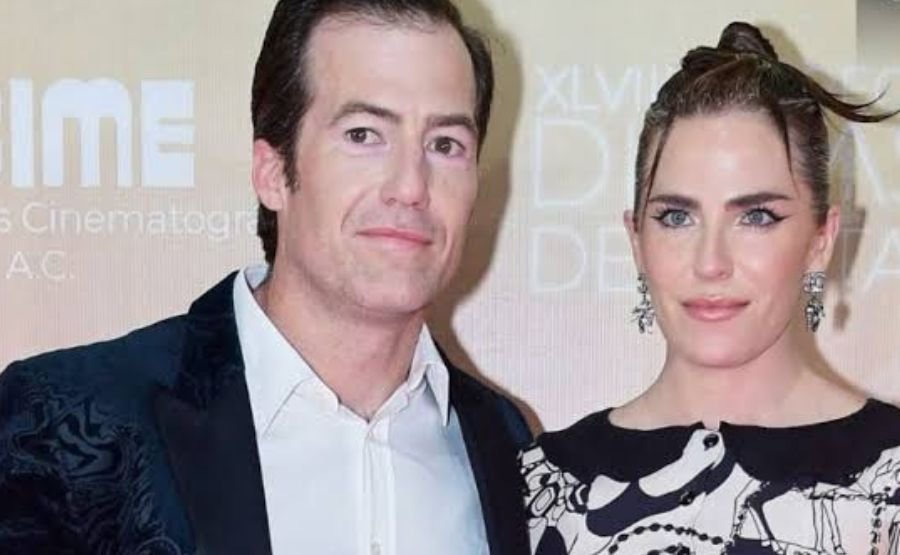
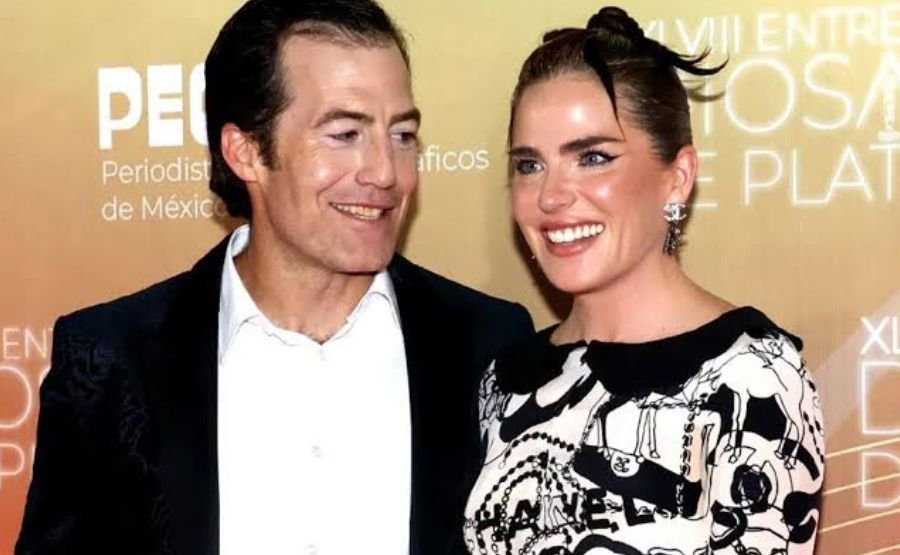
He made a rare public appearance with Souza at a red carpet event in Mexico City in April 2023 — one of the few times he has shown up in entertainment photography. It was noted precisely because it was uncommon. That is the nature of his public profile: visible enough to be searched, private enough to remain genuinely elusive.
His nonprofit involvement continues to represent the most visible dimension of his current life outside family. His board membership with Center Theatre Group placed him inside Los Angeles arts philanthropy in a way that fits his professional background and personal interests. Whether that extends to other civic roles in this period is not part of the public record.
Final Words
There is a certain kind of integrity in Marshall Trenkmann’s public life that is easy to miss because it looks like absence. He doesn’t perform himself for an audience. He doesn’t amplify his own story through social media. He married someone famous and chose, deliberately and repeatedly, to stay out of the light that came with that decision.
What his biography actually shows is a man who built something serious before anyone cared who he was — a career that moved from Texas energy finance through Latin American banking to international credit management at one of the world’s most recognizable financial institutions. He did that work in relative anonymity, and when it was done, he seems to have put it down without ceremony.
The detail that he didn’t get a passport until he was twenty-one and later managed portfolios across thirty-plus countries captures something essential. His life has been a long process of outgrowing the assumptions he started with. That kind of growth — slow, deliberate, unannounced — is rarer and more interesting than the viral kind.
He is not a celebrity. He is neither a saint nor a criminal. He is a Texas-educated former banker who fell in love in Mexico City, raised three children in Los Angeles, and chose, over and over, to give more than he showed. That is enough of a story.
FAQs
1. Who exactly is Marshall Trenkmann?
He is an American banker from Texas who built a nearly two-decade career in international finance, primarily at JPMorgan Chase. He became publicly known after marrying Mexican actress Karla Souza in 2014. He holds degrees from Texas A&M University and worked in Houston, Mexico City, and Los Angeles before stepping away from full-time banking around 2022.
2. How did Karla Souza and Marshall Trenkmann get together?
They met in Mexico City around 2012, where Trenkmann had moved for his banking work and Souza was already established as a TV actress. The meeting happened through a Bible study group, not through the entertainment industry. They became engaged in late 2013 and married in May 2014.
3. What did Marshall Trenkmann do at JPMorgan?
He joined JPMorgan’s oil and gas credit team in Houston around 2004 and spent eight years there. He then moved to Mexico City to lead the CIB Latin America credit team for approximately two and a half years. After relocating to Los Angeles following his marriage, he served as a Credit Risk Director overseeing the CCB West Diversified Portfolio. A 2018 public filing identified him as an Executive Director at JPMorgan Chase Bank.
4. Why did Marshall Trenkmann leave banking?
He has described stepping away after eighteen-plus years because he wanted a different pace and focus — one more oriented toward family life. The decision came around 2022. He spoke about it in a 2024 public conversation connected to faith-based community work, framing it as a reorientation rather than a retirement.
5. How many children do Marshall Trenkmann and Karla Souza have?
Three. Daughter Gianna was born in April 2018, son Luka was born in June 2020, and daughter Giulia was born in March 2024. Souza famously hid her first pregnancy while filming How to Get Away with Murder by using a prosthetic baby bump for her character’s storyline.
6. What does Karla Souza say about her husband?
Souza has consistently described Trenkmann as her rock. She appeared on Red Table Talk: The Estefans in 2020 and spoke about why she married him, mentioning that he was the first partner she felt she could be honest with about her mother’s mental health challenges. He listened from a place of genuine familiarity — his own brother has schizophrenia. She has also mentioned that he leaves small notes in her work bag before she leaves for set.
7. What is Marshall Trenkmann’s net worth?
No verified figure exists. His long senior career at JPMorgan strongly suggests substantial professional earnings, and his household includes Souza’s acting income. Various websites estimate his net worth between three and five million dollars, but those estimates are unsupported by public financial records. Any specific number should be treated as speculation.
8. Does Marshall Trenkmann have social media?
No. He has no known Instagram, Twitter, LinkedIn, or other public social media presence. He made a rare public appearance with Souza at a red carpet event in Mexico City in April 2023, but his general approach to public life has been to stay out of it entirely.
9. Where did Marshall Trenkmann study?
He attended Texas A&M University, where he earned both a bachelor’s degree and a master’s degree. His academic work included accounting, finance, and Spanish and Latin American studies — subjects that directly fed into his later career in Latin American banking.
10. What nonprofit work is Marshall Trenkmann involved in?
He joined the board of Center Theatre Group in Los Angeles in 2016. CTG is one of the country’s major nonprofit theater organizations, operating the Ahmanson Theatre, the Mark Taper Forum, and the Kirk Douglas Theatre. He has also been connected to One Collective, a faith-based nonprofit focused on community development and service.
11. Is Marshall Trenkmann still married to Karla Souza?
Yes, as of the most recent public information, they remain married. They wed in May 2014 and have three children together. Despite the public pressure that often surrounds celebrity marriages, their relationship has not been the subject of breakup or divorce reports.
12. Where does Marshall Trenkmann live now?
He lives in Los Angeles, California, with Souza and their children. After leaving full-time banking, his professional activity has been less publicly documented, but his family life appears centered in the Los Angeles area where Souza’s entertainment career is based.
Explore stories that inspire curiosity with The Imperial Magazine.